Arcades, Claw Machines and Gacha Capsule Toys in Japan: How to Play and Enjoy
Japanese game centers (arcades) are loud, bright and a lot of fun, even if you've never played a video game. You can try to win a plush toy with a claw machine, take sticker photos with friends, drum along to a rhythm game, or turn the handle of a capsule toy machine and see what comes out. This guide explains what's inside an arcade, how to pay and play, the age and time rules set by law, the house rules and manners, where the big capsule toy shops are, and how to keep your spending under control.
This page may contain affiliate links. If you buy through them, we may earn a commission at no extra cost to you.
- What's in a Japanese arcade, and how claw machine prizes work
- Coins, change machines and IC cards; asking staff for help
- Age and time limits for under-18s, with Tokyo (Tokyo) and Osaka (Osaka) as examples
- Capsule toys: how to turn the handle, prices, big shops and capsule recycling
- Setting a budget before you start
Please read this first. Each arcade and shop sets its own house rules (photos, bags, how much staff can help), and the sign at the entrance or the staff always come first. Prices, opening hours and shop details below were checked on official pages on October 4, 2026, and can change.
What's inside a Japanese arcade
Arcades are called game center (ゲームセンター, often shortened to gēsen). Taito, which runs the Taito Station arcades, lists these main types of games on its official "how to enjoy a game center" page:
- Crane (claw) games: move an arm to grab, push or slide a prize into the hole. Many people in Japan call them UFO catchers; "UFO CATCHER" is a registered trademark of SEGA, the machine's maker.
- Sticker photo booths (purikura): take photos in a booth, decorate them on a screen and get a sheet of stickers.
- Music and rhythm games: hit buttons or drums, or dance, in time with the music.
- Medal games: slot, bingo and horse-racing style games played with medals, not money.
- Video games: racing, card, fighting and shooting games.
Prizes in crane games have a value limit. Under the National Police Agency's guidelines, a game center may give out prizes that would cost roughly 1,000 yen or less in a shop; the Japan Amusement Industry Association (JAIA) explains that this limit was raised from 800 yen on March 1, 2022. Medal games give no prizes at all, and medals can never be exchanged for cash or goods.
Coins, change machines and cards
- Most machines take 100-yen coins. The price per play is shown on each machine; GiGO, a large arcade chain, mentions games at both 100 yen and 200 yen a play. Some arcades have 10-yen crane games for sweets and small toys; Round1, for example, has them on its crane game floors.
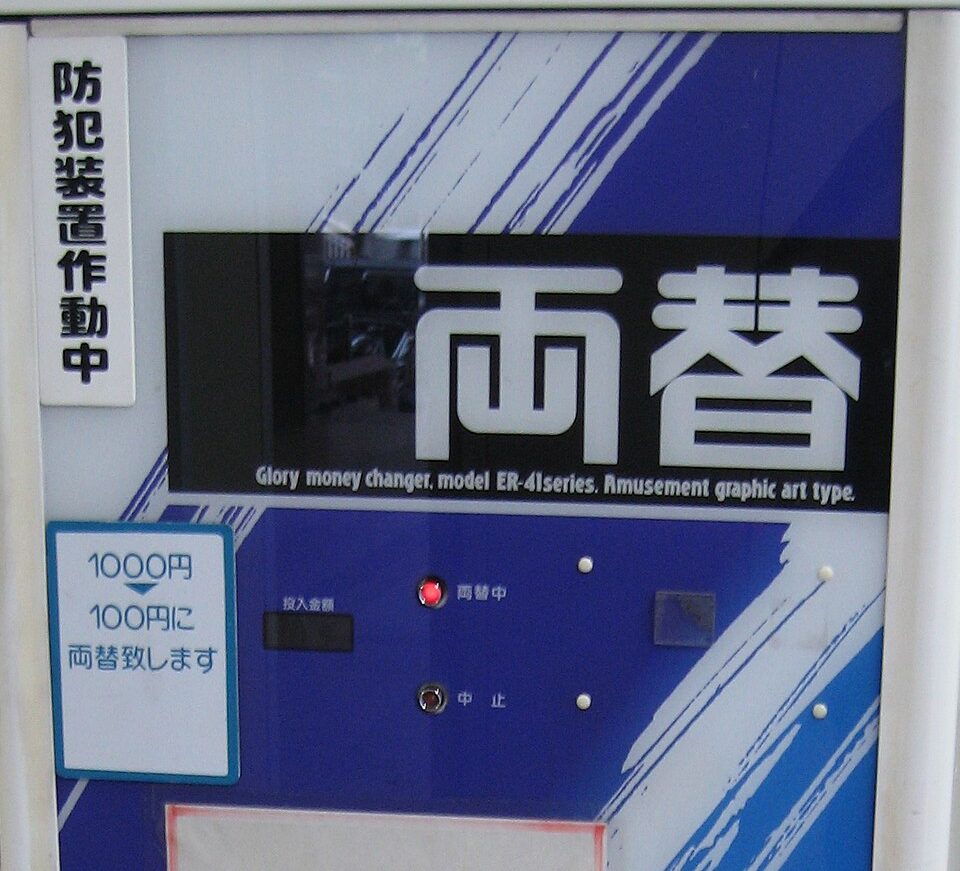
- Change machines (両替, ryōgae) turn notes into 100-yen coins. Taito's guide asks visitors to use the change machines inside the shop. GiGO's English shop search even lets you filter for arcades with a foreign currency exchange machine.
- IC cards: at Taito arcades (except some) you can tap Suica or PASMO on a reader on the machine instead of using coins. At some, you can rent medals with a credit card at the counter. Not every machine or shop supports this.
How to play a crane game
- Watch first. Look at where the prize sits and how far it is from the hole. Taito's page lists four basic moves: grab, slide, push and hook.
- Ask before you win if you want a different color or version. Taito says prizes can't be exchanged after you win them, so tell staff first.
- If you get stuck, call staff. Taito says its staff will help if you're stuck. How staff help is up to each arcade. Never reach into the machine or tilt it.
- Bags: arcades provide bags for prizes; ask staff if you can't see them. Taito's store in Tama Center (Tokyo) uses extra-large prize bags made partly from recycled plastic.
Two phrases that help: Sumimasen, tetsudatte moraemasu ka? (すみません、手伝ってもらえますか?, "Excuse me, could you help me?") and Fukuro o moraemasu ka? (袋をもらえますか?, "Could I have a bag?"). Pointing at the machine works too.
House rules and manners
- One machine at a time. Taito asks customers not to hold several machines, for example by leaving a bag on one machine while playing another, or feeding medals into several medal games at once.
- Photos depend on the arcade. Taito allows simple souvenir photos of yourself, as long as other customers aren't in the picture and you don't block games or aisles. Other chains may have stricter rules, so check the signs. Don't film other people's play or faces.
- Medals stay inside. Taito asks you not to give away or sell medals, and medals can only be used in that arcade. Under the Act on Control and Improvement of Amusement Business (Article 23), an arcade must not let customers take medals out of the shop. Use them up, hand them back, or ask staff about storing them.
- No alcohol. Taito asks customers not to bring in or drink alcohol.
- Sticker photo corners: many arcades don't allow groups of men only into the purikura area. According to a 2024 Minami-Nippon Shimbun report quoting JAIA, many shops across Japan have this rule because of hidden-camera crimes and harassment in the booths. Women and mixed groups can go in.
- Prizes are for you, not for resale. Prizes are made only for arcades and aren't sold in the arcade. Some operators refuse play aimed at reselling; Capcom, for example, bans reselling the prizes from its online crane game.
Age and time limits
Arcades are licensed under the Act on Control and Improvement of Amusement Business. Under Article 22, no one under 18 may be let into an arcade from 10 p.m. to 6 a.m., anywhere in Japan. Each prefecture can add rules for daytime and evening hours, so the limits for under-16s differ by prefecture:
- Tokyo (Tokyo): from after 6 p.m. until 10 p.m., under-16s may only be let in with a parent or guardian (Tokyo Metropolitan ordinance, Article 8).
- Osaka (Osaka): from 7 p.m. until 10 p.m., under-16s without a parent or guardian may not be let in (Osaka Prefecture ordinance, Article 9).
- Elsewhere: the times are set by each prefecture's ordinance and can be stricter. The rule for the shop is shown at its entrance; Taito asks parents to stay with their children, and says staff may check ID such as a student card, driver's license or passport.
- Game corners in big shopping malls that can be seen into from outside can fall outside this law, but they may still follow other local rules. Follow the sign at the entrance.
Capsule toys: how to turn the handle
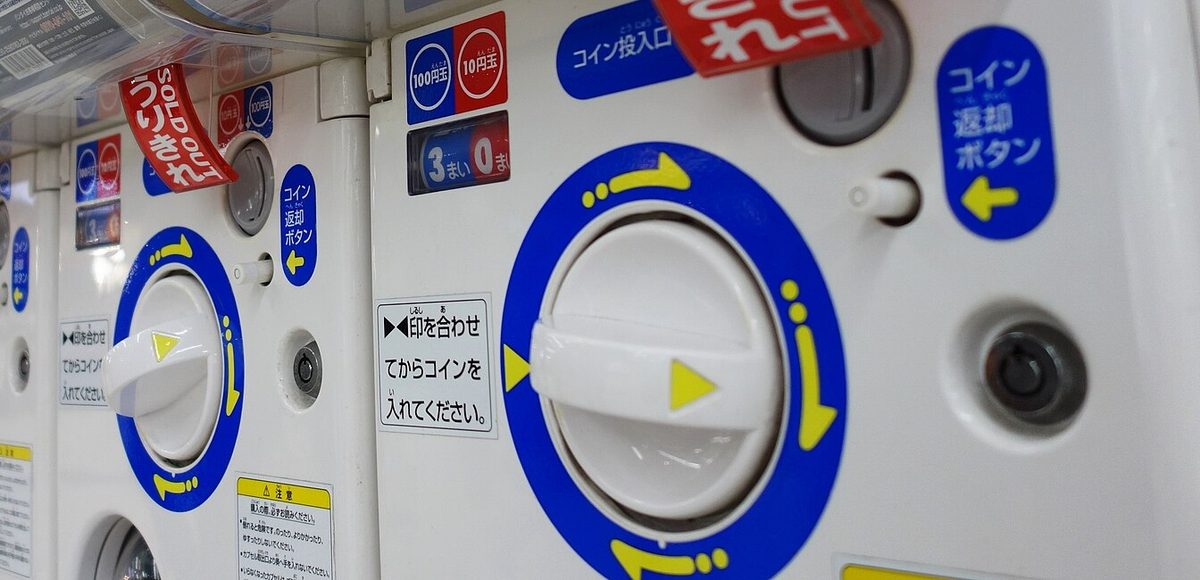
Capsule toy machines (カプセルトイ, often called gacha or gachapon) sell a random small toy in a plastic capsule. "Gashapon" is Bandai's brand name for its machines; other makers have their own. You'll find them in arcades, stations, shopping malls and dedicated shops with hundreds or thousands of machines.
- Prices: capsule toys used to cost about 100 yen. Today, according to the Japan Capsule Toy Association's 2025 survey, 400-yen and 500-yen items together make up 48.1 percent of products, and the Japanese government's HIGHLIGHTING Japan notes that some now cost more than 1,000 yen. The price is on each machine.
- Coins: most machines take 100-yen coins; the label shows which coins each machine takes. Specialist shops have change machines. At the Gashapon Department Store in Ikebukuro (Tokyo), some machines also accept cashless payment.
- It's random. You can't choose which item in the series you get, and you may get the same one twice. If you want one particular item, decide in advance how many tries you'll allow yourself.
- Leftover coins before you fly home? Capsule toy shops at airports are a popular way to spend them (see below).
Where to find big capsule toy shops
These shops were checked on their official pages on October 4, 2026. "Machines" is the number the shop itself gives.
| Shop | Where | Machines | Hours |
|---|---|---|---|
| Gashapon Department Store (main store) | Ikebukuro (Tokyo): Sunshine City, World Import Mart Building 3F | 3,775 | 10:00–21:00 |
| Gashapon Department Store, Akihabara (Tokyo) | Akihabara (Tokyo): 1 minute from Akihabara Station, 4F | 500 | 10:00–23:00 |
| #C-pla Shibuya Center-gai | Shibuya (Tokyo): Center-gai, B1F to 2F | Not stated | 1F 10:00–23:00; B1F and 2F until 22:30 |
| Gashapon Department Store, Nipponbashi (Osaka) | Namba (Osaka): along Nansan-dori, a short walk from Nankai Namba Station, 1F | 360 | 10:00–24:00 |
| Gashapon Department Store, HEP FIVE | Umeda (Osaka): HEP FIVE 9F | 530 | 11:00–22:30 |
| Gacha World (Haneda Airport) | Terminal 3, 5F | About 500 | 10:00–21:00 |
| Capsule Marche (Narita Airport) | Terminal 1, Central Building 5F, before security | Not stated | See the airport's page |
Nipponbashi (Osaka), home to the Den Den Town area of electronics, games and anime goods, is next to Namba (Osaka). Akihabara (Tokyo), Ikebukuro (Tokyo) and Shibuya (Tokyo) all have several large arcades; GiGO's shop search and Taito's store pages show what each one has. See our destination guides for Tokyo (Tokyo) and Osaka (Osaka).
Empty capsules: use the collection box
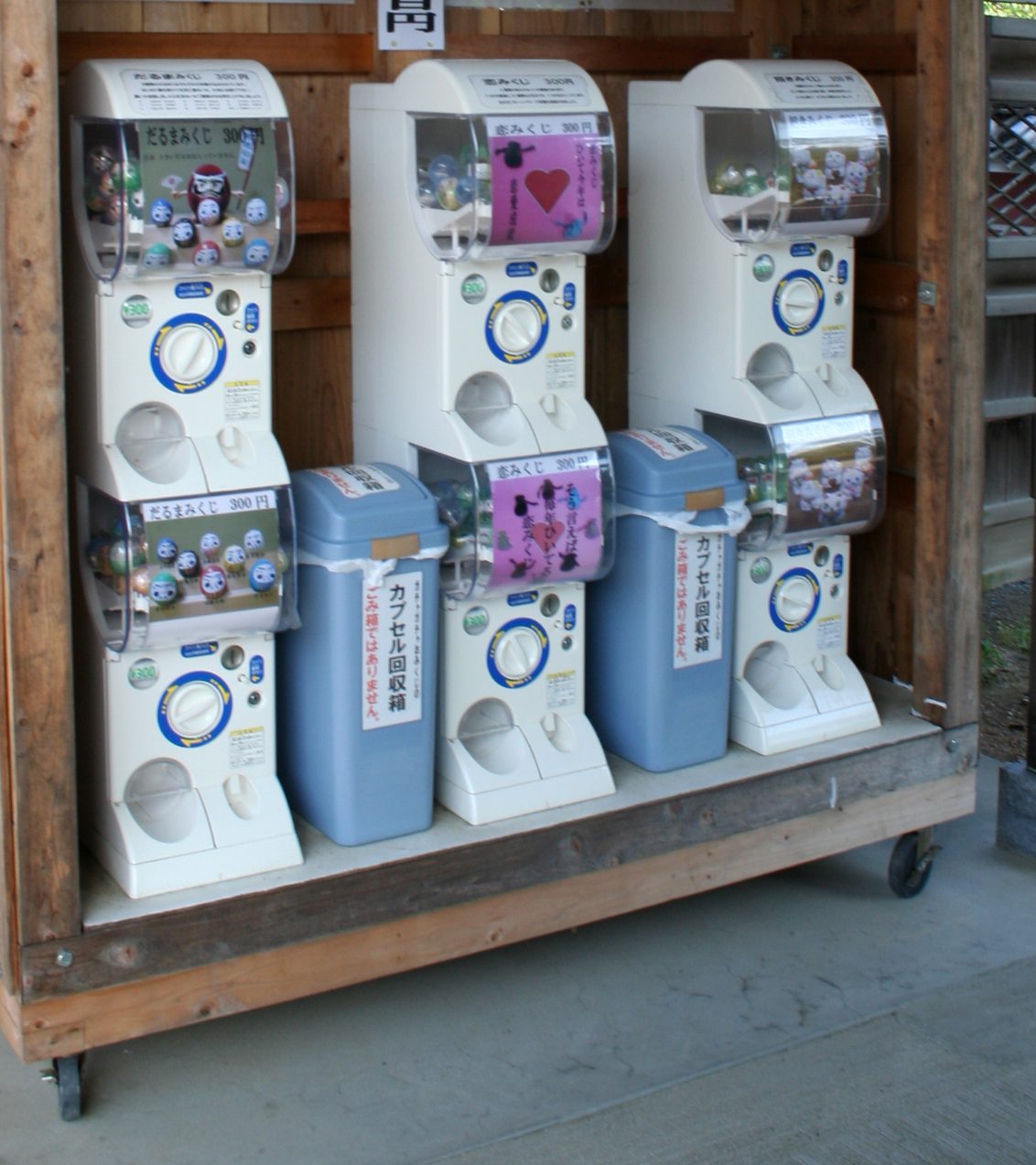
Many capsule toy shops have a box for empty capsules (カプセル回収箱, kapuseru kaishū-bako). Please use it rather than leaving capsules on top of machines or putting them in a trash can that says otherwise.
- Bandai's recycling: the Bandai Namco group has collected and recycled Gashapon capsules since 2006, and in 2021 started turning them back into new capsules; it collected about 47 tons in fiscal 2024, according to its sustainability page.
- Gashapoint Station: Gashapon Department Store and Gashapon Bandai Official Shop stores have this collection machine. It works with the Namco point app if you'd like to collect points, but you can use it without the app.
Keep your spending under control
Arcade games are designed so you want "just one more try," and coins and IC card taps add up fast. A few simple habits help:
- Set a budget before you go in, for example a fixed number of 100-yen coins or a set amount, and stop when it's gone.
- Set a limit for each prize. If a prize hasn't moved after a few tries, ask staff for advice or move on.
- Be careful with card and IC payments. Tapping is easy; check your balance now and then.
- Count the capsules, not just the price. A 500-yen series with several items can cost a lot more if you're trying to collect them all.
Shopping for more? See our guides to Pokémon Center stores, where to buy Sanrio goods, and souvenirs from Japan.
Last reviewed: October 4, 2026. Shop details, prices and local rules change. Please confirm on the official pages below.
References
- e-Gov: Act on Control and Improvement of Amusement Business, Articles 22 and 23 (Japanese)
- Tokyo Metropolitan Government: Enforcement ordinance, Article 8 (Japanese)
- Osaka Prefecture: Enforcement ordinance, Article 9 (Japanese)
- Japan Amusement Industry Association (JAIA): For the media, on prize values (Japanese)
- JAIA: Guidelines for prize games at amusement facilities (Japanese, PDF)
- Taito: How to enjoy a game center (Japanese)
- Taito: Tama Center store opening, recycled prize bags (Japanese)
- GiGO: GiGO app, prices per play (Japanese)
- GiGO: Shop search (English)
- Round1: Giga Crane Game Stadium (Japanese)
- Minami-Nippon Shimbun: Why some purikura corners refuse men-only groups (Japanese, October 7, 2024)
- Capcom Net Catcher: Handling of prizes (Japanese)
- Japan Capsule Toy Association: 2025 capsule toy market survey (Japanese)
- Government of Japan, HIGHLIGHTING Japan: Capsule toys popular with adults and visitors (Japanese, October 2025)
- Bandai Namco Amusement: Gashapon Department Store, places in Tokyo (Tokyo) with many machines (Japanese)
- Bandai Namco Holdings: Waste reduction and recycling (Japanese)
- Gashapon official site: Sustainability and capsule recycling (Japanese)