Kamakura (Kanagawa): What the City Actually Asks About Eating While Walking
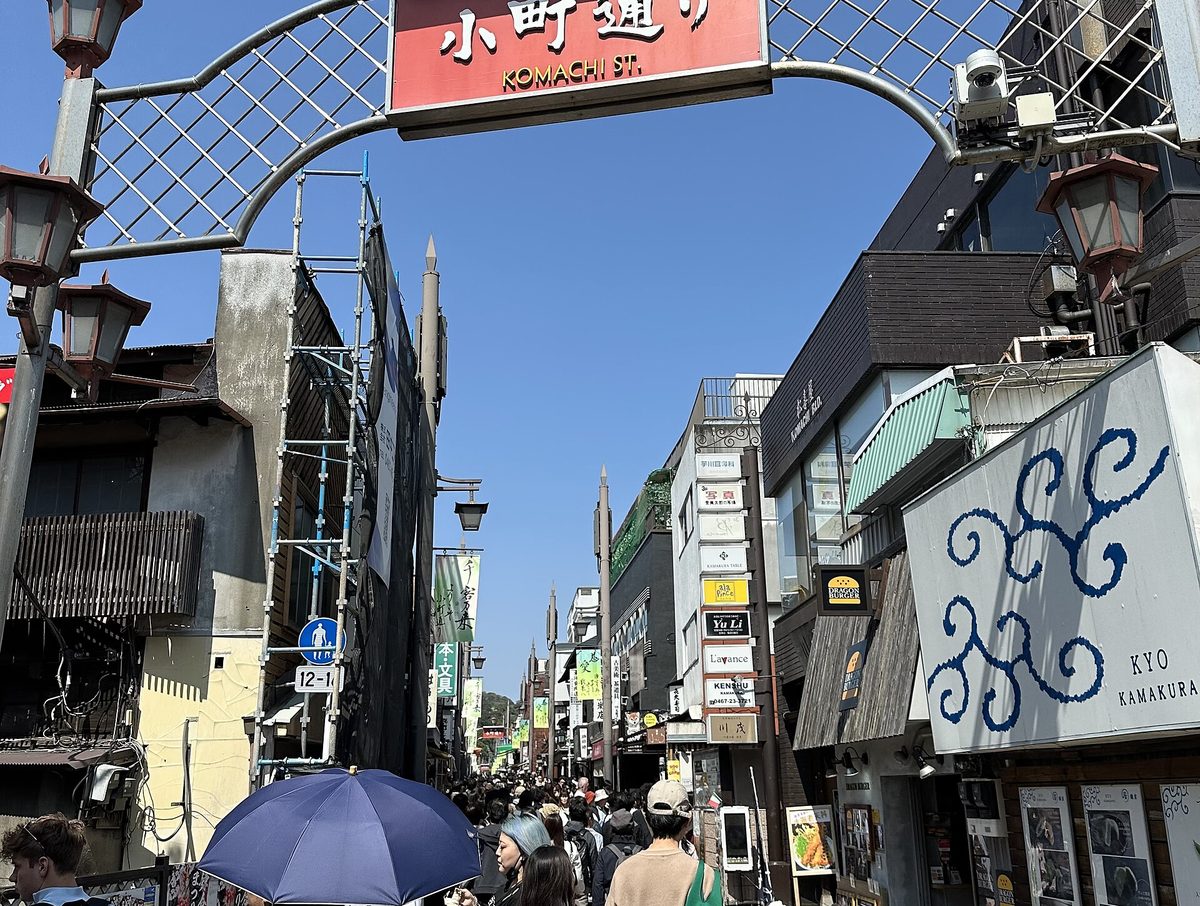
Komachi-dori, the busy shopping street by Kamakura Station, is full of snacks to eat on the go, from dango to ice cream. You may have read that eating while walking is "banned" in Kamakura (Kanagawa). It isn't. What Kamakura City (Kanagawa) actually did is narrower and more practical, and once you know it, you can enjoy the food without worrying. This guide explains the city's manners ordinance in plain terms, the hawks that really will steal your food, and the street-smoking and litter rules that do carry teeth, using Kamakura City (Kanagawa)'s own pages.
This page may contain affiliate links. If you buy through them, we may earn a commission at no extra cost to you.
- The 2019 manners ordinance: what it says and doesn't say
- "Narrow or crowded": how the city defines it
- Black kites: how to eat outdoors without losing your snack
- Street smoking (with a fine) and litter
The ordinance: no ban, but a clear request
Kamakura City (Kanagawa)'s ordinance on improving manners in public places was promulgated on March 25, 2019 and took effect on April 1, 2019. The city says plainly that it does not ban or regulate particular activities such as eating while walking. Instead, it lists "nuisance behaviors" and asks everyone to avoid them, so that Kamakura (Kanagawa) stays pleasant for residents and visitors alike. There is no fine in this ordinance.
The item about food reads, in translation: "eating or drinking while walking, or similar acts, in a narrow or crowded place, in a way that may soil other people's clothes." The city's Q&A explains where this came from: walking and eating is not a problem in itself, but people complained of ice cream on their clothes and being jabbed by dango skewers in packed streets.
What "narrow" and "crowded" mean
The city's explanation of the ordinance gives working definitions:
- Narrow: roughly no wider than the space two adults need to pass each other.
- Crowded: people are touching, or nearly touching, each other.
In practice: on a packed weekend afternoon on Komachi-dori, stop at the side of the street or eat at the shop's counter, then walk on. On a quiet morning or a wide street, a snack in hand is not what the city is worried about. The city has also noted, in a reply to a resident, that shops around Komachi-dori and the station differ in their own policies; if a shop asks you to eat in front of it, or not to take food inside another shop, follow that.
Watch out for the kites
This is the part visitors underestimate. Kamakura City (Kanagawa) warns that black kites (tobi), large birds of prey, target people eating at the beach and in parks. They have excellent eyesight, circle overhead to spot food, then glide in silently from diagonally behind you. People have been hurt by their claws when food was snatched, and the city asks parents to take special care with small children.
The city's advice, briefly: eat under a roof, or use an umbrella so the bird can't see the food from above; sit with your back to a large wall; and, in the city's words, holding food out at arm's length or placing it on the ground to take a photo for social media is "out of the question". In a group, one person can keep an eye on the birds. And please don't feed wild animals at all; the city asks visitors not to, because feeding teaches them to approach people.
The rules that do have teeth
- Street smoking: under Kamakura City (Kanagawa)'s street smoking ordinance, smoking on the street is banned in designated areas around Kamakura Station and Ofuna Station. Patrol staff first tell you to stop; if you don't, they order you to; if you ignore the order, you can be fined 2,000 yen. Elsewhere in the city, everyone is asked to try not to smoke on the street.
- Litter: Kamakura City (Kanagawa)'s litter ordinance aims to end littering, and the city asks visitors to take their trash home or back to where they're staying. Snack skewers and cups count.
The same manners ordinance also lists stopping in the roadway to take photos and taking photos near railway tracks. That mainly concerns the railroad crossing by Kamakura-Kokomae Station; we cover it in "Please don't": what made the news.
Quick checklist
- Crowded street? Step aside or eat at the shop, then walk on.
- Eating outdoors? Roof overhead or back to a wall; no food held up for photos.
- Keep your skewers and cups until you're back at your hotel.
- Smokers: no smoking on the street around Kamakura Station.
Japan's nationwide picture is in our smoking guide and our guide to behavior that made the news. Going on to Hakone (Kanagawa)? Read about volcanic gas at Owakudani and getting around with luggage, or see our Kamakura and Hakone (Kanagawa) page.
Last reviewed: October 4, 2026. Please confirm the latest rules on the official pages below.
References
- Kamakura City (Kanagawa): Tourism manners and the manners ordinance (Japanese)
- Kamakura City (Kanagawa): Explanation of the manners ordinance (Japanese, PDF)
- Kamakura City (Kanagawa): Q&A on nuisance behaviors (Japanese, PDF)
- Kamakura City (Kanagawa): Reply on standing and eating around Komachi-dori (Japanese, PDF)
- Kamakura City (Kanagawa): Damage by crows, pigeons and kites (Japanese)
- Kamakura City (Kanagawa): Please don't feed wild animals (Japanese)
- Kamakura City (Kanagawa): Street smoking prevention (Japanese)