Kenrokuen Garden in Kanazawa (Ishikawa): Admission, Opening Hours, Free Early Entry and the Garden Rules
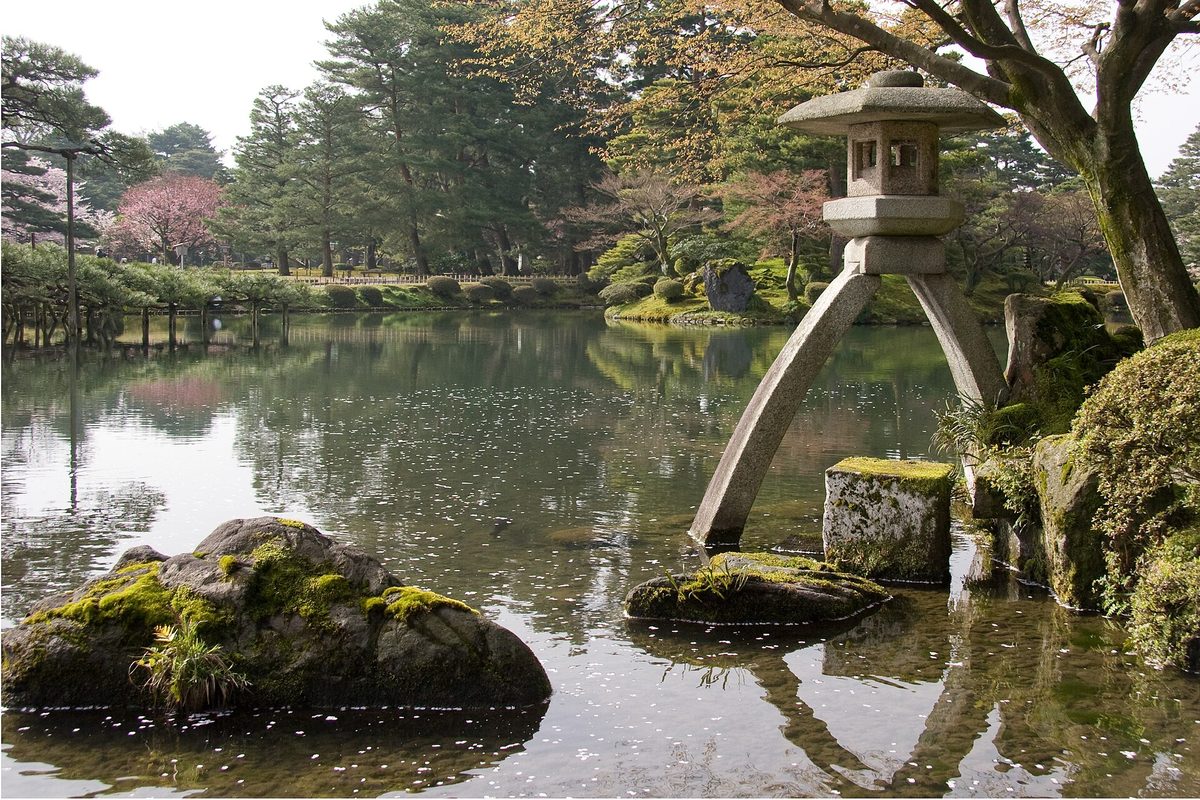
Kenrokuen is the landscape garden in the center of Kanazawa (Ishikawa) that Ishikawa Prefecture describes as one of the three most beautiful gardens in Japan. It's a Special Place of Scenic Beauty, shaped over many generations by the lords of the Kaga domain, and it's open every day of the year. This guide sets out the admission fees, the opening hours for each season, the free early-morning entry and free days, and the garden's own rules, all from the official pages of Ishikawa Prefecture's Kanazawa Castle and Kenrokuen management office.
Knowing the hours and the gates in advance makes it easier to see the garden at a quiet time, especially if you're only in town for a day or two.
- Adults 320 yen, ages 6 to 17 100 yen; ages 65 and over free with ID
- Open every day: 7:00 to 18:00 from March 1 to October 15, 8:00 to 17:00 from October 16 to the end of February
- Free early entry before opening time, through two gates only
- No smoking, no pets, no bikes or motorbikes; gravel paths can be slippery
The garden at a glance
The prefecture's English page explains that the name "Kenroku-en" means a garden combining the six attributes of a perfect garden. It's a strolling-style garden: instead of being viewed from one room, it's laid out with ponds, artificial hills, streams and teahouses so that you walk around it and stop along the way. The prefecture says the lords of the Kaga domain built it over a long time around one idea, a wish for long life and lasting prosperity, which is why there are islands in the ponds that stand for the mythical islands of the immortals.
Admission fees
| Who | Individual | Group (30 or more paying) |
|---|---|---|
| Adults (18 and over) | 320 yen | 250 yen |
| Children (6 to 17) | 100 yen | 80 yen |
Free admission, according to the management office:
- Ages 65 and over: show an ID that proves your age. The English page names a passport.
- People with disabilities: show a disability certificate. One carer also enters free. The Japanese page says the Mirairo ID app is accepted too.
You pay at the ticket window at the gate. The Japanese page lists credit cards (JCB, VISA, Mastercard, American Express, Diners Club and UnionPay), IC cards such as Suica and ICOCA, and other electronic money such as PayPay. The English page still says cash only, so having some cash on hand is the safe choice. Combined tickets such as the "Kenrokuen+1" ticket, which adds one more cultural facility in the city, are also sold.
Opening hours, and free early entry
The garden is open every day of the year. The Shigure-tei teahouse inside the garden has its own hours.
| Period | Opening hours | Last entry |
|---|---|---|
| March 1 to October 15 | 7:00 to 18:00 | 17:30 |
| October 16 to the end of February | 8:00 to 17:00 | 16:30 |
| Shigure-tei teahouse (closed December 29 to January 3) | 9:00 to 16:30 | 16:00 |
Before the paid hours start, Kenrokuen and Kanazawa Castle Park open free of charge early in the morning. For Kenrokuen, only the Renchi-mon and Zuishinzaka gates are open at that time, and you have to leave the garden 15 minutes before the paid opening time, so go in by the last entry time.
In the cherry blossom and autumn leaf seasons, the garden also holds evening light-ups. The dates are announced in the news section of the official site.
Free admission days
The management office opens the garden free of charge on these days, and announces the exact dates about a week ahead:
- the cherry blossom season (late March to early April)
- the Hyakumangoku Festival (around early June)
- Obon (August 14 to 16)
- Culture Day (November 3)
- the New Year holidays (December 31 to January 3)
On Saturdays and Sundays, admission is also free for residents of Ishikawa Prefecture who show an official ID.
The garden rules
The management office lists these rules and cautions:
- No smoking anywhere in the garden.
- No pets.
- No bicycles or motorbikes on the garden paths.
- Watch your step: the paths are paved with small gravel and some spots are slippery.
- Photo shoots and events need permission: activities in the park such as photo shoots or holding events need an application to the management office in advance.
The City of Kanazawa (Ishikawa)'s etiquette leaflet adds a request for gardens and parks in general: please don't climb the trees. The area around Kenrokuen and the 21st Century Museum of Contemporary Art is also one of the city's priority anti-littering areas, where littering and smoking on the street are banned; our guide to the Higashi Chaya District explains how its 1,000 yen fine works.
Wheelchairs and accessibility
Wheelchairs, including some electric ones, can be borrowed at the Katsurazaka, Renchi-mon, Kodatsuno and Zuishinzaka ticket gates. The office notes that the garden has slopes, so take care, and that the area around the Kodatsuno gate is flat and easier to use. A nursing space is available on request at the Ishikawa-mon information center in Kanazawa Castle Park.
Getting there
The prefecture lists three bus stops from Kanazawa Station, each close to a different gate:
- Kenroku-en shita: for the Katsurazaka gate (and the Ishikawa-mon gate of Kanazawa Castle Park).
- Hirosaka: for the Mayumizaka gate.
- Dewa-machi: for the Kodatsuno gate.
A taxi from Kanazawa Station takes about 10 minutes. Kanazawa Castle Park is right next to the garden, so it's easy to see both in one morning. For more ideas, see our Kanazawa (Ishikawa) destination page.
Last reviewed: October 13, 2026. Fees, hours and free days can change. Please check the official site before you go.
References
- Ishikawa Prefecture, Kanazawa Castle and Kenrokuen management office: Kenrokuen visitor information (Japanese)
- Kenrokuen official: Use Guidance (English)
- Kenrokuen official: Kenroku-en, Special Scenic Beauty (English)
- Kenrokuen official: What is Kenrokuen (Japanese)
- Kenrokuen official: Access Information (English)
- City of Kanazawa (Ishikawa): Manners and Etiquette Guide (English, PDF)
- City of Kanazawa (Ishikawa): Higashi Chaya District and Kenrokuen area as priority anti-littering areas (Japanese, PDF)