Miyajima (Hiroshima): Don't Feed the Deer, and How to Time the Tide at the Great Torii
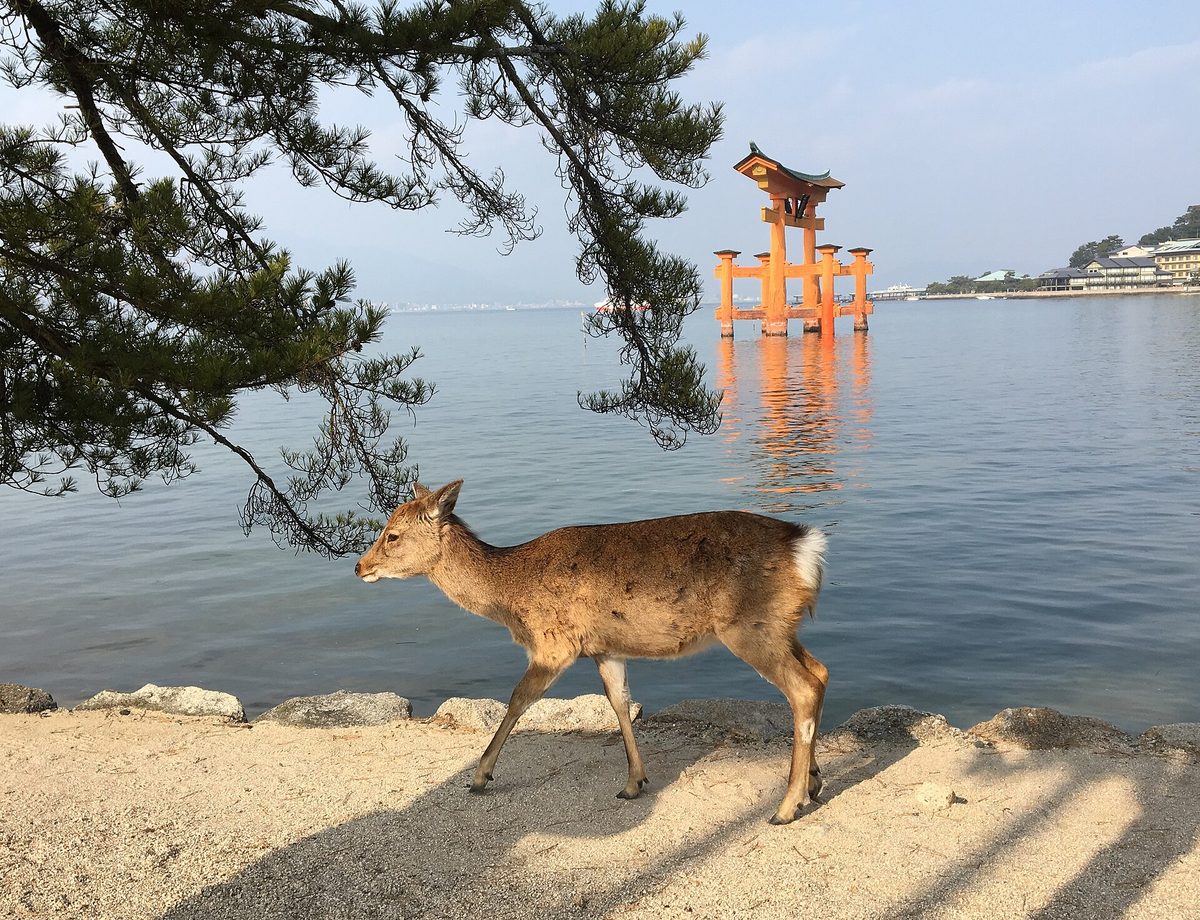
Two things surprise many first-time visitors to Miyajima (Hiroshima). First, the deer wander right up to you, but unlike in Nara (Nara), you are asked not to feed them at all. Second, the famous Great Torii of Itsukushima Shrine looks completely different depending on the tide: at high water it seems to float, and at low water you can walk out to it on the seabed. This guide explains the deer policy of Hatsukaichi City (Hiroshima), which the island belongs to, and how to read the official tide information (checked October 2026).
This page may contain affiliate links. If you buy through them, we may earn a commission at no extra cost to you.
- Why Miyajima (Hiroshima) asks you not to feed the deer
- How to keep your snacks, maps and bags safe
- Floating torii or walk-out torii: reading the tide table
- Shrine hours and fees
The deer: wild animals, not pets
Hatsukaichi City (Hiroshima) explains on its deer management page that the island's deer have long been cared for by residents. But feeding and other human involvement led the deer to settle in town in high numbers. That caused damage to residents' daily lives and harm to tourists, and the deer themselves suffered: foreign objects they swallowed built up in their stomachs and caused health problems such as poor nutrition.
The city now manages the deer as wild animals, aiming for people and deer to live side by side "at a certain distance." Hiroshima Prefecture describes the two pillars of the city's plan as no feeding and strict management of garbage, so that the deer return to the forest.
In practice:
- Don't give the deer any food, including bread, snacks or leftovers, even if a deer comes looking.
- Keep paper and plastic packed away. The city says foreign objects the deer swallowed have damaged their health.
- Take your trash with you until you find a proper bin or leave the island.
- Give them space. They are wild animals; enjoy them from a little distance.
Visiting Nara (Nara) too? The rules there are different: see how to feed and meet the deer of Nara (Nara) safely.
The Great Torii and the tide
Hatsukaichi City (Hiroshima)'s official website for Miyajima (Hiroshima) gives two simple numbers: the shrine looks as if it is floating when the tide level is above 250 cm, and you can walk to the foot of the Great Torii when it is below 100 cm.
The tide page of the Miyajima (Hiroshima) Tourist Association does the reading for you: pick a date and it shows the hours when you can walk to the torii and the hours when the shrine looks like it is floating. Some days have no walking window at all; on October 4, 2026, for example, the lowest tide was 101 cm. The association notes that its monthly tables are for the port of Hiroshima (Hiroshima), and that the tide at the island may come slightly earlier. The walking window is limited, so check the time before you head out and come back before the water rises.
Itsukushima Shrine: hours and fees
- Hours: from 6:30. Closing time changes with the season, from 17:00 in December to 18:00 from March 1 to October 14, according to the shrine's admission page. New Year has special hours.
- Fee to enter the shrine buildings: 300 yen for adults, 200 yen for high school students, 100 yen for elementary and junior high school students. A combined ticket with the Treasure Hall costs 500 yen for adults.
- Getting there: almost everyone arriving by boat pays the island's 100 yen visitor tax; see the Miyajima Visitor Tax explained.
Quick checklist
- Check the tide page for your date: floating, walk-out, or both.
- Pack snacks, maps and bags away before you meet the deer, and feed them nothing.
- Carry your trash, and keep a little distance from the animals.
Spending the morning in the city first? See visiting Peace Memorial Park in Hiroshima (Hiroshima).
Last reviewed: October 4, 2026. The deer policy is set by Hatsukaichi City (Hiroshima) under its deer management plan, and shrine hours change by season. Please confirm on the official pages below.
References
- Hatsukaichi City (Hiroshima): Deer management on Miyajima (Hiroshima) (Japanese)
- Hiroshima Prefecture: About the deer of the Miyajima (Hiroshima) area (Japanese)
- Official Miyajima (Hiroshima) website: Weather forecast and tide table (English)
- Miyajima (Hiroshima) Tourist Association: Tide info (English)
- Miyajima (Hiroshima) Tourist Association: Monthly tide table (Japanese)
- Itsukushima Shrine: Admission and hours (Japanese)