Kasuga Taisha in Nara (Nara): 3,000 Lanterns, the Mantoro Nights and the Special Worship Area
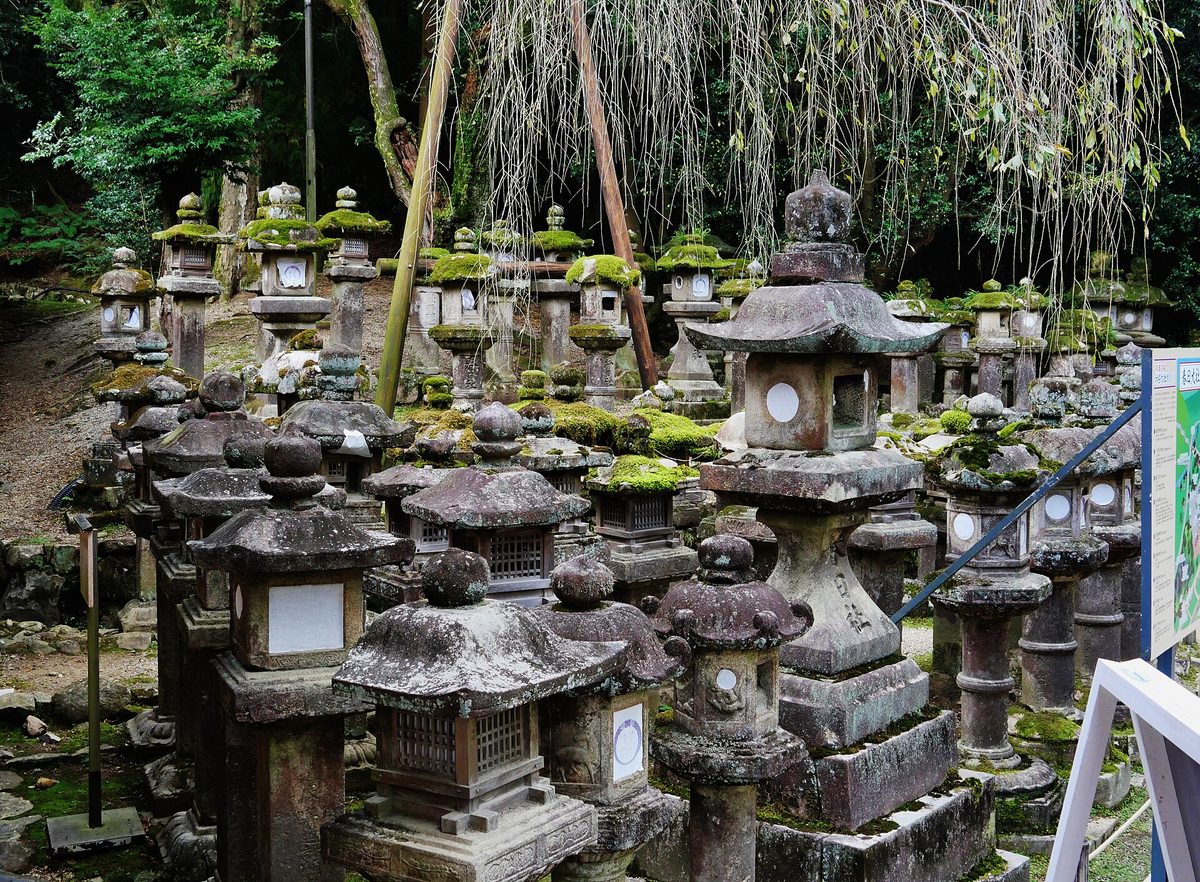
A walk to Kasuga Taisha takes you along a forest path lined with moss-covered stone lanterns, with deer, the shrine's sacred messengers, wandering between them. Inside the vermilion corridors hang hundreds of bronze lanterns. Twice a year, on the Mantoro nights, all of them are lit at once. This guide explains how the shrine is laid out for visitors, what the paid "special worship" area is, and when the lantern nights are, based on the shrine's own pages (checked October 2026).
This page may contain affiliate links. If you buy through them, we may earn a commission at no extra cost to you.
- The free area and the paid special worship area
- Opening hours, fees and closed days
- The Mantoro lantern nights in February and August
- Getting there, and a few house rules
About 3,000 lanterns
The shrine says its grounds hold about 2,000 stone lanterns and about 1,000 hanging lanterns, around 3,000 in all. The stone ones line the approach through the forest; many of the hanging bronze ones are in the corridors around the main sanctuary, which you see in the special worship area.
Free area, paid area
- General worship in front of the main sanctuary: 6:30 to 17:30 from March to October, 7:00 to 17:00 from November to February.
- Special worship of the main sanctuary: 700 yen, 9:00 to 16:00. This lets you pray in front of the Chumon gate and see the hanging lanterns of the corridors up close. It is closed from about March 8 to 13, from December 20 to January 7, and on Coming of Age Day in January, and it is closed in the morning on the 1st, 11th and 21st of every month and on a number of festival days. The shrine's information page lists them.
- Kasugataisha Museum: 10:00 to 17:00 (last admission 16:30), 700 yen for adults.
- Man'yo Botanical Garden: 9:00 to 16:30 (last admission 16:00), 700 yen for adults and 300 yen for children; closed on Tuesdays from June to March, except public holidays.
For how to bow and clap at a shrine, see our guide to shrines vs temples and how to pray.
The Mantoro lantern nights
Twice a year, the shrine lights all of its roughly 3,000 lanterns to pray that people's wishes come true. The shrine's event pages give the times:
- Setsubun Mantoro, on the day of Setsubun in early February (February 3 in 2026): court dance (bugaku) from about 17:30, all lanterns lit at about 18:00, gates close at about 20:30.
- Chugen Mantoro, August 14 and 15: lanterns lit at about 19:00, gates close at about 21:30. Bugaku is performed on the first night and kagura on the second.
- Entry to the inner corridor on these nights is 700 yen. You can also dedicate a lantern with an offering of 3,000 yen or more.
The shrine explains that lanterns were once lit every night for as long as the oil donated with them lasted. The custom stopped in the Meiji era and was revived for Setsubun in 1888 and for the August night in 1929. On Mantoro days, the daytime special worship hours are shortened, so check the shrine's notices before you go.
Getting there and house rules
- Bus: from JR Nara Station or Kintetsu Nara Station, take a bus bound for "Kasuga Taisha Honden"; the main sanctuary is about 3 minutes' walk from the stop. On foot it is about 25 minutes from Kintetsu Nara Station.
- No pets are allowed at the shrine.
- Deer: the deer on the approach are the same deer as in the rest of Nara Park. If you feed them, use only official deer crackers; see how to meet the deer of Nara (Nara) safely.
Quick checklist
- Want the corridor lanterns? Arrive between 9:00 and 16:00, and avoid the morning of the 1st, 11th and 21st.
- Bring 700 yen for the special worship area.
- Visiting in early February or mid-August? Check the Mantoro night on the shrine's calendar.
Combine it with Todaiji and the Great Buddha Hall, a walk away in the same park.
Last reviewed: October 4, 2026. Closed days for the special worship area change with festivals, and the shrine says times may change without notice. Please confirm on the official pages below.