Yamakasa in Hakata (Fukuoka): The July 1 to 15 Festival, the 4:59 a.m. Race and How to Watch
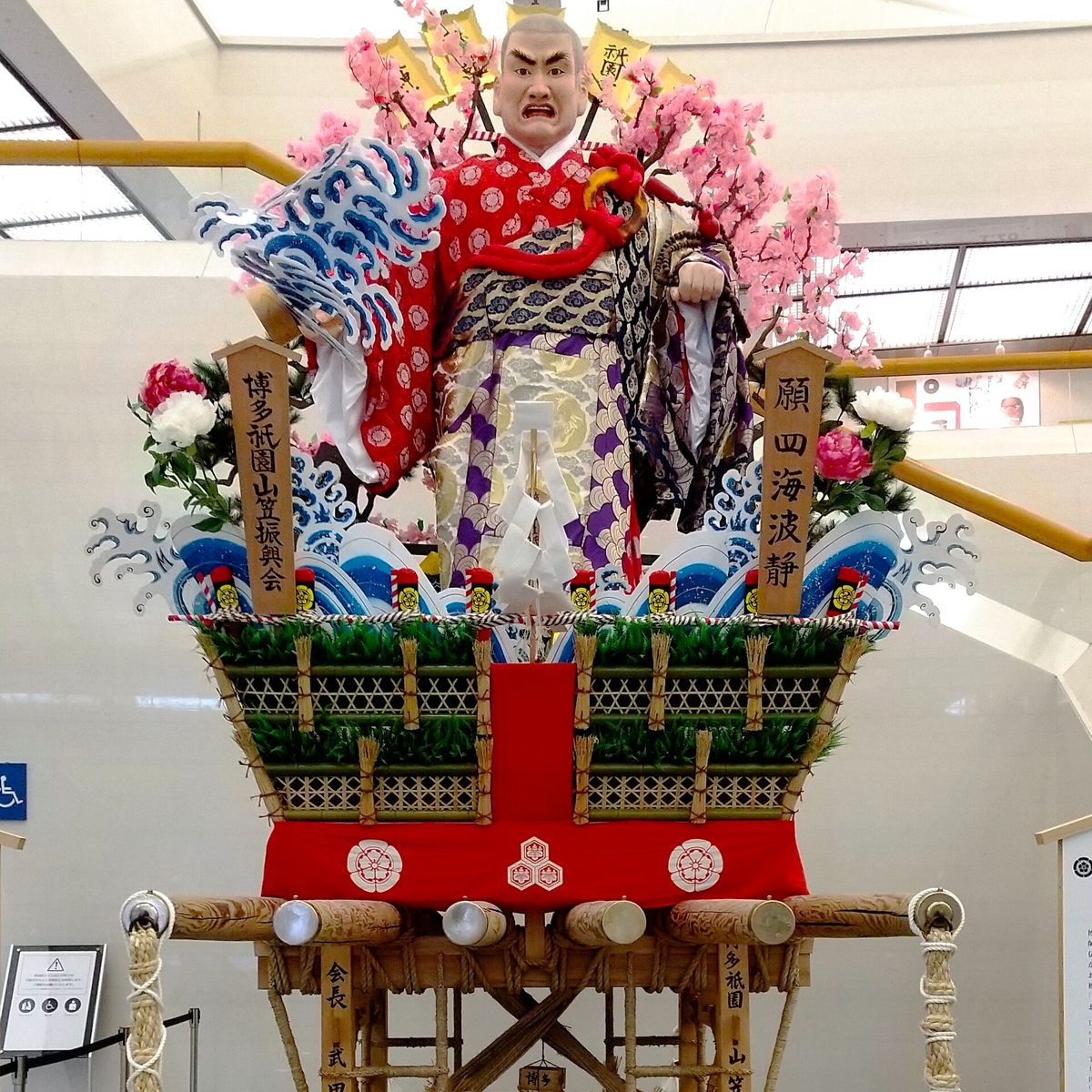
Every July, the streets of Hakata (Fukuoka) belong to the Yamakasa (officially Hakata Gion Yamakasa), a festival offered to Kushida Shrine for more than 780 years. Towering decorated floats stand around the city for two weeks, and teams of men in short coats and loincloths run one-ton floats through the streets, ending in a timed race that starts at 4:59 in the morning on July 15. This guide explains the schedule and how to watch safely and politely, using Fukuoka City (Fukuoka)'s official newsletter and the festival association.
This page may contain affiliate links. If you buy through them, we may earn a commission at no extra cost to you.
- Two kinds of float: the ones you look at, and the ones that run
- The schedule from July 1 to 15
- Where to watch the final race, and what the city asks of spectators
- Seats at Kushida Shrine
Two kinds of float
According to Fukuoka City (Fukuoka), the Yamakasa is a ritual of Kushida Shrine, the guardian shrine of Hakata (Fukuoka), held to pray for good health. It was registered as UNESCO Intangible Cultural Heritage in 2016.
- Display floats (kazari-yama): more than ten meters tall and made by doll makers, they go on show at 13 places around the city from the morning of July 1 until the early hours of July 15, when they are taken apart. The front, which faces Kushida Shrine, usually shows brave traditional scenes such as famous warriors; the back often shows familiar subjects, including popular anime.
- Running floats (kaki-yama): carried by teams from seven districts called nagare. Each weighs about one ton, and from July 10 they run through the streets.
The schedule
The city's newsletters for 2025 and 2026 show the same dates in both years. In 2026 the program was:
- July 1: display floats open to the public; in the evening, the year's lead district fetches purifying sand from Hakozaki beach.
- July 9: all districts fetch purifying sand (evening).
- July 10: each district runs its float in its own area (4 to 6 p.m.).
- July 11: morning runs (5 to 6 a.m.) and runs into other districts (afternoon).
- July 12: rehearsal race (Oiyama narashi), from 3:59 p.m., about 4 km from Kushida Shrine to Narayamachi.
- July 13: group parade (Shudan yamamise), from 3:30 p.m., 2.1 km from the Gofukumachi intersection to Fukuoka City Hall.
- July 14: district runs (around 4 to 5 p.m.).
- July 15: the final race (Oiyama), from 4:59 a.m., about 5 km from Kushida Shrine to Suzaki-machi.
Times are when the floats set off and differ by district. Check the festival association's site for the year you visit.
The final race at 4:59 a.m.
On July 15, at the beat of a drum at 4:59 a.m., the first float of the year runs into the grounds of Kushida Shrine. Only this first team is allowed to stop and sing the festival's celebration song in front of the shrine. Then it charges out into the streets, and the other six districts and a "running display float" follow at five-minute intervals, shouting "Oissa!". The festival association adds that both the run into the shrine grounds and the whole course are timed, and that a Noh play is performed at the shrine from 6 a.m.
Where to watch, and what the city asks
The city's newsletter suggests four places along the final race course:
To let everyone watch safely, the city asks spectators:
- not to sit down on sidewalks;
- not to open umbrellas in crowded places;
- not to step onto private property or into the roadway.
It warns that the area around Kushida Shrine, the start of the final race, gets especially crowded on the 15th. The floats move fast and the runners are concentrating hard, so give them space, follow the instructions of staff and police, and keep children close.
Seats at Kushida Shrine
Tiered seats (sajiki) are set up inside Kushida Shrine for the rehearsal race on July 12 and the final race on July 15. The festival association's Q&A says these seats can't be reserved and, in 2023, were sold only in person on one day (June 26 at 9:00), at 7,000 yen for July 15 and 3,000 yen for July 12. For the current year, ask Kushida Shrine directly (phone 092-291-2951, Japanese). Watching from the street costs nothing.
Plan your Yamakasa
- From July 1, walk around the display floats; look at both sides.
- For the final race, stay within walking distance or check early transport the day before.
- Pick a spot from the city's list; Taihaku-dori is easiest with children.
- No sitting on sidewalks, no umbrellas in crowds, stay off the road.
- Bring something to drink; it's midsummer.
After the race, rest over a good breakfast, or that evening try a yatai food stall. Arriving by plane or ferry? See getting into the city. Visiting a shrine? Read how to pray at a shrine. More on our Fukuoka (Fukuoka) destination page.
Last reviewed: October 4, 2026. The schedule above is for 2026. Times can change each year; check the official pages below for your year.