Bar Scams and Touts in Tokyo (Tokyo) Nightlife: How They Work, How to Say No
Tokyo (Tokyo) is one of the safest big cities in the world to go out at night, and most bars and izakaya are honest, friendly places. There is one trick that police keep warning visitors about: a friendly stranger on the street, often speaking English, who offers to take you to a bar with cheap drinks. In some of those bars the bill turns out to be huge, or a card is charged while the customer is too drunk to notice. It happens to careful, sensible people too. This guide explains how it usually goes, what the local rules say, and the one habit that avoids almost all of it: say "No thank you" and keep walking.
- Touts in Kabukicho (Tokyo) often approach visitors in English
- How a tout-and-bar scam usually goes
- Touting breaks Tokyo and Shinjuku City (Tokyo) rules; you don't
- The same advice in Osaka (Osaka) and Kyoto (Kyoto)
- What to do if a bill looks wrong or your card was misused
You don't need a tout to find a good bar or restaurant. Pick the place yourself before you go out. One option is Rakuten GURUNAVI, one of Japan's big restaurant guides, which has its site in English, Simplified Chinese, Traditional Chinese and Korean. You can search by area and type of food, and restaurant pages show details such as the average price, opening hours, the address with a map, accepted payment methods and whether there is an English menu. Some restaurants can be booked online; check the cancellation conditions on the page when you book.
Why English-speaking touts are the warning sign
The Tokyo Metropolitan Police Department's page for visitors says that street touts and rip-offs targeting foreigners are on the rise: some lead you to partner bars and, while you are drunk, charge excessive fees or use your credit card without your knowledge. Its advice is short: do not follow street touts under any circumstance. The police also note that in nightlife districts you often find non-Japanese touts, or people who approach men, inviting passers-by into a particular place.
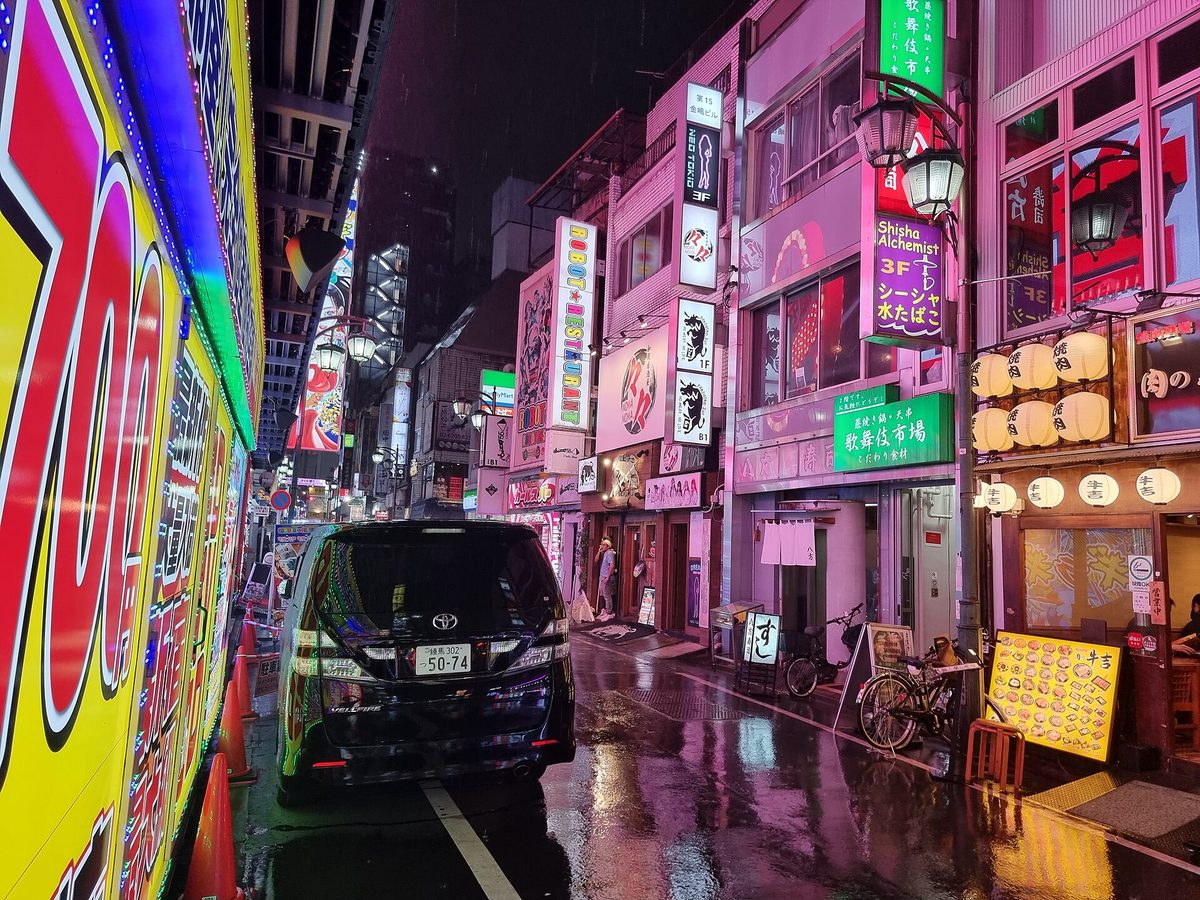
In practice, that often means a friendly person who starts a conversation in English in Kabukicho (Tokyo), the big entertainment district of Shinjuku (Tokyo). In July 2026, police in Tokyo (Tokyo) arrested a man accused of touting there by approaching passers-by with lines like "Don't be scared. I love you." News reports said police in Shinjuku (Tokyo) had received 91 reports from January to June 2026 from people who followed suspected touts and were then charged excessive amounts, with losses of about 99 million yen, many of them visitors from overseas. Being greeted in English is pleasant, which is exactly why it works; treat it as a reason to keep walking, not to stop.
How the scam usually goes
The police describe a few versions of the same pattern on their crime prevention tips page:
- The street tout. Someone approaches you and takes you to "a good bar." After a very strong first drink, the customer falls asleep and later finds the wallet empty and the credit card misused.
- The dating app match. Someone you met on an app suggests a place they know. After a few hours they quietly leave, and a large bill arrives.
- The "special" offer. A tout asks for a "deposit" or advance payment for a promised service that never comes, then demands more money.
The same warnings cover other nightlife areas too. The police name Kabukicho (Tokyo), Ikebukuro (Tokyo), Shimbashi (Tokyo), Shibuya (Tokyo) and Ueno (Tokyo), among others, and the Australian Embassy's warning on drink spiking also mentions Roppongi (Tokyo).
It's the tout who breaks the rules
You have done nothing wrong by being approached. In Tokyo (Tokyo), the rules are aimed at the touts:
- The Tokyo Metropolitan Government's nuisance prevention ordinance, Article 7 (Japanese; the Metropolitan Government also publishes an English translation), bans persistent touting in public places, such as grabbing someone's body or clothes, blocking their way or following them around, as well as certain kinds of touting for adult entertainment. The police say aggressive touting violates this ordinance and the law on entertainment businesses (Japanese).
- Shinjuku City (Tokyo) goes further. Its anti-touting ordinance (Japanese, PDF) bans touting for izakaya, karaoke, hostess and host clubs and similar places in public places across the city, and shops are not allowed to let in customers brought by touts. In the designated area around Shinjuku Station, people who keep breaking the rule after a warning can be named and fined up to 50,000 yen.
Shinjuku City (Tokyo) also explains that calling out "irasshai" (welcome) in front of one's own shop is allowed. So a staff member at the door of a restaurant is normal; someone who picks you out on the street and walks you to another place is the warning sign.
How to say no, and enjoy the night
- Say "No thank you" and keep walking. No need to explain or be polite for long. Stopping to chat or arguing only gives a tout more time.
- Choose your bar yourself, before you go out or by walking in somewhere you picked. Avoid places someone on the street, or someone you just met online, takes you to.
- Check prices before you order, including any seat or service charge, and don't order more drinks than you can keep track of.
- Keep your drink in sight, and stay with your friends. If you suddenly feel much drunker than you should, leave and ask for help.
- Keep your card in your hand when you pay, and check the amount before you tap, insert or sign.
The same advice in Osaka (Osaka) and Kyoto (Kyoto)
Touts aren't only a Tokyo (Tokyo) problem, and the answer is the same everywhere: "No thank you," and keep walking. Both cities have their own rules against touting, and again, it's the tout who breaks them.
- Osaka (Osaka). Osaka City (Osaka)'s anti-touting ordinance (Japanese) bans touting anywhere in public places in the city when someone has already said no, and blocking or following people to tout them. In designated streets of the Kita area around Umeda (Osaka) and the Minami area around Namba (Osaka) and Dotonbori (Osaka), touting of any kind is banned in principle, and people who ignore guidance and orders can be fined up to 50,000 yen. The city says it also sends patrol staff to Kitashinchi (Osaka) and Kyobashi (Osaka). The Australian Embassy's drink-spiking warning names Shinsaibashi (Osaka), Namba (Osaka) and Dotonbori (Osaka) as places where such cases occur.
- Kyoto (Kyoto). Kyoto City (Kyoto)'s anti-touting ordinance (Japanese), in force since April 2015, bans touting in designated areas: the Gion (Kyoto) and Kawaramachi (Kyoto) area, around Higashinotoin-Nishikikoji, and the north side of Kyoto Station. People who keep touting after an order can be fined up to 50,000 yen and named. The city has also put up warning signs (Japanese, PDF) in the Kiyamachi (Kyoto) nightlife streets.
If a bill looks wrong, or your card was misused
- If you are threatened or not allowed to leave, call 110 (police) and say "English." The police page for visitors says not to hesitate to dial 110 for any crime. If you feel unwell, call 119 for an ambulance.
- If it isn't an emergency, you can talk to the police on #9110; the police say English is available. For help in English, Chinese or Korean at any hour, call the Japan Visitor Hotline (JNTO) at 050-3816-2787.
- If your card was charged without your consent, contact your card company right away and consider blocking the card. The Australian Embassy also suggests contacting your travel insurer and asking what documents a claim needs.
- Reporting it. The Australian Embassy notes that a report about drink spiking or fraud is made in person at the police station for the area where it happened (a koban, or police box, is not a police station), and that police may give you a consultation number.
One practical point from the same embassy page: a data-only SIM can't call Japanese emergency numbers. Keep your home line on roaming, or have a plan with a phone number. Our guide to eSIM or pocket Wi-Fi explains the options.
Being careful about touts doesn't mean being nervous about Tokyo (Tokyo) at night. Pick your own place, keep your drink and card close, and the city's nightlife is a lot of fun. For other tricks that look official, see fake 'official' sites and fake police.
Last reviewed: October 4, 2026. Police warnings are updated often; please check the official pages below.
References
- Tokyo Metropolitan Police Department: For Visitors to Tokyo (Tokyo)
- Tokyo Metropolitan Police Department: Crimes against foreigners in entertainment and nightlife districts
- Tokyo Metropolitan Police Department: Crime prevention tips in entertainment and nightlife districts
- Tokyo Metropolitan Police Department: Main problems in nightlife districts (Japanese)
- Tokyo Metropolitan Government: Nuisance prevention ordinance, full text (Japanese)
- Tokyo Metropolitan Government: Ordinance on the Prevention of Violent Delinquent Behavior that Causes Considerable Public Nuisance (English translation)
- Shinjuku City (Tokyo): Anti-touting ordinance, revised (Japanese, PDF)
- Shinjuku City (Tokyo): Guide to the anti-touting ordinance (Japanese, PDF)
- Osaka City (Osaka): Outline of the anti-touting ordinance (Japanese)
- Osaka City (Osaka): Anti-touting measures and patrols (Japanese)
- Kyoto City (Kyoto): Anti-touting ordinance and no-touting areas (Japanese)
- Kyoto City (Kyoto): Anti-touting council materials, fiscal 2022 (Japanese, PDF)
- Australian Embassy, Tokyo (Tokyo): Drink Spiking and Credit Card Fraud in Japan
- JNTO: Japan Visitor Hotline
- Rakuten GURUNAVI: restaurant guide (English)
- Japan Today (SoraNews24, from Kyodo): Man arrested in Kabukicho (Tokyo) over touting (July 15, 2026)