Driving a Rental Car in Okinawa: Licenses, Bus Lanes, Car-Free Sundays and Wet Roads
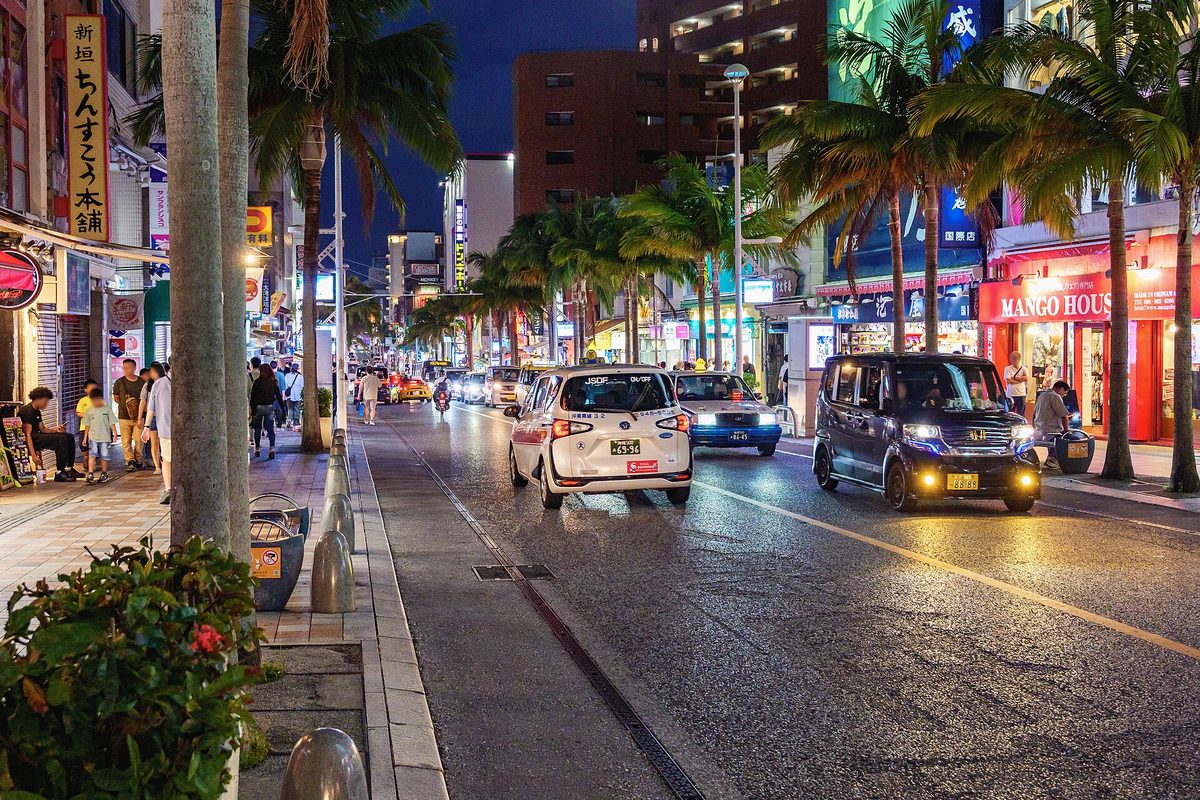
Many visitors explore Okinawa by rental car, and it's a great way to reach beaches and the north of the main island. A few local rules surprise first-timers, though: lanes that turn bus-only at rush hour, a main street that closes to cars on Sunday afternoons, and roads that get slippery in the rain. This guide sets out what the National Police Agency, the Okinawa Prefectural Police and the Okinawa Convention & Visitors Bureau say, so you can plan a relaxed drive.
This page may contain affiliate links. If you buy through them, we may earn a commission at no extra cost to you.
- Which license lets you drive in Japan
- Weekday bus lanes in and around Naha (Okinawa)
- Kokusai-dori on Sundays
- Rain, wildlife, the expressway and other local points
Please read this first. This is a summary of official information (checked October 2026), not legal advice. Road signs on site always take priority. In an accident, call 110 (police), and 119 if anyone is hurt.
First: can you drive in Japan?
According to the National Police Agency, you need one of these to drive in Japan:
- a Japanese driver's license;
- an International Driving Permit (IDP) under the 1949 Geneva Convention (permits in other formats, or from countries not party to that convention, aren't valid); or
- a driver's license from Switzerland, Germany, France, Belgium, Monaco or Taiwan (as of April 1, 2026), with a Japanese translation prepared by an organization designated by Japan, such as the issuing authority or its consulate.
With an IDP or a foreign license plus translation, you can drive for one year from the day you land in Japan, or until the permit or license expires, whichever comes first. Rental companies check these documents at the counter, and some have their own conditions; the Okinawa Convention & Visitors Bureau mentions, for example, that some require you to have held a license for at least six months.
Weekday bus lanes around Naha (Okinawa)
To keep buses running on time, the Okinawa Prefectural Police run bus-lane rules on main roads in Naha (Okinawa) and nearby cities at rush hour. There are two kinds, with different signs:
- Bus-only lane: on multi-lane roads such as Route 58, the first lane next to the sidewalk becomes bus-only. Buses, taxis and motorcycles may use it; other cars must use the other lanes.
- Bus-only road: on roads with one lane each way, such as Kokusai-dori, the road itself becomes bus-only. Buses, taxis, motorcycles and permitted vehicles may use it; other cars can't enter.
The police map lists the hours as 7:30 to 9:00 and 17:30 to 19:00. The rules don't apply on Saturdays, Sundays, public holidays, January 2 and 3, or when route buses are suspended, for example in a typhoon. Rental cars are not exempt. The police publish the map of covered roads in English, Korean and Chinese too.
A tip from the same rule: if the lane next to the sidewalk on Route 58 looks strangely empty during rush hour while the other lanes are jammed, it's probably the bus lane. Check the signs above and beside the road.
Kokusai-dori on Sunday afternoons
On Sundays from 12:00 to 18:00, about 1,300 meters of Kokusai-dori, between the Kencho-kita-guchi intersection and the Saion-bashi intersection (by Makishi monorail station), becomes a pedestrian-priority "transit mall", and ordinary cars can't enter. The Kokusai-dori shopping street association says it is cancelled in rain, and posts other cancellations on its home page. Side streets can be driven up to Kokusai-dori, so you can use nearby parking. Walking it is the easier way to enjoy the street anyway.
Rain, wildlife and other local points
The Okinawa Convention & Visitors Bureau lists several points for drivers new to the island:
- Wet roads are slippery. Salt from the sea air and limestone in the asphalt are said to make Okinawa's roads more slippery than elsewhere, especially in rain. Leave extra distance.
- Traffic jams are common on Route 58, Route 330 and the "Pipeline" road in Urasoe (Okinawa), especially at rush hour. Allow extra time, particularly for returning the car before a flight.
- Center lines that move: in some sections in Naha (Okinawa), the center line shifts with traffic. Follow the signals over the lanes.
- Wildlife: in Yanbaru in the north of the main island and on Iriomote Island, rare animals such as the Okinawa rail and the Iriomote cat are hit by cars. Drive slowly where the signs warn.
- "Y" plates: cars with letter-only plates belong to people connected with the U.S. forces. Keep a good distance; if an accident happens, the procedures can be more complicated.
- Expressway: the speed limit on the Okinawa Expressway is 80 km/h, and the right lane is for overtaking.
- Insurance: consider the optional coverage, and register everyone who will drive.
If any of this makes you uneasy, the bureau itself suggests a car-free trip using public transport. That's a perfectly good choice in central Naha (Okinawa).
Checklist before you pick up the car
- Bring a Geneva-format IDP, or your license plus the official Japanese translation.
- Check the bus-lane hours on your route (weekdays 7:30 to 9:00 and 17:30 to 19:00).
- On Sunday afternoons, skip Kokusai-dori by car.
- Drive gently in rain and in the north; 80 km/h on the expressway.
- Any accident, even a small one: stop, call 110, and contact the rental company.
Heading to the beach? Read Okinawa's sea: box jellyfish and snorkeling safely. Visiting the castle? See Shuri Castle's reopened main hall and timed tickets. More on our Okinawa destination page.
Last reviewed: October 4, 2026. Traffic rules and the Sunday street closure can change. Please check the official pages below.
References
- National Police Agency: How to Drive in Japan, for holders of foreign driver's licenses (English, PDF)
- Okinawa Prefectural Police: Bus lane regulations, with maps in English, Korean and Chinese (Japanese)
- Okinawa Prefectural Police: Bus lane map (Japanese, PDF)
- Kokusai-dori Shopping Street Association, Naha (Okinawa): Transit mall (English)
- Okinawa Convention & Visitors Bureau: Points to note when driving a rental car in Okinawa (Japanese)