Shirakawa-go (Gifu): The Village Rules, the Reservation-Only Winter Light-Up, and the Bus from Takayama (Gifu)
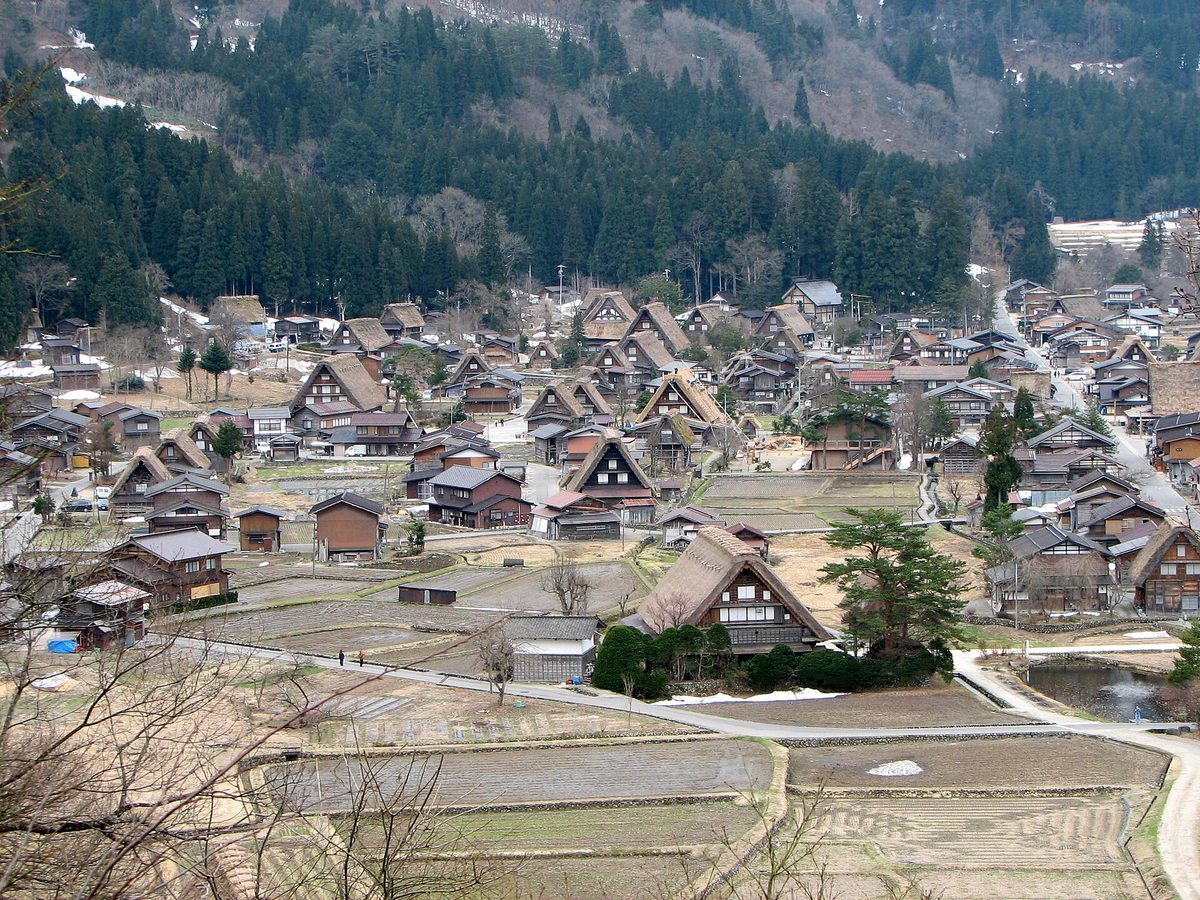
Shirakawa-go (Gifu) is the mountain village of steep thatched gassho-zukuri houses, and many of those houses are still homes. The village asks visitors to use the official parking lot, take their trash home, keep off private land, leave the drone in the bag and leave before dark. In winter, the famous evening light-up is now reservation only: without a ticket booked ahead, you can't get into the village that evening. This guide sets out those rules, the 2027 light-up dates and how to book, and how to get there by bus from Takayama (Gifu), all checked on the official pages of Shirakawa Village, the Shirakawa-go Tourist Association, Takayama City Hall and Nohi Bus.
A day in Shirakawa-go takes a little planning, with a bus to book, a parking lot that closes early and a winter event you have to book ahead. Once you know the few rules, the day is easy to enjoy.
This page may contain affiliate links. If you buy through them, we may earn a commission at no extra cost to you.
- The houses are homes: stay on the streets and off private land
- No bins, no drones, no fireworks, smoking only in set spots, no night sightseeing
- Bus from Takayama (Gifu): about 50 minutes, and most services need a seat reservation
- The winter light-up (January 2027): admission only with a ticket booked ahead
A village where people still live
Shirakawa-go was registered as a UNESCO World Heritage Site in 1995, together with Gokayama in Toyama Prefecture, and the village had already been selected as an important preservation district for groups of traditional buildings in 1976. Shirakawa Village says that nearly 500 people still live in the gassho-zukuri village, and that the number of visitors each year is about 1,400 times the number of people who live in Shirakawa. To protect daily life there, the village has picked out the manners it most wants visitors to follow:
The houses are homes
Many of the gassho-zukuri houses are private homes. Shirakawa Village's manga guide to manners asks visitors not to walk into the grounds of a house while looking for a good photo, and to take care with selfie sticks. Take your photos from the street, and if you'd like to see inside a gassho-zukuri house, go into one that is clearly open to visitors.
Trash, smoking and drones
- Trash: there are no bins in the village, so carry a bag and take everything home with you. The manga guide also asks you to open food and drinks from the shops only after you've paid for them.
- Smoking and fireworks: the village asks people never to drop cigarette butts or set off fireworks, and to smoke only in the set smoking spots, at the parking lot or at three places in the village.
- Drones: drone use is not allowed in the village. For the view from above, the village points visitors to the observation deck, with a shuttle bus that costs 300 yen one way. For Japan's drone laws in general, see flying a drone in Japan.
Visiting hours and parking
The village doesn't take visitors at night, except for guests staying overnight. There is no parking inside the gassho-zukuri village, so drivers use the Seseragi Park parking lot, a 2-minute walk away across a suspension bridge. According to the Shirakawa-go Tourist Association:
| Seseragi Park parking lot | On the official page |
|---|---|
| Hours | 8:00 to 17:00 (last entry 16:30) |
| Ordinary car | 2,000 yen |
| Motorcycle | 500 yen |
| Bus or microbus | 10,000 yen |
The lot has room for about 200 cars, and when it fills up, other lots are opened. Shirakawa Village says 30% of the parking fee goes to protecting the village. Please don't park on private land or stop on the road. If you come on a chartered tour bus, note that bus parking needs an advance reservation from December 1, 2026.
Getting there by bus from Takayama (Gifu)
The Nohi Bus and Gifu Bus express buses run from the Nohi Bus Center in Takayama (Gifu) to the Shirakawa-go Bus Terminal, a 1-minute walk from the village. Nohi Bus's English page says:
- Time and fare: about 50 minutes, 2,800 yen one way. There are 16 round-trip services a day on the line.
- Reservations: the timetable marks the services that need a seat reservation. Book ahead online through Japan Bus Online, or call Nohi Bus at (0577)32-1688 (9 a.m. to 5 p.m.).
- Days: some services don't run on Saturdays, Sundays, national holidays, August 13 to 15 or December 29 to January 3, so check the timetable for your date.
- Children and bags: children under 6 ride free, but a child who takes a seat pays the child fare. Space for big luggage is limited, and mobile batteries must stay with you, not in the luggage compartment.
The Shirakawa-go Tourist Association gives the bus times from Kanazawa (Ishikawa), Toyama (Toyama) and Nagoya (Aichi) shown above. On the same Nohi Bus line, Takayama (Gifu) to Kanazawa (Ishikawa) is 4,200 yen one way. If you're coming by car in winter, read the light-up section below: on light-up days, every vehicle needs a parking reservation.
The winter light-up: reservation only
On a few winter evenings, the houses are lit up in the snow. The Shirakawa-go Tourist Association has announced the dates for 2027: January 11 (a public holiday), January 17, January 24 and January 31, 2027, from 17:30 to 19:30, in the Ogimachi area. These are the key rules:
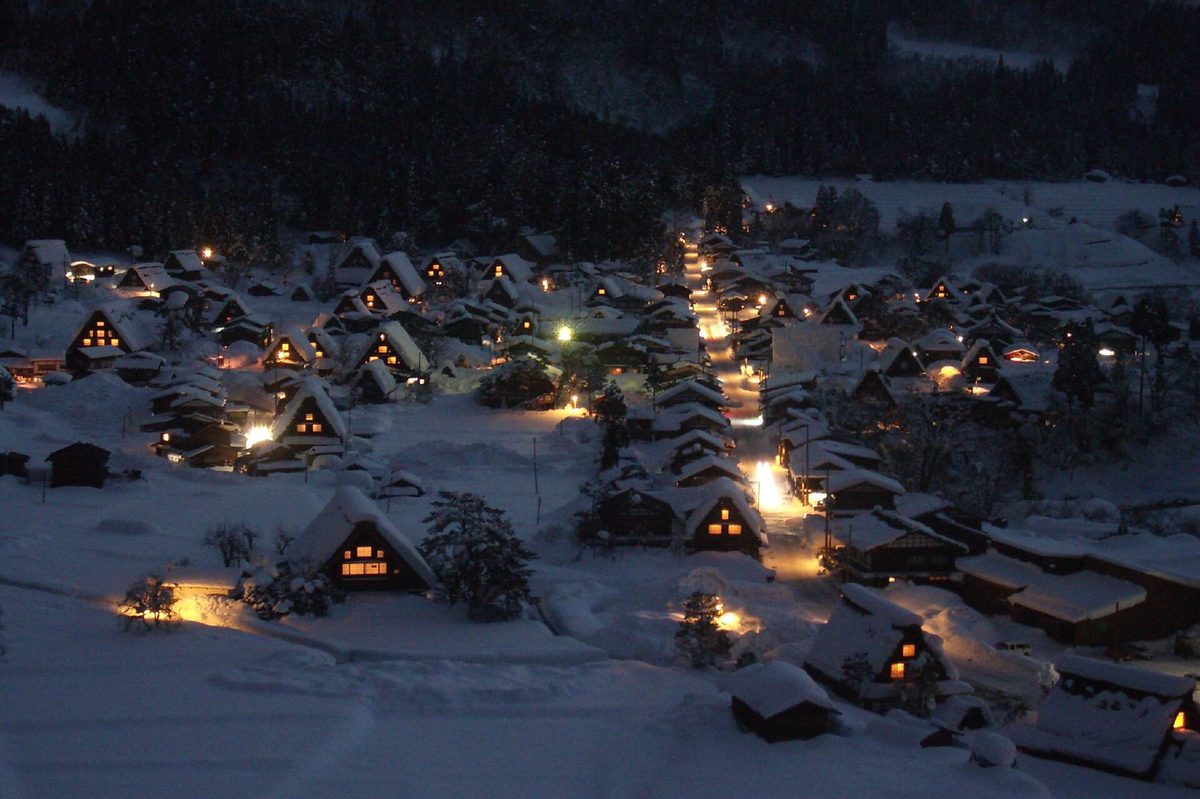
- Advance reservation is required, and admission tickets are not sold on the day.
- From 15:30, an entrance gate is set up, and visitors without an admission ticket can't enter Shirakawa-go. If you come for the daytime by regular bus, take a bus that arrives by 15:20.
- The observation deck is only for people staying overnight in Shirakawa Village and people on the official bus tours. Tripods aren't allowed on the deck, and neither are pets.
- Drone filming is strictly prohibited. Cars must have studless winter tires, and you can't stop, park or drop people off on the road.
- People who break the rules can be banned from the light-up for good.
There are several ways in, and each has its own booking window:
| How you go | Observation deck | How and when to book |
|---|---|---|
| Stay overnight in the village | Included | Lottery: apply October 1 to 31, 2026; results on November 10, 2026 |
| An official bus tour (for example Nohi Bus from Takayama (Gifu)) | Some courses | Sales start at 14:00 on October 13, October 19, October 26 and November 2, 2026, one date for each light-up day |
| Your own car or a taxi (parking reservation at the Midashima lot) | Not included | Round 1 from September 10, 2026, 13:00; round 2 from December 1, 2026, 13:00 |
| A travel agency bus tour | Not included | Details posted on December 2, 2026, 13:00 |
The parking reservation is per car, for up to 10 people. In round 1 it costs 6,000 yen for 1 to 5 people and 9,000 yen for 6 to 10 people; in round 2, 7,000 yen and 10,000 yen. Nohi Bus's light-up tours all leave from the Nohi Bus Center in Takayama (Gifu) and are booked only on its website (no phone bookings, up to 6 people per booking). Course A costs 13,000 yen, course B 16,000 yen and course C 14,000 yen, and only course B includes the observation deck. The event can be cancelled if a severe cold wave is expected to disrupt transport.
Takayama (Gifu)'s old town: a few short notes
Takayama (Gifu)'s Sanmachi area is a preservation district of old wooden townhouses, sake breweries with balls of cedar leaves hanging at the door, and small shops and eateries. Takayama City Hall's English manners page asks for a few things:
- Smoking: to protect the wooden buildings, smoking is only allowed in designated areas.
- No littering: dropping cigarette butts or empty cans is prohibited everywhere in the city. Rangers patrol, and anyone who doesn't follow a ranger's instructions is charged a 1,000 yen fine.
- Roads: don't step into the road to take photos, and cross safely.
Staying the night? Since October 1, 2025, Takayama (Gifu) charges an accommodation tax of 100 yen, 200 yen or 300 yen per person per night, depending on the room rate (under 10,000 yen, 10,000 yen to under 30,000 yen, and 30,000 yen or more). Children are exempt until the first March 31 after their 12th birthday. For more on the rules around Japan, see trash and bins in Japan and smoking rules in Japan, and our Takayama & Shirakawa-go (Gifu) destination page.
Planning your day
Book your bus seat first, aim to arrive in the morning, and plan to leave before the parking lot closes at 17:00. If you'd rather leave the planning to someone else, a guided day tour takes care of the buses.
Last reviewed: October 13, 2026. Fares, timetables, parking fees and the light-up rules can change. Please check the official pages below before you go.
References
- Shirakawa Village: Shirakawa-go Responsible Tourism (Japanese)
- Shirakawa Village: A Manga Guide to Manners in Shirakawa-go (Japanese)
- Shirakawa-go Tourist Association: Access and parking (English)
- Shirakawa-go Tourist Association: The 41st Shirakawa-go Light-Up (2027) (English)
- Shirakawa-go Tourist Association: Bus parking reservation system (English)
- Shirakawa-go Tourist Association: About Shirakawa-go (English)
- Nohi Bus: Shirakawa-go express bus line (English)
- Nohi Bus: Shirakawa-go Light-up Bus Tour 2027 (English)
- HIDA TAKAYAMA, Takayama City Hall: Manners (English)
- HIDA TAKAYAMA: Sanmachi Traditional Buildings Preservation Area (English)
- HIDA TAKAYAMA: Accommodation tax (English)