100-Yen Shops in Japan: DAISO, Seria and Can★Do, What Things Really Cost, and Tax-Free
Quick answer
- Most goods at DAISO, Seria and Can★Do are 100 yen before tax, so you pay 110 yen at the register (10% tax).
- Food and non-alcoholic drinks are taxed at 8%, so a 100-yen snack is 108 yen. Some lines, such as DAISO's THREEPPY and Standard Products, center on 300 yen.
- Payment methods and tax-free service differ by store, so check the store finder or ask at the register. Tax-free needs 5,000 yen or more (before tax) per store per day.
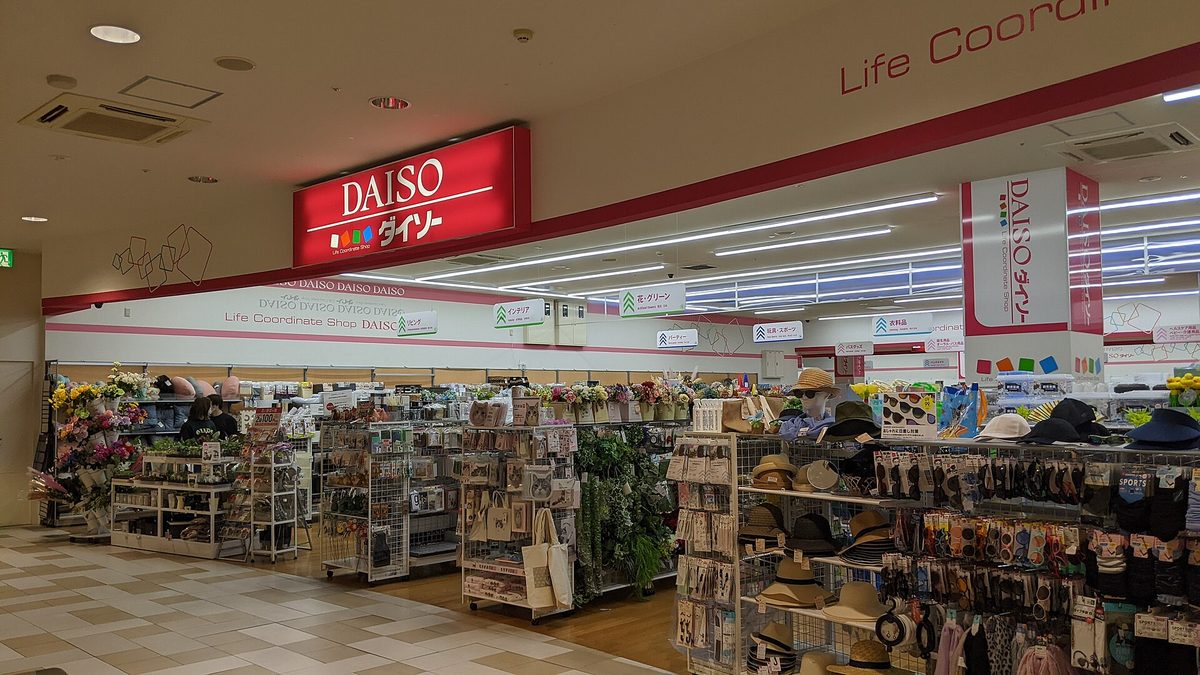
A 100-yen shop (hyaku-en shop, often shortened to "hyakkin") sells most of its goods at a single price of 100 yen before tax. At the register you pay consumption tax on top, so a standard item costs 110 yen (10% tax), while food and non-alcoholic drinks are taxed at 8%, so a 100-yen snack comes to 108 yen. DAISO, Seria and Can★Do are the chains this guide covers, and some of their goods cost more than 100 yen, so always check the tag.
- Why the "100-yen" item costs 110 yen at the register
- How DAISO, Seria and Can★Do differ, from their own company pages
- DAISO's sister brands THREEPPY and Standard Products, where many items start at 300 yen
- Tax-free shopping, paying by card or phone, and returns
What "100 yen" means at the register
Japan has two consumption tax rates. Japan's National Tax Agency lists the standard rate as 10% and the reduced rate as 8%. The reduced rate covers food and drinks sold to take away, but not alcohol and not eating in at a restaurant. So the same "100-yen" price ends up as 110 yen for a sponge or a notebook, and 108 yen for a bag of candy or a bottle of tea.
Price tags show the tax-included price. The NTA explains that shops must display prices including tax, and that a tag may also show the price before tax next to it. So a tag might read 110 yen (tax included), or 100 yen with the tax-included price beside it.
One more change to know about: the NTA has announced a plan to lower the tax on food and drinks for the 2 years from April 1, 2027 to March 31, 2029, if the bill passes the Diet. If you're traveling after that date, the price of snacks and drinks at the register may differ from the examples here.
DAISO, Seria and Can★Do at a glance
| DAISO | Seria | Can★Do | |
|---|---|---|---|
| Company | Daiso Industries Co., Ltd. | Seria Co., Ltd. | CAN DO CO., LTD. (part of the AEON group) |
| Stores in Japan | 3,955 DAISO stores (end of February 2026) | 2,134 stores | 1,378 stores (end of September 2026) |
| Style, in the company's words | "One price" for daily necessities to hobby items | Committed to 100 yen; brand promise "Color the days" | "Surprise and delight for 100 yen" |
| Goods above 100 yen | Yes; sister brands THREEPPY and Standard Products center on 300 yen | Yes; these days it also sells items at 200 yen and up | Some stores (the store finder has a "200 yen and up" filter) |
| Card, e-money, code payment | Varies by store; filter in the store finder | Cash, plus cashless payment at many stores; some older or regional stores may not take it | Varies by store; filter in the store finder |
| Returns with receipt | Within 14 days | Within 30 days, at any Seria | Within 30 days, unopened and unused |
Tip: cash works at every store. Many stores also take cards, e-money or QR code payment, but some older stores and stores outside big cities may not, so carry some cash just in case.
Character goods: 100-yen shops now carry more character goods, such as Sanrio, Chiikawa and popular anime characters. What is on the shelf differs by store and popular items sell out quickly. For the official shops, see our guides to Sanrio shops and Chiikawa shops.
DAISO: the widest range, and a global flagship in Ginza (Tokyo)
DAISO is run by Daiso Industries, whose company motto is to enrich the lives of people around the world with "one price." The company says it handles about 58,000 products, from daily necessities to hobby items, and that its stores in Japan and overseas passed 6,000 on June 26, 2026. In Japan it had 4,784 stores at the end of February 2026, of which 3,955 were DAISO, 601 THREEPPY and 228 Standard Products.
The company history lists a global flagship store in Ginza (Tokyo), opened in April 2022. Daiso also has an app that shows each store's stock as of the night before (not every store is covered), and its store policy says it doesn't take stock questions by phone.
Seria: everything built around 100 yen
Seria describes itself as a company that is particular about "100 yen": it says it aims for quality over quantity, and its brand promise is "Color the days." On its official product page in October 2026, Seria featured seasonal Halloween goods, character goods (such as Mickey & Friends, Toy Story and Crayon Shin-chan), self-nail supplies, and storage and display items.
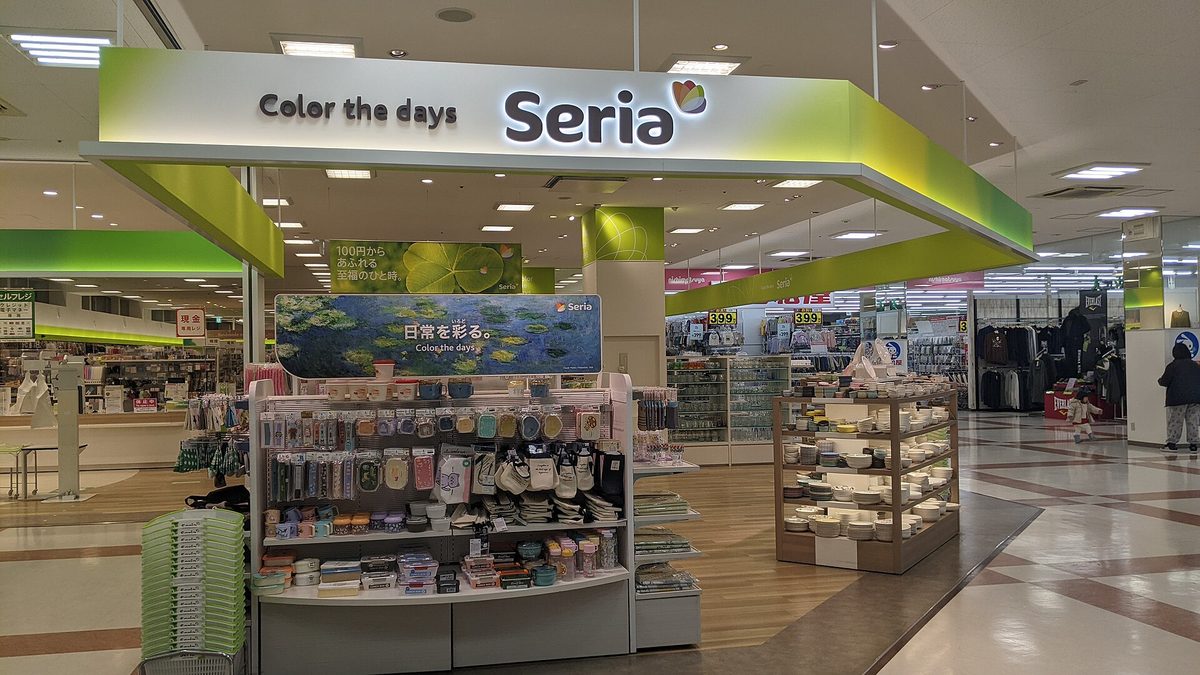
Seria's company profile lists 2,134 stores (2,101 run directly and 33 franchised). Its FAQ says the store finder can search for large stores of 200 tsubo or more (a tsubo is a Japanese floor-area unit), which helps if you want a wide selection in one place. Seria doesn't sell by mail order, and it doesn't check stock by phone or app, so the store itself is where you shop.
Can★Do: part of the AEON group
Can★Do says its name comes from its founder's words, "nothing is impossible if you try," and its pledge to bring customers surprise and delight for 100 yen. It is now a member of the AEON group, and its monthly report lists 1,378 stores at the end of September 2026. The franchise page mentions about 20,000 items across household goods and food, with about 10,000 new items a year.
Can★Do's store finder lets you filter for stores that carry items of 200 yen and up, food, drinks, Disney goods or AEON's TOPVALU brand, and for the payment methods each store accepts.
Items above 100 yen: THREEPPY, Standard Products and price tags
"100-yen shop" describes the main price, not every price. DAISO's own site describes THREEPPY as a brand with items "centered on 300 yen." Standard Products by DAISO uses the slogan "A little better lasts a long time" and works with Japanese makers, such as cutlery from Tsubame in Niigata and kitchen knives from Seki in Gifu. In a January 2025 press release, Daiso listed a Standard Products series at 300 to 500 yen (330 to 550 yen with tax) and a THREEPPY series at 300 to 700 yen (330 to 770 yen with tax). In some locations, DAISO, THREEPPY and Standard Products share one floor, so check each tag before you take things to the register.
Can you shop tax-free at a 100-yen shop?
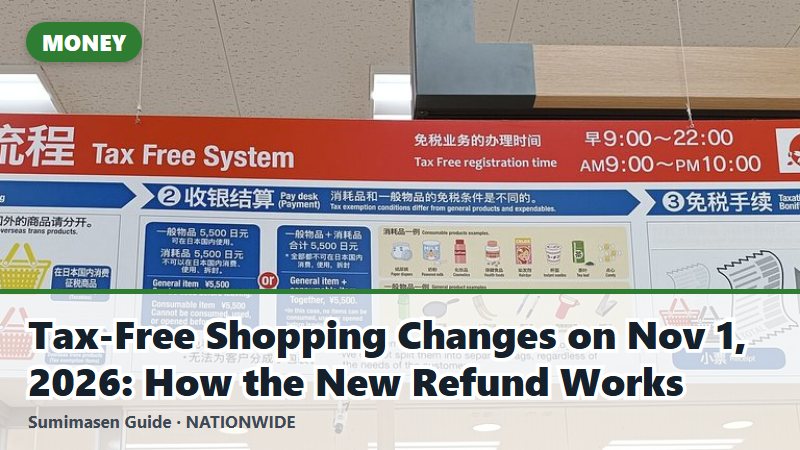
None of the DAISO, Seria or Can★Do official pages we checked says which of their stores handle tax-free sales. Under Japan's rules, tax-free shopping needs 5,000 yen or more (before tax) at one store on one day, which is 50 items at 100 yen. If you are planning a big haul, ask at the register before you pay whether that store is a tax-free shop.
From November 1, 2026, tax-free shopping in Japan moves to a refund system: you pay the full price, and the tax comes back after customs checks the goods when you leave. Here is how the new tax-free refund works, step by step.
Paying: cash, cards and phones
Payment methods depend on the store. DAISO's store finder has filters for stores that accept credit cards, e-money and barcode (QR code) payment. Can★Do's FAQ says the payment methods differ by store and points to its store finder, which filters by cash, credit card, e-money and code payment. Seria's official pages we checked don't list payment methods, so look for the payment signs at the register. For IC cards and which cards work where, see how to pay for things in Japan.
Practical tips from the chains' own pages
- Keep your receipt. DAISO takes returns within 14 days at the store where you bought the item (not food, pet food, personal seals, opened items or special orders). Seria takes returns within 30 days at any Seria store (not opened items, food, special orders or shopping bags). Can★Do takes returns within 30 days if the item is unopened and unused (food only if it's defective).
- No currency exchange. DAISO's store policy says it doesn't exchange money or hold items for you.
- Taking photos in the store. Seria says photos are fine if you take care not to bother other shoppers and keep other people and staff out of the frame. Stores inside a mall may follow the mall's own rules, so check first.
- Looking for a specific item? Seria and Can★Do ask you to visit a store and ask the staff; DAISO points you to its app for stock.
Looking for gifts to take home? Our guide to souvenirs from Japan covers what visitors buy and how to pack it.
Last reviewed: October 13, 2026. Store counts, brands and services change. Please check the official pages below before you go.
References
- Daiso Industries: Company profile and history (Japanese)
- Daiso Industries: Store policy (Japanese and English)
- Daiso Industries: Store finder (Japanese)
- Daiso Industries press release: Stores in Japan and overseas pass 6,000 (Japanese, June 23, 2026)
- Daiso Industries press release: DAISO, Standard Products and THREEPPY store in Nerima (Japanese, January 2025, PR TIMES)
- Standard Products by DAISO: Official site (Japanese)
- Seria: Company profile (Japanese)
- Seria: Business field (Japanese)
- Seria: FAQ (Japanese)
- Seria: Products (Japanese)
- Can★Do: About Can★Do (Japanese)
- Can★Do: Monthly report (Japanese)
- Can★Do: Q&A (Japanese)
- Can★Do: Store finder (Japanese)
- National Tax Agency: Consumption tax rates (Japanese)
- National Tax Agency: Tax-included price display (Japanese)
- Japan Tourism Agency: Special page for travelers (English) — Refund Method