What to Buy at a Japanese Drugstore: Medicine, Candy, Hotel Snacks, Cup Noodles and Bath Bombs
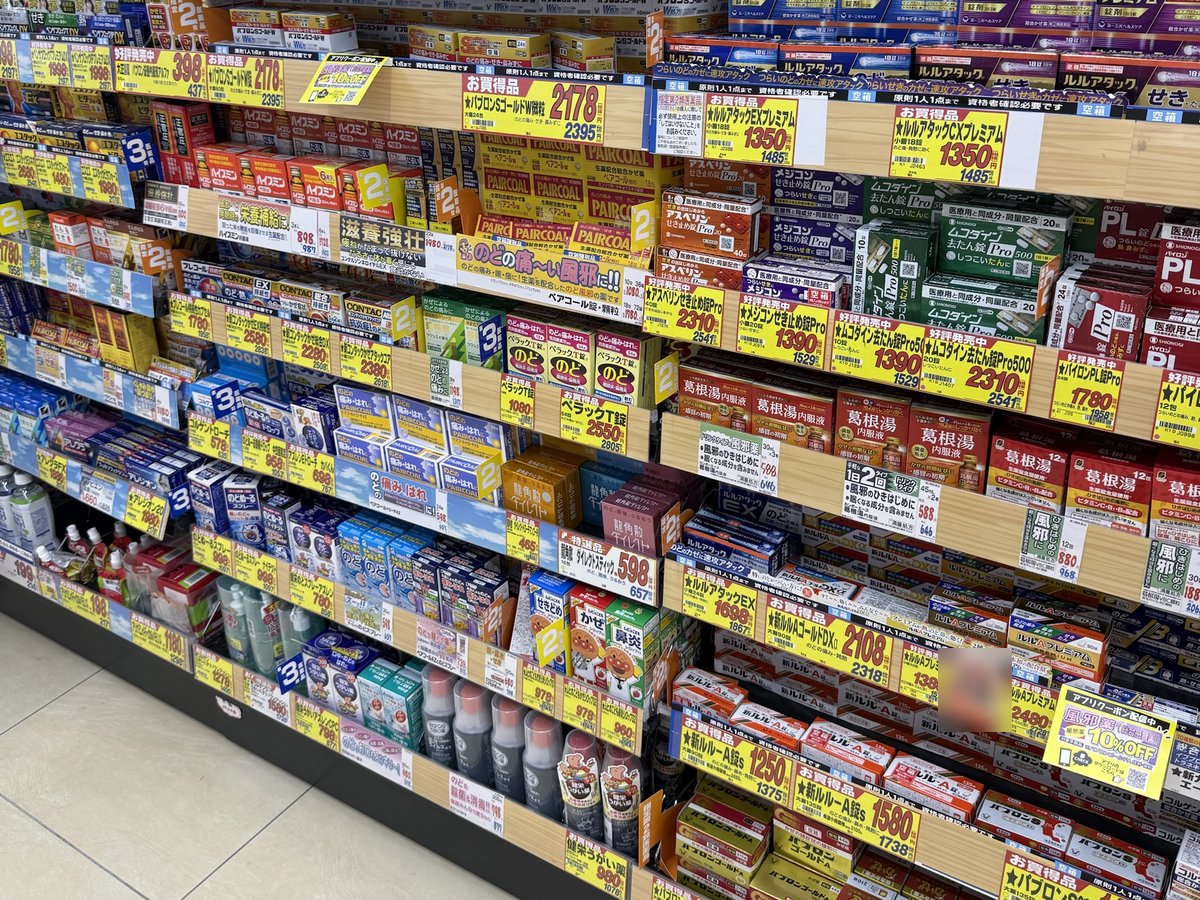
A Japanese drugstore (ドラッグストア) is much more than a pharmacy. Alongside over-the-counter medicines, many sell candy, snacks, cup noodles, ice cream, drinks and fun bath goods, often at everyday prices. This guide walks through what you can typically find at ordinary drugstores across Japan, how to read the medicine labels, and what to check before you buy or take anything home. Stock and prices vary from store to store, so treat the products here as examples.
This page may contain affiliate links. If you buy through them, we may earn a commission at no extra cost to you.
- How Japanese medicine labels show the risk class, and who can sell what
- Stomach medicine, tiredness tablets, cold medicine and pain-relief patches
- Why some shelves hold only empty boxes, and "one per person" signs
- Candy, hotel-room snacks, cup noodles, ice cream and bath bombs
What you'll find at a Japanese drugstore
Walk in and you'll usually see medicine aisles at the back or along one side, and cosmetics, daily goods and food in the rest of the store. The exact mix depends on the shop, but these are the sections this guide covers:
- Over-the-counter medicines: stomach medicine, tiredness and vitamin tablets, cold medicine, pain-relief patches and more.
- Candy: a whole wall of hard candy and throat drops in many flavors.
- Snacks: otsumami (おつまみ), small savory snacks to enjoy with a drink, plus chips and sweets.
- Instant food: cup noodles and cup rice.
- Frozen food: ice cream, sometimes in a big open freezer.
- Bath goods: including fizzing bath balls with a toy inside.
Medicine labels: the risk classes
Every over-the-counter medicine box in Japan shows its risk class, such as 第1類医薬品 (Class 1) or 第3類医薬品 (Class 3). The guide to OTC medicines from the city of Sakai (Osaka) explains that Class 1 medicines can be sold only by a pharmacist (yakuzaishi, 薬剤師), who explains them to you before the sale. Class 2 and Class 3 medicines can be sold by a pharmacist or a registered seller (toroku hanbaisha, 登録販売者). Within Class 2, "designated Class 2" medicines need extra care, and their label shows the 2 in a circle or a square (第②類医薬品), according to a notice from the Shinjuku (Tokyo) city office.
So if no pharmacist is on duty, for example late in the evening, you may not be able to buy a Class 1 medicine. A few more things to keep in mind:
- Ingredients and doses differ. A Japanese product can contain different ingredients, or different amounts, from a similar-looking product at home. Read the ingredient list, use a translation app on the box, and ask the staff if you're unsure.
- Tell the staff about yourself. If you take other medicines, have allergies, are pregnant or are buying for a child, say so before you buy.
- Follow the label. Many products state an age limit and a maximum dose. The examples below come from the makers' own pages.
Stomach medicine
Upset stomachs happen on trips, and the stomach medicine shelf is easy to spot by the bright orange Seirogan (正露丸) boxes. Its maker, Taiko Pharmaceutical, says in its product history that the medicine's story goes back to a sales license granted in 1902, and that the name became 正露丸 in 1954. On its product page, Seirogan is a Class 2 medicine for loose stools, diarrhea and stomach upsets from food or water (shoku-atari, mizu-atari). Its main ingredient, wood creosote, gives it a strong smell, the maker explains. If the smell bothers you, the maker also sells Seirogan Toui-A (セイロガン糖衣A), white sugar-coated tablets without the smell, on sale since 1981.
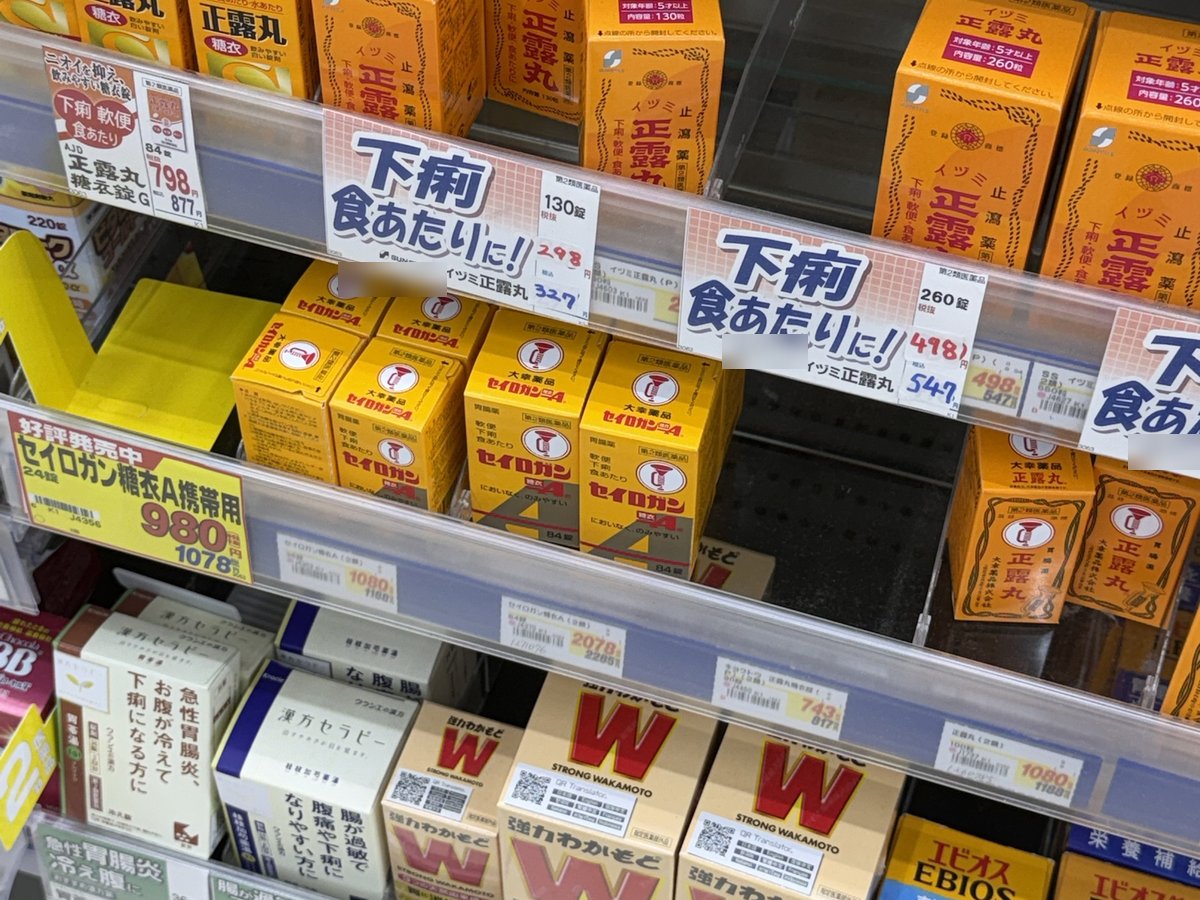
You'll also see other stomach and digestion products on the same shelves, such as Strong Wakamoto and EBIOS. Check the label for what each one is for, and if diarrhea comes with a high fever, blood or lasts a long time, see a doctor rather than relying on a drugstore product: see medicines and getting help in Japan for the visitor hotline and how to find a clinic.
Tiredness and vitamin tablets
After long days of walking, many people in Japan reach for tonic tablets. One well-known example is Kowa's Q&P Kowa Gold α Premium (キューピーコーワゴールドα プレミアム). Kowa's product page lists it as a Class 3 medicine for nutritional support, for example during physical fatigue, and says adults 15 and over take one tablet once or twice a day. It is a medicine, not a snack, so follow the dose on the box.
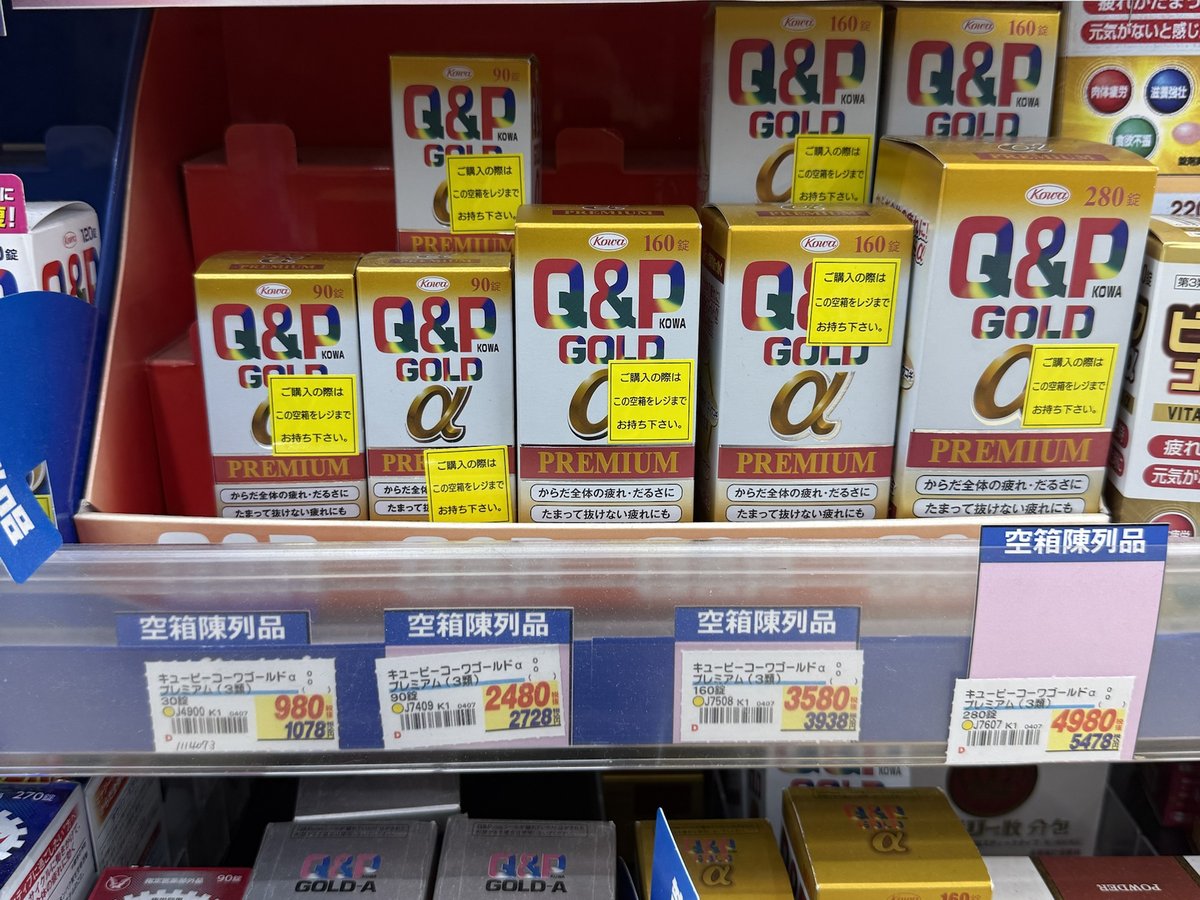
At some shops, the shelf holds only empty boxes. In our photo, the price tags say 空箱陳列品 (empty-box display), and the yellow stickers say ご購入の際はこの空箱をレジまでお持ち下さい: "When buying, please bring this empty box to the register." The staff then hand you the real product. You may also see cards or tags instead of boxes. Here's how it works:
Cold medicine and "one per person" signs
The cold medicine aisle is often the biggest one, with many brands for fever, sore throat, coughs or a runny nose. Japanese cold medicines often combine several ingredients in one box, so compare the ingredient list with what you normally take, and don't take two cold medicines together without asking a pharmacist.
You may also see signs like 原則1人1点まで (as a rule, one per person) and 資格者確認必要 (a qualified staff member must check). Since May 1, 2026, medicines that contain any of eight ingredients, such as ephedrine, pseudoephedrine, codeine, dihydrocodeine and dextromethorphan (except products for external use), are "designated abuse-prevention medicines", the Ministry of Health, Labour and Welfare's notice says. The ministry explains that the pharmacist or registered seller checks with the buyer, asks about purchases at other shops, and asks the reason when someone wants several packs or a large pack. The city of Sakai (Osaka) adds that people under 18 can buy only a small pack. Some shops keep these products where you can't pick them up yourself, so ask at the counter.
Taking cold medicine home? Ephedrine and pseudoephedrine are on the International Narcotics Control Board's list of monitored chemicals, and some countries restrict bringing in medicines that contain them or codeine. Check your own country's customs rules before you pack Japanese medicine. For the rules on bringing medicine into Japan, see medicines you can't bring into Japan.
Pain-relief patches for tired legs
Sore muscles after a day of sightseeing? Pain-relief tapes and patches (shippu, 湿布) fill a whole section. Daiichi Sankyo Healthcare's Loxonin S Tape (ロキソニンSテープ) is a Class 2 medicine for back pain, shoulder pain, joint pain, muscle pain, bruises, sprains and similar aches.
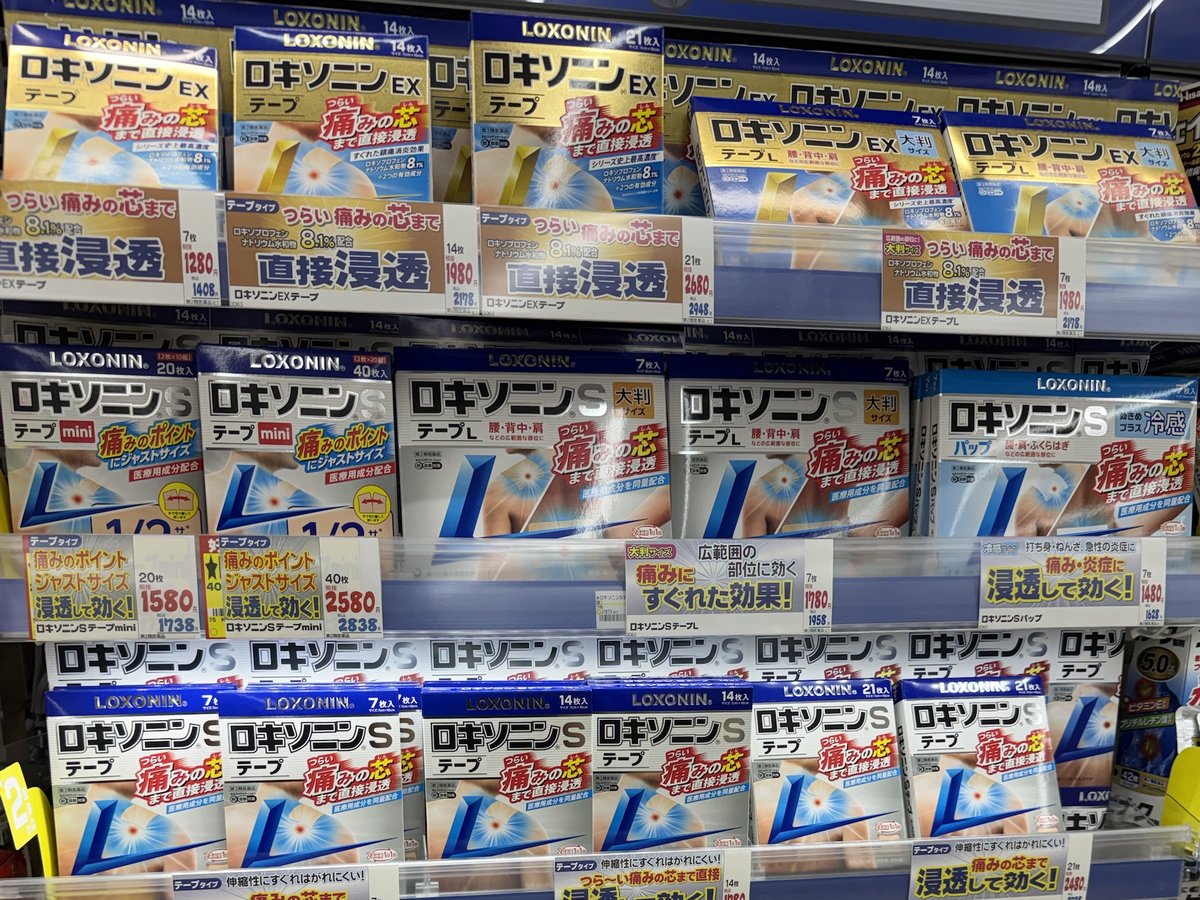
The maker's page says to use it once a day, no more than 4 sheets a day, and not for 2 weeks or longer in a row. Children under 15 should not use it, and people who have had asthma from this or other pain relievers should not use it either. Don't put it on broken skin or rashes. Other brands sit on the same shelves, and each has its own label.
Candy in many flavors
Japanese candy comes in a huge range of flavors, and a drugstore candy wall shows it well: salty candy, plum, honey, milk, matcha and coffee milk, fruit, and many kinds of throat drops (nodo-ame, のど飴).
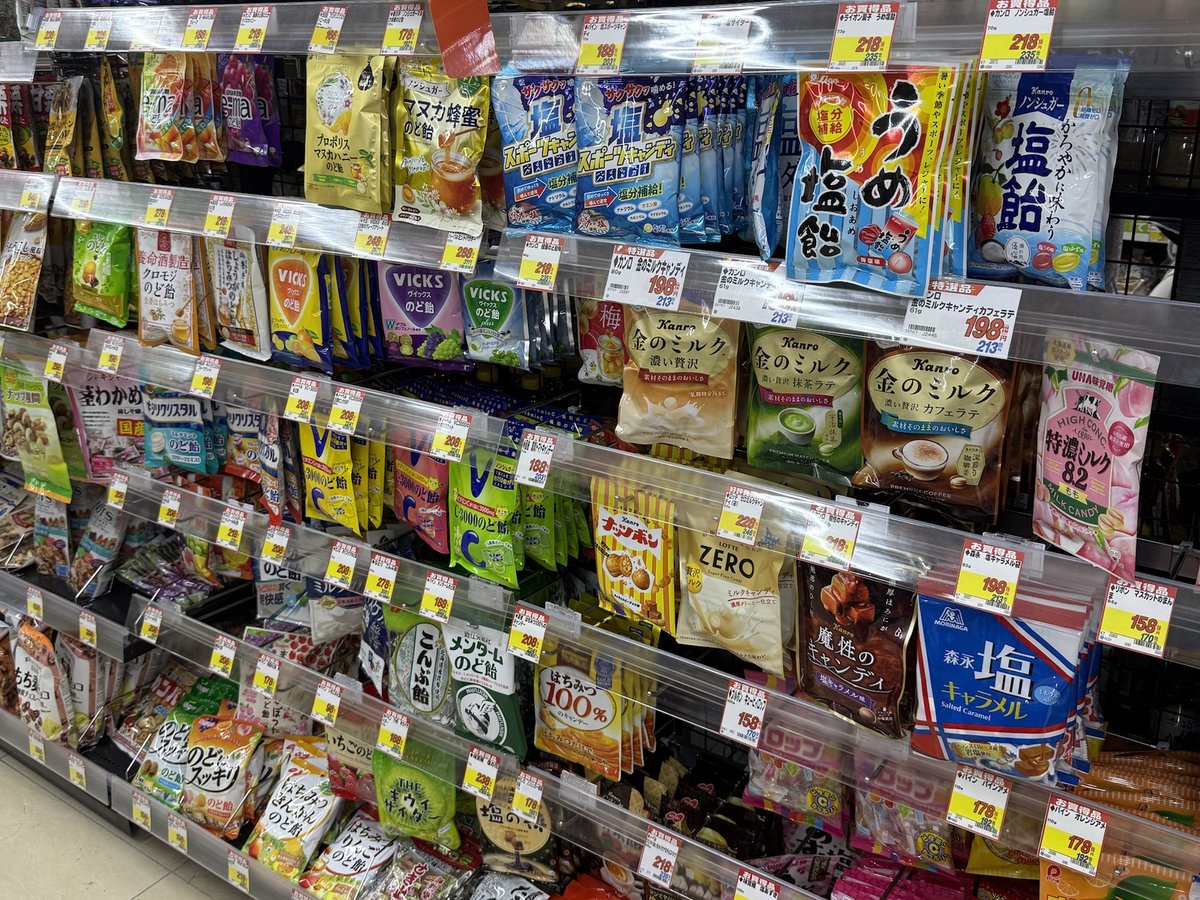
Single bags are light and cheap, which makes them an easy small gift. If you have a food allergy, read the allergen box on the back, or see food allergies in Japan for what the labels show.
Snacks for the hotel room
Many drugstores have an otsumami corner: dried squid, jerky, smoked cheese, fish snacks and flavored peanuts, made to enjoy with a drink. They're handy to pick up on the way back to your hotel.
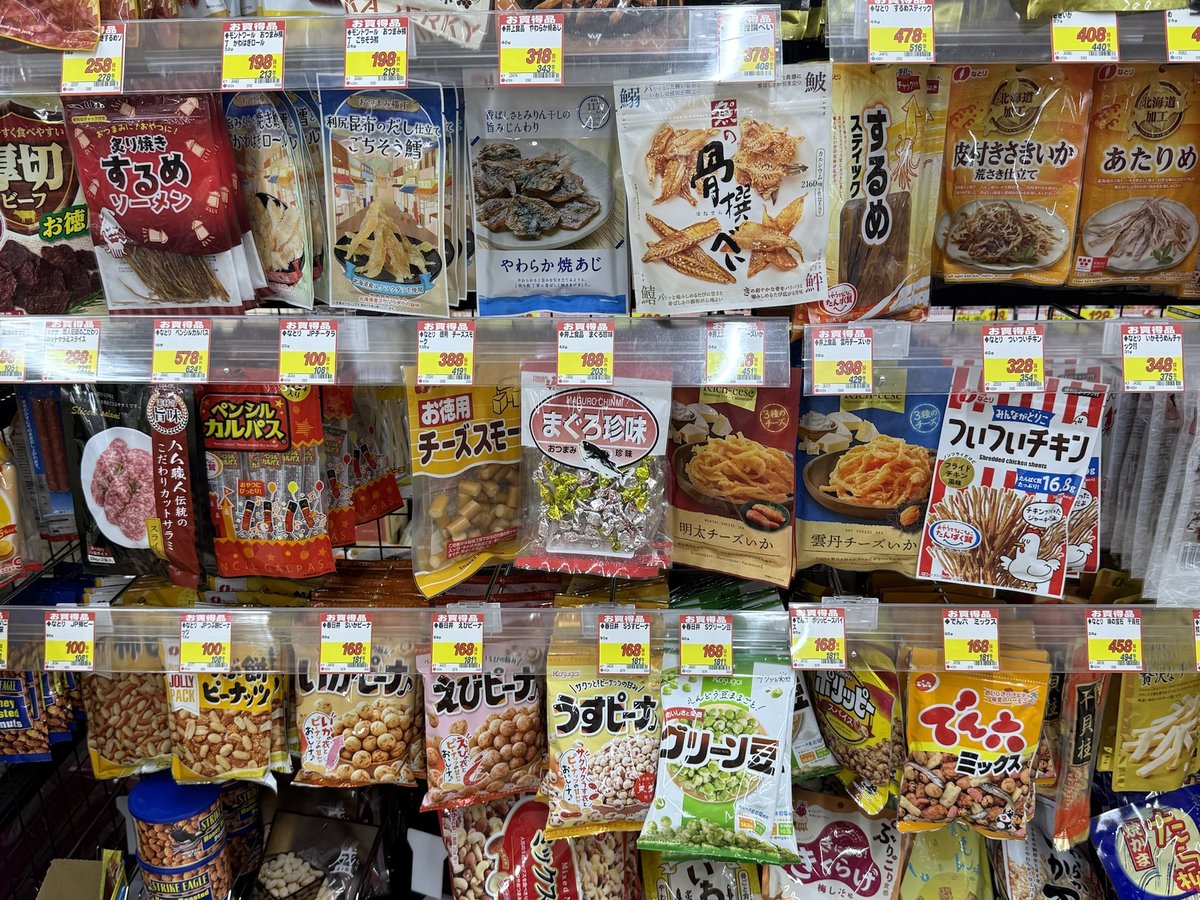
Some, like dried squid and fish snacks, contain seafood, and many contain wheat or soy, so check the allergen list. Please take your snack bags back to the room rather than eating while walking in busy streets, and sort your trash the way your hotel asks.
Cup noodles and cup rice
Drugstores often have a long aisle of cup noodles, from soy sauce and miso ramen to udon, yakisoba and regional flavors, and the prices in our photo were lower than many visitors expect. Look for the hot water line inside the cup and the waiting time on the lid.
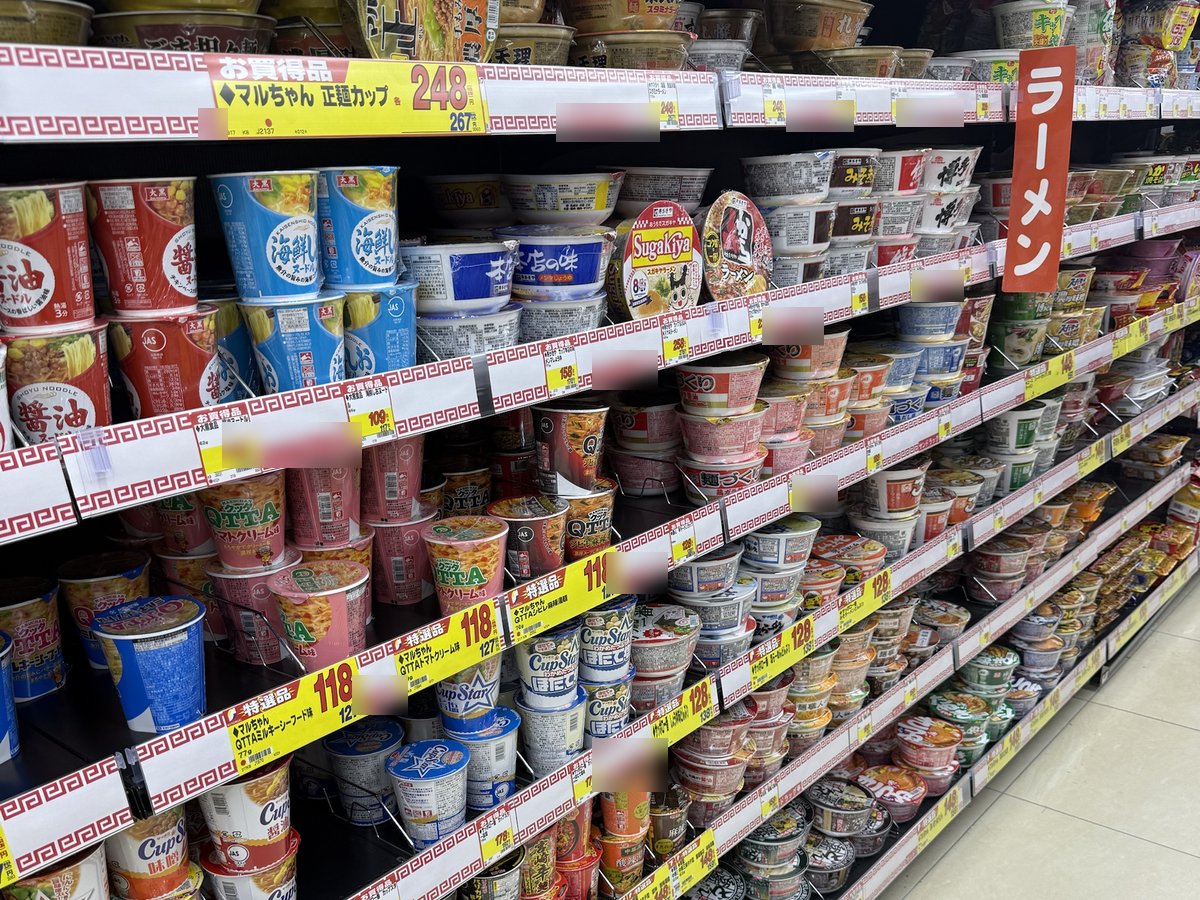
There's cup rice, too. Nissin's Curry Meshi, for example, is cooked by pouring hot water into the cup, waiting 5 minutes and stirring well, according to Nissin's 2016 announcement. If your room has a kettle, a cup of noodles or rice makes an easy late-night meal.
Cheap ice cream
Many drugstores sell ice cream at low prices, sometimes from a big open freezer full of bars, cones and cups.
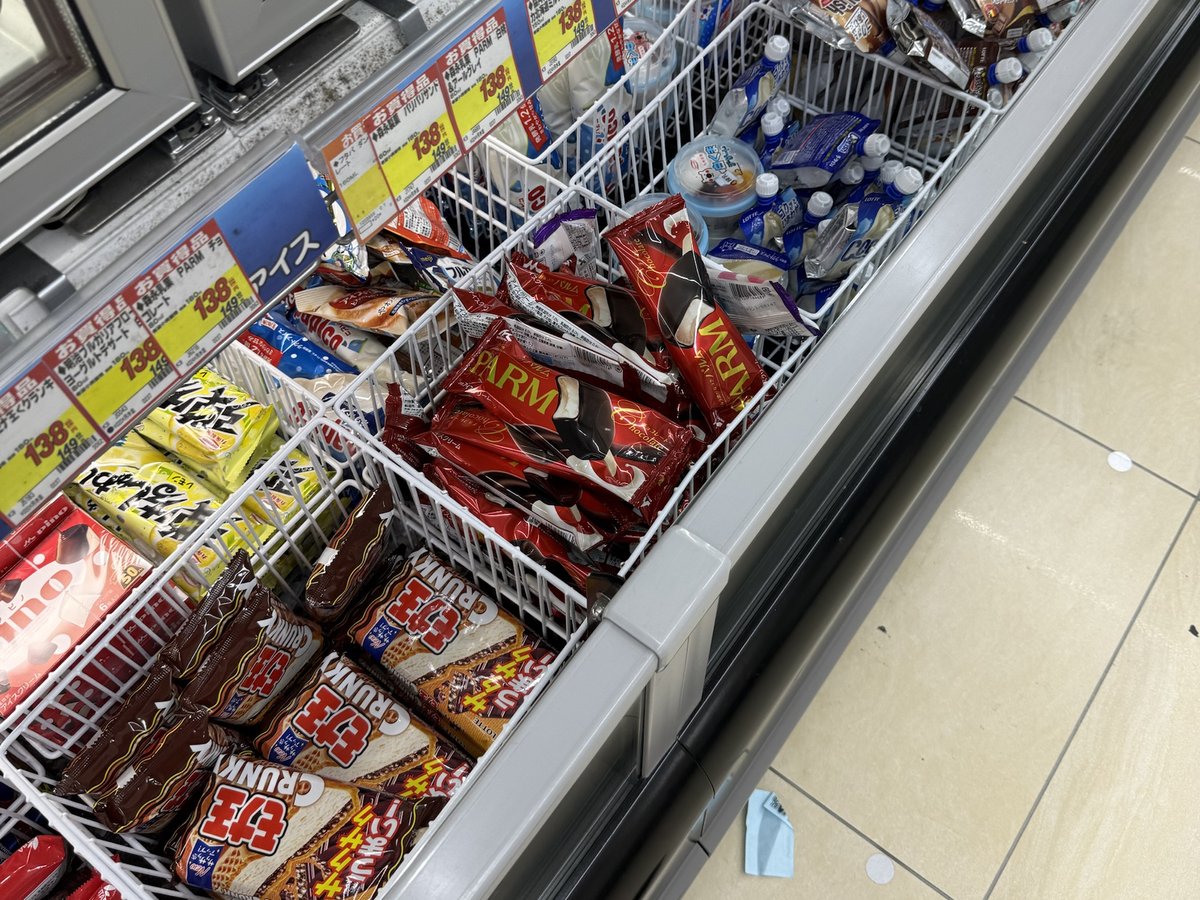
Choose ice cream last, just before you pay, and eat it soon or keep it in a freezer if your room has one.
Bath bombs with a toy inside
In the bath goods section, look for Bikkura Tamago (びっくらたまご), "surprise eggs": fizzing bath balls with a small mascot hidden inside. Bandai's product page says they went on sale in 2002, and that the fun is not knowing what will come out until the ball dissolves. There are many character series, and they're popular with children.
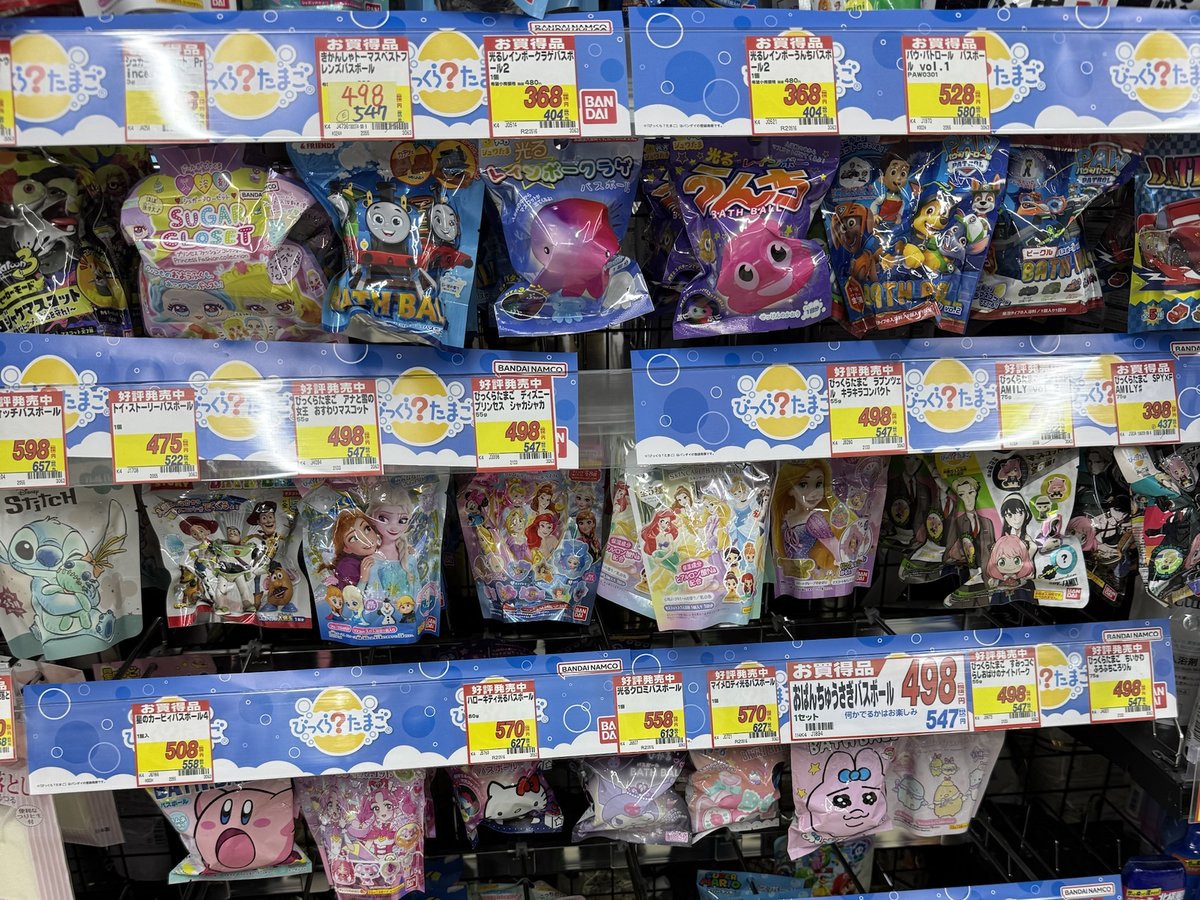
Read the package for how to use it. If your room has a bathtub, it's a fun way to end the day, and an unopened one is a light souvenir.
My visit
My picks at a Japanese drugstore: Q&P Kowa for tiredness, Seirogan when my stomach hurts, cold medicine, and Loxonin tape for sore muscles after a long day of walking.
Japanese candy comes in so many flavors. For snacks to have when I get back to the hotel, the otsumami and cup noodles are surprisingly high quality. The ice cream is cheap and delicious, too.
Paying, tax-free and taking things home
- Paying: many drugstores take cards and code payments, but check the stickers at the register. See how to pay for things in Japan.
- Tax-free: many drugstores offer tax-free shopping for visitors. From November 1, 2026, you pay the full price and get the tax back after customs checks your goods at departure, and consumables you eat or use in Japan can't be refunded. See how the new tax-free refund works.
- Food and medicine for home: check your own country's rules on bringing in food and medicines, and keep medicines in their original boxes with the label.
- Prices and stock: they change from store to store and over time. The prices in our photos are from when they were taken.
Last reviewed: October 9, 2026. Product details are from the makers' official pages at the time of writing. Always follow the label on the box you buy.
References
- Sakai (Osaka) city office: Risk classes of OTC medicines (Japanese)
- Shinjuku (Tokyo) city office: Notice on OTC medicine classes and display (Japanese, PDF)
- Ministry of Health, Labour and Welfare: Changes to medicine sales from May 1, 2026 (Japanese)
- Ministry of Health, Labour and Welfare: Notice on designated abuse-prevention medicines, February 13, 2026 (Japanese, PDF)
- Sakai (Osaka) city office: Designated abuse-prevention medicines (Japanese)
- International Narcotics Control Board: Red List (PDF)
- Taiko Pharmaceutical: Seirogan product history (Japanese)
- Taiko Pharmaceutical: Seirogan (Japanese)
- Taiko Pharmaceutical: Seirogan Toui-A (Japanese)
- Kowa: Q&P Kowa Gold α Premium (Japanese)
- Daiichi Sankyo Healthcare: Loxonin S Tape (Japanese)
- Nissin Foods: Curry Meshi Beef and Seafood, 2016 (Japanese)
- Bandai: Bikkura Tamago (Japanese)