Arashiyama (Kyoto) Beyond the Autumn Leaves: Young Green Maples (Aomomiji) and a Rickshaw Ride
Arashiyama (Kyoto) is famous for its red autumn leaves, but the same maple trees have a second season that many visitors miss: aomomiji, the fresh green leaves of the maples (momiji) in spring and early summer. In April 2022, while staying in Arashiyama (Kyoto), I joined a short rickshaw ride to see the young maple leaves. This guide covers where to see them and how a rickshaw ride works. Facts come from the official pages listed at the end; the "My visit" notes are my own experience.
- Aomomiji means "green maples": the same trees that turn red in autumn, while their leaves are young
- Hogon-in, a temple known for its maples, opens only in spring and autumn; in 2026 its spring opening ran from March 14 to June 30
- Gio-ji describes summer as the season when its fresh green is at its most beautiful
- Rickshaws leave from the north end of Togetsukyo Bridge, on courses from 12 minutes to three hours
Hogon-in is not open all year. You can visit only during its special openings in spring and autumn. Check the dates on the official site before you plan around it. Gio-ji does not allow tripods or monopods (including for phones) and has no toilets for visitors.
Based on the official pages listed at the end (checked October 2026). Dates and hours change every year, so check them again before you go.
What aomomiji is
Ao means green (or blue) in Japanese, and momiji means maple, so aomomiji are maple leaves while they are still green. Hogon-in's spring opening covers this season, and in 2026, for the first time, the temple also held an early-summer night viewing of the green maples and their reflections, seen from its study hall (shoin), on weekends from May 23 to June 21; the temple called the fresh green special to that time of year. In my photos from mid-April, the leaves were already a bright, light green.
Where to see green maples
- Hogon-in: a sub-temple of Tenryu-ji. Its garden, Shishiku no Niwa, uses the hills of Arashiyama (Kyoto) as a backdrop, and the temple says it was made by the Zen monk Sakugen Shuryo in the Muromachi period (14th to 16th centuries). In 2026 the spring opening ran from March 14 to June 30, from 9:00 to 17:00 (last entry 16:45). Outside its openings, you can't go in.
- Gio-ji: a temple with a moss garden in the Saga area, about 25 minutes on foot from JR Saga-Arashiyama Station or Randen Arashiyama Station. The temple describes summer as the season when the fresh green is at its most beautiful, with the whole temple turning green. Open 9:00 to 16:30 (last entry); you can stay until 16:50. Tripods and monopods are not allowed, please don't photograph the Buddhist statues in the hut, there are no toilets for visitors, and pets are not allowed (guide dogs and hearing dogs are welcome).
- Tenryu-ji: the head temple of Hogon-in and part of the World Heritage site "Historic Monuments of Ancient Kyoto". The garden is open from 8:30 to 17:00 (last entry 16:50). It is about 13 minutes on foot from JR Saga-Arashiyama Station and right by Randen Arashiyama Station.
Seeing them by rickshaw
A rickshaw (jinrikisha) is a two-wheeled cart pulled by a runner. In Arashiyama (Kyoto), Ebisuya's branch here picks up riders at the north end of Togetsukyo Bridge. It opens at 9:30 every day of the year, and its last ride of the day changes with the season. Courses run from 12 minutes up to three hours; you can book ahead or join on the day if there is space. Klook lists Ebisuya's tour here in English or Japanese, in the box above.
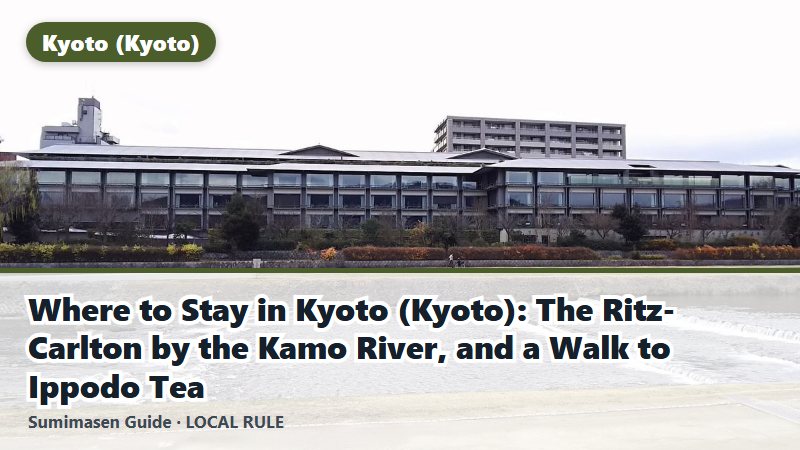
If you stay at Suiran, a hotel by the river, the hotel offers guests a ride by rickshaw from the station or by taxi from Kyoto Station; see the Suiran section of where I stayed in Kyoto.
My visit
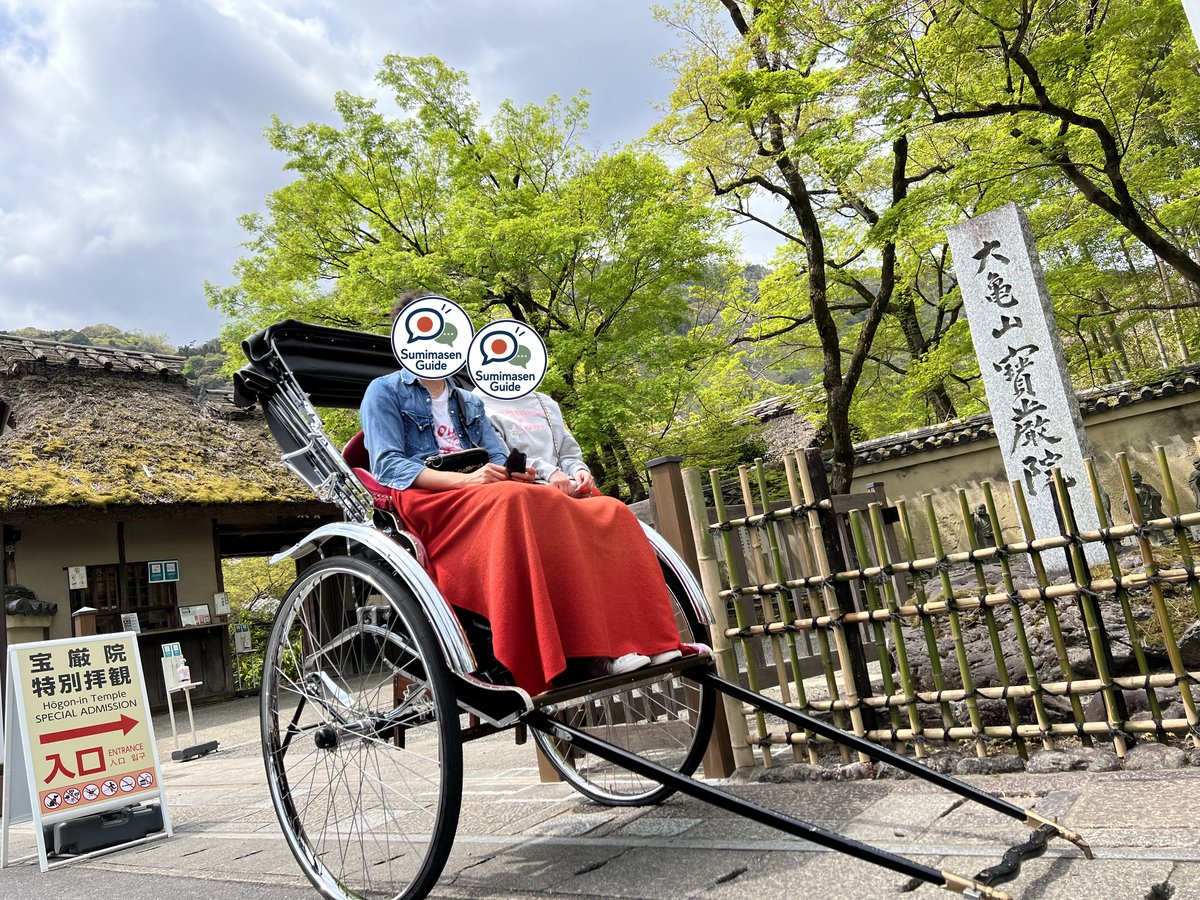
On April 13, 2022, during my stay at Suiran, I joined a short rickshaw tour to see the young maple leaves. We rode along the river and stopped at the gate of Hogon-in, under the new green leaves.
Photos can't do it justice. The strong, youthful green cleanses the heart. Arashiyama (Kyoto) has a hidden charm beyond its autumn leaves: the young maples of spring.

Before you go
- Check Hogon-in's opening dates for the year you visit.
- Note the walking times: Gio-ji is about 25 minutes on foot from the stations.
- Leave the tripod at your hotel if you plan to visit Gio-ji.
- For a rickshaw, book ahead or go to the north end of Togetsukyo Bridge.
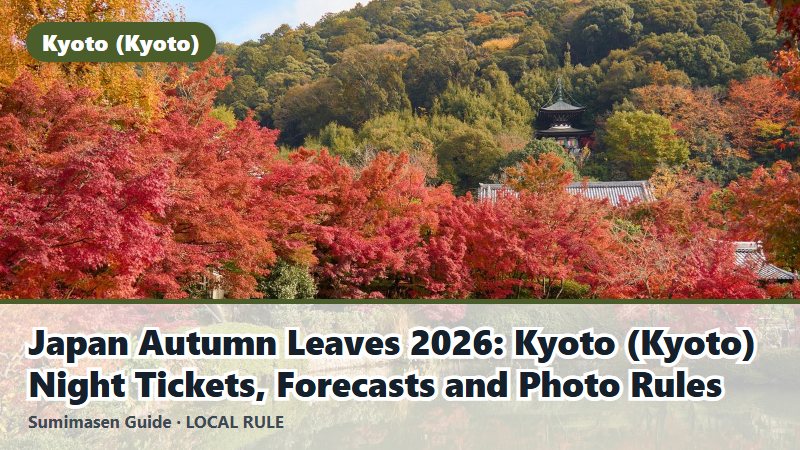
Coming back for the red leaves? See our autumn leaves guide. More on our Kyoto page.
Last reviewed: October 15, 2026. Opening dates, hours and courses change; please confirm on the official pages below before you go.
References
- Hogon-in: Events and special openings (Japanese)
- Hogon-in: official site (Japanese)
- Gio-ji: Visiting and access (Japanese)
- Gio-ji: The four seasons (Japanese)
- Gio-ji: official site (Japanese)
- Tenryu-ji: Visiting and access (Japanese)
- Tenryu-ji: official site (English)
- Ebisuya: Arashiyama (Kyoto) branch (Japanese)
- Suiran, a Luxury Collection Hotel, Kyoto: Access (Japanese)