Miyakojima (Okinawa): Sea Turtles, a Wartime Cave, and Mamoru-kun the Police Doll
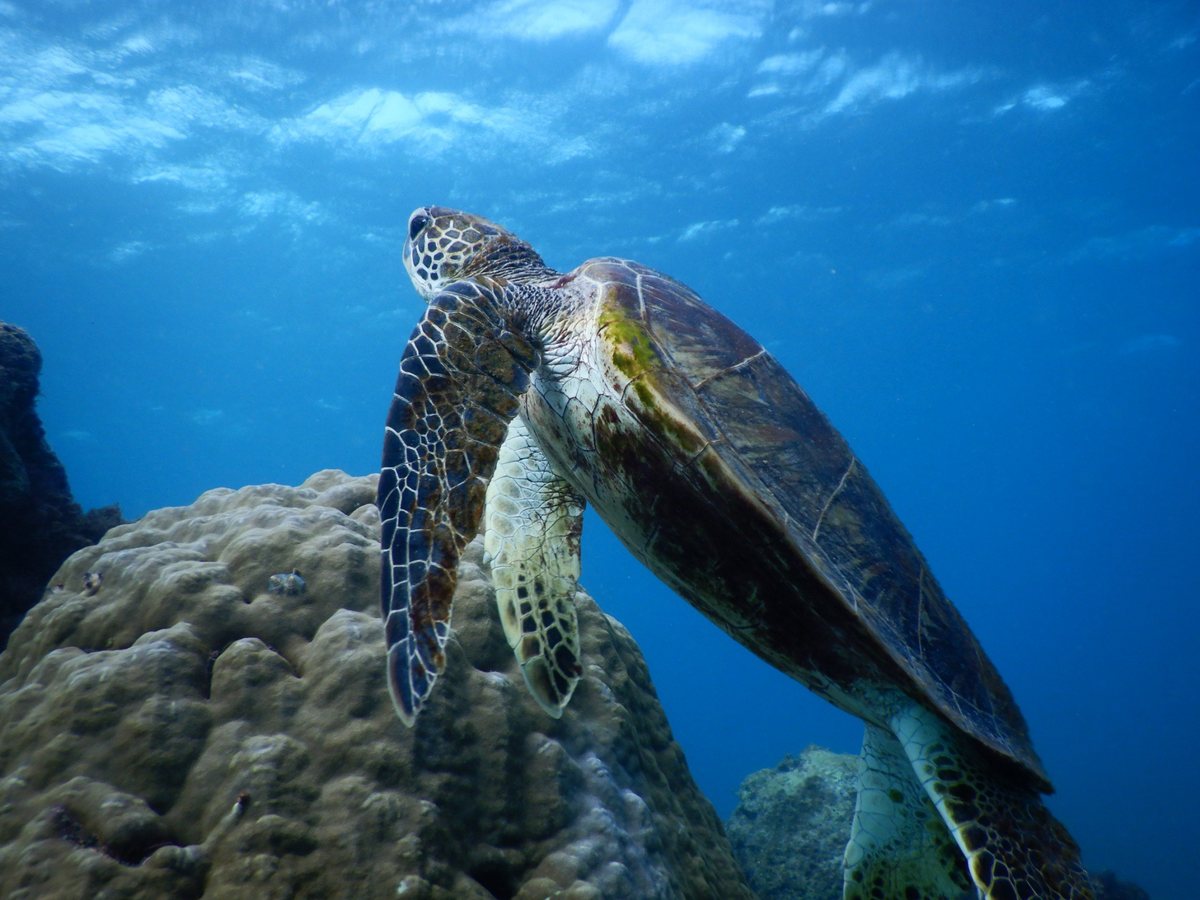
Miyakojima (Okinawa) is a flat coral island about 300 km southwest of Naha (Okinawa), known for clear water and sea turtles. It also has a few surprises that most guidebooks skip: a family of police officer dolls called Mamoru-kun who stand by the roads, and Nudokubiabu, a deep cave on Irabu Island whose depths hold traces of the war. This guide covers the island's own rules for meeting sea turtles, what divers should plan for, how to visit the cave respectfully, and how to get to the island and around it. The photos on this page were all taken by the site owner.
This page may contain affiliate links. If you buy through them, we may earn a commission at no extra cost to you.
- Mamoru-kun: who he is and why there are so many of him
- Meeting a sea turtle: the island's "touch nothing" rules
- Scuba diving: guided tours, a health check and the 24-hour rule before flying
- Nudokubiabu, the wartime cave on Irabu Island
- Flights to the island, the bridges, and renting a car
The island at a glance
Miyakojima is the main island of the Miyako Islands. According to the Miyakojima Tourism Association, three long bridges link it to four smaller islands (Ikema, Irabu, Shimoji and Kurima), so you can drive to all of them. Here's what this guide covers, at a glance:
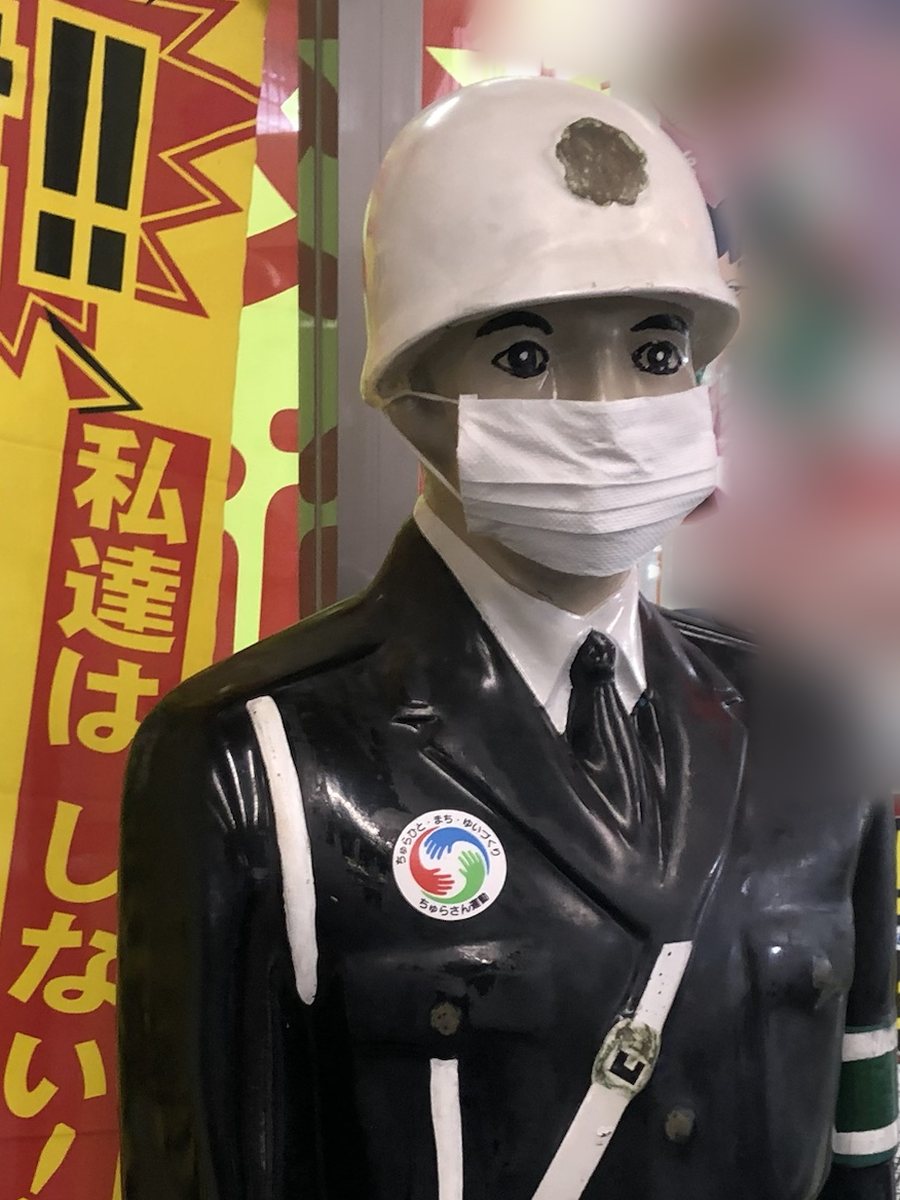
Mamoru-kun, the police doll who never goes off duty
Drive around the Miyako Islands and sooner or later you'll pass a stiff, pale-faced police officer standing at the side of the road. He isn't real. He's Mamoru-kun ("Mamoru" means "protect"), a police officer doll put there to remind drivers about traffic safety, and there are about 20 of him spread across the islands, each with his own name.
- Why he exists: speaking to TOKYO FM in 2017, the Miyako District Traffic Safety Association said that when the dolls began in 1991, traffic accidents were frequent on the island and fatal accidents ran into double digits. They wanted something that would catch drivers' eyes more than an ordinary signboard.
- How long he's been there: a police official told Kuruma News in 2022 that the dolls have stood on the island since 1996, with an official "birthday" of August 5, 1991 (the numbers 3-8-5 can be read "mi-ya-ko"). The official said there were 21 dolls, each with a different name and a hand-painted face, so no two look quite the same.
- He's taken seriously: the Okinawa Times reported that in 2020 one doll, which had gone missing after a typhoon about 10 years earlier and turned up in a field, was repaired and given a formal "appointment" by the chief of Miyakojima Police Station, who assigned him to watch over the traffic outside a local police box. That brought the team back to 20.
TOKYO FM's report adds that Mamoru-kun has become something of an island mascot, with souvenirs sold in his image, and that visitors even come to the police station's front entrance to see him. If you go looking for him, remember he's there for road safety: the island's tourism guidelines ask visitors not to park in dangerous places, especially on the bridges and near intersections, so stop only where it's safe and legal.
Meeting a sea turtle: the island's rules
Seeing a sea turtle underwater is the highlight of many trips to Miyakojima, and the island has its own rules for it. The Miyakojima sustainable tourism guidelines for travelers were drawn up by a council that includes the Miyakojima Tourism Association, Miyakojima City, Miyakojima Police Station, the Japan Coast Guard office in Miyakojima, Okinawa Prefecture and the Ministry of the Environment's Okinawa office. Their "no-touch" manners for the sea say:
- Don't touch or chase sea turtles. The same goes for coral and other sea life: coral is fragile enough to break when touched, and some creatures are dangerous.
- Never feed coral, fish or sea turtles. The guidelines say the sea's ecosystem rests on a delicate balance.
- Don't stand or walk on coral or rocks. Baby coral settles on them. Float with a life jacket or another float instead.
- Don't kick the coral. People often break it with their fins without noticing; avoid long fins in shallow reefs.
- Use reef-friendly sunscreen, or cover up with clothing, as some sunscreen ingredients harm coral.
The same guidelines ask everyone in the water to wear a life jacket for snorkeling, never to swim alone, and never to go in after drinking or when feeling unwell. Because the island's reefs and currents are complex and conditions change daily, they strongly recommend joining a tour with a guide or instructor rather than heading out on your own, and suggest choosing an operator certified under the guidelines (the tourism association links to the list of certified operators). For box jellyfish, first aid and life jackets around Okinawa, read our guide to Okinawa's sea.
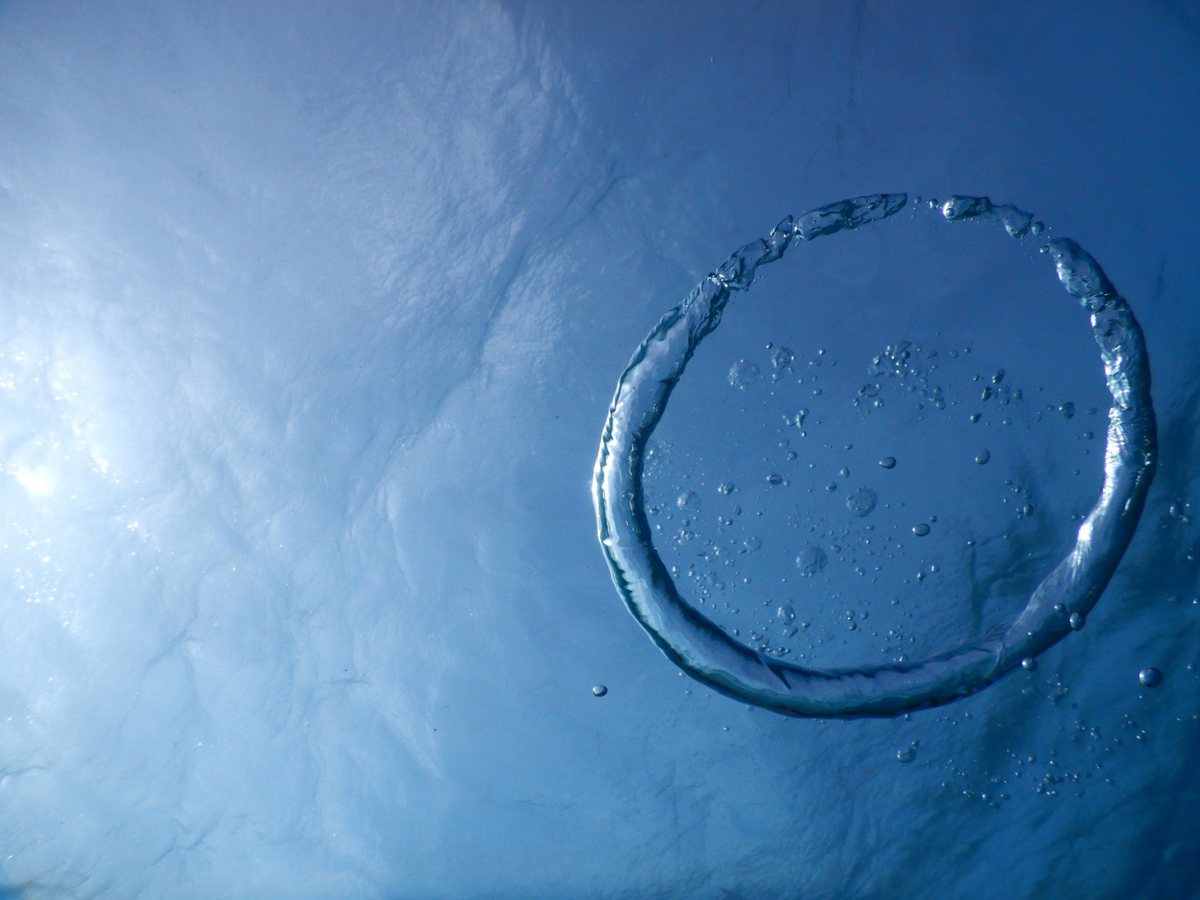
Scuba diving: plan these three things
If you'd like to go below the surface, as the site owner did, three things are worth sorting out before you book:
- Go with a local dive shop's guide. The island's guidelines strongly recommend tours with a guide or instructor, for the reasons above. If you've never dived before, a shop can explain what's possible for beginners.
- Check your health first. The Diver Medical Participant Questionnaire used by dive training agencies asks about your medical history before a course. If you answer "yes" to certain questions, a doctor's evaluation is required before you dive. The form also says not to dive if you're pregnant or trying to become pregnant, and to avoid diving if you feel ill. If you have a medical condition or take medicine regularly, it's easier to talk to your doctor before the trip than on the island.
- Leave a day before you fly. Japan Airlines says on its domestic flight help page that it may refuse boarding to passengers who have been scuba diving within the past 24 hours, because the lower cabin pressure can cause decompression sickness. Its travel health page advises avoiding flights for at least 24 hours after diving, and says the first sign is often joint pain in the arms or legs; tell the cabin crew if you feel it. Since the only way off the island is by plane, plan your last dive at least a day before your flight home.
Nudokubiabu: a wartime cave on Irabu Island
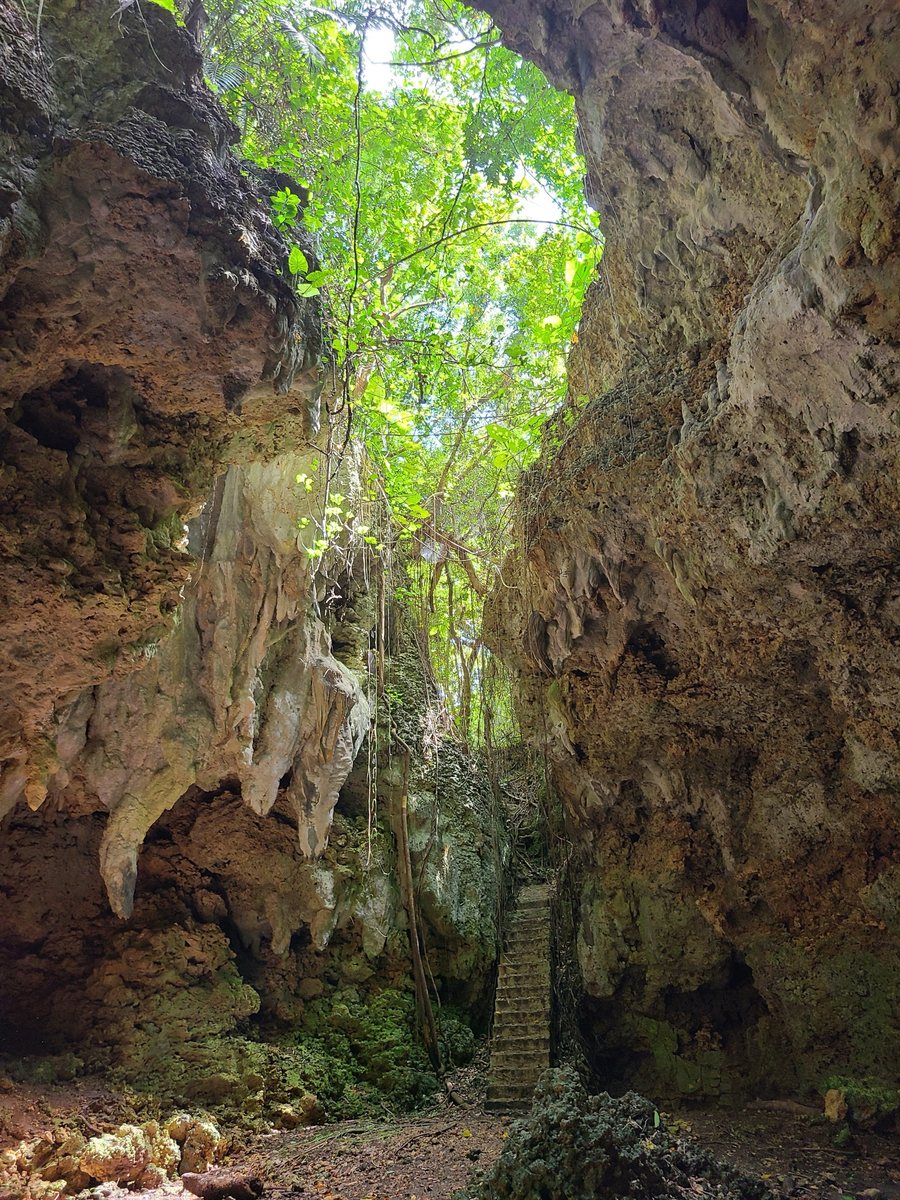
Across the Irabu Bridge from Miyakojima, in a patch of forest on Irabu Island, the ground suddenly opens into Nudokubiabu, one of the island's vertical caves. Miyakojima City, which has designated it a city historic site, describes it like this:
- The cave is about 22 m deep and has two openings. The larger one is 3 m wide and 25 m long, and you can go down into it by a stairway from the northeast side. The other is a large, well-like shaft, 3 m wide and 7 m long, separated by a natural rock bridge.
- At the bottom of the stairs is a chamber with icicle-shaped stones on the right. Aerial roots and tree roots hang all the way down to the floor.
- Deep inside the cave, toward the southwest, there are remains of cooking stoves used by the Japanese military during the war.
Local travel guides add more of the story. Okinawa Labo and Miyakojima Tours both say the cave was used as an air-raid shelter during the war, and Okinawa Labo says the stairway was built at that time. These are travel sites, not official records; Miyakojima City's own description, above, mentions the army's cooking stoves but doesn't use the words "air-raid shelter." Both guides also explain the name: in the Miyako dialect, "nudokubi" means "throat" and "abu" means a vertical hole or cave.
Please visit quietly. This is a protected historic site and a place connected to the war. Keep your voice down, and don't touch, move or take anything, including the roots and stones. The island's tourism guidelines ask visitors to help protect its cultural properties, and never to enter sacred places that are closed to visitors.
- Stacked stones: Okinawa Labo notes a spot inside where stones seem to have been piled up on purpose, and says it may be an utaki (a local sacred place). Don't climb on or move them.
- Dark and slippery: Okinawa Labo says the cave gets very dark further in, and both guides warn that the ground turns muddy after rain. Miyakojima Tours says the footing and the stairs can be slippery, so wear shoes that are easy to walk in.
- Mosquitoes: both guides mention lots of mosquitoes or other insects, and suggest bringing insect repellent.
My visit
The cave that was used as an air-raid shelter was breathtaking, too. There are lots of Mamoru-kun dolls around the island, so go and find them! All the photos here are mine, and I took the underwater ones while scuba diving, when I got to meet a sea turtle.
A note on the cave: "air-raid shelter" is how local travel guides describe Nudokubiabu's wartime past. Miyakojima City's description mentions the remains of the Japanese military's cooking stoves inside (see the section above).
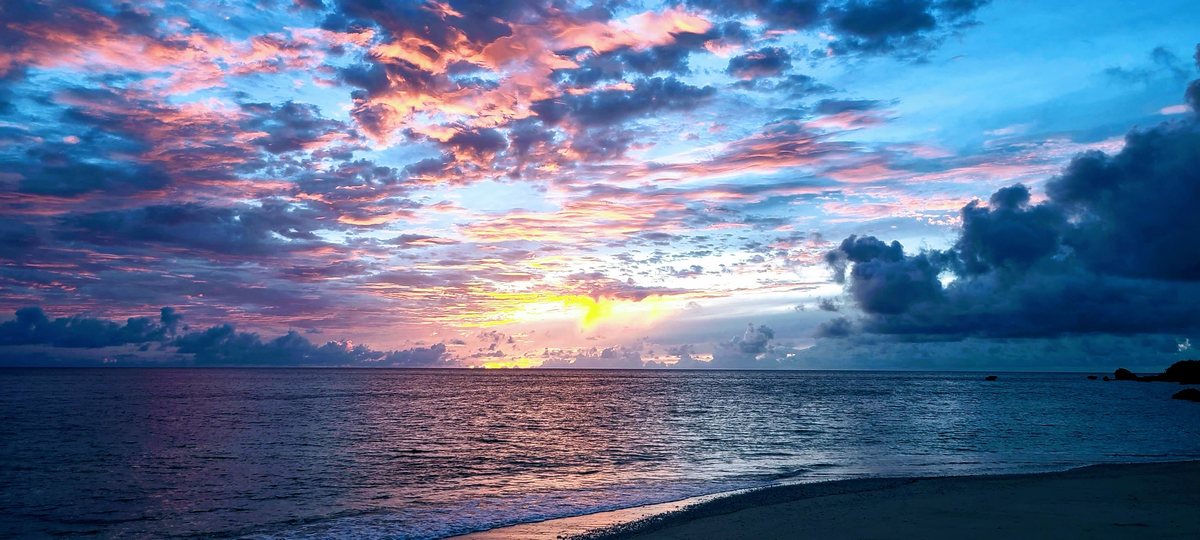
Sunsets and island scenery
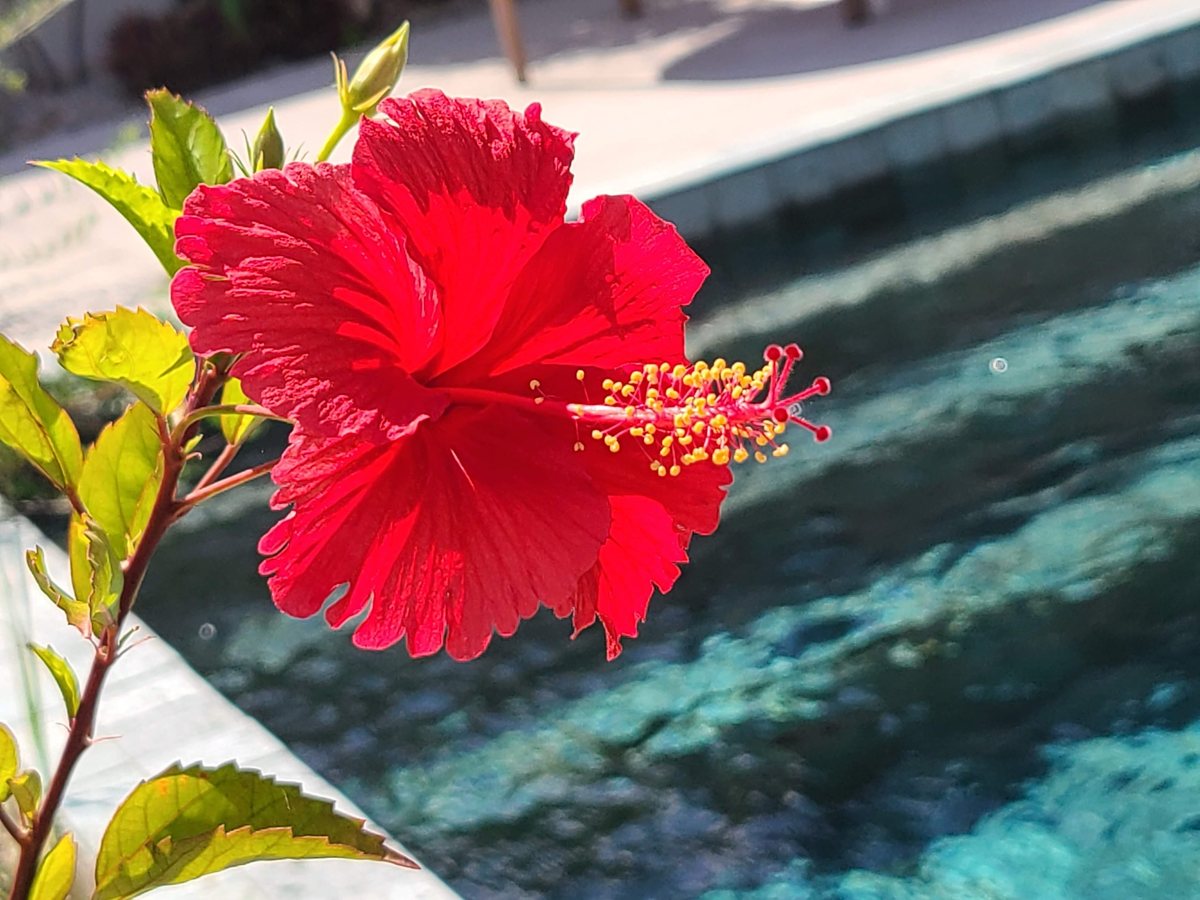
Away from the reefs, Miyakojima is an easy place to slow down, with red hibiscus flowers and sunsets over the sea. The tourism guidelines include a few habits that keep the island pleasant for everyone: take your rubbish home with you, don't walk around town or residential areas in just your swimsuit, and don't light barbecues, campfires or fireworks on beaches or in parks. The island relies on limited groundwater, so the guidelines also ask visitors to save water.
Getting to Miyakojima and getting around
The Miyakojima Tourism Association says the island can only be reached by plane; there's no passenger ferry. There are two airports:
- Miyako Airport: about 45 minutes from Naha (Okinawa), with direct flights from Tokyo (Tokyo), Osaka (Osaka), Nagoya (Aichi) and Fukuoka (Fukuoka), some of them only in certain seasons. There are also short flights to Ishigaki Island and Tarama Island.
- Shimojishima Airport on Shimoji Island, next to Irabu Island: about 50 minutes from Naha (Okinawa), with flights to Tokyo (Tokyo) and Kobe (Hyogo), and in some seasons Fukuoka (Fukuoka).
The association notes that flight numbers and times change with the season, so check with the airlines. On the island, the main ways to get around are taxis, buses and rental cars; the tourism guidelines say public transport isn't well developed and most visitors rent a car. Before you pick one up, read our guide to driving a rental car in Okinawa, including the license you need. Keep an eye out for Mamoru-kun as you drive, and don't stop on the bridges to take photos. More ideas for the region are on our Okinawa destination page.
Last reviewed: October 4, 2026. Rules, flights and conditions change. Please check the official pages below before you go.
References
- Miyakojima Tourism Association: Meets More MIYAKOJIMA (Japanese)
- Miyakojima Tourism Association: Access (Japanese)
- Miyakojima Tourism Association: Protecting the island, sustainable tourism guidelines and certified operators (Japanese)
- Miyakojima Sustainable Tourism Council: "Miyako Promise", 24 actions for travelers (Japanese)
- Miyakojima City: Nudokubiabu, city historic site (Japanese, with English)
- Okinawa Labo (travel site, not official, September 15, 2020): How to get to Nudokubiabu (Japanese)
- Miyakojima Tours (tour booking site, not official, August 2026): Nudokubiabu guide (Japanese)
- TOKYO FM (August 17, 2017): Do you know Miyakojima Mamoru-kun? (Japanese)
- Kuruma News (May 19, 2022): The 21 Miyakojima Mamoru-kun dolls (Japanese)
- Okinawa Times (October 4, 2020): Mamoru-kun found after 10 years returns to duty (Japanese)
- UHMS: Diver Medical Participant Questionnaire (English, PDF)
- Japan Airlines: Domestic flights, notes for divers (Japanese)
- Japan Airlines: Before you travel, health advice (Japanese)