Okadera in Asuka (Nara): Flower Water Basins, Dahlias, the Stone Cave and the Bus from Kashiharajingu-mae
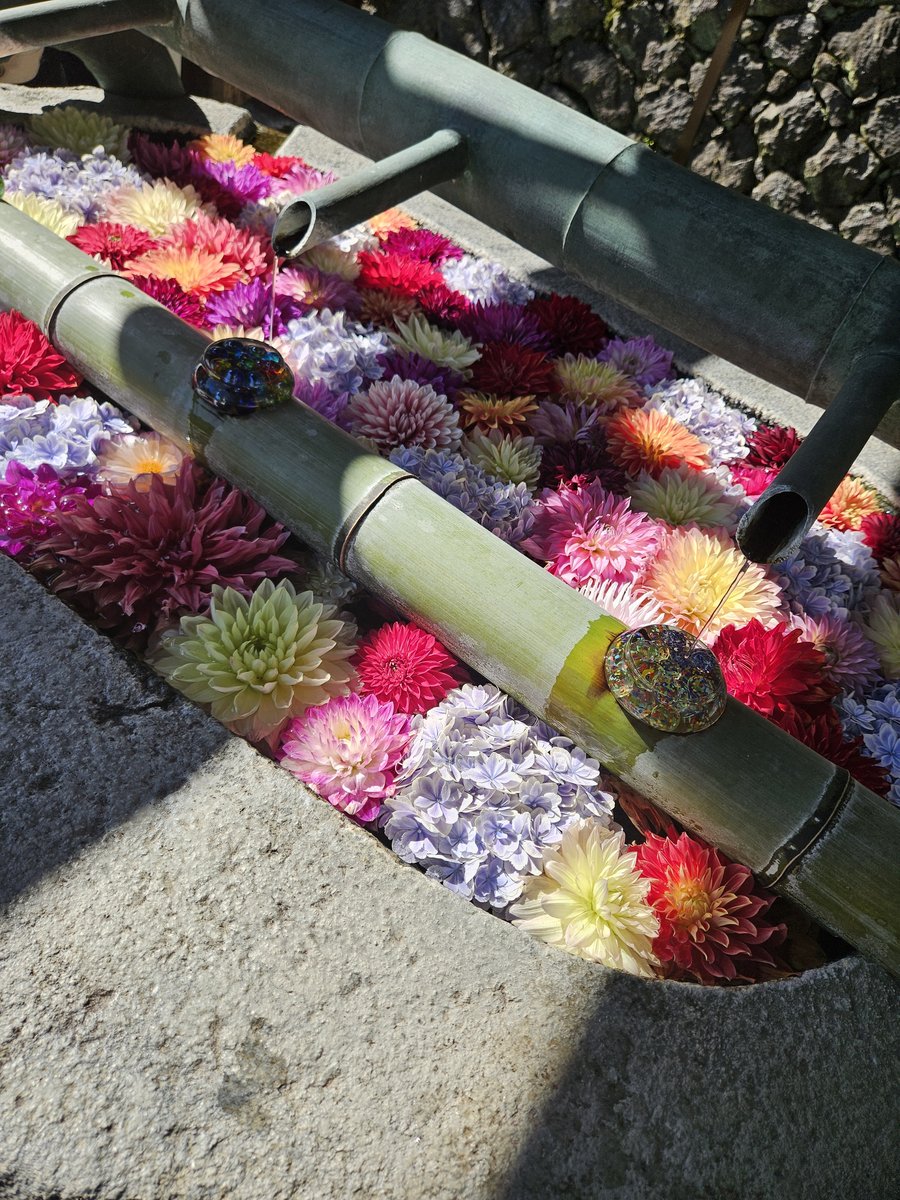
Okadera is a hillside temple in Asuka (Nara), the quiet farming village where Japan's early capital, Asuka-kyo, once stood. It is temple No. 7 of the Saikoku pilgrimage (a route of 33 temples of Kannon, the Buddhist figure of compassion, across western Japan), and it calls itself Japan's first temple for yakuyoke, prayers to ward off bad luck. Many visitors now come for its flowers: the temple floats dahlias on a pond and in its water basins in spring, and fills the grounds with potted hydrangeas in early summer. This guide sets out the flower seasons, the hours and fees, the bus from Kintetsu Kashiharajingu-mae Station or Asuka Station, and the manners the temple and the village ask for, all from the official pages (checked October 2026).
Asuka is a little off the usual Kyoto and Nara route, and the station named after the temple is not the one to use. A little planning makes the half day easy.
- Open 8:30 to 17:00 (December to February until 16:30); adults pay 500 yen.
- Take the Akakame bus from Kashiharajingu-mae Station (East Exit) or Asuka Station to Okadera-mae, then walk about 10 minutes. Don't get off at Okadera Station.
- The floating dahlias are a Golden Week event; hydrangeas run from late in May to early July, and the autumn leaves from early or mid November to early December.
- On October 18, 2026 (the third Sunday of October), the paintings inside the three-storied pagoda are shown on their one open day of the year.
What Okadera is
The temple's formal name is Ryugaiji. According to the temple, it was founded about 1,300 years ago by the monk Gien at the wish of Emperor Tenji. The name means "the temple of the dragon's lid": the legend says Gien shut a dragon that troubled the farmers of Asuka into a pond and covered it with a large stone. That pond, the Ryugai pond, is still in the grounds in front of the main hall, and an old saying holds that touching the lid stone brings rain.
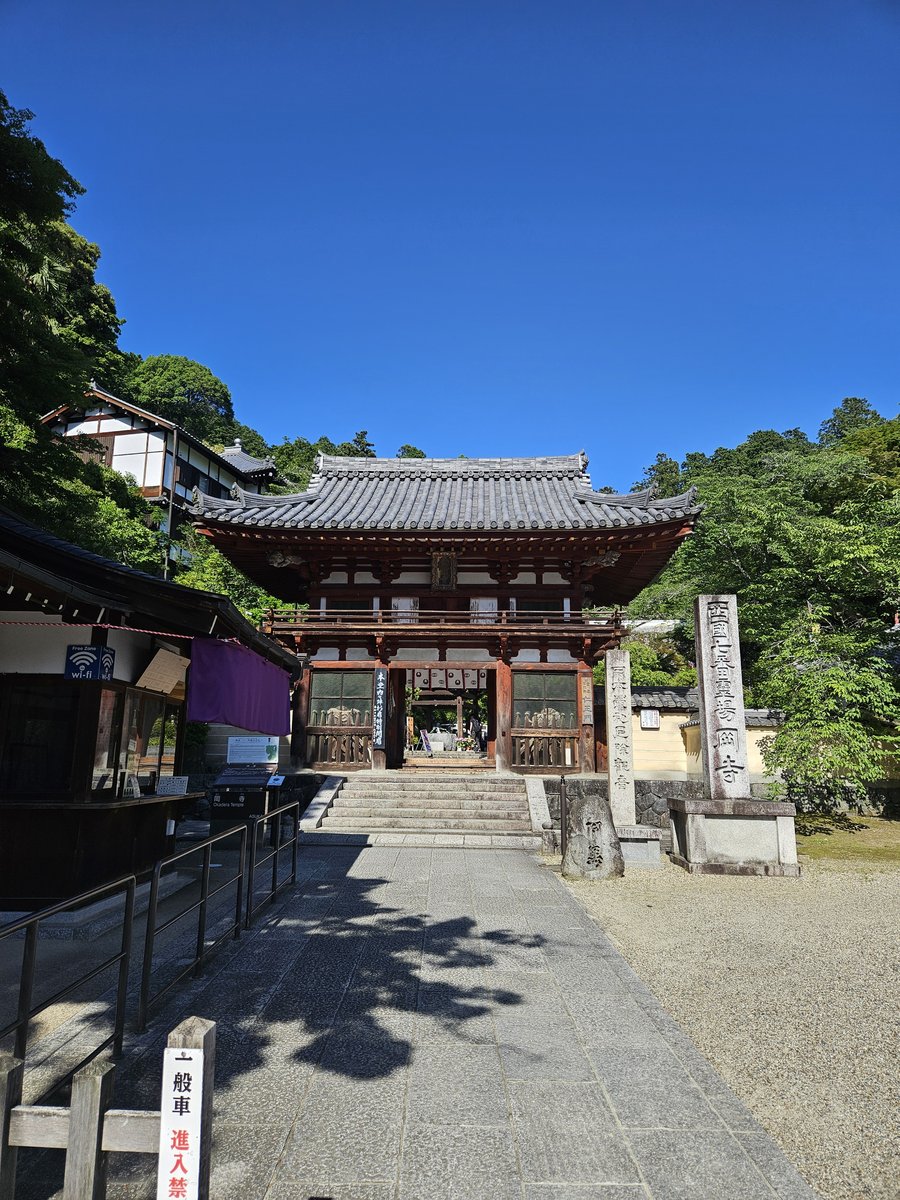
The main image, a seated Nyoirin Kannon from the Nara period, is 4.85 meters tall and is the largest clay Buddhist statue in Japan. It is an Important Cultural Property, and the temple counts it with the Great Buddha of Todaiji and the Kannon of Hasedera as one of Japan's three great Buddhas. The Niomon gate at the entrance, built in 1612, is also an Important Cultural Property.
Okadera is a living temple. Many Japanese people come to pray for protection in a yakudoshi, an age traditionally thought to bring bad luck, and you may see prayers and ceremonies going on. From January to March the main hall is used for these yakuyoke ceremonies, so ordinary visitors can't go inside the inner sanctuary then; it is open to everyone from April to December, except during some events.
The dahlia pond and the flower water basins
The temple's spring event is called Hana no Ike ("the flower pond"): dahlias are floated on the pond just inside the Niomon gate, in the temizuya (the water basin for rinsing your hands) and in bowls in front of the main hall. The temple holds it during Golden Week (a run of national holidays from late April to early in May), from the late-April holidays until about the end of Golden Week. It says the dates change each year with the calendar and the flowers, so check its official social media as the season comes near.
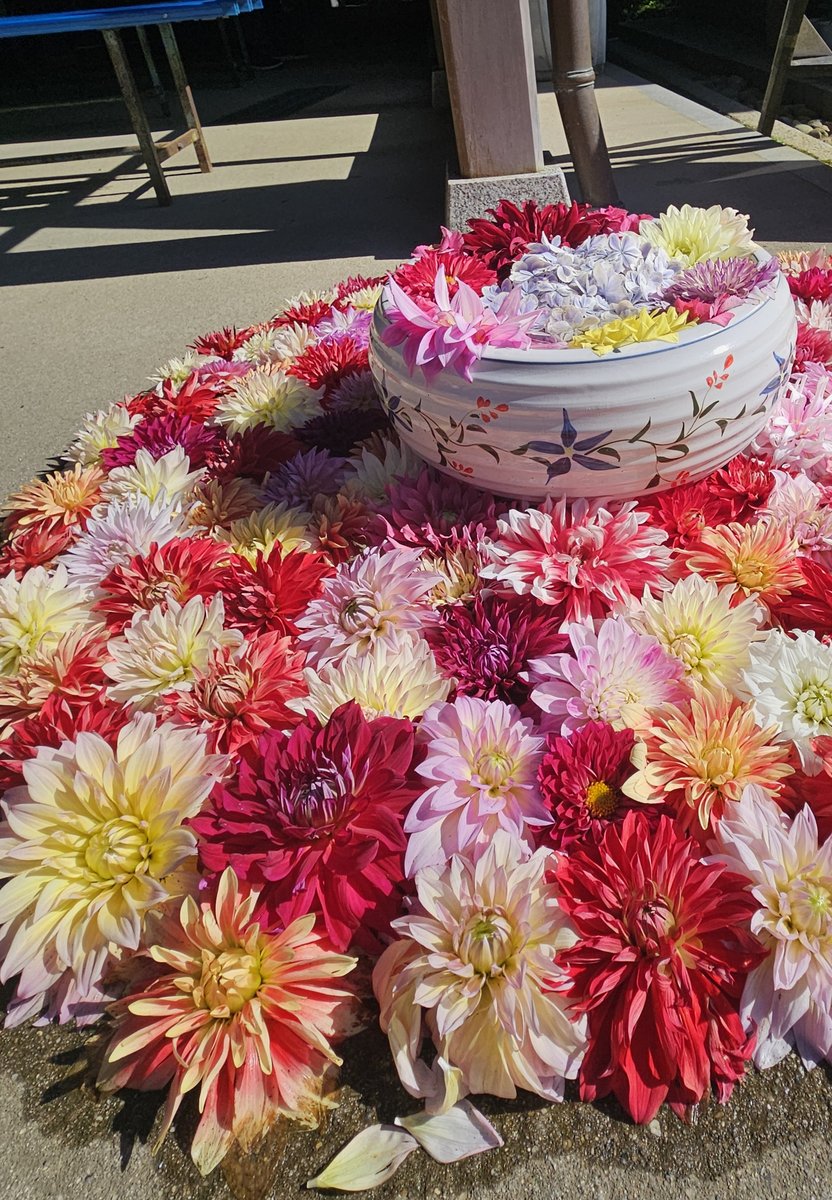
The temple says it began floating flowers in spring 2015, and that people now call it a forerunner of the hana-chozu (flower water basin) displays seen at temples and shrines across Japan. The basins are part of a working temple. Take your photos without blocking them, and step aside for other visitors.
Flowers through the year
The flower seasons below are from the temple's list of annual events. The exact dates move a little each year.
- Spring: about 3,000 rhododendrons bloom from mid-April until early in May, especially along the path to the Okunoin (the inner precinct at the back), with peonies and other flowers. Okadera joins three other Nara temples (Tsubosakadera, Hasedera and Murouji) in a spring flower route; in 2026 it ran from March 14 to May 6.
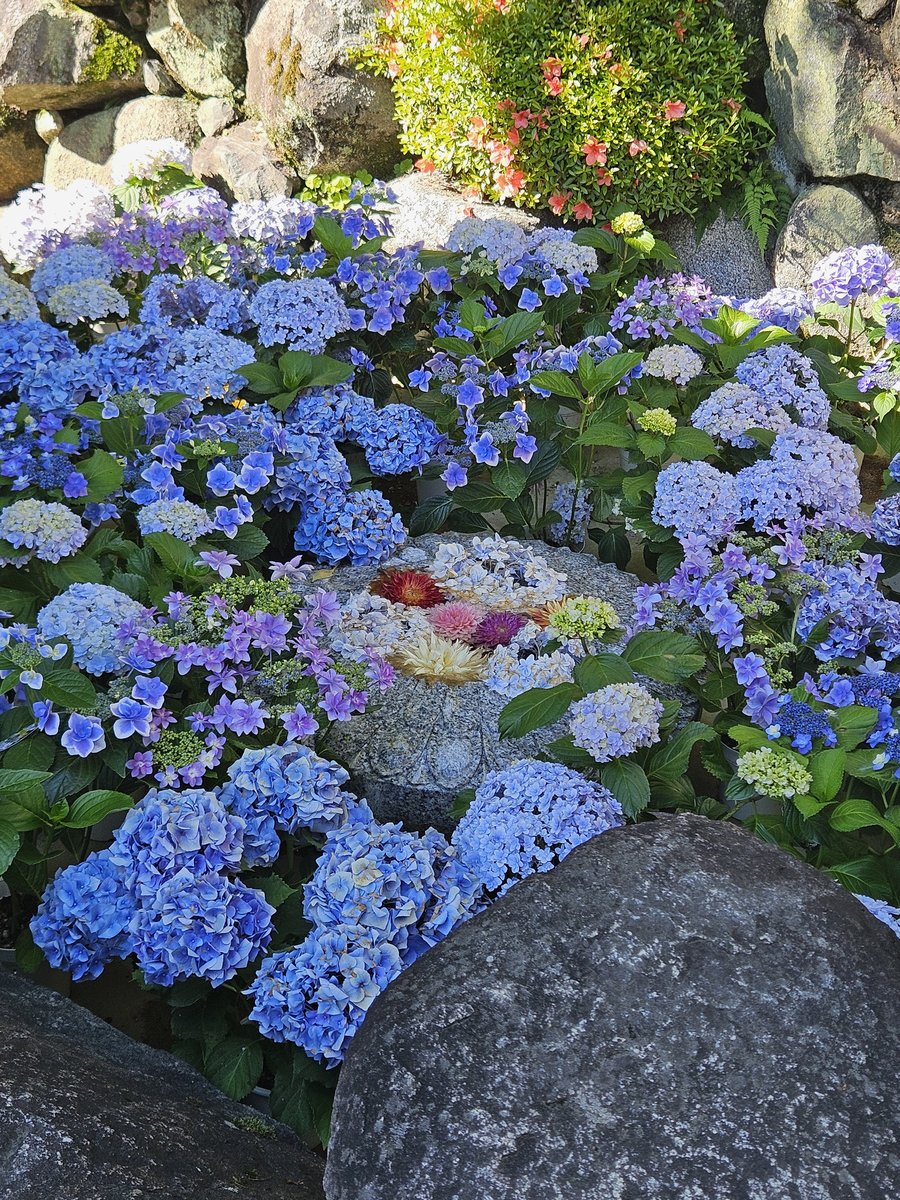
- Early summer: the same four temples hold a hydrangea route from late in May to early July, decorating their grounds with potted hydrangeas as well as those in the ground. In 2026 it ran from June 6 to July 5.
- Autumn: the temple says the maples around the grounds turn red from early or mid November to early December. Since 2023 it has held an evening light-up of the leaves with Japanese umbrellas in late November. The 2026 dates had not been announced when we checked; the temple posts them on its official social media.
The four temples also give limited-edition goshuin during these routes. A goshuin is a temple's stamp with handwritten brush lettering, written into a book; it is a record of your visit and costs a small fee.
The 2027 dates had not been published when we checked.
Inside the grounds: stone steps and the main hall
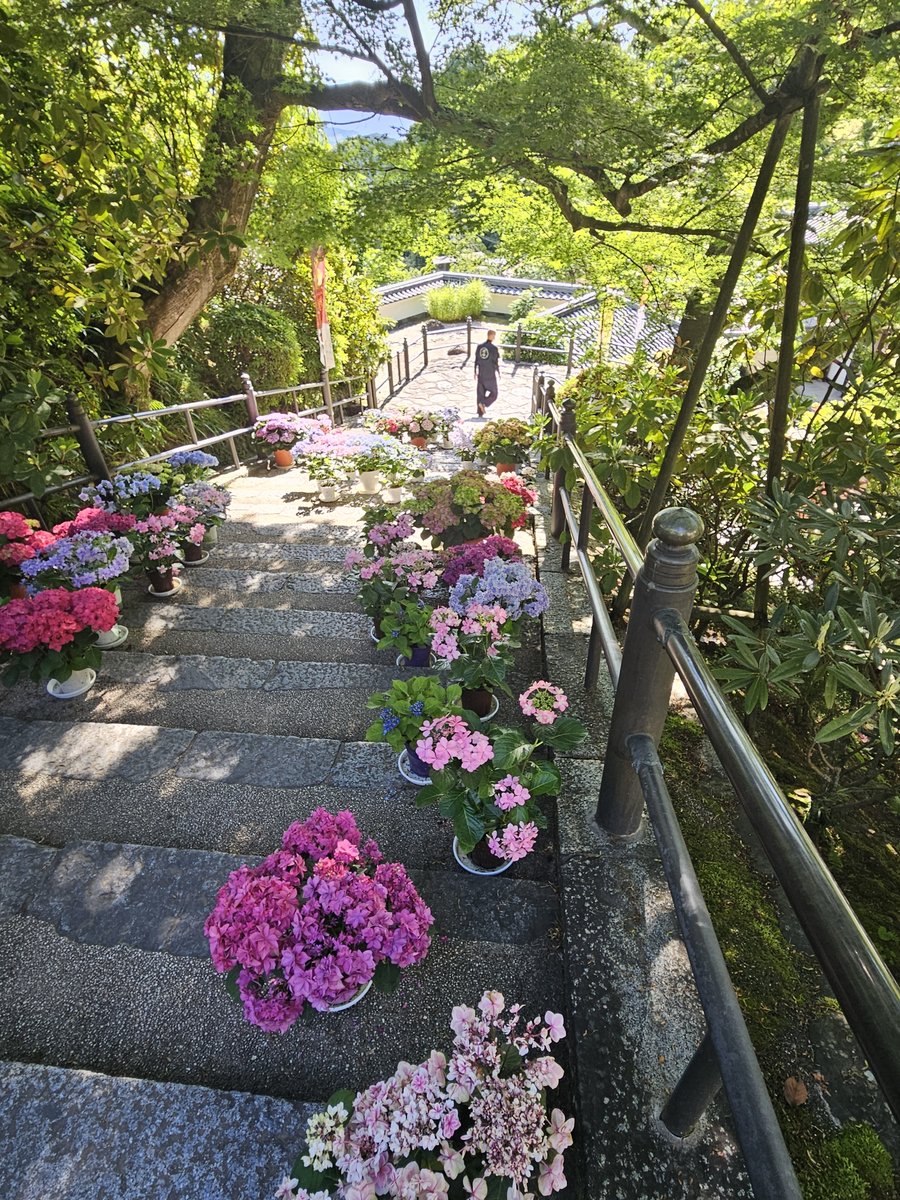
From the Niomon gate, stone steps lead up to the main hall; in late May 2024 they were lined with potted flowers. The temple sits on the side of a hill, so comfortable shoes help. In the grounds stand a bell tower, whose bell many visitors ring, and the three-storied pagoda. The temple says the pagoda was rebuilt in 1986, 514 years after the old one fell in a storm. Its door paintings and wall paintings are shown once a year, on the third Sunday of October, for the memorial day of the founder Gien; in 2026 that is October 18.
The stone cave and the path to the Okunoin
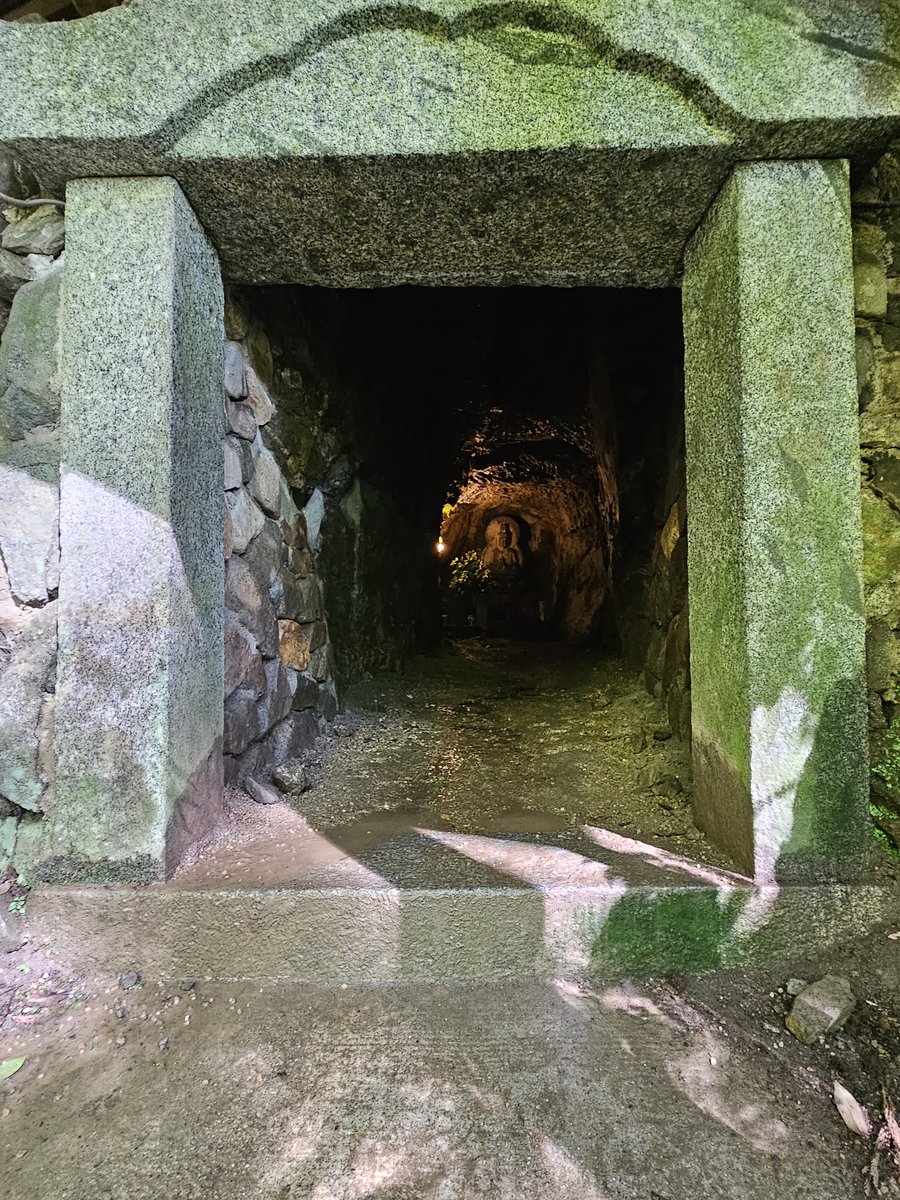
Behind the main hall, a path climbs to the Okunoin. Along the way are a thirteen-tiered stone pagoda above the Ryugai pond, a memorial pagoda said to be Gien's, and the Rurii well. The temple says the well's spring water is linked to Kobo Daishi (the monk who founded the Shingon school) and was once drunk to ward off illness, but it can't be drunk now. At the end of the path, past a small Inari shrine, is the Miroku cave, a cave hall with a seated statue of Miroku, the Buddha of the future, inside. Walk in quietly, and watch your step on the wet stone.
Hours and admission
| Item | Details |
|---|---|
| Opening hours | 8:30 to 17:00 (December to February: 8:30 to 16:30) |
| Last entry | 16:50 (December to February: 16:20) |
| Adults and university students | 500 yen |
| Junior and senior high school students | 400 yen |
| Elementary school age and younger | Free |
| Inner sanctuary of the main hall | April to December (not January to March) |
The Asuka Tourism Association lists the temple as open every day. Phone: 0744-54-2007 (from abroad +81-744-54-2007), 8:30 to 17:00.
Getting there from Kashiharajingu-mae or Asuka Station
Asuka is south of Nara city. According to the Asuka Tourism Association, Kintetsu Kashiharajingu-mae Station is about 55 minutes from Kintetsu Kyoto Station by limited express, and about 40 minutes from Abenobashi Station (Kintetsu) in Osaka by express. Asuka Station is about 5 minutes further on the Kintetsu Yoshino Line.
- The bus: the Akakame ("red turtle") loop bus, run by Nara Kotsu for Asuka Village, connects Kashiharajingu-mae Station (East Exit) and Asuka Station by way of the main sights. The Asuka Tourism Association says it runs about once an hour, and about every 30 minutes in busy seasons. In the current timetable, extra buses run on Saturdays, Sundays and holidays from September 19 to November 15, 2026. Get off at Okadera-mae, then walk about 10 minutes.
- Fares: fares depend on distance; for example, Kashiharajingu-mae East Exit to Ishibutai is 440 yen for adults. If you will ride several times, the Asuka loop bus free pass is 750 yen for one day or 1,100 yen for two days (adults; children 380 yen and 550 yen). Paper passes are sold at the Kintetsu Kashiharajingu-mae Station central ticket gate and at Asukabito no Yakata, the information center in front of Asuka Station, among other places. A mobile version is sold in Jorudan's Norikae Annai app.
- Okadera Station: despite its name, the temple advises against using Kintetsu Okadera Station. There is no bus or taxi from there, and walking takes nearly an hour.
- Taxi: the temple says taxis are available at Kashiharajingu-mae Station.
- Bicycles: several rental cycle shops are in front of Asuka Station, and an electric bike makes the ride more comfortable. Okadera is up a slope at the east side of the village. For bike rules in Japan, see our guide to rental bicycles in Japan.
- Luggage: there are coin lockers in front of Asuka Station, and Asukabito no Yakata keeps bags for 500 yen per item.
Driving? The temple says the road up to its parking is very narrow, and passing an oncoming car is difficult. It recommends that first-time visitors and less confident drivers use the private parking lots in front of the gate (not run by the temple), about a 5-minute walk, or public transportation. Asuka Village lists the Okadera parking lot with about 70 spaces; paid lots in the village cost 500 yen per visit for a standard car.
Manners at the temple and in Asuka
For the basics of praying at a Buddhist temple (no clapping, how to use the incense and the water basin), see our guide to shrines and temples in Japan. At Okadera, the temple has also asked for the following:
- Photos: the temple does not allow portrait photo shoots or photo sessions that get in other visitors' way without permission. It reminds visitors that a temple is not a photo studio. Don't take over a spot with chairs, stepladders, folding benches, picnic mats or bags.
- Pets: keep dogs on a lead at all times in the grounds, don't block the paths for pet photos, and don't take pets into the main hall or other halls. Staff may ask people who break these rules to leave.
- The flowers: the floating flowers and the potted hydrangeas are there to welcome visitors. Please enjoy them without touching or taking any.
The whole of Asuka Village is protected by a special national law, the Asuka Act, which keeps its landscape and ancient sites. The village's visitor guidelines ask you to:
- stay out of rice fields, farms and private land;
- not pick plants or take animals or insects home;
- use public toilets only, and take your rubbish home with you;
- not park on road shoulders or private land;
- ride bicycles in single file, not spread across the road;
- not climb on, damage or leave things at the ancient sites, and not take even small pieces away.
Plan your Nara trip
Okadera fits well into a half day in Asuka with the bus or a rental bike. If you will stay in Nara city, our guide to where to stay in Nara compares the areas near the stations, and our Nara destination page has more ideas, including Todaiji, Kasuga Taisha and the deer.
Last reviewed: October 16, 2026. Flower events, bus times and fares can change, and the 2026 autumn light-up and the 2027 flower dates were not yet announced. Please check the official pages again before you go.
Official sources (checked October 2026)
- Okadera: official site, hours and admission (Japanese)
- Okadera: access (Japanese)
- Okadera: annual events and flower seasons (Japanese)
- Okadera: the grounds, the pagoda and the Okunoin (Japanese)
- Okadera: the main image (Japanese)
- Okadera: spring flower route 2026 and the dahlia pond (Japanese)
- Okadera: hydrangea route 2026 (Japanese)
- Okadera: rules for pets and photography (Japanese)
- Okadera: visiting by car (Japanese)
- Asuka Village: the Akakame loop bus and timetable (Japanese)
- Asuka Village: Asuka loop bus free pass (Japanese)
- Asuka Tourism Association: Okadera (Japanese)
- Asuka Tourism Association: access and parking (Japanese)
- Asuka Tourism Association: travel tips, bus pass, rental cycles and luggage (Japanese)
- Asuka Tourism Association: visitor guidelines (Japanese)