Walking on Snow and Ice in Sapporo (Hokkaido): How Not to Slip, and the Free Sand Boxes
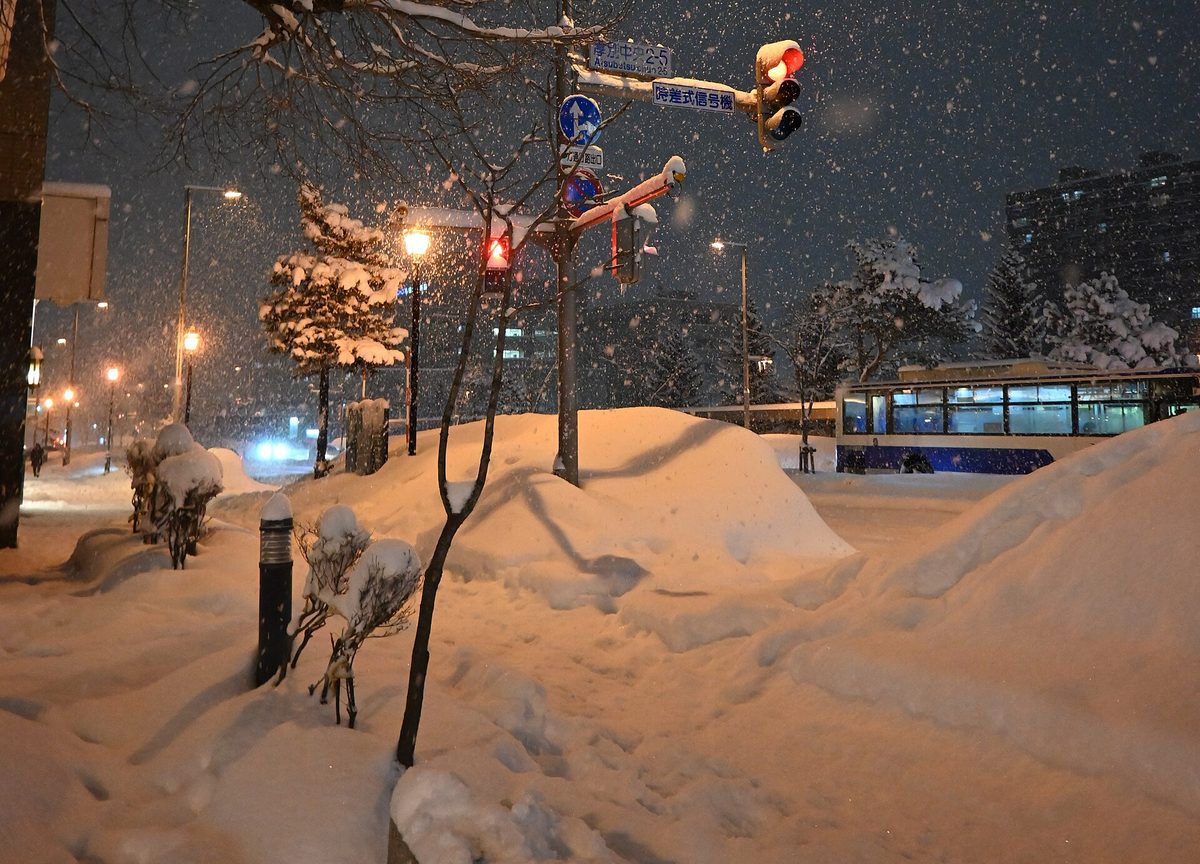
Snow in Sapporo (Hokkaido) is beautiful, and the sidewalks under it can be as slick as a skating rink. Every winter, the city's fire bureau counts the people taken to hospital by ambulance after slipping on snowy or icy roads, and in recent winters the number has been around 1,800. Most were simply walking along a sidewalk. This guide uses the city's own figures and advice so that your trip, whether for the snow festival or a ski holiday, doesn't end with a sprained wrist.
This page may contain affiliate links. If you buy through them, we may earn a commission at no extra cost to you.
- How many people fall, and when
- The "penguin walk": how locals are told to walk
- Where it's most slippery
- Free sand boxes, the next-morning ice forecast, and shoe grips
How many people fall
The fire bureau of Sapporo (Hokkaido) publishes a summary of ambulance transports for "falls on snowy roads" every winter. In the winter from November 2024 to March 2025, 1,869 people were taken to hospital this way. About 65.2% of the injuries were classed as mild, 34.0% as moderate and 0.8% as severe. 75.0% of the falls happened on roads, including sidewalks and pedestrian bridges.
February, the month of the snow festival, had the most transports that winter. The city also notes that falls tend to rise from about 7 a.m. to noon, when many people are out commuting.
The "penguin walk": how to walk on ice
The fire bureau gives three simple tips, the same ones it gives residents:
- Take small steps. Long strides lift your feet higher and swing your weight more, which makes falls easier.
- Put your whole sole down. On glassy ice, walk with small steps and the whole sole flat, almost like shuffling. Don't drag your feet completely, though; lift them slightly, or you may trip.
- Don't rush. When you're in a hurry you forget all of the above. Leave time, look for slippery patches and avoid them. Walking while looking at your phone makes it harder to notice the surface.
Where it's most slippery
The Winter Life Promotion Council, which works on fall prevention with data from the city's fire bureau, reports on its site "Tsuru-tsuru" (slippery) that falls are concentrated in the Susukino and Odori areas of Sapporo (Hokkaido), and are common around several subway stations. It notes fewer falls along Ekimae-dori between Sapporo Station and Susukino, and suggests that the underground shopping streets, the underground walkway and heated roads there may be part of the reason. When it's icy, using the underground walkways for that stretch is one easy option.
Other places to watch: building entrances, where melted snow refreezes, and crossings, where the ice is polished by many feet and car tires.
Free sand boxes at busy corners
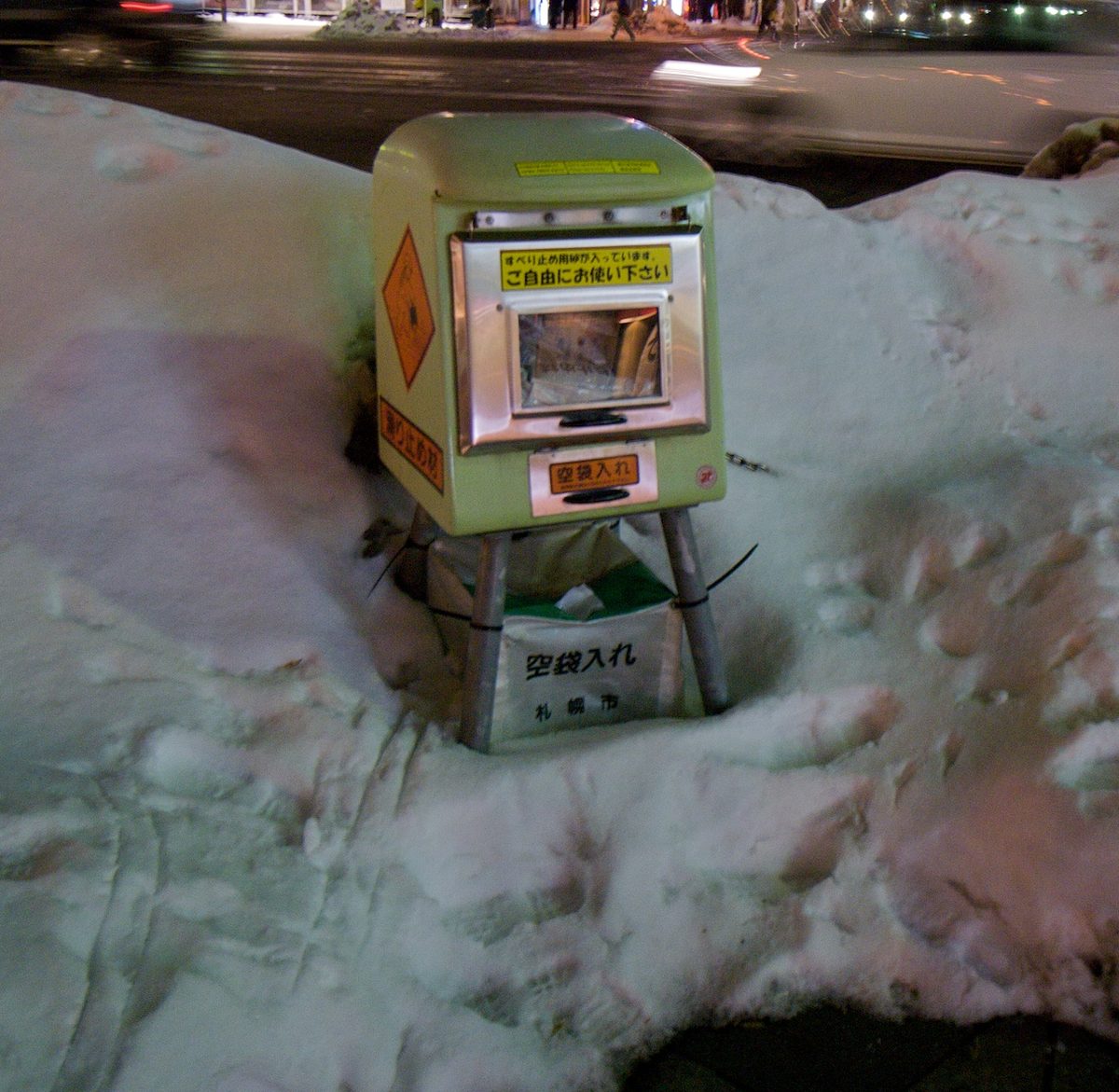
Sapporo (Hokkaido) places sand boxes for pedestrians at busy intersections, such as along Ekimae-dori and around subway and JR stations. According to the city's page on sand spreading, the anti-slip sand inside is for spreading on roads (sidewalks and roadways), and anyone can use it. The city asks people to spread some when the surface is icy, for their own safety and for the people who come after them.
The city's Q&A explains how: take a sand bag out of the box, open it at the cut on the edge, and spread it over a wide area. Put the empty bag in the box's slot for empty bags; some boxes have a bag hanging on them for this.
Check the ice forecast and your shoes
- "Tsuru-tsuru" forecast: the council's site publishes a forecast of how slippery Sapporo (Hokkaido)'s sidewalks will be the next morning (7 to 10 a.m.), in three levels from "not very slippery" to "very slippery". The fire bureau recommends checking it before going out.
- Shoes: the fire bureau says slip-resistant shoes help prevent falls. The tourism association of Furano (Hokkaido) notes that removable anti-slip grips for shoe soles are sold at home centers and shoe shops in Hokkaido.
If you fall
If you hit your head hard, or can't stand up, ask someone nearby for help and call 119 for an ambulance.
A quick checklist
- Check the next-morning ice forecast.
- Wear shoes with grip, or add removable grips.
- Walk in small steps with the whole sole down; keep your phone in your pocket.
- Use underground walkways when the surface is glassy.
- See a sand box at an icy corner? Spread a little for yourself and the next person.
More on Hokkaido: bears and foxes, the farm fields of Biei and Furano (Hokkaido), a bowl of miso ramen to warm up, and our Hokkaido destination page.
Last reviewed: October 4, 2026. Figures are from the city's summary for November 2024 to March 2025. Please check the official pages below for the latest winter.
References
- Sapporo City (Hokkaido) Fire Bureau: Ambulance transports after falls on snowy roads, and prevention tips (Japanese)
- Sapporo City (Hokkaido) Fire Bureau: Summary for fiscal 2024 (Japanese, PDF)
- Winter Life Promotion Council: Statistics on winter falls (Japanese)
- Sapporo City (Hokkaido): Sand spreading and sand boxes (Japanese)
- Sapporo City (Hokkaido): Q&A, slippery roads (Japanese)
- Furano Tourism Association: FAQ, winter clothing (Japanese)