Bonnō (煩悩) and Zen: The 108 Bells of New Year's Eve, and How Zen Temples Talk About Worldly Desires
Quick answer
- The Soto school translates bonnō as "mental afflictions"; the three roots are greed, anger and delusion.
- The best-known explanation is that 108 is the number of bonnō; others are 12 + 24 + 72 = 108 and 4 × 9 + 8 × 9 = 108.
- Engakuji's abbot writes that ringing the bell does not make bonnō disappear; the temple rings it praying for peace.
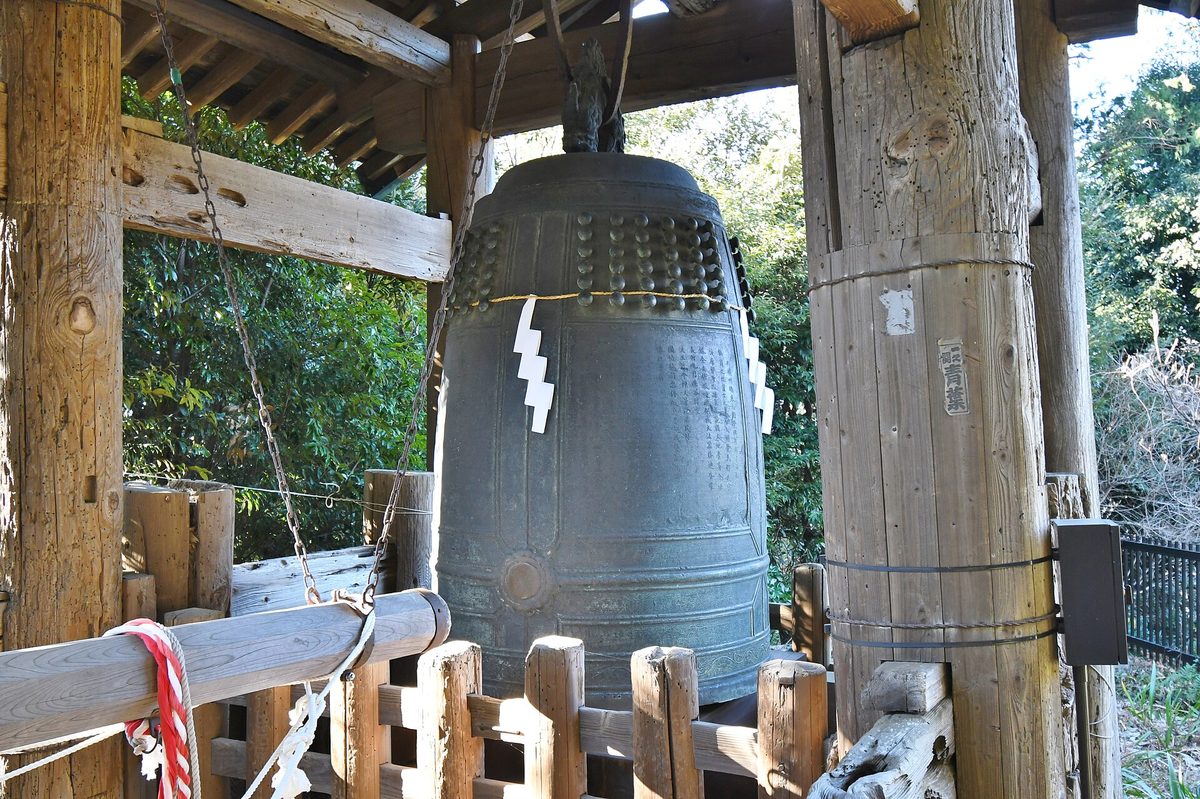
If you spend New Year's Eve in Japan, you may hear temple bells ringing slowly through the night. This is joya no kane (除夜の鐘), and you'll often be told that the bell is struck 108 times, once for each of our 108 bonnō (煩悩), usually translated as "worldly desires." This short column looks at what the word bonnō means in Buddhism, why the number 108 has more than one explanation, and how Zen temples themselves talk about it, using the official websites of the Soto and Rinzai schools and of Engakuji, a Rinzai head temple.
It's a reading piece, not a lesson in religion. Knowing the background simply makes the sound of the bell a little more interesting.
This page may contain affiliate links. If you buy through them, we may earn a commission at no extra cost to you.
- Bonnō are the "mental afflictions" behind suffering; the three roots are greed, anger and delusion
- 108 = the number of bonnō is the best-known explanation, but the Soto school lists other ways to count it
- Engakuji's abbot writes that ringing the bell doesn't make bonnō disappear
- Bell customs differ by temple: check each temple's own notice in December
What does bonnō mean?
The Soto school's official English glossary translates bonnō as mental afflictions (Sanskrit kleśa): "unhealthy states of mind that vitiate all actions and are the root causes of suffering." It names three principal ones, often called the three poisons: greed (ton 貪), anger (jin 瞋) and delusion (chi 癡).
So "worldly desires" is a handy translation, but the word is wider than wanting things. Anger, and not seeing things as they are, count too.
Why 108 bells on New Year's Eve?
The Soto school's page on annual events explains that the jo (除) in joya (New Year's Eve) carries the sense of cleaning and purifying, so joya is the night of clearing away the old year. On the 108 strikes, it says there are several explanations, and that the best known is that 108 is the number of human bonnō, and the bell is rung to remove them. It mentions two other explanations as well.
- The calendar. The 12 months, the 24 solar terms and the 72 shorter seasonal periods of the old calendar add up to 108.
- A play on words. Shiku hakku (四苦八苦) means "all kinds of suffering," but the numbers in it can be read as 4 × 9 + 8 × 9 = 108. The abbot of Engakuji says he doesn't think this one means much.
- Counting the senses. Engakuji's abbot quotes one dictionary explanation: each of the 6 senses (eyes, ears, nose, tongue, body and mind) meets things as pleasant, unpleasant or neither, which gives 18; each of those can be pure or impure, which gives 36; and those 36 run through past, present and future, which gives 108.
The Soto page also notes that a temple bell is normally rung 18 times each morning and evening, and that ringing 108 times is said to have begun in China in the Song dynasty. It quotes an old Zen monastery code, Zen'en Shingi, which describes 18 slow strikes and 18 quick strikes, repeated three times, for 108 in all. The abbot of Engakuji adds that when the custom of the New Year's Eve bell began is not really clear, and that ways of counting the 108 vary.
How Zen temples look at bonnō
Zen doesn't treat bonnō as a list to tick off in one night. A few things the temples say themselves:
- "Inexhaustible." The Four Great Vows, recited in Zen temples, include the line "Mental afflictions are inexhaustible; I vow to cut them off" (bonnō mujin seigandan 煩悩無尽誓願断). The Rinzai school's introduction to Zen lists the same four vows. In other words, the vow is a commitment to keep practicing, not a promise that the work will ever be finished.
- The bell doesn't do it for you. In a column on Engakuji's official site, the abbot writes that striking the bell does not make bonnō disappear: if it did, he would ring it every day. He even suggests that wanting to get rid of bonnō by ringing a bell could itself be a bonnō. The temple rings it, he says, praying that the world may be peaceful and that everyone may be happy.
- A time to look at yourself. The Rinzai school's page on annual events describes New Year's Eve as a time to strike the bell, said to erase the 108 bonnō, to look at yourself again and shake off the dust of the year.
- Zazen starts with the body. The Soto school sums up zazen as chōshin (調身, settling your posture), chōsoku (調息, settling your breath) and chōshin (調心), and says that when the first two are in place, the mind settles naturally. Its English guide says that when thoughts arise, you should neither chase them nor fight them, but let them come and go.
- Any door will do. The Rinzai school's introduction says people may come to Zen through "the gate of health" or "the gate of bonnō," whichever brings them.
This is how the temples describe their own practice. This site makes no claim that zazen or the bell will remove worries or change your health.
Hearing the bells as a traveler
Many temples ring a bell on New Year's Eve, but who strikes it, and whether visitors can come in, is up to each temple:
- Engakuji in Kamakura (Kanagawa). The abbot writes that before the pandemic, visitors also took turns at the training hall bell, but that it is now rung by the monks only. He also writes that the temple's main gate stays open all night on New Year's Eve. The Ogane in the photo above is rung only a few times a year.
- Chion-in in Kyoto (Kyoto), a temple of the Jodo school (not Zen), is known for its huge bell, rung by 17 monks pulling together. For New Year's Eve 2025, its official page said visitors needed a ticket booked in advance, and could watch but not strike the bell. It also lists a rehearsal ringing on December 27.
- Other temples post their own plans, usually in December. Look for the temple's official notice for that year rather than older articles, and dress warmly: you may wait outside late at night.
Around the New Year, shops, museums and some transport keep holiday hours; see our guide to New Year closures in Japan. For bowing and quiet at the temple, see shrine and temple etiquette.
Trying zazen yourself
If the idea of settling body, breath and mind appeals to you, our zazen guide lists temples whose own websites confirm English guidance, prices and times, with what to wear and the manners in the hall.
For more of the Zen side of Japanese culture, read matcha, tea ceremony and Zen and shu-ha-ri and Zen.
Last reviewed: October 14, 2026. This is a short introduction based on the official pages listed below, not a complete account of Buddhist teaching. New Year's Eve plans change every year; please check each temple's own notice.
References
- Soto Zen (SOTOZEN.COM): Glossary, "mental afflictions" and "Verse of Four Universal Vows" (English)
- Soto Zen (SOTOZEN-NET): Annual events, year-end and New Year's Eve (Japanese)
- Soto Zen (SOTOZEN-NET): Zazen manners, chōshin, chōsoku and chōshin (Japanese)
- Soto Zen (SOTOZEN.COM): How to do Zazen (English)
- Joint Council for Japanese Rinzai and Obaku Zen (Rinnou.net): Annual events (Japanese)
- Joint Council for Japanese Rinzai and Obaku Zen (Rinnou.net): Introduction to zazen (Japanese)
- Engakuji: The abbot's column on the New Year's Eve bell and the 108 bonnō, January 5, 2023 (Japanese)
- Engakuji: The abbot's column on New Year's Eve and New Year's morning, December 31, 2025 (Japanese)
- Chion-in: New Year's Eve bell, 2025 visitor information (Japanese and English)