Finding a Toilet in Japan: Where Free Public Toilets Are, Asking at a Convenience Store, and the Word to Use
Japan has a lot of free, clean public toilets, but when you suddenly need one in an unfamiliar city, knowing where to look makes all the difference. This guide covers the usual places (train stations, department stores, parks, tourist spots and highway rest areas), how to politely ask to use the toilet at a convenience store, and one small vocabulary tip: in Japan, say "toilet" rather than "restroom".
- Where free toilets usually are, from stations to roadside stations
- Convenience stores: many let you use the toilet, but ask the staff first
- Say toire (toilet); "restroom" may not be understood
- The signs to look for, accessible toilets, and what to carry
Where to look first
JNTO, Japan's national tourism organization, notes that Japan has free-to-use public washrooms in train stations and other places. Here are the places most travelers pass every day:
Train stations
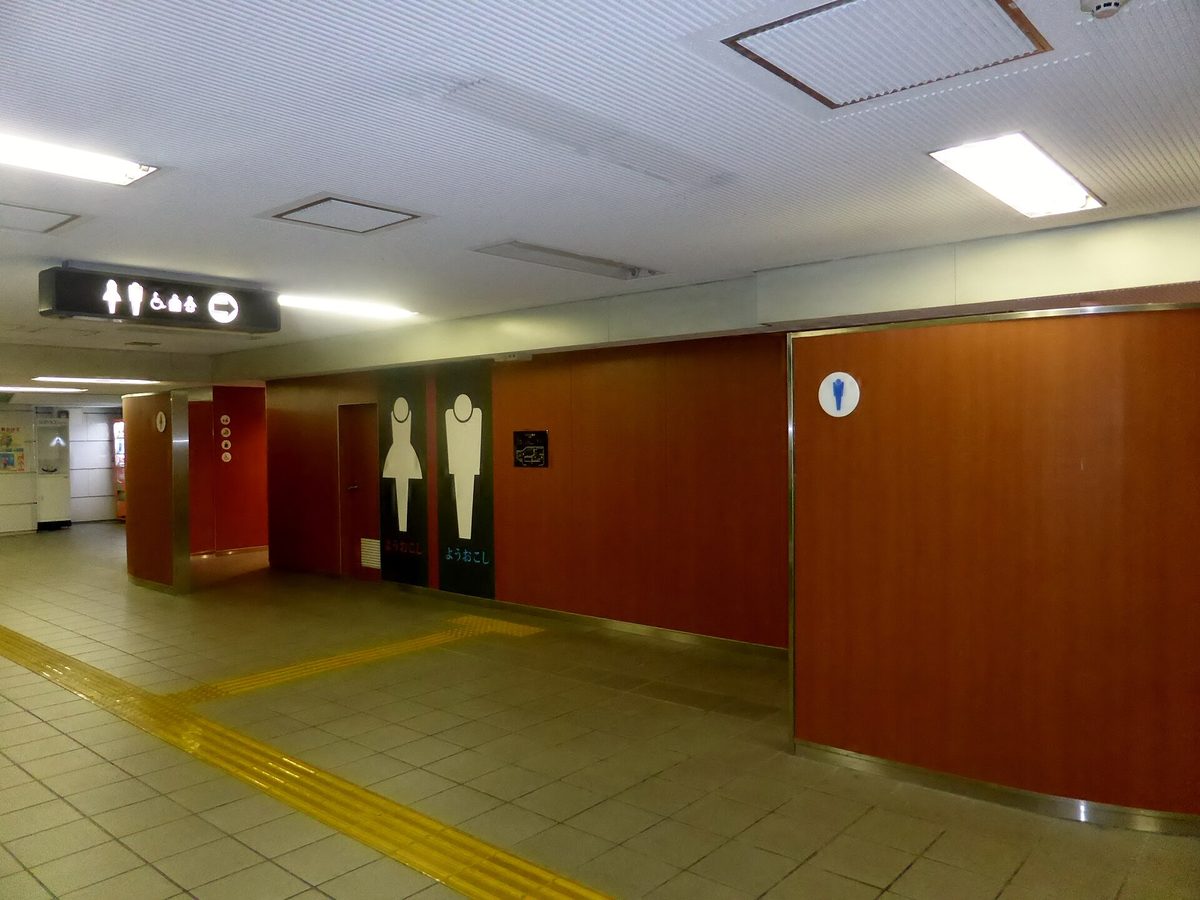
Almost every trip in Japan passes through stations, and most stations have toilets. One thing surprises visitors: at some stations the toilets are only inside the ticket gates, so you need a ticket or an IC card (a rechargeable transit card such as Suica or ICOCA) to reach them. At others they are outside the gates, or on both sides. The RakuRaku Odekake-net site, run by the Foundation for Promoting Personal Mobility and Ecological Transportation, shows for each station whether its toilets, wheelchair-accessible toilets and baby-changing facilities are inside or outside the gates. If you're already on the train, the next big station is usually a good bet. More on stations and IC cards in our guide to trains and buses in Japan.
Department stores, malls and tourist information centers
Department stores and large shopping malls have toilets for shoppers, often with baby-changing rooms and accessible toilets. For example, the Tokyo Metropolitan Government's GO TOKYO site lists restrooms and a multipurpose toilet among the facilities at Mitsukoshi in Ginza (Tokyo). Follow the toilet signs or the floor guide near the escalators. JNTO's road-trip guide also notes that most tourist information centers are equipped with toilets.
Parks, tourist spots and highway rest areas
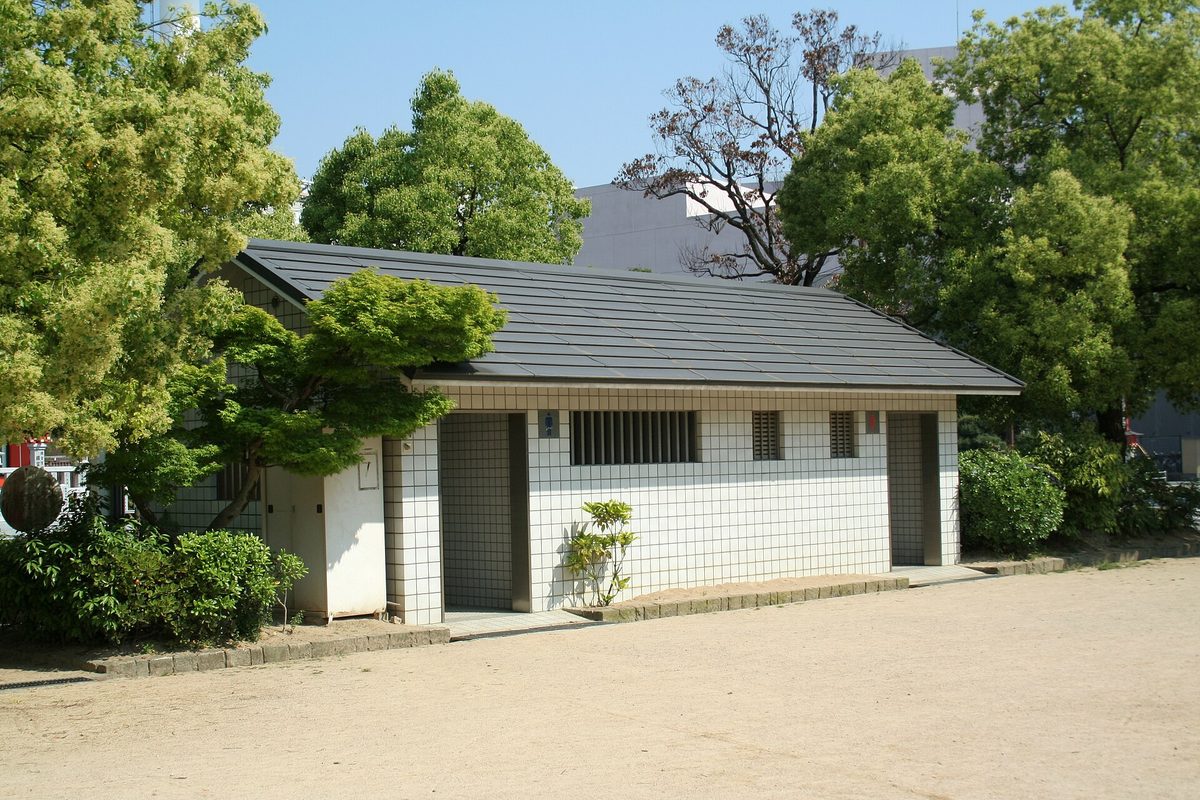
Many parks and sightseeing areas have free public toilets, usually in a small building of their own. Some cities go further:
- Kyoto: the city runs a "tourist toilet" (観光トイレ, kanko toire) system. Private facilities near sightseeing spots open their toilets to residents and visitors, and the city helps pay for their upkeep with its accommodation tax. In December 2025, the city said there were 57 of them.
- Shibuya (Tokyo): THE TOKYO TOILET, a project managed by the local city government, has redesigned public toilets in 17 locations.
- Roadside stations (道の駅, Michi-no-Eki): JNTO says there are more than 1,000 of these rest stops, each with free parking and toilets in operation 24 hours a day, 365 days a year.
- Expressway rest areas: JNTO notes that many have toilets and vending machines, and the bigger ones also have restaurants and souvenir shops.
If you're driving or on a long bus ride, these rest stops are the easiest places to plan your breaks around.
Convenience stores: ask the staff first
Convenience stores (konbini) are easy to find in Japanese cities, and many let customers use their toilet. But it's each store's choice. Nippon.com reported in 2026 that individual store owners decide whether to install a toilet and whether to open it to customers, so the big chains don't have exact figures; shoppers can use the toilet in the majority of stores. Some stores don't have a toilet at all, and some closed their toilets for a while during the COVID-19 pandemic. So don't count on every store.
The polite way to use one:
- Ask a staff member first, even if you can see the toilet door. A short phrase is enough: トイレを借りてもいいですか? (Toire o karite mo ii desu ka?, "May I use the toilet?").
- If the store has no toilet or they say no, thank them and try a station or a department store.
- Afterward, buying something small, like a drink or a snack, is a nice way to say thanks. It's a courtesy, not a rule.
My visit
I'm Japanese and I live in Japan, so here's my advice rather than a visit story. When you suddenly need a toilet, convenience stores are handy: just ask the staff first. Say "toilet", not "restroom". Many Japanese staff won't recognize "restroom".
Also, some convenience stores don't have a toilet at all, so don't count on every store. Stations and department stores are safer bets.
Say "toilet": words and signs
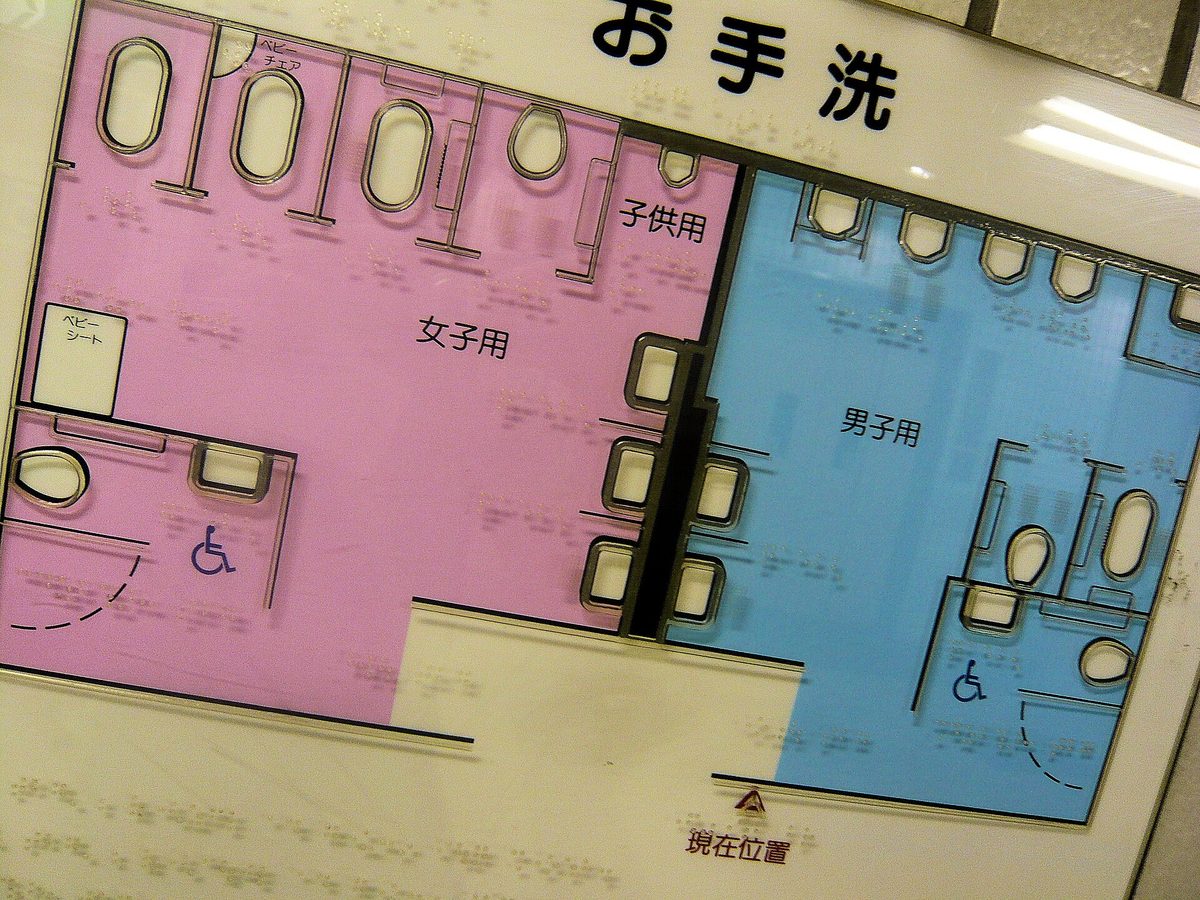
The everyday Japanese word is トイレ (toire), which comes from the English "toilet". English words such as "restroom", "washroom" or "bathroom" aren't part of everyday Japanese, so a clerk who doesn't speak much English may not understand them, while "toilet" is easy to catch. On signs you will see:
- The pictogram of a man and a woman side by side, often blue and red
- トイレ (toire): the everyday word
- お手洗い or お手洗 (otearai): a polite word, literally "hand washing"
- 化粧室 (keshoshitsu): a polite word often seen in department stores, hotels and airports
- WC: also used on some signs and maps
Once you're inside, our guide on how to use a Japanese toilet explains the bidet seat buttons, how to tell the flush from the call button, and what can go down the toilet.
Accessible toilets: for people who need them
Larger toilets with handrails, a sink for people with an ostomy (a surgical opening for waste), a baby-changing table or a child seat go by names such as 多機能トイレ (takino toire, multipurpose toilet), バリアフリートイレ (barrier-free toilet) or みんなのトイレ (minna no toire, "everyone's toilet"). They're open to anyone who needs them, including wheelchair users and parents with small children. Japan's Ministry of Land, Infrastructure, Transport and Tourism has run campaigns about this because, when people who could use a regular toilet use these, the people who truly need the equipment sometimes can't. Its campaign in winter 2025 again included barrier-free toilets. So if you can, use a regular toilet and leave the accessible one free.
If you do need an accessible toilet, JNTO recommends the Check A Toilet app for finding the nearest one.
Small things to carry
- A pack of tissues: most public toilets have paper, but a pack is handy just in case. Put only toilet paper in the toilet (see our guide on trash in Japan for the wrappers).
- A small handkerchief or towel: not every toilet has paper towels or a working hand dryer.
- An IC card with some credit: handy when the station toilet is inside the ticket gates.
Last reviewed: October 17, 2026. Facilities change, and each store and building decides how its toilets are used.
References
- JNTO: Beyond the Bidet (English)
- JNTO: Fun road trips for the family (English)
- JNTO: Michi-no-Eki, Japan's roadside stations (English)
- RakuRaku Odekake-net (Foundation for Promoting Personal Mobility and Ecological Transportation): Station search (English)
- GO TOKYO (Tokyo Metropolitan Government): Mitsukoshi department store page (English)
- Kyoto City: News release on a new tourist toilet (Japanese, PDF, December 4, 2025)
- THE TOKYO TOILET (Shibuya City) (English)
- Nippon.com: Japan's Convenience Store Restrooms (English, 2026)
- Ministry of Land, Infrastructure, Transport and Tourism: Toilet manners campaign (Japanese, 2020)
- Ministry of Land, Infrastructure, Transport and Tourism: Campaign for the proper use of accessible facilities (Japanese, 2025)