Japanese Incense for Beginners: What It's Made Of, Sticks, Cones and Coils, How to Burn It, and Incense at Zen Temples
Quick answer
- Nippon Kodo uses powdered tabu tree bark as the base of incense, with aromatic woods such as aloeswood and sandalwood.
- Sticks give a mild scent for a small room, cones a strong scent quickly, and coils burn for about 2 hours.
- Light the tip, blow out the flame, and stand the incense on a holder over a ceramic plate or in ash, away from you.
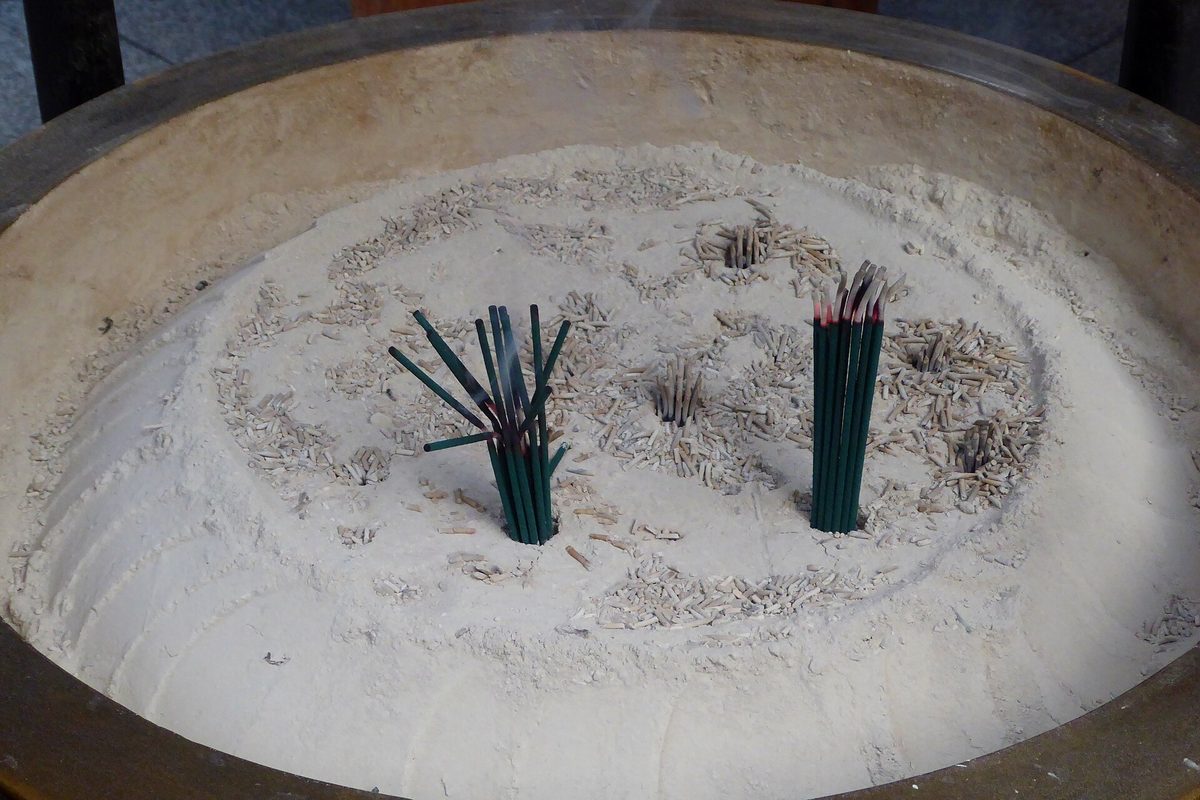
The scent of incense drifting from a temple burner is one of the first things many visitors notice in Japan, and a box of Japanese incense is a light, easy souvenir. This guide explains what Japanese incense is made of, the difference between sticks, cones and coils, how to burn it safely at home, a little of its history, and the role it plays at Zen temples, based on the official pages of Nippon Kodo, a Japanese incense maker, and the Soto school of Zen.
You don't need any special knowledge to enjoy incense, but a few basics make it easier to choose and use.
- Base and scent: tabu tree bark powder, aloeswood, sandalwood and other natural materials
- Sticks for a small room, cones for a quick strong scent, coils for about 2 hours
- Burn it on a stand over a ceramic plate or in ash, away from you
- At Zen temples, offering incense is part of Buddhist practice
What Japanese incense is made of
Nippon Kodo's page on raw materials lists the natural ingredients it uses. A few of the main ones:
- Tabu-no-ki (Machilus thunbergii): the bark is ground into powder and used as the base of incense.
- Aloeswood: harvested only in a limited area of Southeast Asia centered on Vietnam. The wood itself starts out light and odorless; over time, natural forces and the tree's own processes give it its prized aroma. Kyara is considered the most refined form.
- Sandalwood (byakudan, "white scented wood"): the leaves and bark barely smell, but the center of the trunk is very fragrant.
- Others: benzoin resin (a vanilla-like sweetness that also helps hold the fragrance), borneol, cinnamon, clove, star anise, patchouli, and floral oils such as rose and lavender.
Sticks, cones and coils
Nippon Kodo describes three common forms and where each suits:
How to burn incense at home
Nippon Kodo's instructions, in short:
- Light the tip, then blow out the flame so it smolders.
- With a stand: put the stick in an incense stand placed on a ceramic plate to catch the ash.
- With an incense burner: fill it about 80% with incense ash. Stand a stick upright in the ash; place a cone or coil on top of the ash. Leave the lid off unless closing it won't cut off air to the flame.
- Place it in the center or a corner of the room, not right next to you. The company suggests enjoying the scent from a distance as the smoke rises.
Nippon Kodo asks you to be careful with fire. Our own tips: never leave burning incense unattended, keep it away from curtains and paper, and open a window if the room is small. Natural ingredients can sometimes change color or crystallize; Nippon Kodo says this doesn't affect quality. We make no health or therapeutic claims about incense.
A short history
According to Nippon Kodo, the Chinese Buddhist priest Ganjin, who reached Japan in 754, brought the craft of nerikoh (blended incense balls) along with medicinal incense. Incense, first an offering, also became a pleasure of its own: in the Heian period (794 to 1185) court nobles blended their own scents for their clothes and rooms, chose them by season and occasion, and held incense competitions. From this grew Kodo, "the way of incense," a Japanese art of appreciating fragrance closely tied to the seasons and to poetry.
Incense at Zen temples
At temples, incense has a religious meaning. The Soto school of Zen's official English site lists offering incense, together with joining palms (gassho), bowing and the rosary (juzu), among the manners of a Buddhist memorial service. It also explains kuyo as making heartfelt offerings of incense, flowers, candles and food to the Buddhas and bodhisattvas.
This is one school's description of its own practice. Using a stick of incense at home and practicing Zen are different things, and incense isn't required for meditation. If you visit a temple, follow the temple's own way; our shrine and temple etiquette guide covers the basics, and our zazen guide lists temples that welcome first-timers.
Choosing incense as a souvenir
- Form: sticks are the most common and easiest to use; check whether a cone or coil needs a special holder.
- Ingredients: look for what the maker says about its materials and scent, such as sandalwood or aloeswood.
- Holder: does the box include a stand, or will you need one or a burner with ash?
- Instructions: read the maker's directions for burning and fire safety.
If you'd like to order more after you get home, Nippon Kodo's site has a country and region selector that links to its stores for North America and other regions; check the delivery conditions for your country. More souvenir ideas, and how to pack them, are in our souvenirs guide. For tea, start with what matcha is.
Last reviewed: October 14, 2026. Product details vary; follow the instructions on your own package.