Kushikatsu in Osaka (Osaka): The "No Double-Dipping" Rule and How to Enjoy It
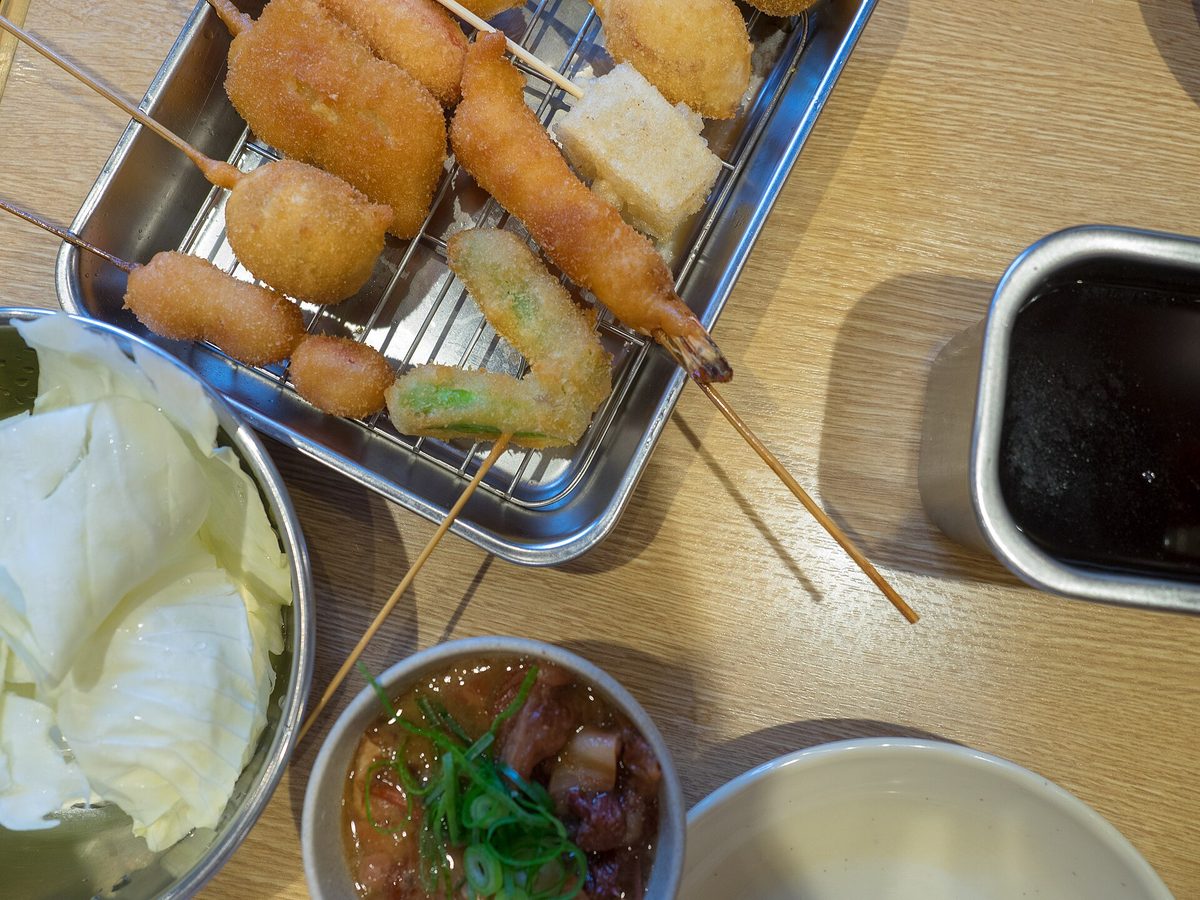
Kushikatsu is one of Osaka (Osaka)'s best-loved foods: meat, seafood and vegetables on skewers, coated in batter and breadcrumbs, deep-fried, and dipped in sauce. Japan's Ministry of Agriculture, Forestry and Fisheries says one account traces it to Shinsekai, the district around Tsutenkaku Tower in Osaka (Osaka), in the late Taisho and early Showa eras (roughly the 1920s and early 1930s), as a cheap, filling meal for workers. It comes with one famous house rule: don't dip twice. This guide explains why, what to do instead, and how a kushikatsu meal works, so you can sit down at the counter with confidence.
This page may contain affiliate links. If you buy through them, we may earn a commission at no extra cost to you.
- What kushikatsu is and where to eat it
- The no double-dipping rule, and why it exists
- How to get more sauce: the cabbage question
- Eating step by step, and allergies
What kushikatsu is
The Ministry of Agriculture, Forestry and Fisheries lists kushikatsu as one of Osaka Prefecture's regional dishes: beef, vegetables, seafood and more on skewers, battered and fried, eaten straight from the fryer and dipped into a container of sauce. It describes kushikatsu as "cheap, fast and tasty", often served at standing bars, though upscale restaurants serve it too. The Osaka Convention & Tourism Bureau's OSAKA-INFO calls Janjan Yokocho in Shinsekai the "town of kushikatsu", and notes the free cabbage on the counter.
The rule: one dip, before you bite
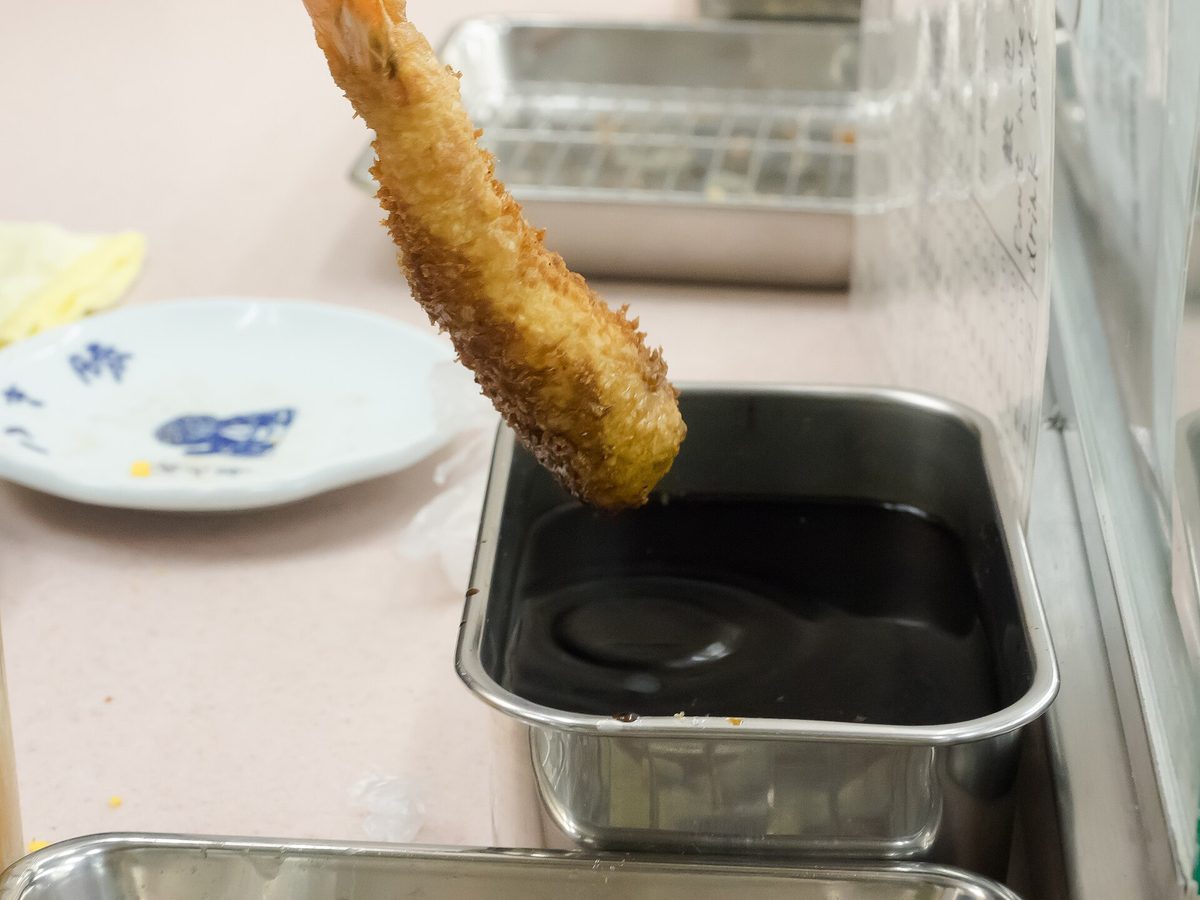
At many kushikatsu restaurants, a metal tray of sauce sits on the counter and is shared by everyone who sits there, now and later. The rule that the ministry calls "well-known" follows from that: sharing the sauce is fine, but dipping a skewer you've already bitten is strictly not allowed. In Japanese it's written 二度づけ禁止 (nido-zuke kinshi, "no second dipping").
Why? Because the tray is shared, a bitten skewer would carry what's been in your mouth into everyone else's sauce. Once you see it that way, the rule is easy to keep. If you want more sauce on a skewer you've bitten, don't put the skewer back in; get more sauce another way.
Many shops now use sauce bottles instead
Don't be surprised if there is no shared tray at all. Since 2020, more kushikatsu shops have switched to sauce you pour from a bottle. Kushikatsu Daruma, a long-established chain from Osaka (Osaka), replaced the shared tray with individual sauce bottles when it reopened on May 16, 2020, and offered the traditional tray only to guests who asked for it, according to a Nikkan Sports report at the time. The chain Kushikatsu Tanaka announced on June 12, 2020 that all its shops would pour sauce from a dispenser, with the old style available on request. With a bottle, you can pour sauce on as often as you like. The rule is simple: if there's a shared tray, dip once; if there's a bottle, pour freely. Each shop decides its own style, and it may have changed since these reports, so just follow what's on your table.
The cabbage question
Raw cabbage is served free on the counter, and OSAKA-INFO notes you can eat as much as you like. It's also, traditionally, how you get extra sauce: the Japan Kushikatsu Association, an industry group, describes the earlier common rule as "scoop sauce with cabbage and pour it over the skewer on your plate". But the same association has since published a revised rule that asks diners not to put cabbage into the shared sauce at all, and instead to put a little sauce on your own plate with the first dip, then use that. Restaurants don't all follow the same version. So:
- If there's a sign or the staff explain the rule, follow that.
- If not, the safe choice is: dip once, and let the extra sauce drip onto your plate to use later.
- Never put anything that has touched your mouth or your plate into the shared tray: not a bitten skewer, not chopsticks, not a used cabbage leaf.
How to eat, step by step
- Order a few skewers at a time. They're best straight from the fryer, and the association's rule also asks you to eat them while they're hot.
- Dip once, before the first bite. Put salt or other seasonings on your plate, not on the skewer tray, so nothing gets into the shared sauce.
- Put finished skewers in the skewer holder on the counter, not on your plate or the tray.
- Enjoy the cabbage between skewers.
- If someone next to you dips twice by mistake, the association's own rule says to explain the rule kindly. Nobody minds a first-timer asking.
Allergies and diet
The batter is made with wheat, and MAFF's sample recipe uses eggs as well. Sauces can contain other ingredients, and you may want to ask whether everything is fried in the same oil. If you have a food allergy or don't eat certain ingredients, ask before ordering, and see our guide to food allergies in Japan.
Where to go
Shinsekai, in Naniwa Ward, Osaka (Osaka), near Tsutenkaku Tower, has the highest concentration of kushikatsu restaurants, especially along Janjan Yokocho. Kushikatsu is served all over Osaka Prefecture too, from standing bars near stations to restaurants offering courses of creative skewers, which usually have no shared tray at all. Remember that streets in Osaka (Osaka) are non-smoking; see Osaka (Osaka)'s citywide street-smoking ban. More local food on our Osaka (Osaka) destination page, and other ordering systems in our ramen guide and conveyor-belt sushi guide.
Last reviewed: October 4, 2026. House rules differ by restaurant. Please follow the signs and staff where you eat.
References
- Nikkan Sports (May 16, 2020): Kushikatsu Daruma replaces the shared sauce tray with individual bottles (Japanese)
- Kushikatsu Tanaka official news (June 12, 2020): Sauce now served from a dispenser at all shops (Japanese)
- Ministry of Agriculture, Forestry and Fisheries: Kushikatsu, Our Regional Cuisines (English)
- OSAKA-INFO (Osaka Convention & Tourism Bureau): Kushikatsu (English)
- Japan Kushikatsu Association: K2K rule (Japanese, with English version)