Osaka Amazing Pass: Is It Worth It? What's Included, How to Make It Pay Off and How to Buy It
This page contains affiliate links.
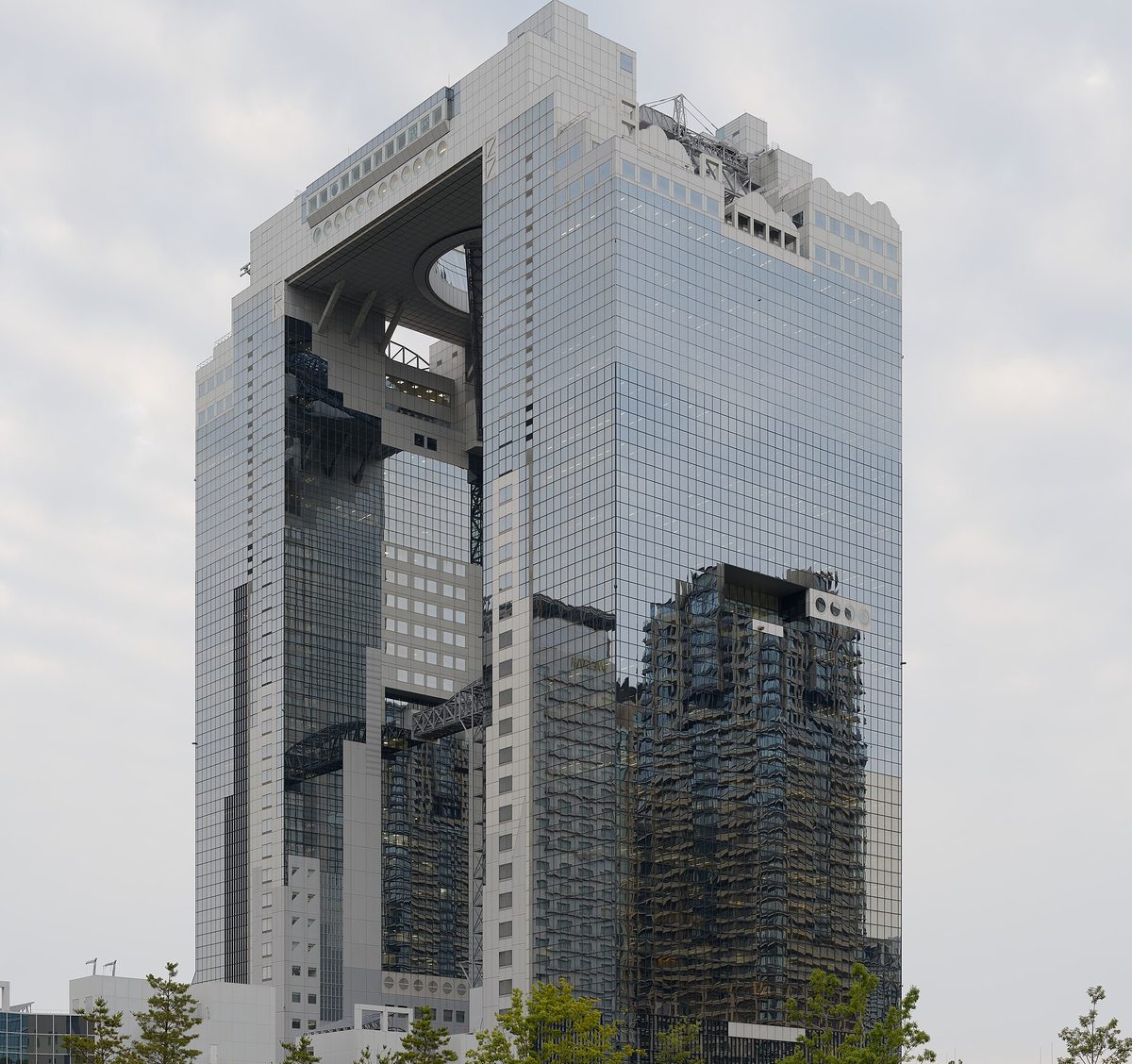
The Osaka Amazing Pass is worth it on a day when you'll visit 2 or 3 paid sights, such as the Umeda Sky Building observatory, Osaka Castle, Tsutenkaku Tower and a Dotonbori river cruise, because it covers both their entry and your subway and bus rides. If you'll only see one paid sight, a subway day pass or an IC card usually costs less. This guide sets out the prices, what the pass covers, the rules that catch people out, and a route that pays off, all from the pass's official site and Osaka Metro (checked October 25, 2026).
Passes are easy to overthink: buy one and the day can feel like a race, skip it and you wonder what you missed. A few minutes with the numbers below will tell you which kind of day you're planning.
- Price: 3,500 yen for 1 day, 5,000 yen for 2 days in a row. There's no child pass.
- Included: unlimited Osaka Metro and Osaka City Bus rides, private railways mainly within Osaka City, and free entry to about 40 sights, each once.
- A "day" is a calendar day (3:00 a.m. to 2:59 a.m.), not 24 hours from when you start.
- It pays off once the regular admission fees you'd pay that day go past roughly 2,700 to 2,900 yen.
- It's a smartphone ticket bought online with a credit card. JR lines, USJ and the Kaiyukan aquarium aren't on the pass.
The Osaka Amazing Pass in one minute
The pass is sold by Surutto Kansai, and in Japanese it's called the Osaka Shuyu Pass. It's a digital ticket on your smartphone: you show a QR code at the station gate, on the bus and at each sight. In 2026 there are 3 versions:
| Version | Price (adults) | How long it lasts |
|---|---|---|
| Osaka Amazing Pass | 1 day: 3,500 yen 2 days: 5,000 yen | 1 calendar day, or 2 calendar days in a row |
| Osaka Itami Airport version | 1 day: 3,800 yen 2 days: 5,400 yen | As above, and it also covers the Osaka Monorail from Osaka Airport (Itami) to Expo Memorial Park |
| Kansai International Airport version | 28 hours: 5,300 yen | 28 hours from when you start it, plus 1 trip on Nankai from Kansai Airport Station to Namba Station |
The 1-day and 2-day passes are on sale from March 25, 2026 to March 31, 2027, and the Kansai Airport version went on sale on October 1, 2026. Whichever you buy, you have to start using it within 3 months of buying it. The official site says there's no child price, so children use an adult pass or pay their own fares and admissions.
How a "day" counts
This is the rule that most often surprises people. The official site says the 1-day and 2-day passes run by the calendar day, not for 24 or 48 hours from when you first use them:
- A day runs from 3:00 a.m. to 2:59 a.m. the next morning. Press the start button on the day, after 3:00 a.m. If you press it between midnight and 2:59 a.m., the pass stops working at 3:00 a.m.
- Trains and buses can be used from the first to the last service of the day, and each sight from opening time to its last entry.
- The 2-day pass covers 2 days in a row, not any 2 days.
- So start a 1-day pass in the morning. Starting it in the late afternoon leaves you only the evening.
The Kansai Airport version works differently: it lasts 28 hours from the moment you start it, and it has to be within its time when you go through the station gate, when you get off a bus and when you enter a sight. Its Nankai trip runs one way only, from Kansai Airport Station to Namba Station, and you can't get off at the stations between Kansai Airport and Sakai.
Trains and buses it covers
Osaka Metro's page for the 2026 pass lists:
- Osaka Metro: all lines, including Yumeshima Station.
- Osaka City Bus: all routes except the IKEA Tsuruhama bus and some other routes; on-demand buses aren't included.
- Private railways: set sections of Hankyu, Hanshin, Keihan, Kintetsu and Nankai, mainly within Osaka City (for example Nankai from Namba Station to Sakai Station, and Keihan from Yodoyabashi). The route map on the official site shows each section.
Not included: JR lines (such as the Osaka Loop Line and the JR train to Universal Studios Japan), reserved-seat limited express trains on the private railways (you pay the extra charge), and airport buses. If you ride beyond the covered area, the official FAQ says to buy a ticket to the edge of the area and show it with the pass to station staff when you get off.
For a sense of scale, a single adult ride on Osaka Metro costs 190 to 390 yen, depending on distance.
The sights you can enter for free
The official list has about 40 sights. You can visit as many as you like in a day, but each sight only once (once per day on the 1-day pass, once in the whole period on the 2-day and 28-hour passes). These are the ones most first-time visitors pick, with the regular adult fee the official site gives for each:
| Sight | Regular fee | Watch for |
|---|---|---|
| Umeda Sky Building, Kuchu-Teien (Floating Garden) Observatory | 2,000 yen | Free entry with the pass only until 15:00; after that, 10% off |
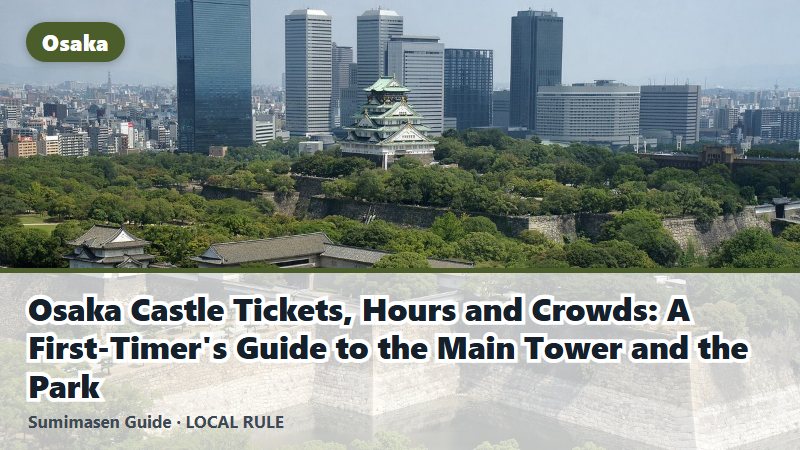
| Osaka Castle Main Tower | 1,200 yen | Includes the Toyotomi Stone Wall Museum on the same day |
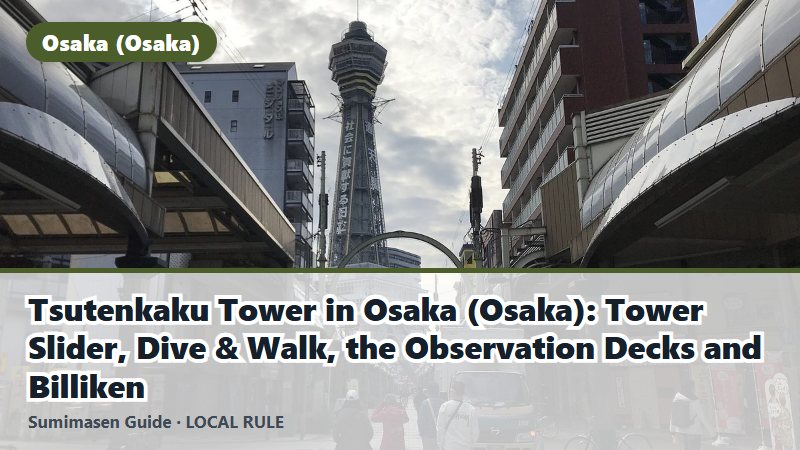
| Tsutenkaku Tower observation deck | 1,500 yen | Swap the pass for a timed entry ticket on site |
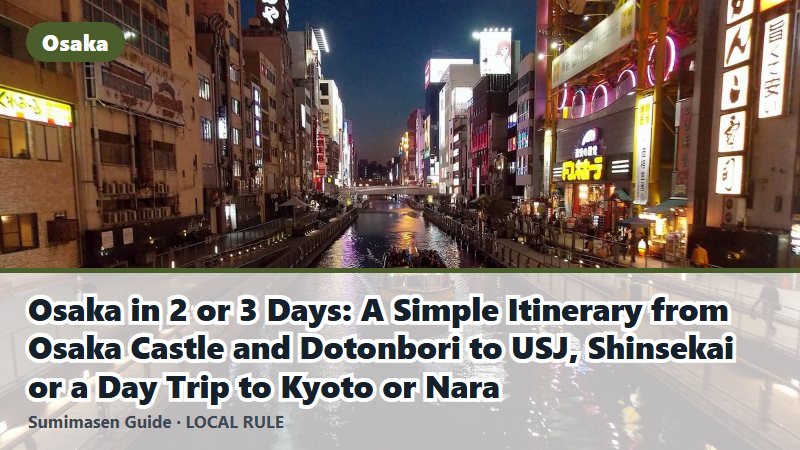
| Tombori River Cruise (Dotonbori) | 2,000 yen | Swap for a timed ticket on the day; evening boats fill up early |
| Osaka-jo Gozabune boat | 1,800 yen | Children of junior high school age and younger need an adult with them |
| Osaka Suijyo Bus Aqua-Liner | 2,000 yen | Not on the pass from March 25 to April 10 (cherry blossom season) |
| Tempozan Giant Ferris Wheel | 1,000 yen | Near Osakako Station |
| Osaka Tennoji Zoo | 800 yen | Closed on Mondays |
A few more details from the official list:
- Tsutenkaku: the Tower Slider (1,100 yen) and Dive & Walk (3,000 yen) are on the pass too, with height, weight and age limits. Our Tsutenkaku guide explains them.
- Osaka Castle: Nishinomaru Garden, the Kaiyodo Figure Museum and the Gozabune boat in the castle park are on the list too, so a castle morning can cover 3 or 4 sights. Hours and the elevator rule are in our Osaka Castle guide.
- Captain Line: a boat between the Kaiyukan side of Osaka Port and the Universal Studios Japan side, on the pass as a round trip (1,700 yen).
- LEGOLAND Discovery Center Osaka: only on set dates, you must book a time on its own website first, and groups of only adults or only children can't enter.
- Closures: the official list shows the Osaka Museum of Housing and Living closed from September 1, 2026 to January 5, 2027, and OSAKA WHEEL (Itami Airport version only) closed for maintenance.
Not on the list: Universal Studios Japan and the Kaiyukan aquarium. If either is the main event of your day, you'll be buying their tickets anyway; see whether the USJ Express Pass is worth it.
Is it worth it? The simple test
Compare the pass with what you'd pay without it. On a day of only subway and bus rides, Osaka Metro's own 1-day ticket, the Enjoy Eco Card, costs 820 yen on weekdays and 620 yen on weekends and holidays (children 310 yen), and it gives small discounts at about 20 sights. So, by our own sum:
- 1-day pass (3,500 yen): it pays off when the regular admissions you'll actually use that day add up to more than about 2,700 yen on a weekday or 2,900 yen on a weekend. That's usually 2 big sights, or 3 smaller ones.
- 2-day pass (5,000 yen): 2,500 yen a day. It pays off when your admissions over the 2 days go past about 3,400 yen on weekdays. Because each sight counts once, it suits a trip where you spread different sights over 2 days.
- Not worth it on a USJ day, a day trip to Kyoto or Nara, or a shopping and food day with no paid sights. For those, an IC card is simpler; see cash and IC cards in Japan.
The official site also says the pass can't be combined with other discounts, and it gives no refund if a sight is closed or the weather turns after you've started it. The pass does add perks at about 50 sights and shops (discounts or small extras), but treat those as a bonus rather than the reason to buy.
A route that pays off
The pass's official site suggests a "This is Osaka" course that fits the rules well. In short:
- 9:30, Umeda Sky Building: go first, because free entry ends at 15:00. It's at Umeda Station (Midosuji Line).
- 13:00, Osaka Castle: from Tanimachi 4-chome Station, the main tower and, if you have time, Nishinomaru Garden.
- 15:00, Tsutenkaku Tower: from Dobutsuen-mae Station, swap your pass for a timed ticket and head up.
- 17:00, Tombori River Cruise: in Dotonbori. The site advises swapping for your boat ticket earlier in the day, since evening boats sell out quickly.
That's 6,700 yen in regular admissions before rides, almost double the 1-day price. If you have 2 or 3 days, our Osaka 2 or 3 day itinerary shows where a pass day fits next to a USJ day or a day in Kyoto. Before dinner in Shinsekai, read about the "no double-dipping" rule for kushikatsu.
How to buy and use it
- Where to buy: online, through the official purchase site (Surutto QRtto), which needs an account. The official site names one counter that also sells it: the Kansai Tourist Information Center.
- Payment: credit card only. The official FAQ says cash and debit cards aren't accepted.
- Your phone: you need a smartphone with a camera and an internet connection, with camera access allowed in your browser. Screenshots and printouts don't work. If you don't have data yet, see eSIM or pocket Wi-Fi.
- Groups: you can buy up to 4 passes at once and send them to the others' phones. At buses and sights, one QR code lets the whole group in; at station gates, everyone goes through one by one.
- Starting: open the ticket, tap "Show", and press the start button just before you use it, after 3:00 a.m. on your day. The ticket then works only on the first phone you used.
- On the bus: hold the QR code to the reader when you get off, not when you get on.
- Refunds: an unused pass can be refunded within its validity period, with no fee, from the purchase site. Once started, no refund.
Questions about the pass go to Surutto Kansai by phone at +81-6-7730-9171 (06-7730-9171 inside Japan), 9:00 to 17:00, except weekends and holidays.
Where to stay for a pass day
The pass covers Osaka Metro from end to end, so a hotel a short walk from a Midosuji Line station (Umeda Station, Shinsaibashi Station, Namba Station or Tennoji Station) makes the morning start easy. Our where to stay in Osaka guide compares the areas. Hotels in Japan often price by the number of guests, which our guide to business hotels explains, and Osaka Prefecture adds an accommodation tax.
If you're arriving at Kansai Airport
The Kansai Airport version (5,300 yen for 28 hours) includes 1 Nankai trip from the airport to Namba Station. It suits someone who lands in the morning and wants to start sightseeing the same day, because the 28 hours run from when you start it. Reserved-seat limited express trains need an extra charge. Our Kansai Airport guide compares the other ways into the city.
More ideas for the city are on our Osaka destination page.
Last reviewed: October 25, 2026. Prices, the list of sights and the rules change, and the pass posts changes on its official site. Please check before you buy.
Official sources (checked October 2026)
- Osaka Amazing Pass official site (Surutto Kansai) (English)
- Osaka Amazing Pass official: Versions, prices and how long they last (Japanese)
- Osaka Amazing Pass official: Participating attractions (English)
- Osaka Amazing Pass official: How to buy and use (Japanese)
- Osaka Amazing Pass official: Sale period, cautions and contact (Japanese)
- Osaka Amazing Pass official: FAQ (Japanese)
- Osaka Amazing Pass official: Suggested routes (Japanese)
- Osaka Metro: Osaka Amazing Pass for April 1, 2026 to March 31, 2027 (Japanese)
- Osaka Metro: Enjoy Eco Card (Japanese)
- Osaka Metro: Fares (Japanese)