Shu-Ha-Ri (守破離) and Zen: Keep the Form, Break It, Leave It, and What It Means When You Try Tea or Martial Arts in Japan
Quick answer
- Shu: follow the teacher's form faithfully. Ha: refine it. Ri: go beyond it and establish something of your own.
- The three characters appear in the writings of tea master Kawakami Fuhaku (1719-1807), who linked them to military teaching.
- A verse handed down as Sen Rikyu's ends "do not forget the root"; it isn't a Zen term in the official sites we checked.
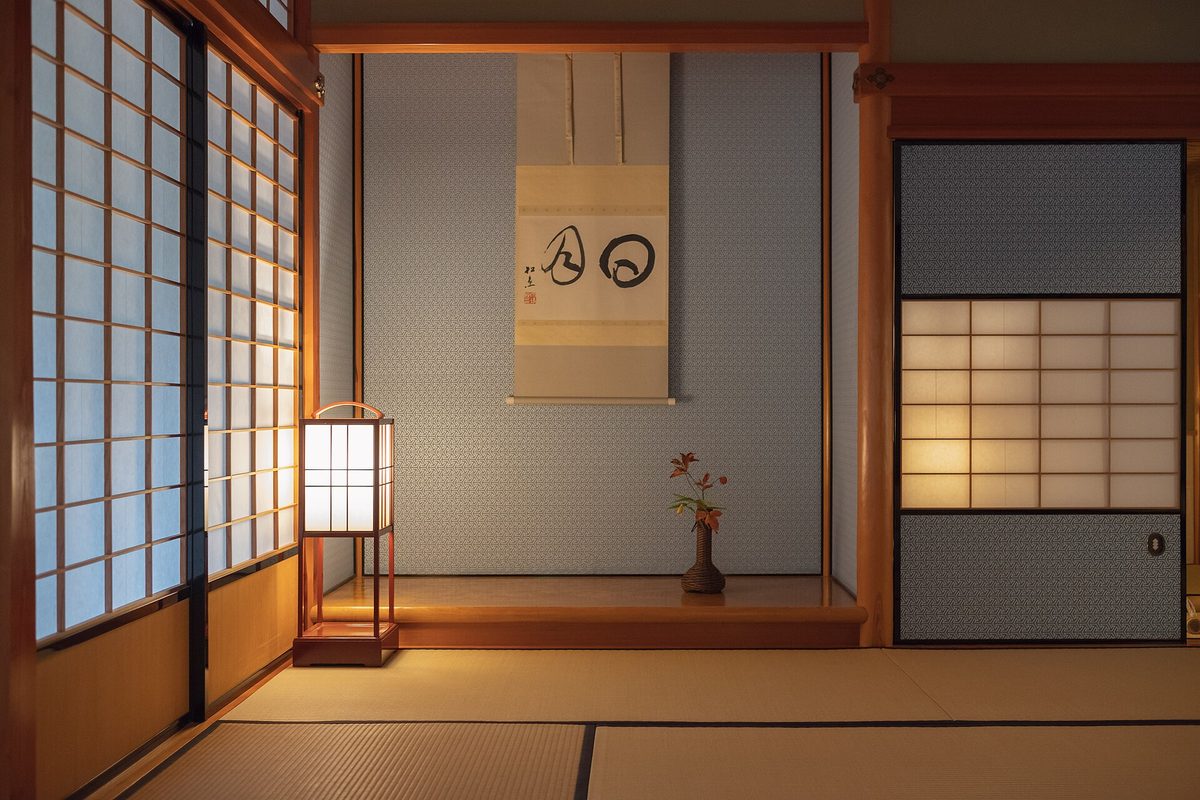
In Japanese tea, martial arts and other traditional "ways," you may hear the phrase shu-ha-ri (守破離): first keep the form, then break it, then leave it. It's often mentioned in the same breath as Zen. This short column explains what the three stages mean, where the words come from as far as official and academic sources show, how the idea sits next to Zen practice, and why it's a useful way to look at a tea ceremony or a martial arts class on your trip.
It's a reading piece. You don't need any of it to enjoy a bowl of matcha, but it may change how you see the teacher's careful instructions.
This page may contain affiliate links. If you buy through them, we may earn a commission at no extra cost to you.
- Shu: learn the teacher's form faithfully. Ha: refine it. Ri: go beyond it and make something your own
- The three characters appear in the writings of tea master Kawakami Fuhaku (1719-1807)
- A verse handed down as Sen Rikyu's ends with "do not forget the root"
- Not a Zen term in the sources we checked, but tea, martial arts and zazen all begin with learning a form
What shu, ha and ri mean
The Nippon Budokan's kendo teaching guide lists shu-ha-ri as a teaching that shows the stages of training:
- Shu (守, "keep"): learn by following your teacher's instruction faithfully, and make it reliably your own.
- Ha (破, "break"): work on what you learned in the shu stage, and raise your skill further.
- Ri (離, "leave"): go beyond shu and ha, deepen your skill and establish something new of your own.
Where the words come from
The three characters appear in the writings of Kawakami Fuhaku (1719-1807). According to Edo Senke, the tea school he founded, Fuhaku trained in Kyoto (Kyoto) under Joshinsai, the seventh head of the Omotesenke school, and then spread the Sen family's way of tea in Edo, today's Tokyo (Tokyo).
A 2007 paper in the journal of the Japanese Academy of Budo quotes a passage from Fuhaku's notes, Fuhaku Hikki. In it, Fuhaku says the three characters come from the teaching of military strategy, and explains them roughly like this:
- What a teacher teaches a student is only shu.
- When the student has fully mastered shu, they naturally begin to break from it themselves, because it has become their own.
- Shu alone is incomplete, and so is ha alone. Leaving both behind is the level of a master, yet it also means keeping both, and this keeping is different from the first shu.
An education researcher writing in a 2004 academic journal notes that, at a time when some arts were creating set forms as their numbers of students grew, Fuhaku was worried about forms turning into a rigid authority, and put the stress on ri.
The verse handed down as Rikyu's
Many people link shu-ha-ri with a verse handed down as the words of the tea master Sen Rikyu (1522-1591):
Kiku sahō / mamori tsukushite / yaburu tomo / hanaruru totemo / moto o wasuru na
規矩作法 守り尽くして 破るとも 離るるとても 本を忘るな
Roughly: "Keep the rules and manners to the full; even when you break them, even when you leave them, do not forget the root." A 2020 paper in the journal of the Japanese Cognitive Science Society introduces shu-ha-ri as originally Rikyu's words with this verse, and a paper in the journal Kansei Engineering describes the "Rikyu Hyakushu" (Rikyu's hundred verses) as a collection of Rikyu's teachings. In the sources we checked, we couldn't confirm whether Rikyu wrote this verse himself, so we call it a verse handed down under his name. Notice that it doesn't stop at "leave": the last words send you back to the root.
Shu-ha-ri in tea and martial arts
- Tea. Fuhaku was a tea master, and the verse is a tea verse. Each school of tea, such as Urasenke and Omotesenke, has its own forms, and in a lesson you learn the form of the school you are in.
- Martial arts. The Nippon Budokan's kendo teaching guide includes shu-ha-ri in its glossary, and the 2007 budo paper discusses it among the words used for training in the martial arts.
- Other fields. In Japan the phrase is also borrowed well beyond traditional arts, for example in papers on medicine and project management, as a way to talk about growing in any skill.
Shu-ha-ri and Zen
Shu-ha-ri is often described as a Zen idea, but we didn't find it in the official sites of the Rinzai and Soto schools that we checked, and Fuhaku himself linked the three characters to military teaching. So it's safer to say that shu-ha-ri and Zen stand side by side than to say one comes from the other. Where they meet:
- The tea masters studied Zen. Urasenke's official history says that tea masters from Shuko to Sen Rikyu studied Zen, many at Daitokuji in Kyoto (Kyoto). See our matcha, tea ceremony and Zen column.
- Zazen also starts with a form. The Soto school sums up zazen as settling your posture, then your breath, and says that the mind then settles naturally. It adds that detailed manners differ between training halls, so you should ask the instructor. The Rinzai school's introduction describes body and mind in zazen as one (shinjin ichinyo 身心一如).
Put together: you start by keeping the form your teacher gives you, and the form is not the goal but the way in. That's our reading of the overlap, not a teaching of either school.
A useful view for your own tea or martial arts experience
On a trip, you'll almost always be at the very first step, shu, and that's exactly the right place to be:
- Follow the host's way. In a tea ceremony, zazen session, martial arts or calligraphy class, copy what you are shown rather than improvising. If you've seen a different way somewhere else, it may simply be another school's form.
- Ask when unsure. Teachers expect beginners' questions, and the Soto school itself says to ask the instructor about details.
- Enjoy the details. The careful order of a tea ceremony is the form being handed to you, for one afternoon.
Our guide to matcha and tea ceremony experiences covers places in Uji (Kyoto), Kyoto (Kyoto) and Nishio (Aichi), and our zazen guide covers temples with English guidance.
For another Zen word you may meet in Japan, read bonnō and the 108 bells of New Year's Eve.
Last reviewed: October 14, 2026. This is a short introduction based on the official and academic sources listed below, not a complete account of tea, martial arts or Zen teaching.
References
- Nippon Budokan: Kendo teaching guide, chapter 7 glossary, "shu-ha-ri" (Japanese, PDF)
- Todo Yoshiaki and Murata Naoki: A study of how the names used for training methods in budo have changed, Research Journal of Budo 40(1), 2007 (Japanese)
- Edo Senke: History, Kawakami Fuhaku (Japanese)
- Kitamura Mitsuko: Traditional learning and modern education, Forum on Modern Education 13, 2004 (Japanese)
- Enomoto Mika: A study on learning embodied skills, Cognitive Studies 27(2), 2020 (Japanese)
- Inoue Osamu: Character of Japanese traditional culture, from the viewpoints of yoriai and kata, Kansei Engineering 16(1) (Japanese)
- Urasenke: An Introduction to Chado (English)
- Soto Zen (SOTOZEN-NET): Zazen manners (Japanese)
- Joint Council for Japanese Rinzai and Obaku Zen (Rinnou.net): Before you sit (Japanese)