Electric Kick Scooters and LUUP in Japan: Age, Speed, Sidewalks and Fines
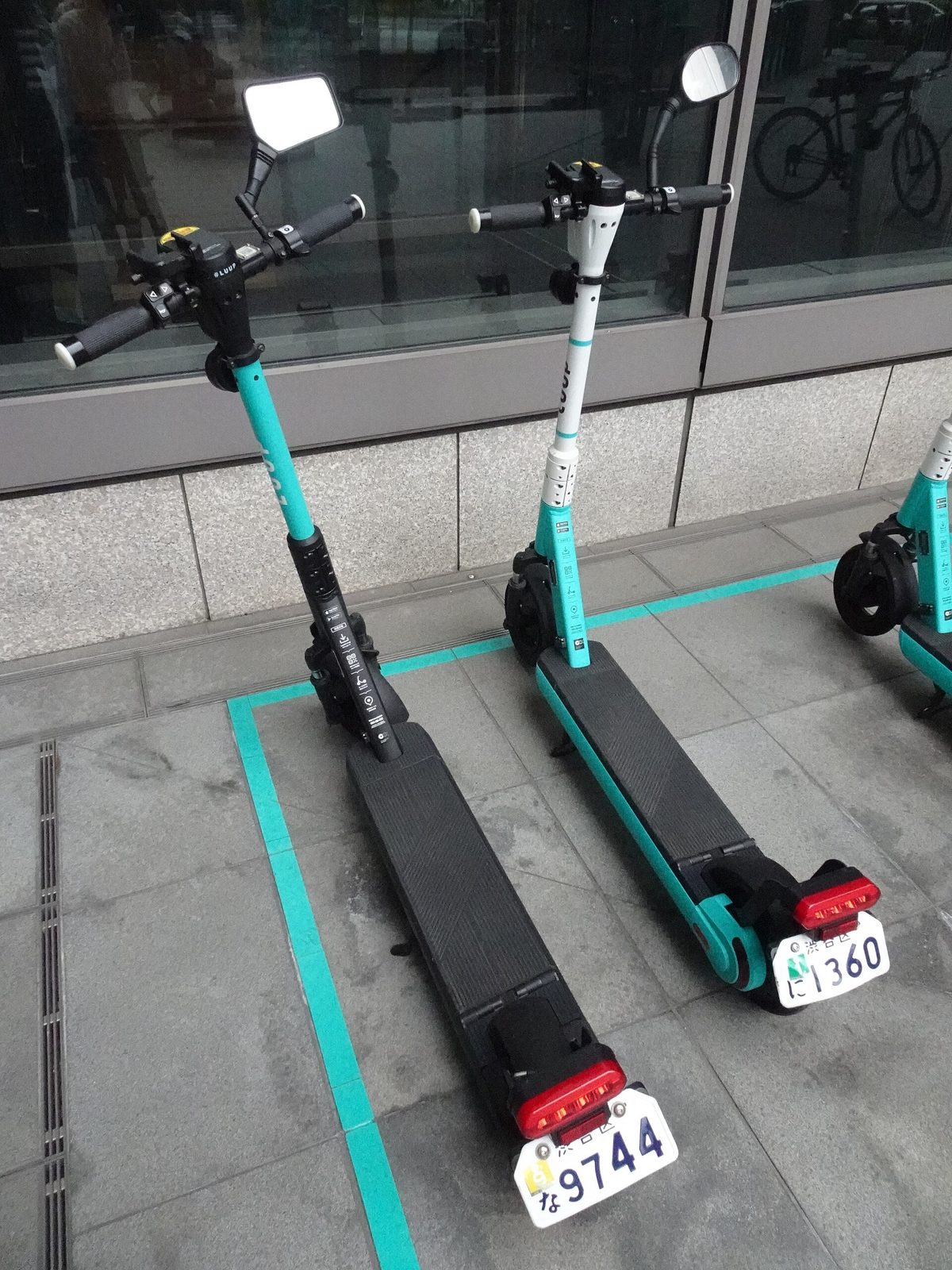
Shared electric kick scooters are now parked on street corners in many Japanese cities, and apps like LUUP let you ride one without a Japanese driver's license. That makes them a handy way to hop between sights. But an e-scooter in Japan is not a toy and not a bicycle: it is a vehicle in its own legal class, with its own speed limit, its own sidewalk rule and the same kind of fines as cars and bikes. This guide explains the rules the National Police Agency publishes, what LUUP asks you to do before your first ride, and the mistakes that cost the most.
This page may contain affiliate links. If you buy through them, we may earn a commission at no extra cost to you.
- Who can ride, and why no license is needed
- 20 km/h on the road, 6 km/h on a few sidewalks
- The fines for common mistakes, from 3,000 to 12,000 yen
- What LUUP needs from you (passports are accepted)
Please read this first. This is a plain-English guide, not legal advice. It is based on the National Police Agency's page on this vehicle class and the Osaka Prefectural Police safety handbook (as of September 25, 2025), checked in October 2026. Rules and amounts can change; please check the official pages at the end.
A vehicle class of its own
Since July 1, 2023, Japan has had a vehicle class called specified small motorized bicycles (特定小型原動機付自転車, tokutei kogata gendokitsuki jitensha). The National Police Agency (NPA) says a vehicle belongs to this class only if it meets set standards, including:
- no longer than 190 cm and no wider than 60 cm, with an electric motor of 0.60 kW or less;
- it cannot go faster than 20 km/h, and the speed setting cannot be changed while riding;
- it has a speed indicator lamp (最高速度表示灯).
A scooter that doesn't meet these standards is not in this class: it needs a driver's license and can never use the sidewalk. The shared scooters you rent through an app are built for this class. The NPA also notes that these vehicles are covered by the traffic infraction notification system, the "blue ticket" with fixed fines.
Who can ride, and what you need
- Age: no driver's license is needed, but riding is banned under 16. Lending one to someone under 16 is also banned. The NPA lists the penalty as up to 6 months' imprisonment or a fine of up to 100,000 yen.
- Helmet: riders should make an effort to wear one (努力義務). It is strongly recommended, but there is no fine for not wearing one.
- Plate and insurance: the vehicle must carry a license plate and have compulsory liability insurance (自賠責). Rental and sharing companies take care of this for their scooters.
- Alone: riding with two people on one scooter is not allowed. The seating capacity is one.
Where you can ride, and how fast
The road is the rule. The NPA says you must ride on the roadway (bicycle lanes are allowed too), keep to the left edge, never ride on the right, and follow the signals for vehicles. Turning right is done in two stages, crossing straight and then turning, like a bicycle.
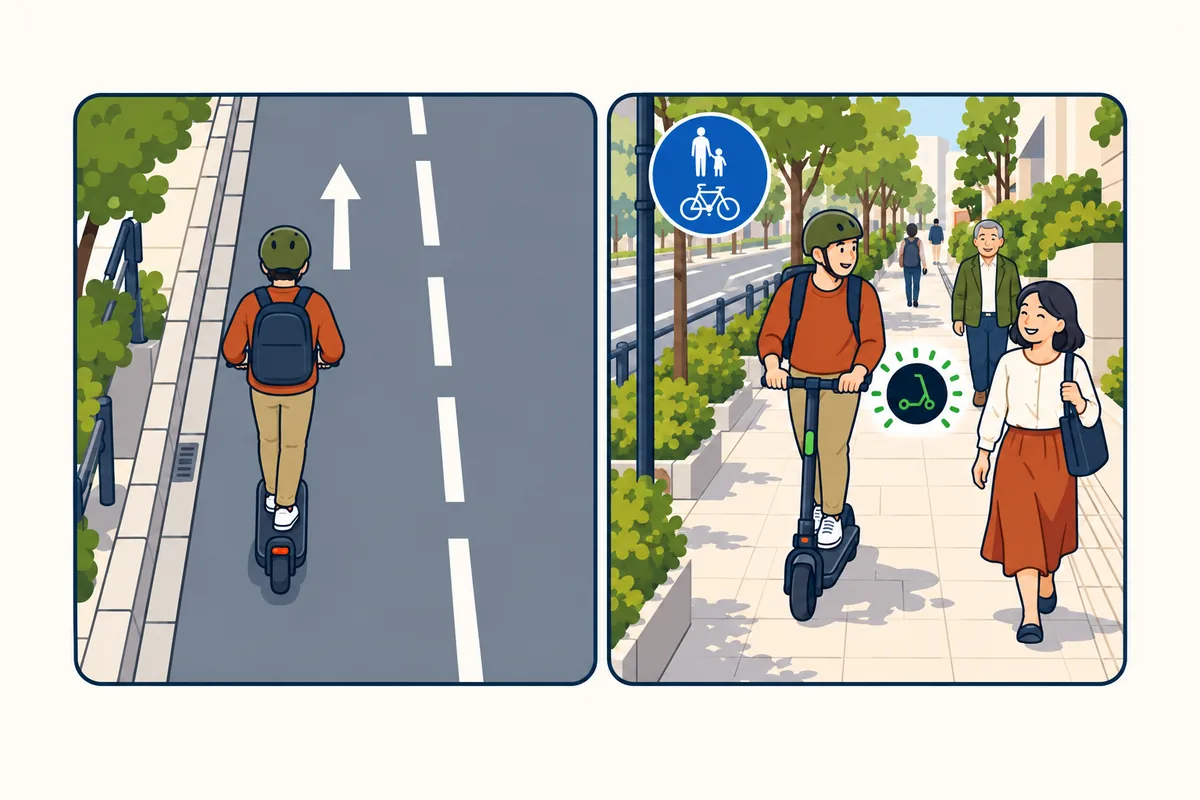
Sidewalks are the exception, and a narrow one. Only a scooter in its special sidewalk mode can use them: the speed lamp must be flashing, and the scooter must be built so it cannot go faster than 6 km/h in that mode. The NPA notes that simply keeping your speed down with the throttle does not count. Even then, you can only use sidewalks where a sign allows bicycles, ride on the road side, and stop when you would get in a pedestrian's way. The Osaka Prefectural Police handbook sums up the lamp: on for the road, flashing on the sidewalk.
The fines for common mistakes
The same handbook lists further fines (for example 5,000 yen for riding through a pedestrian-only road without slowing down). Some violations are too serious for a ticket and go to criminal procedures, including riding under 16, riding without insurance, dangerous "road rage" riding and leaving the scene of an accident.
Never ride after drinking. The NPA says you must not ride after drinking alcohol. Riding drunk can mean up to 5 years' imprisonment or a fine of up to 1,000,000 yen; riding with alcohol in your body, up to 3 years or 500,000 yen. Giving someone a scooter or alcohol when they will ride is also banned. After dinner with drinks, walk or take a taxi.
Using LUUP as a visitor
LUUP is one of the largest sharing services. According to its official pages:
- You must be 16 or older; a driver's license is not required.
- Before your first ride you submit an ID to confirm your age. LUUP lists My Number Card, driver's license, residence card or passport, and says overseas passports are acceptable.
- You must pass a traffic rules test in the app by answering every question correctly in a row. LUUP says the test and learning content are available in English.
- You need to register a credit card. Whether a particular card issued abroad works is something to check in the app.
- You can only end a ride at a designated port. You can change your return port in the app.
- LUUP bans riding with two people, riding after drinking, riding with one hand (holding a phone or umbrella), listening to music, parking where parking is prohibited, and taking a vehicle onto public transport.
A one-minute check before you ride
- Check the lamp: steady on the road, flashing only in sidewalk mode.
- Keep left on the road. Turn right in two stages.
- Put the phone in a mount or in your pocket. Stop to check the map.
- One person per scooter. A helmet if you can.
- No riding after drinking. End your ride at a port.
Prefer a bicycle? Our guide to rental and share bikes covers where to ride and park, and Japan's bicycle fines explains the blue ticket for bikes.
Last reviewed: October 4, 2026. Fine amounts are set by law and can change. Please confirm the latest information on the official pages below.
References
- National Police Agency: Traffic rules for specified small motorized bicycles (Japanese)
- National Police Agency: Main traffic rules (Japanese, PDF)
- Osaka Prefectural Police: Safety handbook for specified small motorized bicycles (Japanese, PDF, as of September 25, 2025)
- Tokyo Metropolitan Police Department: Table of violations and fines (Japanese)
- Ministry of Economy, Trade and Industry: Specified small motorized bicycles (Japanese)
- LUUP: E-scooters without a driver's license (English)
- LUUP Help: What you need before riding (English)
- LUUP Help: Ending your ride at a port (English)
- LUUP Help: Prohibited actions (English)