Maternity Marks, Help Marks and Priority Seats: Giving Up Your Seat in Japan
On trains and buses in Japan, you may notice a small pink tag on a bag, or a red tag with a white cross and heart. They are quiet requests: "I may need a seat," "I may need help, even if you can't see why." Japan also has priority seats on almost every train and bus, with a shared rule about phones. None of this is complicated, and nobody expects visitors to be perfect. This guide explains what the marks mean, what the railways and the government actually ask, and a few short phrases you can use, so you can help when you want to, without worrying about getting it wrong.
This page may contain affiliate links. If you buy through them, we may earn a commission at no extra cost to you.
- The Maternity Mark: pregnancy that doesn't show yet
- The Help Mark: needs you can't see, and the note on the back
- Priority seats and phones: what changed in 2014 and 2015
- Older people, strollers and elevators
- What to say in English and Japanese, and what to do if someone says no
A note before you start. Offering a seat is a kindness, not a rule you can be fined for, and nobody will think less of you if you miss a mark. Do what feels comfortable and safe for you. If you need a seat yourself, you are welcome to use priority seats too.
The Maternity Mark
The Maternity Mark (マタニティマーク) is a light-pink mark showing a mother and child. It was chosen in 2006 from 1,661 designs under Japan's national "Healthy Parents and Children 21" campaign, which is now run by the Children and Families Agency. Versions for twins and triplets were added on November 19, 2024.
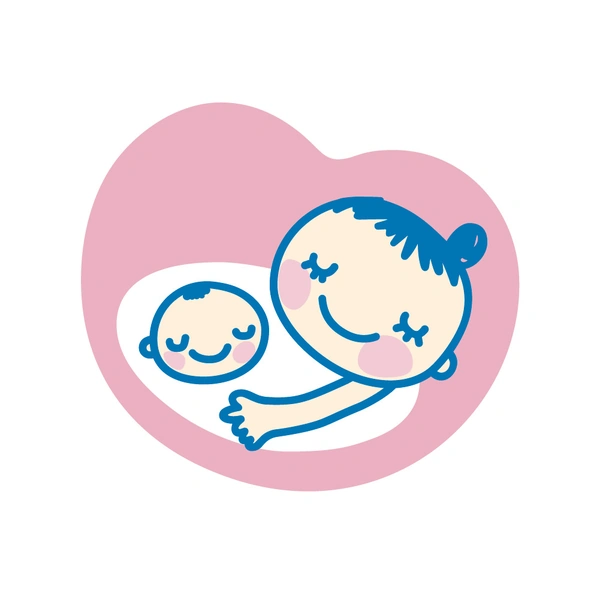
- What it means: the person is pregnant, or gave birth recently. The official site explains why it exists: in early pregnancy the baby bump doesn't show, even though nausea and tiredness can be hard at this stage, so pregnant women often can't get a seat because nobody can tell.
- What it looks like in practice: usually a small keychain or badge on a bag. Toei Subway's version is a round tag about 5 cm across on a ball chain.
- Where it comes from: most cities and towns give one out with the maternal and child health handbook (1,689 municipalities did so in fiscal 2023). Railways also hand them out: Toei Subway gives one on request at its station offices, and JR East at most staffed stations in eight prefectures (Tokyo, Kanagawa, Saitama, Chiba, Ibaraki, Tochigi, Gunma and Yamanashi) and some stations elsewhere.
The government's request is simple: offer a seat on trains and buses, don't smoke near a pregnant woman, and ask if she needs help if she looks unwell.
Traveling while pregnant? You can ask for a Maternity Mark at a Toei Subway station office or a staffed JR East station in the Tokyo (Tokyo) area. Toei says some stations may run out.
The Help Mark
The Help Mark (ヘルプマーク) is a red tag, about 8.5 by 5.3 cm, with a white cross and a white heart, usually hanging from a bag on a strap. The Tokyo Metropolitan Government created it in October 2012. It was added to Japan's national standard for public signs (JIS) on July 20, 2017, and by October 31, 2021 every prefecture had adopted it. The Tokyo Metropolitan Government has now named July 20 "Help Mark Day."

- Who uses it: people whose need for help doesn't show from the outside. The metropolitan government's examples: people with a prosthetic leg or artificial joint, internal disabilities or intractable (long-term, hard-to-treat) illnesses, and women in early pregnancy. It says there is no medical test to qualify, and no documents are needed.
- The back of the tag: many prefectures give out a sticker that the user can put on one side of the tag and write on, for example what help they need or something they want people to know. Some people also carry a separate Help Card with emergency contacts and the help they need.
The Tokyo Metropolitan Government asks three things when you see someone with a Help Mark:
- On a train or bus, offer your seat. Someone may look healthy but tire quickly or struggle to stand holding a strap. It adds that people with a Help Mark sometimes get suspicious looks when they sit in priority seats, which is stressful. Please don't judge people who "look fine."
- At stations and in shops, ask if they need help if they seem to be in trouble. Some people find it hard to cope with sudden events like a train delay, or to stand up, walk or use stairs.
- In a disaster, help them get to safety.
Katsushika City (Tokyo) adds: if the person shows you a card or sticker, help in the way it describes. If someone is having a panic attack or a seizure, first speak to them gently, in short words.
Can visitors get a Help Mark? Generally, no. The Tokyo Metropolitan Government hands them out only to people who live in Tokyo (Tokyo), one per person, and the other prefecture we checked (Saitama) also gives them to residents. For urgent cases, the metropolitan government's page offers the official image to print; if you use it, print it in color and don't change the shape or colors. It also asks people not to buy or sell Help Marks on flea-market apps.
Which mark is which?
Maternity MarkHelp MarkThe Maternity Mark and Help Mark images on this page are the official designs, shown as provided, without changes to their shape, colors or proportions, as both organizations' usage rules require. More official versions (for example, Maternity Marks for twins and triplets) and the full usage rules are on the Maternity Mark official site and the Tokyo Metropolitan Government's Help Mark page.
Priority seats and your phone
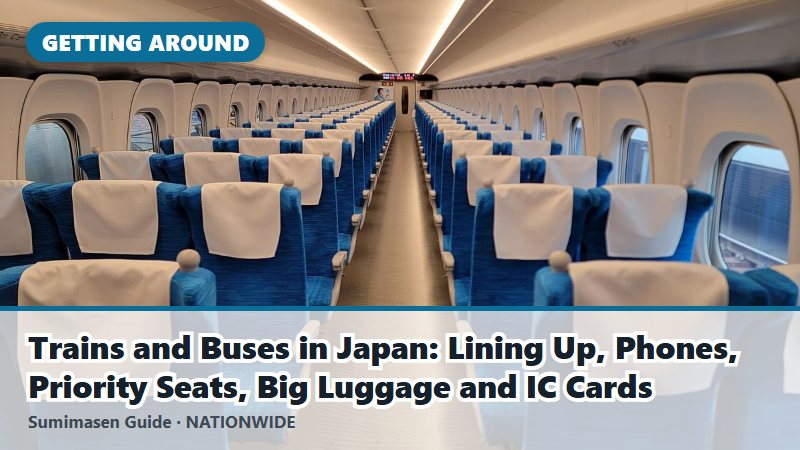
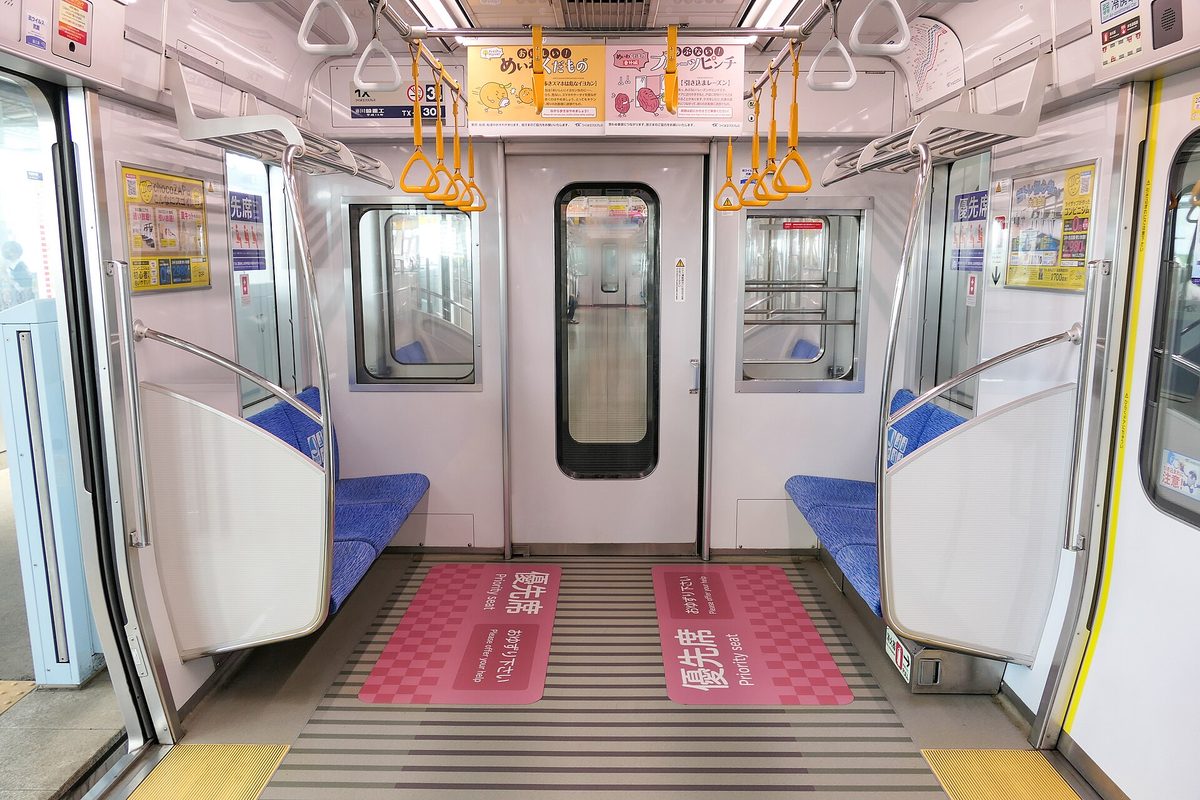
Priority seats are called 優先席 (yusenseki) in most places; many railways in the Kansai region use 優先座席 (yusen-zaseki). They are marked by signs, a different seat color and often a floor marking. They are for older people, pregnant women, people with disabilities or injuries, and people with small children. Japan's Barrier-Free Act makes helping these seats, elevators and accessible toilets go to the people who need them a shared duty of the public, and the transport ministry ran campaigns asking for exactly that in December 2024 and December 2025.
The phone rule near priority seats is the same in wording across the big city networks, but it was agreed region by region:
| Area | Since | Near priority seats | Rest of the car |
|---|---|---|---|
| Kanto, Tohoku and Koshinetsu: JR East and 36 other companies, including Tokyo (Tokyo) lines | October 1, 2015 | Turn your phone off when the train is crowded | Silent mode; please don't make calls |
| Kansai: JR West and 24 companies of the Kansai Railway Association, including Osaka Metro, Hankyu and Kyoto City Subway | July 1, 2014 | Turn your phone off when the train is crowded | Please don't make calls, however empty the train is |
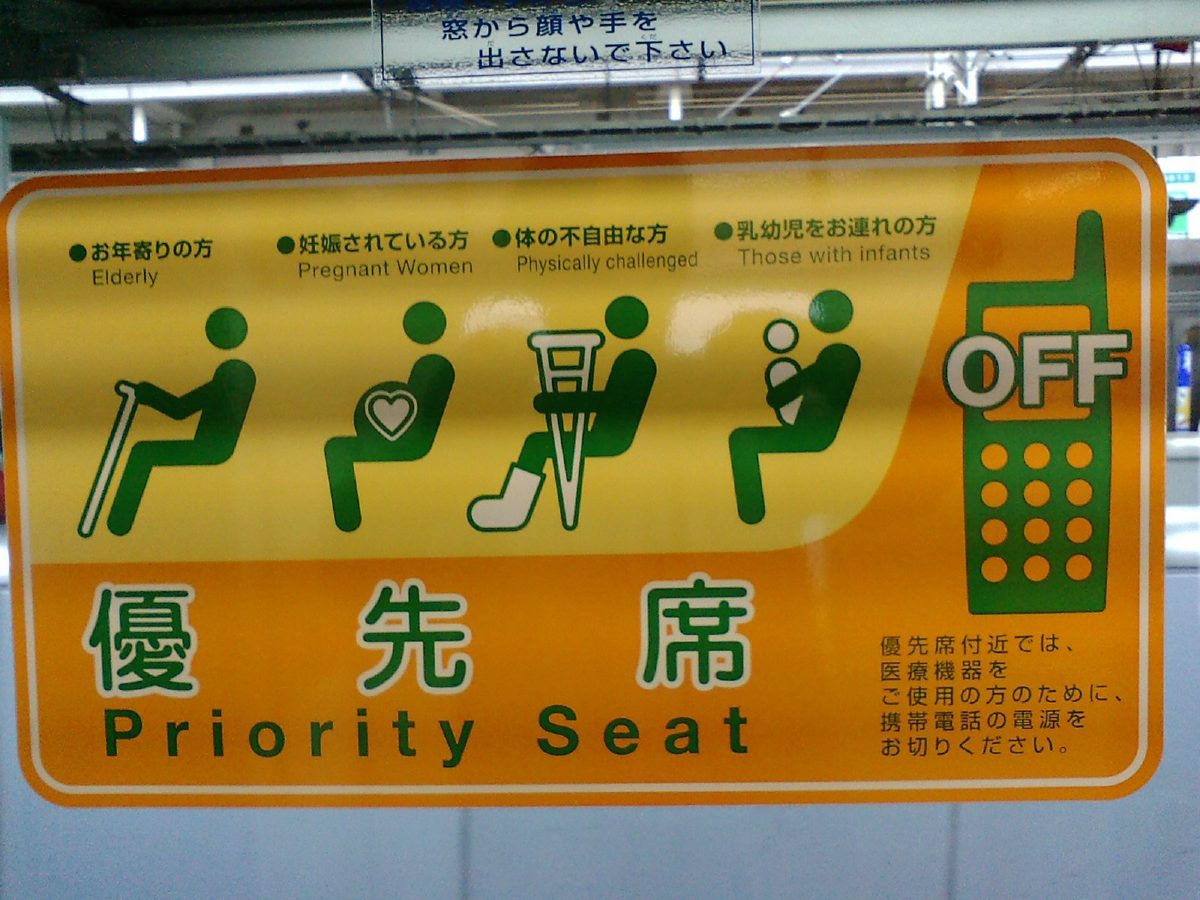
Before these changes, the rule was "always off" near priority seats, and some Kansai lines such as Hankyu even had whole "phone-off cars." Those cars are gone. You may still see older signs, like the one at the top of this page, that say to switch off at all times. Some people near priority seats use medical devices such as pacemakers, which is why the "crowded" part matters. When in doubt, follow the sign in the car you are in.
Older people, strollers and elevators
The government's requests for older people and families are mostly about patience and space:
- Don't rush people getting on or off. Let them take their time at the door and on the stairs.
- Elevators first for those who need them. The transport ministry asks that people in wheelchairs, with strollers and others who need elevators can use them without long waits. If you can manage the stairs or escalator, consider leaving the elevator for them.
- Strollers don't need to be folded on trains and buses. This is the rule agreed by the transport ministry, railways and bus companies in 2014. On buses, the driver may ask a parent to fold the stroller and sit, depending on the road and the bus. The stroller mark shows places where strollers are welcome (elevators, spaces in trains and buses); a crossed-out stroller mark (for example on escalators) means no strollers.
- For everyone around: the ministry asks people to be warm toward stroller users, and to offer to help, for example carrying a stroller up stairs where there is no elevator.
- Some "strollers" are wheelchairs. The ministry points out that some children use a child's wheelchair that looks like a stroller; they need the space, not a reminder to fold it.
Offering your seat, step by step
Not sure whether someone wants a seat? That's normal; plenty of people hesitate. A few things make it easier:
- You don't need to speak. Standing up and gesturing toward the seat with an open hand is widely understood.
- If they say no, that's the end of it. They may be getting off at the next stop, or find standing easier. There's nothing to apologize for, and you can sit back down.
- Only if it's safe for you. If you are carrying a lot, feel unwell or have a child on your lap, you don't need to stand.
- Don't guess out loud. Avoid asking "Are you pregnant?" or commenting on someone's age. Just offer the seat.
Phrases you can copy
| English | Japanese | How to say it |
|---|---|---|
| Would you like to sit? | どうぞ、お座りください。 | Douzo, o-suwari kudasai. |
| Here you go. (short and very common) | どうぞ。 | Douzo. |
| Can I help you with anything? | 何かお手伝いしましょうか。 | Nanika o-tetsudai shimashou ka? |
| OK, no problem. (if they decline) | わかりました。 | Wakarimashita. |
| Excuse me, could I have a seat? (if you need one) | すみません、席を譲っていただけますか。 | Sumimasen, seki o yuzutte itadakemasu ka? |
Quick checklist
- Learn two marks: the pink Maternity Mark and the red Help Mark.
- Offer your seat with a word or a gesture; accept a "no" with a smile.
- Near priority seats, turn your phone off when the train is crowded. No calls anywhere on board.
- Leave elevators for wheelchairs, strollers and people who need them when you can use the stairs.
- Don't judge people who "look fine" in priority seats.
More about riding trains and buses: see trains and buses in Japan.
Last reviewed: October 4, 2026. Rules and distribution places change. Please confirm on the official pages below.
References
- Children and Families Agency (Healthy Parents and Children 21): Maternity Mark official site (Japanese)
- Children and Families Agency: Maternity Mark usage guide and rules (Japanese, PDF)
- Government of Japan Public Relations Online: If you see a Maternity Mark (Japanese, January 27, 2026)
- Tokyo Metropolitan Bureau of Transportation (Toei): Maternity Mark (Japanese)
- JR East FAQ: Maternity Mark distribution (Japanese)
- Tokyo Metropolitan Government: Help Mark (Japanese)
- Tokyo Metropolitan Government: Help Mark design and usage guideline (Japanese, PDF, July 1, 2023)
- Ministry of Health, Labour and Welfare: Promoting understanding of people with disabilities, including the Help Mark (Japanese)
- Saitama Prefecture: Help Mark (Japanese)
- Katsushika City (Tokyo): Help Mark, Help Card and Help Sticker (Japanese)
- JR East FAQ: Phone manners on trains (Japanese)
- JR West and the Kansai Railway Association: Phone manners near priority seats (Japanese, June 25, 2014)
- Osaka Metro: Phone manners near priority seats (English, 2014)
- Hankyu Hanshin Holdings: End of phone-off cars (Japanese, PDF, 2014)
- Ministry of Land, Infrastructure, Transport and Tourism: Campaign for proper use of priority seats and elevators (Japanese)
- Ministry of Land, Infrastructure, Transport and Tourism: Stroller mark (Japanese)
- Ministry of Land, Infrastructure, Transport and Tourism: Stroller and child wheelchair poster (Japanese, PDF)