Maneki-neko: What the Lucky Cat's Right and Left Paw Mean, the Colors, and Where It Came From
Walk past almost any small shop or restaurant in Japan and you may spot a ceramic cat sitting near the register with one paw raised: the maneki-neko, or beckoning cat. Some raise the right paw, some the left, and they come in white, black, gold and many other colors. This column explains what each paw and color is said to mean, the stories about where the cat came from, and where you can see and buy one in Japan.
This page may contain affiliate links. If you buy through them, we may earn a commission at no extra cost to you.
The short answer
- Left paw raised: said to beckon people, so it's popular with shops that want customers.
- Right paw raised: said to bring good fortune and money.
- Colors: the classic cat is a calico; white, black, gold and other colors are each said to carry a wish of their own.
- Origin: nobody knows for sure. Gotokuji temple in Tokyo has its own famous story, and other places tell different ones.
Why a cat, and why that wave?
The name comes from two Japanese words: maneku, "to invite" or "to beckon", and neko, "cat". The Japan Tourism Agency's English description notes that farmers and shopkeepers have long valued cats because they catch rats and other pests, which helps explain why a cat became a symbol of good luck.
The raised paw can look like a wave goodbye to visitors from abroad, but it copies the Japanese gesture for "come here": a raised hand with the palm facing down and the fingers moving up and down. So the cat isn't waving at you. It's calling good things in.
Right paw or left paw: what each is said to invite
The Japan Tourism Agency's description of the cats made in Tokoname (Aichi), one of the best-known places that make them, explains the two paws like this: a cat that raises its left paw is said to beckon people, which makes it popular with businesses that want customers, and a cat that raises its right paw is said to bring good fortune and wealth. Aichi Prefecture's official tourism site puts it the same way: the right paw invites money, the left paw invites customers. Cats with both paws up are sold too.
These are traditional meanings, not rules, and not every place reads them the same way. Gotokuji temple in Tokyo, for example, has a meaning of its own for its right-paw cat (see below).
What the colors are said to mean
The Japan Tourism Agency describes the classic cat as a calico, with white, black and orange markings, holding a gold coin in the paw that isn't raised. It also notes that the traditional calico is still the most popular, but the cats now come in many colors and designs.
Aichi Prefecture's official tourism site lists the meanings people attach to each color when they display Tokoname-style cats:
- White: invites good fortune
- Black: keeps illness away
- Gold: invites money luck
- Silver: long life
- Pink: success in love
- Blue: safe travel on the road
- Red: wards off evil
Like the paws, these are customs, not rules: if you simply like the look of a color, that's a fine reason to choose it.
Where did the lucky cat come from? The stories differ
The honest answer is that nobody knows. The Japan Tourism Agency says the origin of the maneki-neko is unclear, and that the first lucky-cat figurines are thought to have appeared in the mid-19th century. Several places in Japan tell their own story, and the stories don't agree.
- Gotokuji temple (Setagaya, Tokyo): the temple's own site tells how a lord returning from falconry was beckoned by a cat at the temple gate and stopped in. While he was there, thunder rang out and rain began to fall; he stayed dry, enjoyed a talk with the priest, and was moved by his good luck. The lord was Ii Naotaka, lord of the Hikone domain, and with his support the temple was rebuilt in 1633. The temple later built the Shofuku-den hall to honor the cat that brought good fortune.
- Imado Shrine (Asakusa, Tokyo): this shrine is also often called a birthplace of the lucky cat, and its grounds are full of cat figures. Its own website describes its history (founded in 1063 and renamed Imado Shrine in 1937, when it merged with Hakusan Shrine) and its gods, including the married couple Izanagi and Izanami, but we couldn't find the shrine's own account of a cat story, so we don't retell one here.
- Tokoname (Aichi): not a birthplace story, but a big part of the cat's modern look. The Japan Tourism Agency says Tokoname began making lucky cats in the late 1930s and was Japan's top producer by 1950, and that its signature cat has big eyes and ears and a plump body.
So when a guide tells you "this is where the lucky cat was born", it's sharing one of several stories.
Gotokuji's right-paw cats: connections, not coins
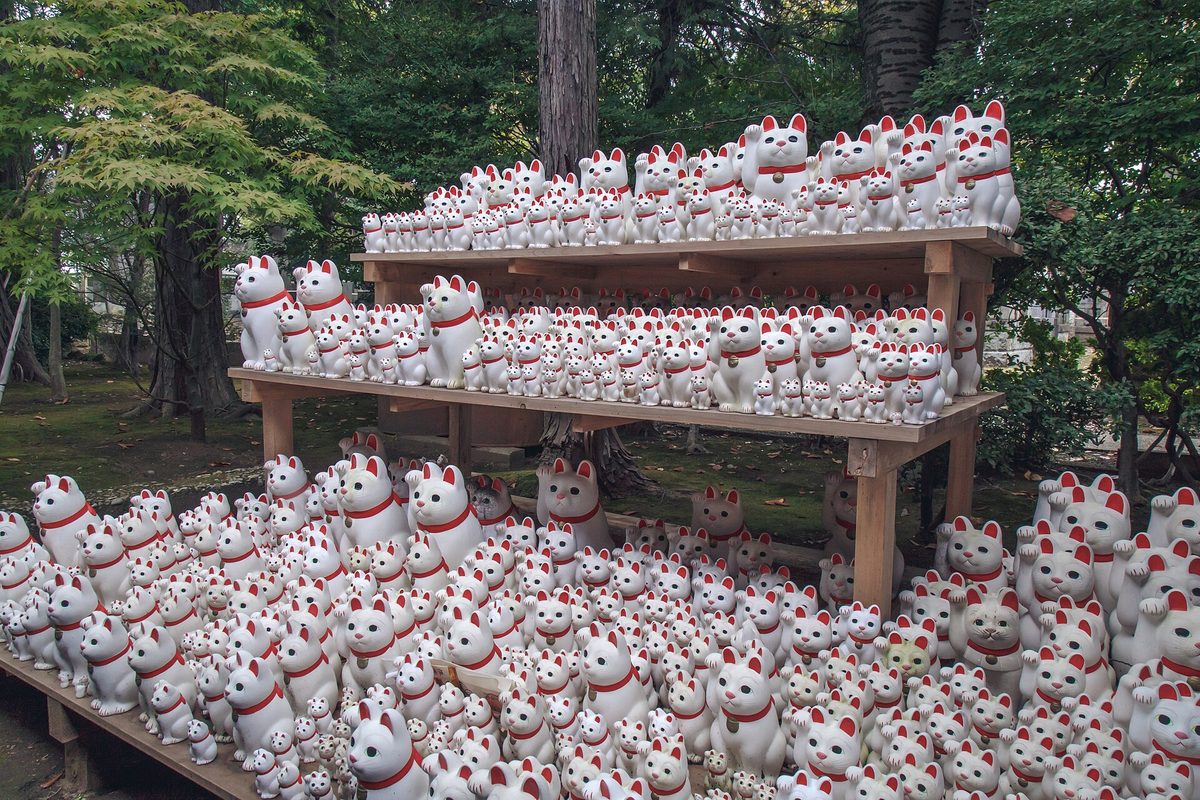
At Gotokuji, every cat raises its right paw and none holds a coin. The temple explains why: the cat invites people and brings you connections (en), but it doesn't hand you good fortune itself. Whether you make the most of those connections is up to you, and if you live with gratitude, good fortune comes to you naturally.
The rows of white cats you see in photos stand at the temple's offering place. The temple says there's no rule about offering one, but many people bring a cat back after their wish has come true.
Where to see and buy lucky cats in Japan
- Gotokuji temple, 2-24-7 Gotokuji, Setagaya, Tokyo: a 5-minute walk from Miyanosaka Station on the Tokyu Setagaya Line, or 15 minutes from Gotokuji Station on the Odakyu Line. The grounds are open 6:00 to 17:00, and the temple office, where the cat figures are sold, is open 8:00 to 15:00. The temple notes that some sizes may be out of stock. Please don't write on the cats: the temple has asked visitors not to, because they are sacred. The temple also says it doesn't run or endorse any guided tours, and that commercial guiding and filming on the grounds need its permission first.
- Imado Shrine, 1-5-22 Imado, Taito, Tokyo: about a 15-minute walk from the stations in Asakusa, Tokyo. The shrine office is open 9:00 to 16:00, and the shrine has no parking and no restrooms, so plan a stop before you go.
- Tokoname (Aichi): Tokoname Maneki Neko-dori (Lucky Cat Street) runs from Meitetsu Tokoname Station toward the town's pottery walking path and is lined with 39 cat figures made by local artists. Halfway along, Tokonyan, a giant cat face with a raised left paw, peeks over an embankment near a bridge: 3.8 meters high and 6.3 meters wide.
- Seto (Aichi): Aichi Prefecture describes the Manekineko Museum here as Japan's largest museum of lucky cats, with thousands of them on display. Seto also holds a lucky-cat festival on a weekend in late September.
Taking a lucky cat home
- Choose by your wish: a left paw for a shop or anything to do with people, a right paw for money and luck, or a Gotokuji cat if you like its idea of connections.
- Pack it well: most cats are ceramic. Wrap yours in clothes and carry it in your cabin bag rather than a checked suitcase.
- A cat from a temple is a lucky charm: at Gotokuji, many people bring their cat back after the wish comes true, but it isn't required. For general manners at temples and shrines, see our guide to visiting shrines and temples.
For more ideas on what to bring home, see souvenirs from Japan.
Last reviewed: October 18, 2026. Opening hours and what temples sell can change. Please check the official sites before you go.
References
- Japan Tourism Agency multilingual descriptions: Tokoname Maneki Neko (Lucky Cats) (English, PDF)
- Japan Tourism Agency multilingual descriptions: Tokoname Maneki Neko, short version (English, PDF)
- Aichi Now (Aichi Prefecture official tourism site): Tokoname and Seto, Japan's two big lucky-cat towns (Japanese)
- Aichi Now: Lucky-cat column (Japanese)
- Gotokuji temple official: Gotokuji and Manekineko (English)
- Gotokuji temple official: Maneki-neko (Japanese)
- Gotokuji temple official: Hours, access and notices (Japanese)
- Gotokuji temple official: Charms and figures (Japanese)
- Imado Shrine official site (Japanese)