Business Hotels in Japan: Good-Value Rooms Near Stations, and Why the Number of Guests Matters When You Book
This page contains affiliate links.
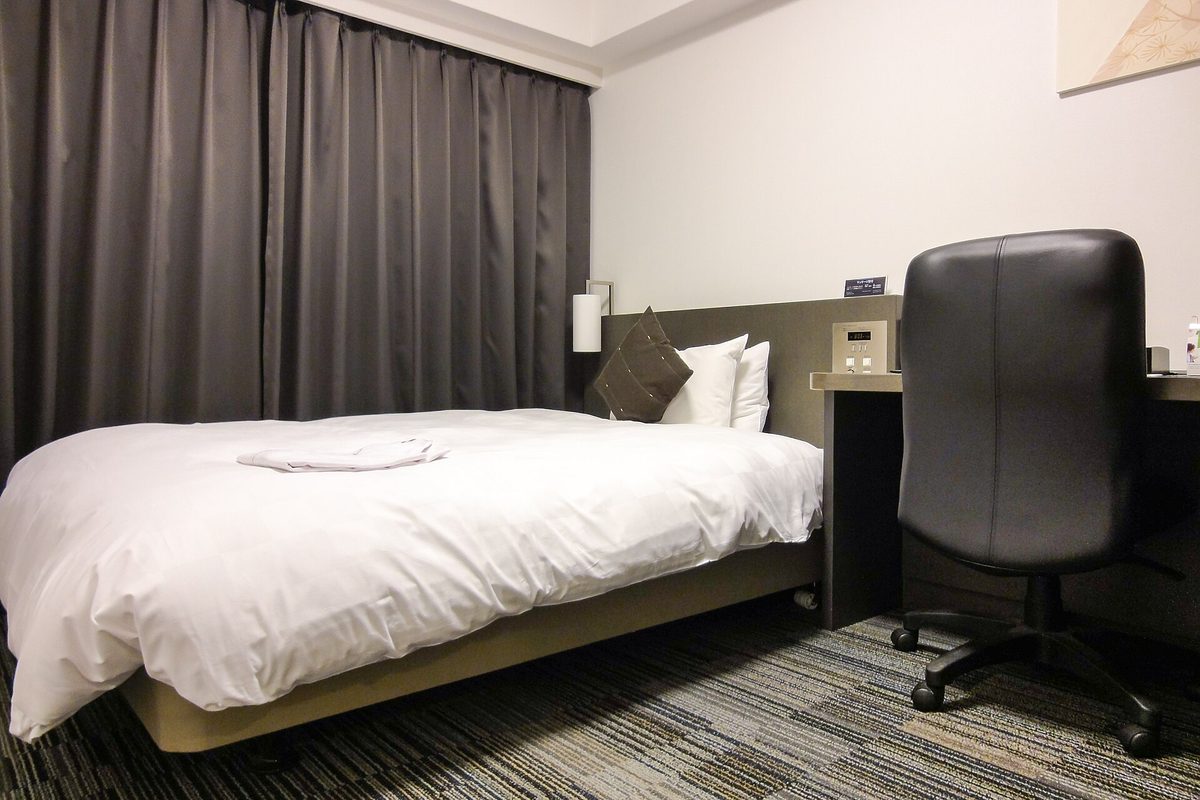
A business hotel is often the best-value bed in a Japanese city: a small, clean room near a station, and at many chains a free breakfast or a large shared bath. The one habit to unlearn is "a room costs the same however many of us sleep in it." Many Japanese hotels set the price by the number of guests, so always enter everyone who will stay, adults and children, before you compare prices.
If you're used to paying one price for a room and squeezing in a friend, Japanese booking pages can look confusing at first. Once you know what to type in the guest box and what each chain includes, they become one of the easiest ways to travel on a budget.
- Many Japanese hotels and ryokan (traditional Japanese inns) charge by the number of guests. JNTO says ryokan rates are usually charged per person, with dinner and breakfast.
- Not every hotel works this way: Toyoko Inn's official site shows a price "per room." Either way, type in every guest.
- Every guest is registered at check-in, and visitors who don't live in Japan show their passport.
- Children's rules differ by chain: free in a parent's bed up to a certain age, or a small fee.
- Free breakfast, large baths and pillow choices differ by chain. At hotels with a large bath, tattoos are usually not allowed unless covered.
What a business hotel is
JNTO, Japan's national tourism organization, describes business hotels as an economical, no-frills option found across Japan, usually close to train stations, with clean and comfortable rooms that are smaller and have fewer amenities than standard hotels. The name comes from business travelers, but tourists use them just as much. What you usually get:
- A small private room with its own bathroom, often a compact unit bath (toilet, sink and bathtub in one).
- A station-side location, handy for early trains and day trips.
- Set equipment: Wi-Fi, a desk, a fridge, a kettle and nightwear are common. Toyoko Inn, for example, lists these among its standard room equipment.
- Extras that depend on the chain: a free breakfast, a large shared bath, a coin laundry or free evening snacks.
The price often depends on how many of you stay
In many countries you book "a room," and the price stays the same whether one or two people sleep in it. In Japan, many hotels and ryokan set the price by the number of guests:
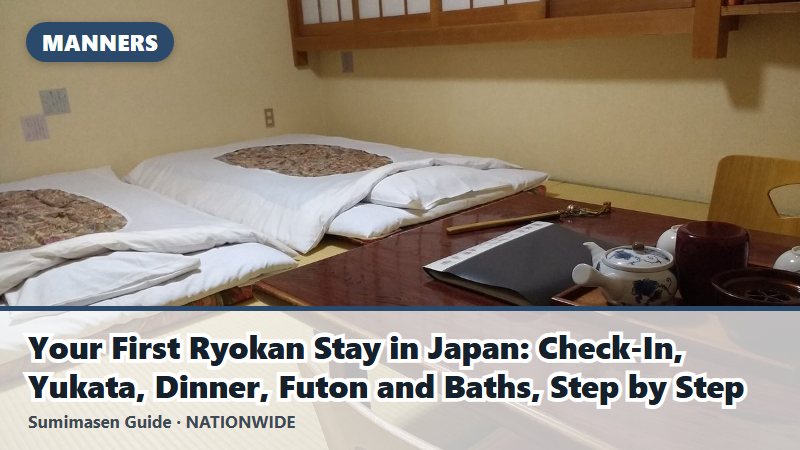
- Ryokan: JNTO explains that room rates are usually charged per person, with dinner and breakfast included. Our first ryokan stay guide walks you through the rest.
- Super Hotel sells separate 1-person and 2-person plans, and its FAQ notes that if you book a 2-person plan because the 1-person plan is full, the price isn't changed later.
- Route Inn explains that if one adult and one child use a room for two, the stay is charged as two adults. Its late check-out and early check-in fees are also per person.
- Dormy Inn charges children of junior high school age and up the same rate as one adult.
Not every hotel works this way. Toyoko Inn's official booking page shows a price "per room," and when we searched one of its Tokyo hotels, the economy double showed the same price for 1 or 2 guests. So read what the price on your screen covers, and don't assume a room for one person can take a second person for free.
Type in every guest, every time. At check-in, hotels register each guest's name and other details. Japan's Ministry of Health, Labour and Welfare requires hotels to record the nationality and passport number of foreign guests who don't have an address in Japan, and asks them to keep a copy of the passport. Toyoko Inn's rules ask foreign guests to show their passport and say the hotel takes a copy. A single room at Toyoko Inn, for example, is for one adult, so a second person needs a different room type. If you change a booking directly with Toyoko Inn, any extra amount is paid at the hotel. See also carrying your passport in Japan.
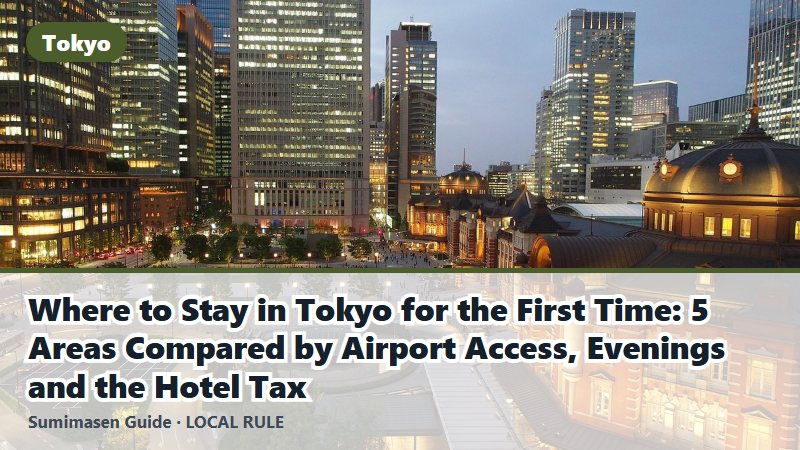
The accommodation tax is per person too. Tokyo and Kyoto charge it per person per night, based on the room charge per person, so the tax is worked out for each guest. Toyoko Inn shows the total with the tax on its booking confirmation page, and the tax is paid with the room charge. See Kyoto's accommodation tax, Osaka's accommodation tax and, for Tokyo, where to stay in Tokyo.

Kohaku's tipType in every guest, adults and children, before you compare prices. At many hotels, the price depends on how many of you stay.
Children: each chain has its own rule
Sharing a parent's bed (soine in Japanese) is often free for young children, but the age limit and fees differ:
- Toyoko Inn: children of elementary school age and younger stay free in a parent's bed, one child per bed, and eat the free breakfast too. Don't count them in the "guests" box; a child who needs their own bed, or anyone of junior high school age and up, counts as an adult.
- Dormy Inn: ages 0 to 2 are free in a parent's bed; ages 3 to elementary school age are 3,000 yen per child per night, one child per bed; junior high school age and up pay the adult rate.
- Route Inn: sharing a bed is free for preschool children and 2,000 yen for elementary school children. These rates apply only when the child is beyond the room's capacity: one adult and one child in a room for two pay for two adults.
- Super Hotel: preschool children stay free in a parent's bed, but they count toward the room's capacity, so enter them when you search.
- Richmond Hotels: children of elementary school age and younger stay free in a parent's bed, one child per bed. There are no extra beds, and junior high school age and up pay the adult rate. Tell the hotel in advance if a child will share your bed; towels are provided for every guest. Affiliated and "friendship" hotels have different rules.
- APA Hotel: at all APA Hotels except Kasuigo and APA Alliance hotels, one preschool child per bed can share an adult's bed for free. Some hotels have children's amenities, so ask the hotel.
In Japan, children start elementary school at age 6: Super Hotel's FAQ defines preschool children as ages 0 to 6. If your child is near an age limit, ask the hotel before you book.
Room types in English and Japanese
- Single (シングル): one bed for one adult. At Toyoko Inn, single rooms are for up to 1 adult and come with a double-size bed.
- Semi-double (セミダブル): a bed between a single and a double in size. Check the room's capacity and the bed width on the booking page.
- Double (ダブル): one bed for up to 2 adults. Toyoko Inn's double rooms have a queen-size bed.
- Twin (ツイン): two beds. Toyoko Inn's twin rooms take 2 to 4 adults, depending on the room.
Many booking pages list the bed width in centimeters. On Toyoko Inn's pages, for example, beds range from 110 cm to 160 cm wide depending on the room type. If two adults will share one bed, the width in cm tells you more than the room name.
Why they're good value: what the big chains include
Each chain has its own strengths. Pick the one that suits your trip; there's no single best chain. Here's what the chains' official pages say:
- Toyoko Inn: a free breakfast at all its hotels, which you can take to your room at most of them. There are no large baths. It keeps its prices steady, without big swings between seasons, under its "one price" policy. Suits travelers who want a simple, predictable room near a station.
- Dormy Inn: known for its large baths, some with saunas and outdoor-air areas, plus free extras such as welcome drinks, ice cream after your bath and late-night noodles (yonaki soba). Breakfast prices vary by hotel. Suits travelers who want a soak at the end of the day.
- Route Inn: a free buffet breakfast of over 30 dishes at Hotel Route Inn and Hotel Route Inn Court, and large baths. Suits travelers who want a big breakfast and a bath.
- Super Hotel: a free organic-focused breakfast (some hotels charge), natural hot spring baths at some hotels, and a free welcome bar at some hotels. Suits travelers who care about sleep and breakfast.
Other chains, such as Sotetsu Fresa Inn, have their own rules for children, baths and breakfast, so read each hotel's page before you book.
Pillows you can choose
Some business hotels let you pick a pillow. Super Hotel has a "Gussuri corner" with 8 types of pillow to choose from; they're first come, first served and can't be reserved. Toyoko Inn's Premium Plus rooms, a limited number per hotel, come with an airweave mattress and pillow. At other hotels, ask at the front desk.
Breakfast: a busy time of day
Many guests are on business trips and eat before work, so the breakfast room can get busy. Check the serving hours on your hotel's page. At Toyoko Inn Tokyo-eki Yaesu Kita-guchi, for example, the free breakfast is served from 6:30 to 9:00. On holiday, you can choose a quieter time within those hours, and at most Toyoko Inn hotels you can take breakfast back to your room. If you leave very early, check the serving hours the night before: Toyoko Inn says it can't prepare food before breakfast starts.
Large baths and tattoos
Large shared baths (daiyokujo) are one of the best things about some chains, and most of them don't let people with tattoos bathe unless the tattoo is covered. The rules differ:
- Dormy Inn: refuses tattoos in principle. Some hotels have cover stickers, and if a sticker covers your tattoo, you can bathe. Usually up to 2 stickers are offered, while they last.
- Route Inn: refuses tattoos, unless the tattoo is fully covered with a cover sticker.
- Super Hotel: asks guests with tattoos or body paint not to use its hot spring baths. Every room also has its own bath.
- Toyoko Inn: has no large baths, so you use your room's bathroom.
Use the bath as Japanese guests do: rinse before you get in, and keep your towel out of the water. Our guide to onsen and tattoos covers cover stickers and private baths, and onsen and sento manners covers the rest.
My visit
I've stayed at all of these chains. APA Hotel and Super Hotel also have larger rooms, and many of them are near sightseeing spots, so they're convenient.
Being able to choose your pillow is really nice. Hard pillows, soft pillows: find your favorite.
Many guests are on business, so the breakfast buffet is often crowded in the morning. Keep that in mind.
And if you have tattoos, you often can't use the large bath. (The rules differ by chain: see above.)
Before you book: five things to check
- Smoking or non-smoking: Toyoko Inn's rooms are non-smoking unless the room type is marked as smoking, and you choose when you search. Super Hotel doesn't allow e-cigarettes such as IQOS in non-smoking rooms. See where you can smoke in Japan.
- Check-in and check-out times: usually 15:00 and 10:00 at Toyoko Inn, Route Inn and Super Hotel, and 15:00 and 11:00 at Dormy Inn, though some hotels and plans differ. At most Super Hotel hotels, check-in runs from 15:00 to midnight; after midnight the booking is treated as cancelled, so call the hotel if you'll be late.
- Arriving early: Toyoko Inn can keep your bags from the morning of your check-in day, but the room is ready at 15:00. Route Inn charges per person to use the room before 15:00, starting at 1,000 yen per person for 14:00 to 15:00.
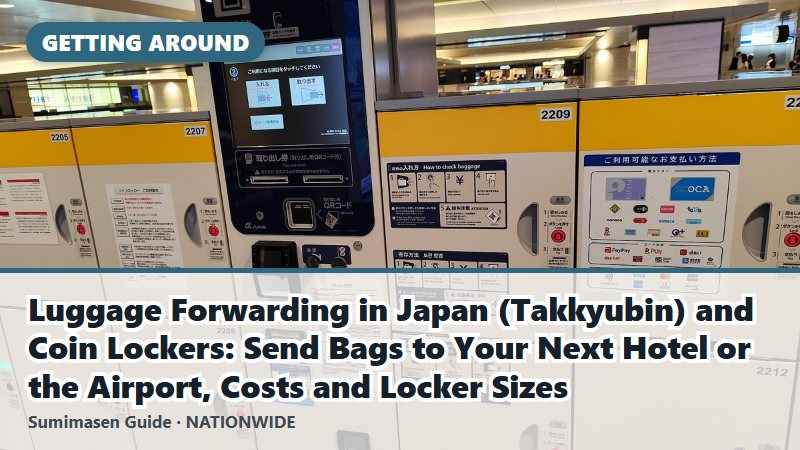
- Big suitcases: rooms are small, so a big suitcase can fill the floor. Route Inn accepts luggage sent ahead if the label has your stay date and your name in katakana (Japanese script). See luggage forwarding and coin lockers and our Japan packing list.
- Accommodation tax: check whether your city charges one, and how it's paid.
Last reviewed: October 30, 2026. Prices, services and rules change and can differ by hotel and plan. Please check the hotel's official page before you book.
Official sources (checked October 2026)
- JNTO: Accommodation in Japan (English)
- Ministry of Health, Labour and Welfare: Guest register rules for foreign guests (Japanese)
- Tokyo Metropolitan Government Bureau of Taxation: Accommodation tax (Japanese)
- Kyoto City: Accommodation tax (Japanese)
- Toyoko Inn: How to use Toyoko Inn (Japanese)
- Toyoko Inn: Rooms and services (Japanese)
- Toyoko Inn: One price policy (Japanese)
- Toyoko Inn: FAQ (Japanese)
- Toyoko Inn: Terms of stay (Japanese)
- Toyoko Inn Tokyo-eki Yaesu Kita-guchi: hotel page and booking page (Japanese)
- Dormy Inn: FAQ (Japanese)
- Dormy Inn: What makes Dormy Inn different (Japanese)
- Route Inn Hotels: FAQ (Japanese)
- Route Inn Hotels: Buffet breakfast (Japanese)
- Super Hotel: FAQ (Japanese)
- Super Hotel: For families (Japanese)
- Super Hotel: Natural hot springs (Japanese)
- Super Hotel: Sleep research and pillows (Japanese)
- Richmond Hotels: FAQ about the hotels (Japanese)
- APA Hotel: Sharing a bed with your child (Japanese)