Cash, Cards or IC Card? How to Pay for Things in Japan in 2026
Japan is no longer a cash-only country, but it isn't fully cashless either. Hotels, department stores and chain restaurants take credit cards, trains and convenience stores take a tap of an IC card, and a small family restaurant or a temple counter may still want yen in cash. The easiest way to travel is to carry all three: a card, an IC card and some cash. This guide explains where each one works, how to get yen from an ATM with a foreign card, which IC card suits a short visit, and what has changed recently, using official pages from the government, the Bank of Japan, railway companies and banks.
- Where cards, IC cards and cash each work best
- Which ATMs take foreign cards, and their limits
- Welcome Suica, Welcome Suica Mobile and ICOCA compared
- Tap-to-pay credit cards at train gates, and the new banknotes
The short answer: carry all three
Cashless payment is growing fast. Japan's Ministry of Economy, Trade and Industry (METI) calculated that 58.0% of consumer spending in 2025 was cashless, and that credit cards made up 82.7% of that. It also means a large share is still paid in cash, so a mix is the safe choice.
Cash: still needed, and the new banknotes
Many small restaurants, shrine and temple counters, market stalls and festival stands take cash only, and so do some buses outside the big cities. The ticket machines that top up physical IC cards also take cash, not cards. Keep enough yen for a day or two of small payments.
You may see two designs of banknotes. The Bank of Japan began issuing new 10,000, 5,000 and 1,000 yen notes on July 3, 2024, and it says the older notes remain valid. Both are real money.
If you bring a lot of cash, note that anyone entering or leaving Japan with cash or other means of payment worth more than 1,000,000 yen in total must declare it to Japan Customs.
Getting yen: ATMs that take foreign cards
Many ATMs in Japan are for Japanese bank cards only. JNTO's money page points visitors to two networks that work with cards issued abroad:
- Seven Bank ATMs, mainly inside 7-Eleven stores. Seven Bank says its ATMs run 365 days a year; for cards issued overseas, the limit is 100,000 yen per withdrawal (30,000 yen for magnetic-stripe cards), and fees vary by card brand. JNTO notes the screens come in 12 languages.
- Japan Post Bank ATMs, mostly at post offices. Japan Post Bank's international ATM page lists Visa, Mastercard, JCB, UnionPay, Discover and others; the limit is 50,000 yen per withdrawal, and a fee of 220 yen per use may apply for some cards. Post office ATMs usually run from 7:00 a.m. to 11:00 p.m. on weekdays and Saturdays, with shorter hours on Sundays and holidays.
Your own bank may also charge a fee, so check it before you go. If you head to the countryside or a small island, withdraw cash before you leave the city.
IC cards: Suica, ICOCA and the rest
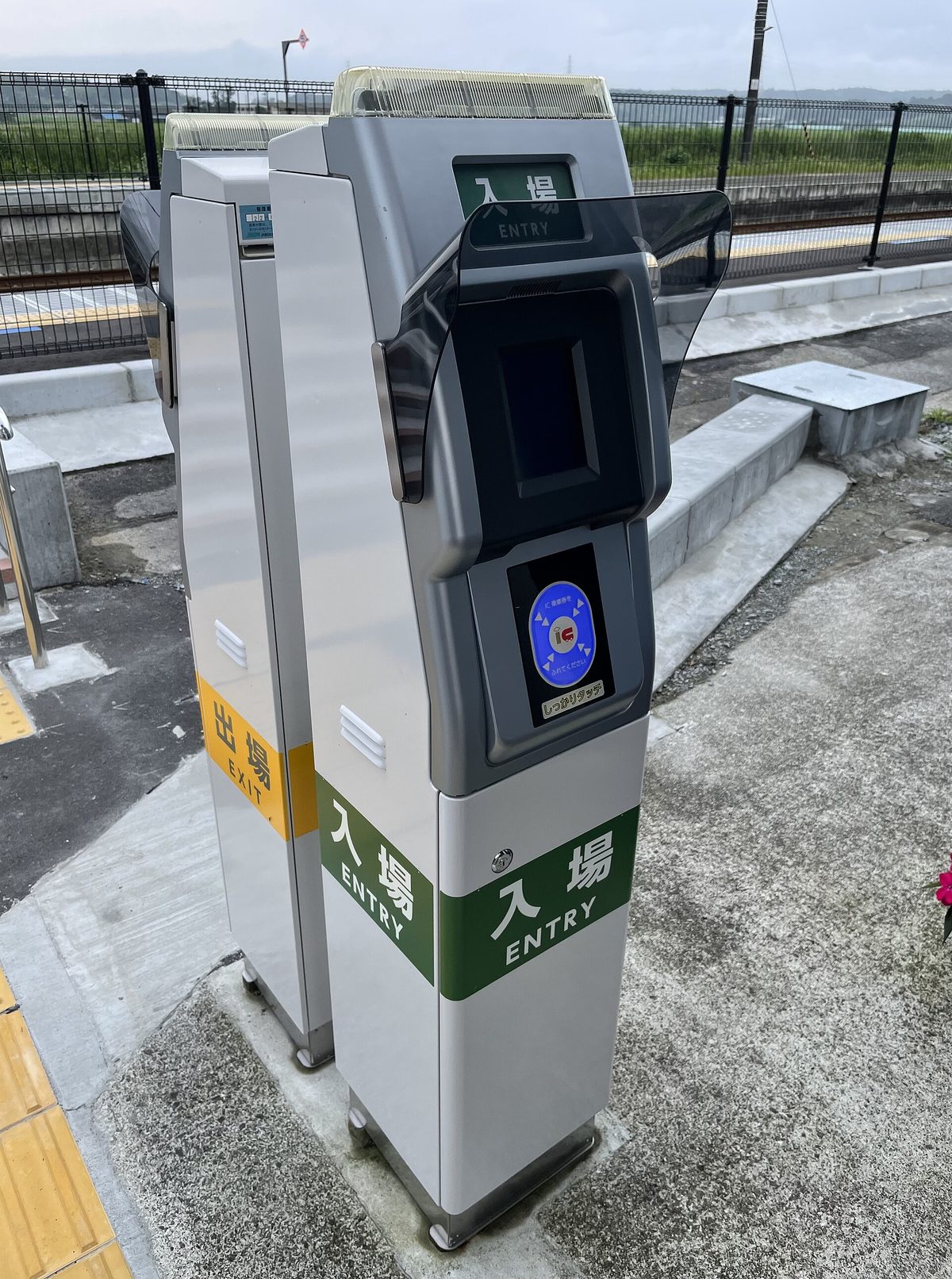
An IC card is a prepaid card you tap at train gates and on buses, and at shops with the IC mark: convenience stores, vending machines and station lockers. Japan's main cards (Suica, PASMO, ICOCA, manaca, TOICA, Kitaca, SUGOCA, nimoca, Hayakaken and PiTaPa) work in each other's areas, so one card is enough for the whole trip. One limit to know: a single trip can't cross from one card area into another. JR East's Welcome Suica page gives the example that you can't ride from the Tokyo (Tokyo) area to the Sendai (Miyagi) area on it; leave the gate and buy a ticket for that kind of trip.
Three options made for or easy for visitors:
- Welcome Suica (card), from JR East. Sold at airport stations and some major stations in the Tokyo (Tokyo) area and Sendai (Miyagi), in principle one per person. No deposit. It is valid for 28 days including the day you buy it, can be topped up only with yen in cash (up to 20,000 yen), and the remaining balance is not refunded, so try to spend it before you leave.
- Welcome Suica Mobile, a JR East app for iPhone. You can set it up before your trip and top it up with a card through Apple Pay. It is valid for 180 days from issue, and the balance is not refunded. It doesn't work on Android phones.
- ICOCA, from JR West, sold at ticket machines in the Kansai area and elsewhere in JR West's area. JR West's ticket page explains that the price includes a 500 yen deposit; return the card at a JR West ticket office to get the deposit and remaining balance back, minus a 220 yen fee. It can't be bought or topped up with a credit card. iPhone users can also add ICOCA to Apple Wallet.
Tapping a credit card at the ticket gate
A growing number of railways in Japan now let you tap a contactless credit card (or a phone with one set up) at special readers on the ticket gates, so you don't need an IC card at all on those lines. For example, the subway in Nagoya (Aichi) started this at all its stations on September 3, 2026. It is convenient, but check the rules of each line: on Nagoya (Aichi)'s subway, for example, it always charges the adult fare, you need one card per person, and you must tap out with the same card or device. Our guide to getting around Nagoya (Aichi) has the details. Lines without these readers still need an IC card or a ticket, so an IC card remains the simplest choice.
Credit cards in shops
Visa, Mastercard and other international cards are widely accepted in cities. A few tips:
- Look for the card marks at the entrance or the register, and ask before you order if you're not sure.
- Small payments can often be made by tapping the card. Japanese card companies note that above a certain amount, you may need to insert the card and enter your PIN, or sign, so know your PIN before you travel.
- Bring a second card and keep it separately, in case one is declined or lost.
Shopping a lot? Tax-free shopping changes on November 1, 2026: see how the new tax-free refund works.
Quick checklist
- Bring two payment cards, and know your PIN.
- Withdraw yen at a 7-Eleven (Seven Bank) or post office (Japan Post Bank) ATM.
- Get an IC card: Welcome Suica at the airport, Welcome Suica Mobile on an iPhone, or ICOCA in Kansai.
- Keep enough cash for small restaurants, temples and topping up your card.
For riding trains and buses, see trains and buses in Japan, and to stay online when you pay, eSIM or pocket Wi-Fi.
Last reviewed: October 4, 2026. Fees, limits and card rules change; please confirm on the official pages below.
References
- METI: 2025 Ratio of Cashless Payment Among the Total Amount Paid by Consumers (March 31, 2026)
- Bank of Japan: A New Series of Banknotes
- Bank of Japan: Issuance Date for the New Series of Bank of Japan Notes
- Japan Customs: Export/Import of Means of Payment (FAQ)
- JNTO: Currency exchange and ATMs
- Seven Bank: Overseas Cards Usable at ATMs
- Japan Post Bank: International ATM Service
- JR East: Welcome Suica
- JR East: Welcome Suica, where to buy and validity
- JR East: Welcome Suica Mobile
- JR West: Tickets and ICOCA
- JR West: Riding the Train, the Basics (ICOCA on Apple Pay)
- JR West: How to use JR-West, FAQ (PDF)
- Nagoya City Transportation Bureau: Riding with a contactless credit card (Japanese)
- JCB and partners: Tap-to-pay rides on the subway in Nagoya (Aichi) (press release, Japanese, PDF)