Flying a Drone in Japan as a Tourist: The Rules That Apply to You
Mt. Fuji at sunrise, a shrine gate by the sea, a sea of autumn leaves: Japan looks wonderful from the air, and it's natural to want to pack your drone. Before you do, it helps to know that Japan treats drones seriously. Drones of 100 g or more must be registered before their first flight here, flying over city centers and other built-up areas needs permission, and the law that protects the area around important facilities was amended in July 2026. None of this makes flying impossible. It just means the planning happens at home, not on the day. This guide walks through the rules that apply to visitors, using the official pages of the Ministry of Land, Infrastructure, Transport and Tourism (MLIT) and the National Police Agency.
This page may contain affiliate links. If you buy through them, we may earn a commission at no extra cost to you.
- The two laws that matter, and which drones each one covers
- Registration for drones of 100 g or more, and how visitors do it online
- Where and how you need permission, and the new 2026 no-fly zones
- Parks, shrines and private land, plus a short pre-trip checklist
Please read this first. This page is a plain-English guide, not legal advice. The official rules are on MLIT's Flight Rules for Unmanned Aircraft page and the National Police Agency's Drone Act page. MLIT's help desk for unmanned aircraft answers questions at +81-3-5539-0225 (weekdays 9:00 a.m. to 5:00 p.m. Japan time, excluding holidays and December 29 to January 3).
Two laws, and which drones they cover
The National Police Agency sums it up: drone flights in Japan are restricted by two laws.
- The Civil Aeronautics Act (run by MLIT) covers drones and model aircraft weighing 100 g or more, battery included. It sets registration, the areas where you need permission, and how you may fly.
- The Drone Act (the Act on Prohibition of Flight of Small Unmanned Aircraft, run by the police) covers drones of any weight, including those under 100 g. It bans flights over and around important facilities.
On top of these, the owner or manager of the land you take off from can set their own rules. A small drone may skip the first law, but never the second or the third.
Step 1: Register a drone of 100 g or more before you fly
Since June 20, 2022, every unmanned aircraft of 100 g or more that flies outdoors in Japan must be registered. MLIT's portal tells visitors to register their drone before flying it in Japan, and no unregistered drone may fly.
- Apply online through MLIT's DIPS 2.0 system. Identity can be verified online using your passport, and there is an application fee.
- Display the registration ID on the drone so that it is clearly visible.
- Remote ID: the drone must also have a remote ID function, which broadcasts its identification while it flies (MLIT says this does not include personal information).
- A registration ID is valid for three years.
Flying an unregistered drone can be punished by up to one year of imprisonment or a fine of up to 500,000 yen, according to MLIT's registration portal. Because the online check can take time, start this well before your trip.
One more thing for drones bought abroad: MLIT's leaflet warns that radio equipment without Japan's Technical Conformity Mark cannot be used and may be treated as illegal radio use, even if it meets a foreign standard. Check your model before you pack it.
Step 2: Where you need permission
Under the Civil Aeronautics Act, you need permission from MLIT in advance to fly in these areas:
- Around airports
- 150 m or more above the ground
- Above Densely Inhabited Districts (DIDs): built-up areas defined from the national census. MLIT links to a map where you can check them.
Separately, the Drone Act bans flights, in principle, over the premises of important facilities (the "Red Zone") and the area of approximately 1,000 meters around them (the "Yellow Zone"). The amended Act came into force on July 14, 2026. The covered facilities include the National Diet Building, the Prime Minister's Office, the Supreme Court, the Imperial Palace, designated political party offices, embassies, designated Self-Defense Forces and U.S. Forces facilities, designated airports and nuclear sites. The police note that in Tokyo (Tokyo), flying is prohibited in many areas. You can check the zones on the GSI Maps service linked from the police page.
Penalties under the Drone Act: flying over a Red Zone can mean up to one year of imprisonment or a fine of up to 500,000 yen, and flying over a Yellow Zone up to six months or a fine of up to 500,000 yen. Even when an exception applies (for example, written consent from the facility), you must notify the Prefectural Public Safety Commission at least 48 hours before the flight.
Step 3: How you fly (and the four rules that always apply)
Even outside the areas above, MLIT requires advance approval if you want to fly a 100 g+ drone in any of these ways:
- At night
- Beyond your own line of sight
- Within 30 m of people or property on the ground or water (buildings, cars and so on)
- Over events where many people gather
- Carrying hazardous materials
- Dropping any object
And these four rules apply to every flight, wherever and however you fly:
If you do get permission or approval, there are a few more duties: you must report your flight plan to MLIT in advance and keep a flight logbook. Applications are made through DIPS 2.0, and MLIT's manual page asks applicants to submit 10 or more working days before the planned flight. Any accident or serious incident must be reported, with or without permission. Flying without the permission or approval you needed can be punished with imprisonment or a fine.
Parks, shrines, temples and private land
Following the national rules doesn't give you the right to take off anywhere. The Ministry of the Environment reminds drone users that land and facility managers, including shrines and temples with important cultural properties and park facilities, may ban drone flights over their grounds, and asks you to check with them beforehand. In national parks, no permit is needed just to fly under the Natural Parks Act, but disturbing other visitors, hurting wildlife or leaving a crashed drone behind can lead to penalties.
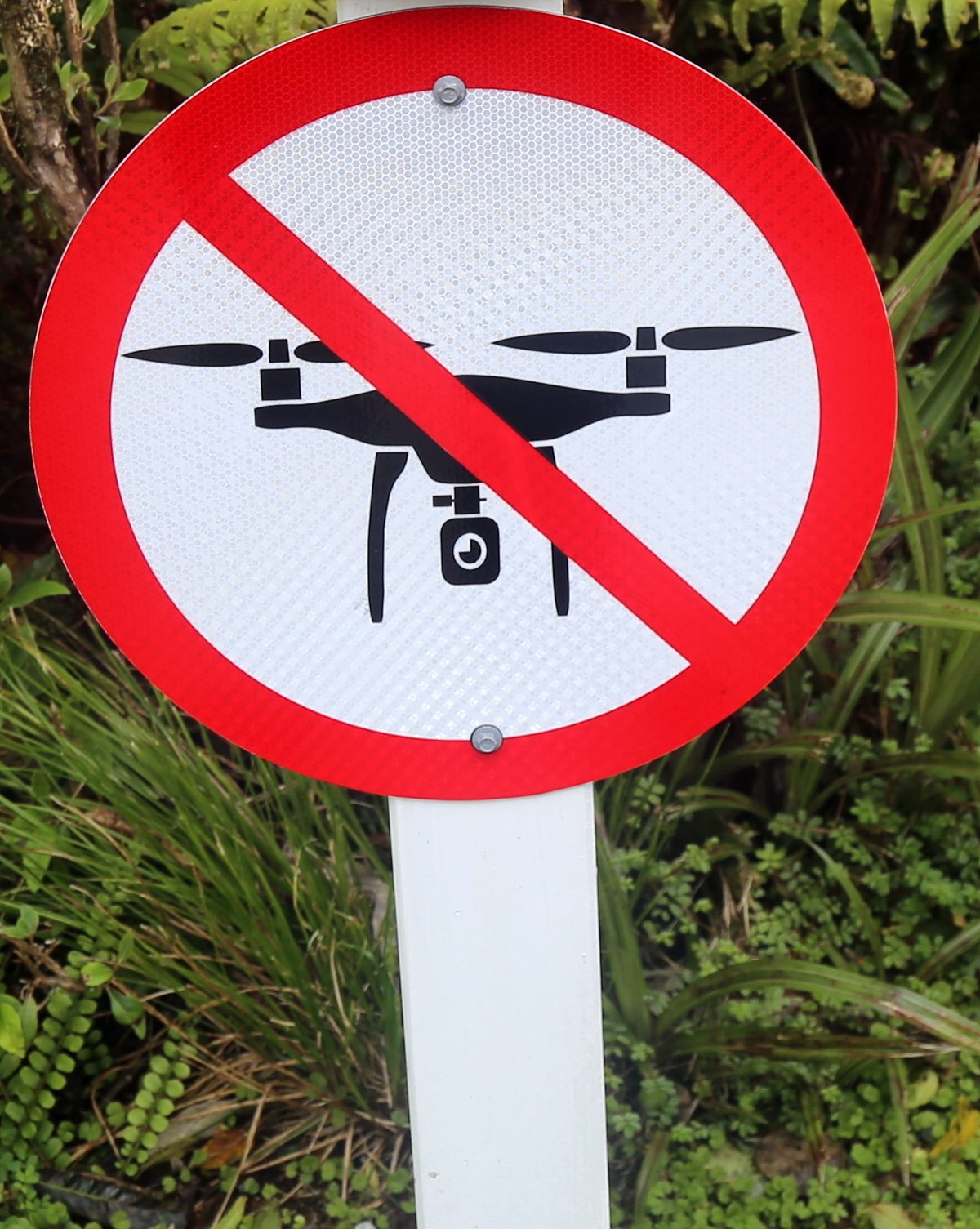
Signs at the entrance are the quickest guide. If you see a no-drone sign, that's the answer. For one well-known example, see our guide to photo rules and the drone ban at Ise Jingu.
Your pre-trip checklist
- Weigh your drone with its battery. 100 g or more means registration, a visible ID and remote ID.
- Check the radio mark. Make sure your model can be legally used in Japan.
- Pick your spots on the maps: airports, DIDs and Drone Act Red/Yellow Zones.
- Need night, out-of-sight or close-to-people flights, or a restricted area? Apply on DIPS 2.0 at least 10 working days ahead.
- Ask the land manager before taking off in parks, temples, shrines or private land.
- On the day: no alcohol, preflight check, keep watching the sky.
If that list feels like too much for a short holiday, that's a fair conclusion too. Leaving the drone at home and enjoying the view from an observation deck is a perfectly good plan. Either way, you'll know the choice was yours, not a surprise at the airport.
Last reviewed: October 4, 2026. Rules can change. Please confirm the latest information on the official pages below before you travel.
References
- MLIT: Flight Rules for Unmanned Aircraft (Drones and Model Aircraft, etc.)
- MLIT: Unmanned Aircraft Registration Web Portal
- MLIT: Unmanned Aircraft Flight Permission/Approval Application Web Portal
- MLIT: Drone/UAS Information Platform System (DIPS 2.0)
- DIPS 2.0: Manuals and application timing
- MLIT: Flight Rules on Unmanned Aircraft (leaflet, PDF)
- National Police Agency: The Drone Act
- Ministry of the Environment, Kanto Regional Environment Office: Using drones in national parks (Japanese)