Medicines You Can't Bring Into Japan (and What to Do Instead)
You pack for Japan the way you pack for anywhere: passport, charger, and a small bag of the medicines you always carry. A cold tablet for the flight. Your regular prescription. Maybe something for allergies. It feels like the least risky thing in your suitcase. In Japan, it can be the most risky one. A few ingredients that sit on open shelves in other countries are tightly controlled here, and a doctor's prescription from home does not change that. This guide walks you through how to check your own medicines before you fly, using only what Japan's government says, and what to do if something on your list turns out to be restricted.
This page may contain affiliate links. If you buy through them, we may earn a commission at no extra cost to you.
- The few ingredients that cause most of the trouble (and why)
- How much ordinary medicine you can bring without any paperwork
- Which permit or document you need, and how early to apply
- What to do in Japan if you had to leave something at home
Please read this first. This page is a plain-English guide, not legal or medical advice. Japan's rules are set by the Ministry of Health, Labour and Welfare (MHLW) and can change. Before you travel, check the official pages linked at the end, or email the address MHLW gives for questions: yakkan@mhlw.go.jp. Please don't stop or change a prescribed medicine without talking to your doctor.
Why this catches so many careful travelers
Most people who run into problems were not careless. They simply assumed that "legal at home" means "legal everywhere." The U.S. Embassy in Japan puts it bluntly: many common medications and over-the-counter drugs in the United States are illegal in Japan, and having a valid U.S. prescription does not matter if the medicine is illegal in Japan. The Embassy warns that travelers who bring such medicine risk arrest and detention.
The reason is not that Japan dislikes medicine. Japan's laws sort substances by what they could be turned into or how they could be misused, and some everyday ingredients land in strict categories. Once you know the handful of ingredients that matter, checking your bag takes about ten minutes.
The short list: ingredients to look for on your labels
Japan's Narcotics Control Department (part of MHLW) publishes a Controlled Substances List. It does not list brand names, so you need to read the active ingredients on your box or prescription. These are the ones that most often surprise visitors:
| Ingredient (examples of where it appears) | How Japan treats it | What it means for you |
|---|---|---|
| Amphetamine (e.g., Adderall) | Controlled as a "stimulant." On the list of substances no individual traveler can bring. | Cannot be brought in, even with a prescription and even for treatment. |
| Lisdexamfetamine (e.g., Vyvanse, Elvanse) | A "stimulants' raw material." | Allowed only with permission obtained before you travel. |
| Pseudoephedrine / ephedrine (some cold, sinus and allergy medicines) | A "stimulants' raw material." Products containing 10% or less are excluded. | Above 10% needs advance permission. The percentage is rarely printed on the box, so many travelers simply leave these at home. |
| Codeine (some painkillers and cough medicines) | A "narcotic." Products containing 1% or less are excluded. | Above 1% needs advance permission. |
| Morphine, oxycodone, fentanyl and similar strong painkillers | "Narcotics." | Advance permission needed. |
| Zolpidem, alprazolam, diazepam, clonazepam and similar | "Psychotropics." | No permit, but above a set amount you need a doctor's certificate with you. |
| THC (cannabis; also in some CBD products) | Strict limits on THC in products since December 12, 2024. | Cannabis is prohibited. CBD products can contain trace THC, so they are a risk. |
A note on cold medicine: the Narcotics Control Department lists pseudoephedrine by name as a stimulants' raw material. Some decongestants use a different ingredient, phenylephrine, instead. Read the ingredient line on your own box rather than going by the brand name, because the same brand can contain different ingredients in different countries.
Check your medicine in four questions
Here is the whole process on one page. Start at the top with each medicine you plan to pack.
How much ordinary medicine you can bring without paperwork
Most medicines are not controlled substances at all. For these, MHLW sets amounts you can bring for personal use without applying for anything:
- Prescription drugs (and drugs classed as poisons or deadly poisons): up to a 1-month supply
- Other medicines and quasi-drugs (for example, ordinary over-the-counter pain relievers): up to a 2-month supply
- Medicines for external use (creams, ointments and similar, excluding the categories above): up to 24 per item
- Injectable drugs with their syringes: up to a 1-month supply, and only "pre-filled syringes" or "self-injection kits"
If you need more than that, for example because you are staying three months and take a daily prescription, you apply for an Import Confirmation (輸入確認証, yunyu kakunin-sho; older guides call it yakkan shoumei). MHLW says you must receive it before you leave home and show it to the customs officer. Part of the process can now be done online through MHLW's application site.
Even when no paperwork is needed, the U.S. Embassy suggests carrying a copy of your prescription and a letter stating what the medicine is for. It costs nothing and can save a long conversation at the airport.
If you need a permit: how it actually works
For narcotics and stimulants' raw materials (codeine above 1%, pseudoephedrine above 10%, Vyvanse, strong opioids), you apply to the Narcotics Control Department. Its English guidance asks for:
- The application form for import (and a separate export form if you will leave with leftover medicine).
- A medical certificate from the doctor who prescribed it, issued within 3 months. It must include your name and address, the specific reason you take the medicine, the list of medicines with doses and strength, and the doctor's signature. The department says vague reasons like "for personal use" or "for treatment" are not accepted.
- Photos of the medicine's package, clearly showing the name and strength (JPEG, PDF or Word; their email cannot open HEIC photos).
You send these by email, fax or mail to the office that covers your arrival airport. Apply at least 14 days before your trip. The department notes that the Tokyo (Tokyo) office cannot accept last-minute applications for any reason. Because emails can fail to arrive, it recommends sending a short follow-up message asking them to confirm receipt.
Two details people miss:
- You must carry the medicine yourself. You cannot mail it to Japan or ask a family member to carry it for you.
- Show the import certificate to the customs officer when you arrive.
About CBD. Since December 12, 2024, Japan sets very low limits for THC remaining in products: 10 parts per million for oils and powders, 0.1 ppm for water-based liquids, and 1 ppm for everything else (gummies, capsules, creams). A product above the limit is treated as a narcotic. A label saying "THC-free" or "under 0.3%" does not tell you it meets Japan's limits, so the simplest choice is not to pack CBD products.
What to do instead: getting what you need in Japan
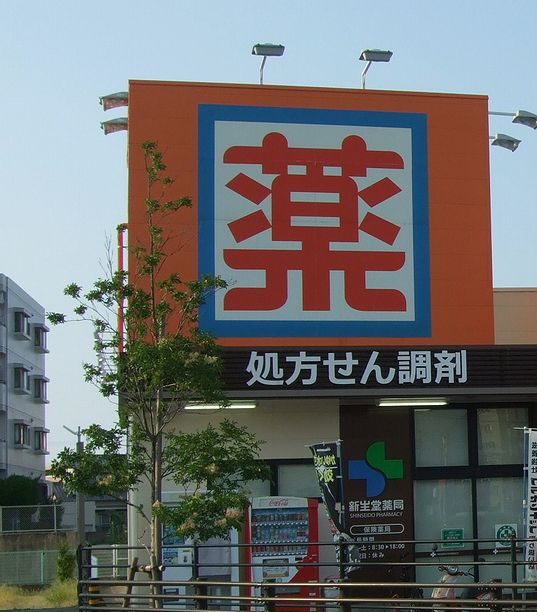
Leaving a cold medicine at home does not mean being miserable on your trip. Japan has pharmacies and drugstores everywhere, and they sell their own cold, allergy and pain medicines.
- Look up medicines before you go. JNTO (Japan's national tourism organization) offers an English-language search for over-the-counter medicines sold in Japan. You can search by the drug name, the affected part of the body, or what it treats.
- At the store, show the ingredient. Brand names differ between countries, but ingredient names are shared. A photo of your usual box helps staff find something similar.
- Ask a pharmacist. JNTO notes that some types of medicine cannot be bought when the pharmacist is not on duty, so evening visits may limit your choices.
- For a regular prescription you cannot bring, talk to your doctor before the trip about an alternative that is allowed in Japan, or about whether a permit is the better route.
If you get sick while you're here
Save these before you fly:
- Japan Visitor Hotline (JNTO): 050-3816-2787 (from overseas +81-50-3816-2787). Open 24 hours, 365 days. English, Chinese and Korean. It covers illness, accidents, disasters and general tourist information.
- JNTO's medical institution search lets you filter by area, language and department.
- Ambulance: 119. JNTO suggests showing a nearby person this sentence so they can call for you: 救急車を呼んでください。 (Please call an ambulance.)
JNTO also points out that many clinics accept cash only and that, without overseas travel insurance, you may be charged the full cost of treatment. Checking what your insurance covers in Japan, including whether it offers cashless payment at hospitals, is worth doing at the same time as checking your medicines.
Your ten-minute checklist
You don't need to understand Japanese law to travel safely. You just need to look at your own labels once.
- Lay out every medicine you plan to pack, including "just in case" cold tablets.
- Read the active ingredients (not the brand name) on each one.
- Compare them with the table above and the official Controlled Substances List.
- If anything matches, contact your doctor this week. Permits need at least 14 days.
- Count your supply against the 1-month and 2-month limits.
- Still unsure? Email the product name, active ingredients, strength and quantity to yakkan@mhlw.go.jp.
That one quiet evening of checking is what lets you stop thinking about it at the airport. Have a good trip.
Last reviewed: October 4, 2026. Rules can change. Please confirm the latest information on the official pages below before you travel.
References
- Ministry of Health, Labour and Welfare: Information for those who are bringing medicines for personal use into Japan
- MHLW Narcotics Control Department: Application Guidance (carrying medicine containing controlled substances)
- Narcotics Control Department: Controlled Substances List (December 12, 2024, PDF)
- Hokkaido Regional Bureau of Health and Welfare: Import/export of stimulants' raw materials by carrying (English)
- MHLW notice on THC residual limits, October 4, 2024 (Japanese, PDF)
- Japan Customs: Goods with Prohibitions, Controls and Restrictions
- U.S. Embassy & Consulates in Japan: Bringing Over-the-Counter Medicine and Prescriptions into Japan
- JNTO: For safe travels in Japan, Guide for when you are feeling ill
- JNTO: Japan Visitor Hotline