Do You Need a Visa for Japan? Visa-Free Short Stays, Passport Validity, What Immigration Asks For, and JESTA
Whether you need a visa for Japan depends on two things: your nationality (more exactly, the passport you travel on) and what you plan to do here. Many visitors coming for sightseeing don't need one, but the rules differ by country and region, and a few countries have extra conditions such as an ePassport. This guide explains how the rules work, how to check your own case on the official list, what immigration may ask for when you land, and where JESTA, Japan's planned online travel authorization, stands today.
We don't copy the country list here, because it changes. Use this page to understand the rules, then check your own nationality on the Ministry of Foreign Affairs of Japan's page linked below.
- A "short-term stay" means up to 90 days for tourism, business meetings or visiting friends or relatives, with no paid work.
- Japan has visa exemptions with 74 countries and regions. Check yours, and its notes, on the Ministry of Foreign Affairs list.
- Your passport should be valid for your whole stay. Carry a return or onward ticket and your hotel details.
- If you need a visa, apply before you travel. Visas are not issued at the airport.
- JESTA (online travel authorization) is now law but has not started. Don't pay any site that claims to sell it.
What counts as a "short-term stay"
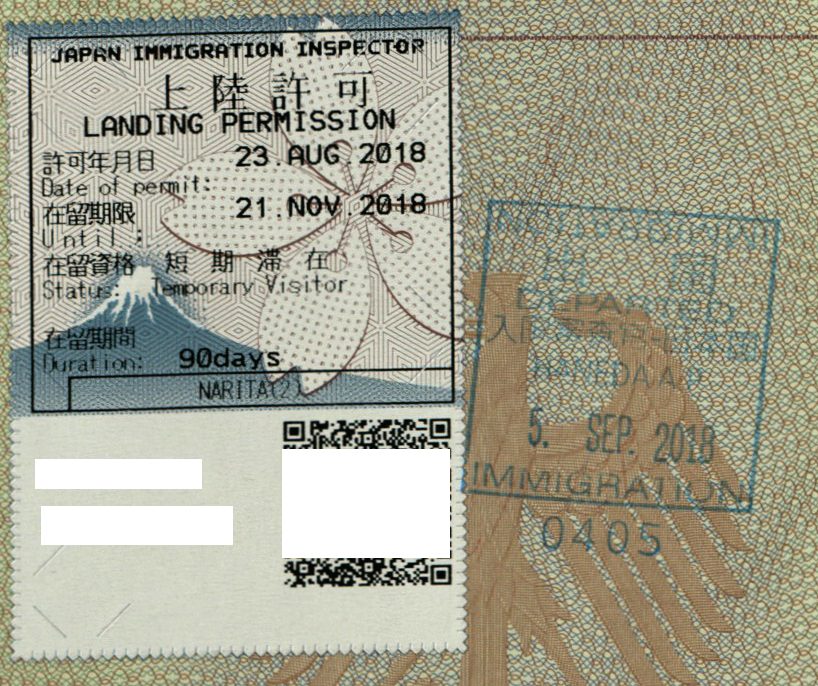
The Ministry of Foreign Affairs (MOFA) describes a short-term stay as a stay of up to 90 days for tourism, business, visiting friends or relatives and similar purposes that does not include paid work. Sightseeing, a holiday with family, or attending a meeting fit this category. Working for pay in Japan, or staying longer than 90 days, does not; for those, the usual route is a Certificate of Eligibility from the Immigration Services Agency of Japan, then a visa from a Japanese embassy or consulate.
Visa exemption: how to check your country
MOFA's page "Exemption of Visa (Short-Term Stay)" lists 74 countries and regions whose citizens don't need a visa for a short-term stay. The list includes, for example, the Republic of Korea, Taiwan and Hong Kong, but each entry can have a note, so read the notes for your own passport:
- How long you can stay: on landing, most visa-exempt visitors are given 90 days, but MOFA lists 15 days for Indonesia and Thailand and 30 days for Brunei and Qatar.
- Which passport: for several countries the exemption applies only to holders of an ePassport (a passport with an IC chip; it has the ePassport symbol on the cover), and for a few you must register your ePassport with a Japanese embassy or consulate first. For Taiwan, it applies to passports with a personal ID number; for Hong Kong, to HKSAR passports and BNO passports of people with the right of residence in Hong Kong.
- Longer stays for some nationalities: a few agreements allow up to 6 months, but MOFA says anyone in that group who wants to stay more than 90 days must apply for an extension at a regional immigration office before the 90 days end.
Visa exemption is not a guarantee of entry. Japanese embassies note that permission to land is decided by the immigration officer at the airport.
How long your passport must be valid
The Consulate-General of Japan in Seattle states that Japan has no minimum remaining validity, but your passport must be valid for your entire stay in Japan, with one blank page for the entry sticker or a visa. If you register your passport on Visit Japan Web (Japan's free official entry website) and it has less than six months left, the site shows a warning; that is a reminder, not a separate rule. Airlines and any country you pass through on the way may have their own passport rules, so check those with your airline too.
What immigration may ask for when you land
At the immigration counter, an officer checks your passport, your purpose and how long you plan to stay. Japanese embassies list these items to have with you:
- A valid passport, and a visa if your nationality needs one.
- A return or onward ticket with a fixed date (an e-ticket is fine). The Seattle consulate says immigration may ask to see it.
- Your itinerary, such as hotel bookings, and proof that you have enough money for the trip.
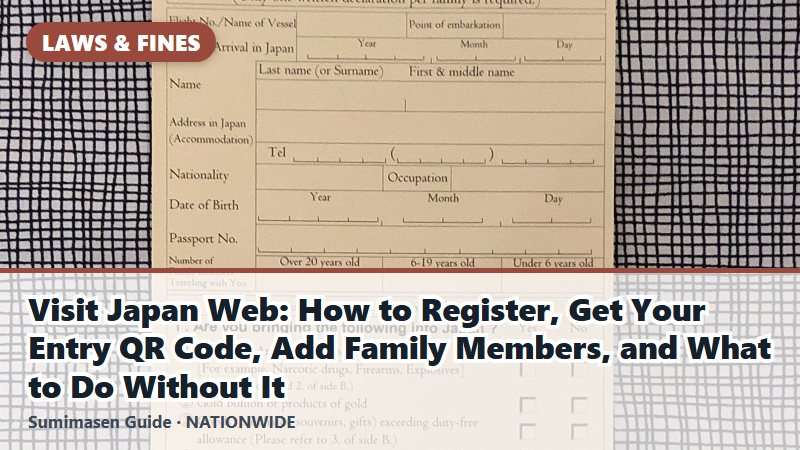
- The entry record (ED card): every foreign visitor submits it. The Immigration Services Agency recommends doing it online on Visit Japan Web; a paper card is also available. For a short-term stay, enter 90 days or fewer as your length of stay; the agency says wrong numbers here are a common mistake.
Foreign visitors also give their fingerprints and a face photo at entry. Some airports now have shared kiosks where you scan your Visit Japan Web QR code and passport to do this together with customs. Our Visit Japan Web guide shows each step.
If your nationality needs a visa
- Apply before you travel. MOFA says visas are issued only at Japanese embassies, consulates-general and consular offices abroad. You can't get one on arrival or while you are in Japan.
- Where: at the Japanese embassy or consulate that covers the place where you live, through an accredited agency, at the Japan Visa Application Centre, or online through JAPAN eVISA, depending on what that embassy accepts. JAPAN eVISA for single-entry tourist visas is open to residents of certain countries and regions; MOFA's visa page lists them.
- How long: MOFA says processing takes about one week once all documents are in order, and can take longer.
- Fee: for applications accepted from July 1, 2026, about 15,000 yen for a single-entry visa and about 30,000 yen for a multiple-entry visa, paid in local currency. MOFA says the fee may be lower or not required depending on your nationality and purpose. See new rules for visiting Japan in 2026.
- Changing planes in Japan: the Seattle consulate warns that a visa may be needed even to transit between different airports or terminals.
The exact documents depend on your nationality and purpose. The website of the Japanese embassy or consulate where you will apply lists them.
JESTA: Japan's planned online travel authorization
The law creating JESTA, an electronic travel authorization system, was passed by the Diet (Japan's parliament) on May 29, 2026 and promulgated on June 5, 2026. According to the Immigration Services Agency:
- Who: visa-exempt visitors coming for a short stay such as sightseeing, cruise passengers, and some transit passengers.
- How: you send your information online before the trip and are authorized for each new entry. Airlines will report passenger names and must not carry people the agency says should not enter.
- When: on a date set by Cabinet Order, no later than March 31, 2029. The fee will also be set by Cabinet Order.
What to do now: nothing. It has not started, so for now you travel as described above. If a website or ad offers to sell you JESTA or a "Japan travel authorization" today, don't pay; see fake official sites. We will update this page when the government announces a start date.
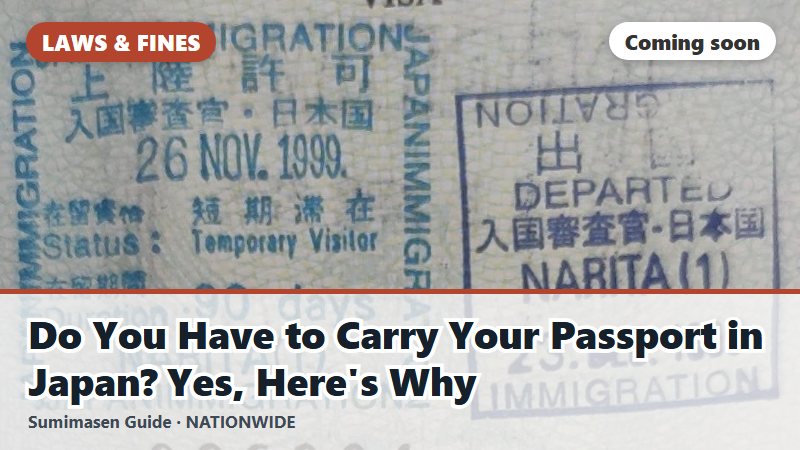
Once you know your visa situation, the rest of the preparation is in our Japan trip checklist. Keep your passport with you after you land: visitors must carry the passport itself, as explained in carrying your passport in Japan.
Last reviewed: October 23, 2026. Visa rules, the exemption list and fees change. Please check the official pages below, and the Japanese embassy or consulate for your country, before you travel.
Official sources (checked October 2026)
- Ministry of Foreign Affairs of Japan: Exemption of Visa (Short-Term Stay) (English)
- Ministry of Foreign Affairs of Japan: Visa (English)
- Ministry of Foreign Affairs of Japan: Visa FAQ (English)
- Ministry of Foreign Affairs of Japan: Visa fees (English)
- Consulate-General of Japan in Seattle: Traveling to Japan Quick Facts (English)
- Embassy of Japan in the Netherlands: Do I need a visa? (English)
- Immigration Services Agency: the entry record (ED card) and Visit Japan Web (Japanese)
- Immigration Services Agency: shared kiosks for immigration and customs (Japanese)
- Immigration Services Agency: The 2026 amendment of the Immigration Control Act (Japanese)
- Immigration Services Agency: Outline of the amendment, including JESTA (Japanese, PDF)
- Digital Agency: How to use Visit Japan Web (English)