Japan Trip Checklist: What to Do Weeks Before, the Night Before, on the Plane and After You Land
Most of the things that go wrong for first-time visitors to Japan can be fixed at home in an evening: a cold medicine that isn't allowed, a phone that can't take an eSIM, a card without a PIN. This checklist puts everything in the order you'll need it, from a few weeks before your trip to your first hour in Japan, and links to our detailed guide for each item.
Tick the boxes as you go. If something looks unfamiliar, the linked guide explains it with official sources.
This page may contain affiliate links. If you buy through them, we may earn a commission at no extra cost to you.
- Check your medicines' active ingredients early: some need a permit applied for at least 14 days before the trip.
- Visit Japan Web (Japan's free official entry website) never charges a fee. Use the official address.
- Japan's electricity is 100 volts. Check the label on your chargers.
- From your first hour in Japan, carry the passport itself, some yen, an IC card (a tap-to-ride travel card) and mobile data.
A few weeks before
- Medicines: read the active ingredients on every medicine you plan to pack, including "just in case" cold tablets. Some, such as pseudoephedrine above 10% or codeine above 1%, need permission applied for at least 14 days before the trip, and amphetamine can't be brought in at all. Prescription drugs without paperwork: up to a 1-month supply. See medicines you can't bring into Japan.
- Passport and entry: check whether your nationality needs a visa on the Ministry of Foreign Affairs of Japan's page. JESTA, Japan's planned online travel authorization, has no application site yet, so don't pay any site that claims to sell it. See new rules for visiting Japan in 2026.
- Payment cards: bring two cards, keep them separately, and know your PIN; above a certain amount you may need it. Check your card's overseas settings and your bank's fees. See cash, cards or IC card.
- Phone: check that it supports eSIM and is unlocked, or reserve a pocket Wi-Fi. A data-only plan can't call 110 or 119, so keep a way to make phone calls. See eSIM or pocket Wi-Fi.
- Travel insurance: many clinics accept cash only, and without overseas travel insurance you may be charged the full cost of treatment. Check what your insurance covers in Japan.
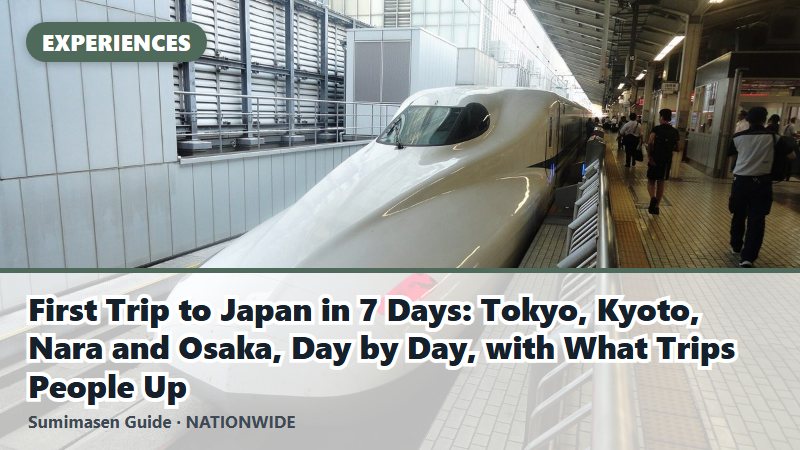
- Big suitcase and the Shinkansen: on the Tokaido, Sanyo and Kyushu Shinkansen, baggage of 161 to 250 cm in total (length + width + height) needs a reserved seat with an oversized baggage area. Measure your suitcase now. See trains and buses in Japan.
The night before
- Visit Japan Web: register your immigration and customs information and get the QR codes to show at the airport. It's free. Type the official address, https://www.vjw.digital.go.jp, or follow a link from an official site, not a search ad. See fake official sites.
- eSIM: install it on Wi-Fi at home; installing needs an internet connection.
- IC card on your phone: iPhone users can set up Welcome Suica Mobile before the trip and top it up with a card through Apple Pay. It doesn't work on Android phones.
- Chargers: JNTO says the voltage throughout Japan is 100 volts, with 50 hertz in eastern Japan and 60 hertz in western Japan. Dual-voltage items such as hair dryers and shavers should work; others may need a step-down transformer. Conversion plugs and transformers are relatively easy to find in cities.
- Contacts: save the Japan Visitor Hotline, 050-3816-2787 (from a non-Japanese phone: +81-50-3816-2787), open 24 hours in English, Chinese and Korean, and your embassy's details. Ambulance and fire: 119. Police: 110. See who to call in Japan.
- Passport copy: keep a copy separately and leave one at home. It's a backup, not a substitute: in Japan you carry the passport itself.
- A small bag: public trash cans are hard to find, so pack a small foldable bag for your trash. See handling garbage in Japan.
On the plane
- Power banks: carry-on only, never in checked baggage. On flights in Japan, the rules since April 24, 2026 allow no more than two and no charging from them on board. Follow your airline's own rules too. See power banks and the rules on planes.
- Cash: if you carry cash or other means of payment worth more than 1,000,000 yen in total, you must declare it to Japan Customs.
- Passport and QR codes: keep the passport and your Visit Japan Web screen at hand for arrival.
After you land
- Data: switch your phone's data to the eSIM, or collect your pocket Wi-Fi.
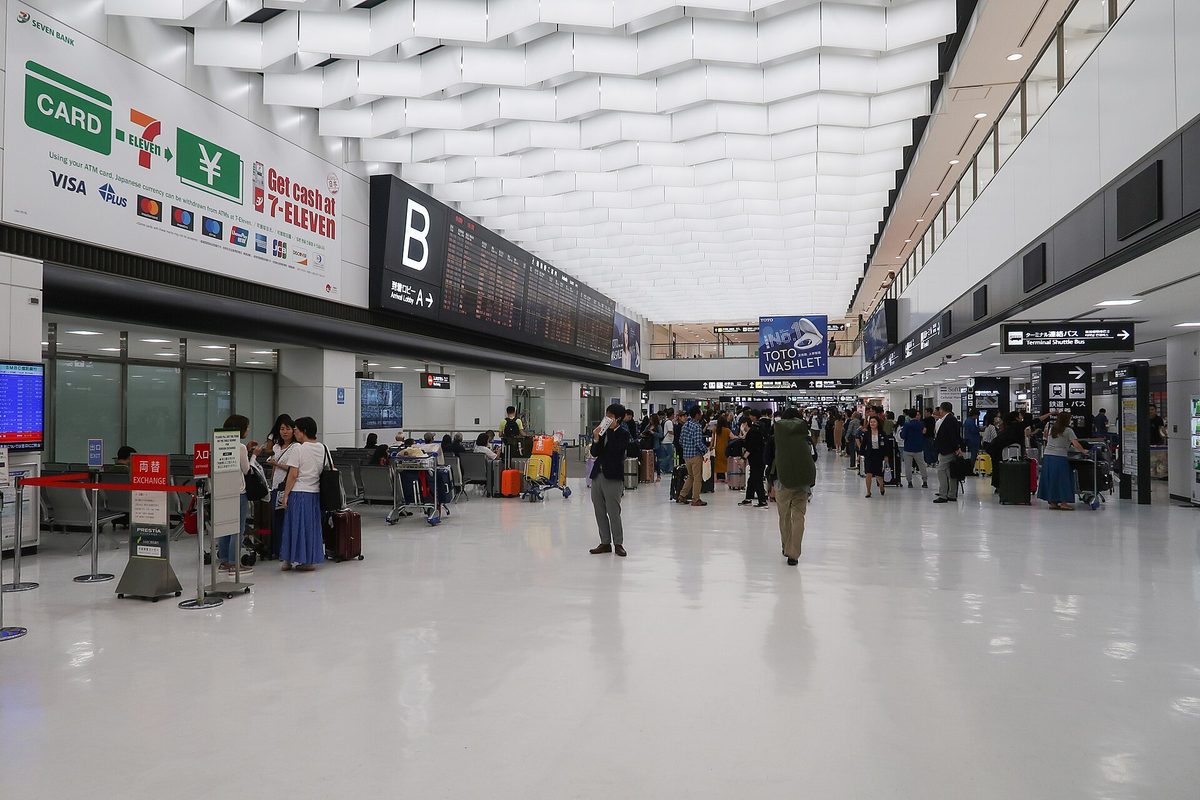
- Yen: Seven Bank ATMs (mainly in 7-Eleven stores) and Japan Post Bank ATMs take cards issued abroad. Keep enough cash for small restaurants and temple counters.
- IC card: Welcome Suica is sold at airport stations, valid for 28 days and topped up with cash only. In the Kansai area, ICOCA works the same way.
- Into the city: from Narita Airport, compare the Skyliner, the N'EX, airport buses and fixed-fare taxis in Narita Airport to Tokyo.
- Every day from now on: carry your passport, don't tip, and line up at the marks on the platform. Our 7-day first-trip itinerary puts the rest in the order you'll meet them.
That's the whole list. Once these are ticked, the rest of the trip is about enjoying it. Plan your days with our 7-day itinerary for Tokyo, Kyoto, Nara and Osaka.
Last reviewed: October 15, 2026. Rules, prices and airline policies change. Please check the linked guides and the official pages below before you travel.
Official sources (checked October 2026)
- JNTO: plugs and electricity in Japan (English)
- Ministry of Health, Labour and Welfare: bringing medicines for personal use into Japan (English)
- Japan Customs: beware of fake websites related to customs procedures (May 28, 2026)
- Japan Customs: export and import of means of payment (FAQ, English)
- MLIT: new rules for carrying power banks on board, from April 24, 2026 (Japanese)
- JNTO: guide for when you are feeling ill (English)
- JNTO: Japan Visitor Hotline (English)
- JR Central: oversized baggage (English)