First Trip to Japan in 7 Days: Tokyo, Kyoto, Nara and Osaka, Day by Day, with What Trips People Up
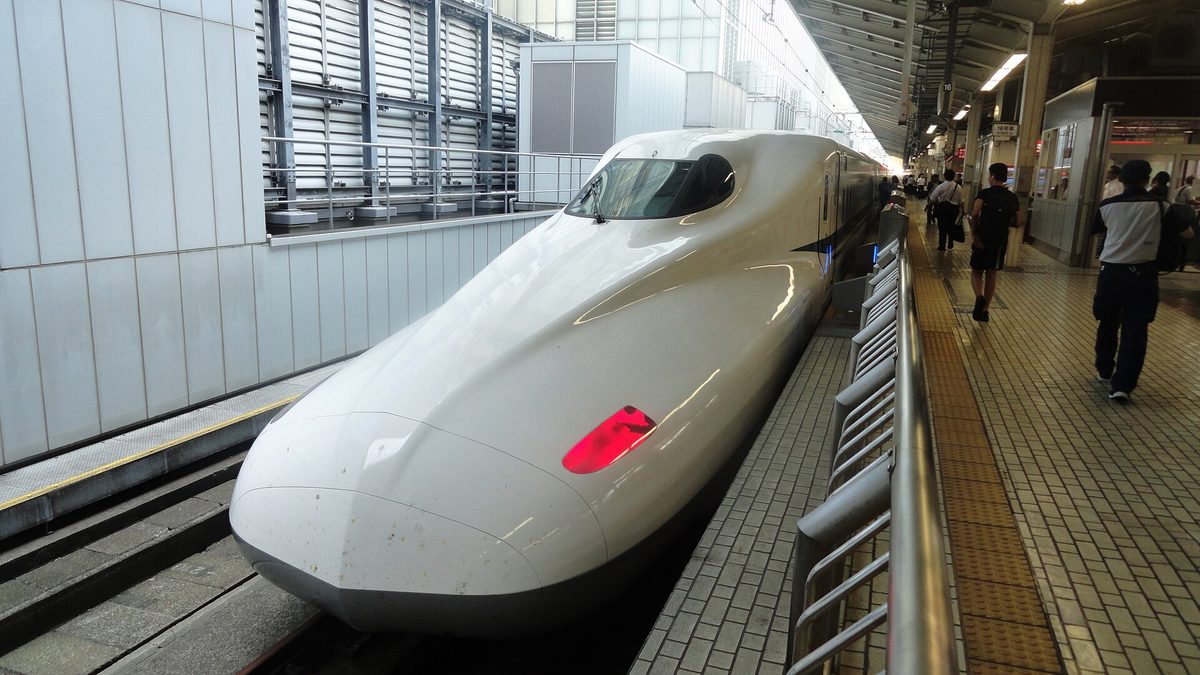
Seven days, Tokyo first, then the Shinkansen (bullet train) to Kyoto, a day trip to Nara and a last night in Osaka: it's the route many first-time visitors choose. This guide follows that week day by day and puts the rules and small surprises of each day in the order you'll meet them, from the airport ATM on day one to the tax-free check before you fly home.
Each day links to our detailed guide on that topic, and has a small "My pick" box with places the site owner has actually been. Use it as a frame and swap days around to suit your trip.
This page may contain affiliate links. If you buy through them, we may earn a commission at no extra cost to you.
- Day 1: get yen from an ATM that takes foreign cards, an IC card (a tap-to-ride travel card) and mobile data, and carry your passport from now on.
- Day 3: a suitcase over 160 cm in total (length + width + height) needs a reserved oversized baggage seat on the Tokaido Shinkansen.
- Kyoto and Nara: temples often take cash only, Nara's deer eat only deer crackers, and Gion (Kyoto) has private lanes you shouldn't enter.
- Day 7: from November 1, 2026, the tax-free check at the airport comes before you check in your bags.
Before you go: the one-page checklist
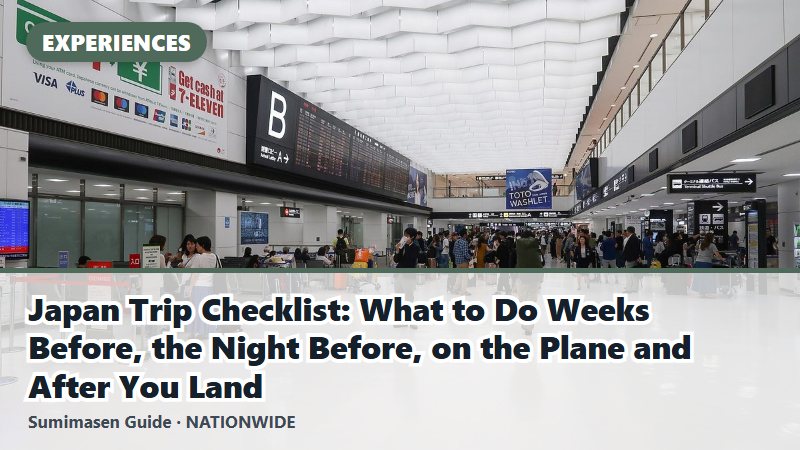
Medicines, Visit Japan Web (Japan's free official entry website), payment cards and phone data are easiest to sort out at home. Our checklist for the weeks before, the night before, the flight and landing puts them in order.
Day 1: Arrive in Tokyo
- Getting into the city: from Narita Airport, the Skyliner, the N'EX, airport buses and fixed-fare taxis each suit a different hotel area. Compare them in Narita Airport to Tokyo.
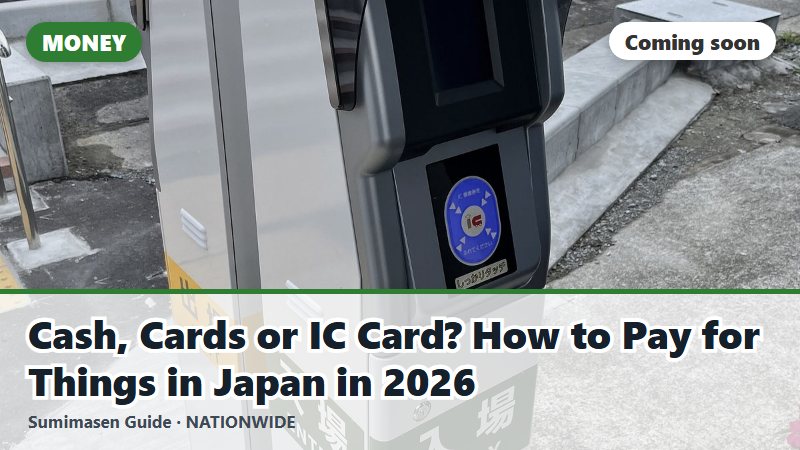
- Yen: many ATMs in Japan are for Japanese bank cards only. Seven Bank ATMs (mainly in 7-Eleven stores) and Japan Post Bank ATMs (mostly at post offices) take cards issued abroad. See cash, cards or IC card.
- IC card: Welcome Suica is sold at airport stations and some major stations, has no deposit, is valid for 28 days and is topped up with cash only. iPhone users can set up Welcome Suica Mobile before the trip.
- Passport: from today, carry the passport itself, not a copy. The hotel will also ask to see it and keep a copy at check-in. See why you carry your passport in Japan.
- Visit Japan Web: it's free. If a site asks for a "processing fee", it's a fake. See fake official sites and fake police.
Day 2: Tokyo
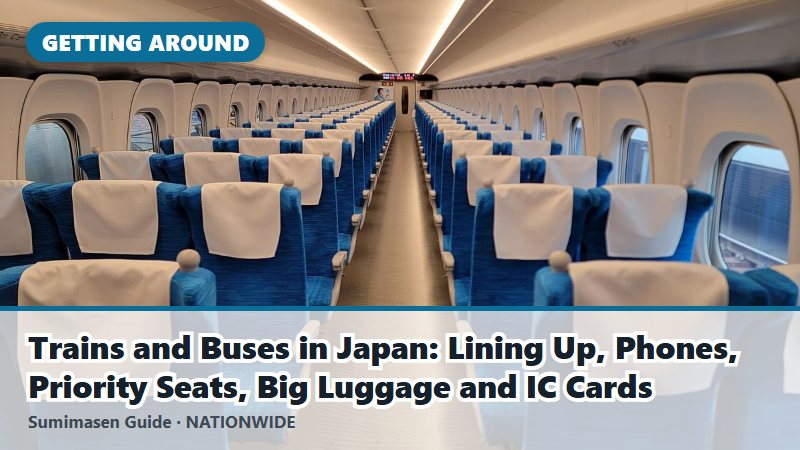
- Trains: line up at the marks on the platform, let people off first, set your phone to silent and don't take calls on board. See trains and buses in Japan and lining up and giving way.
- Escalators: in Tokyo most people stand on the left, but railways now ask everyone to stand still and hold the handrail. See escalators in Japan.
- Trash: public bins are hard to find, so carry a small bag. The box next to a vending machine is for drink containers only. See handling garbage in Japan.
- Snacks and smoking: markets such as the Tsukiji Outer Market ask you to eat at the shop, not while walking (eating while walking). Smoking on the street is restricted or fined in many wards (Tokyo's ward rules).
- Paying: no tips in restaurants, taxis or hotels (tipping in Japan). Some small restaurants take cash only (how to tell).
My pick
The site owner, who is Japanese, often buys convenience store sweets with a cup of freshly ground coffee and uses the store like a café: see convenience store sweets and coffee. For an easy dinner, the owner's own meals at Sushiro are in conveyor-belt sushi chains.
Day 3: Shinkansen to Kyoto
- Big suitcase: on the Tokaido, Sanyo and Kyushu Shinkansen, baggage of 161 to 250 cm in total needs a reserved seat with an oversized baggage area. Without one you pay a 1,000 yen fee, and over 250 cm can't be taken on board. Measure before you book: see large suitcases on the Shinkansen.
- Travel light: Kyoto City asks visitors not to bring large luggage onto city buses and recommends sending bags to the hotel instead.
- Lunch on board: eating at your seat is common on the Shinkansen, unlike on commuter trains. Choose food without a strong smell and take your trash with you.
- IC cards: your Tokyo card works in Kyoto, but a single trip can't cross from one card area into another, so use a Shinkansen ticket for the long ride.
- Hotel bill: Kyoto City charges an accommodation tax of 200 to 10,000 yen per person per night, depending on the room charge. See Kyoto's accommodation tax.
My pick
The owner's Kyoto base: The Ritz-Carlton by the Kamo River, where tea at check-in was hojicha (roasted green tea) from Ippodo, and Ippodo's store is a walk away. The owner's dinners and sweets in Kyoto, from Tokuo to the kuzukiri (arrowroot noodles) at Kagizen Yoshifusa, are in where to stay in Kyoto.
Day 4: Kyoto
- Shrines and temples: at a shrine, two bows and two claps; at a temple, hands together and no clapping. See shrines vs temples and how to pray.
- Gion (Kyoto): don't enter or photograph lanes marked private, and don't follow or stop geiko and maiko (Kyoto's professional entertainers) for photos. See private lanes and photo rules in Gion (Kyoto).
- Street food: Nishiki Market asks you not to eat while walking. See eating while walking in Kyoto.
- City buses: on regular routes, board at the rear, get off at the front and pay when you get off. IC cards work; credit cards don't.
- Smoking: street smoking is prohibited throughout Kyoto City, with a 1,000 yen fine in designated busy areas. See smoking rules in Japan.
My pick
Start the day with asagayu (morning rice porridge) at Hyotei, then walk over to Nanzen-ji, as the owner did in July 2018; the owner's favorite Kyoto breakfast, at Kishin, is in the same guide: breakfast in Kyoto. The owner's photos at Kiyomizu-dera and the colorful charms of Yasaka Koshindo are on our Kyoto destination page. Visiting in spring? The owner rode a rickshaw under the young green maples of Arashiyama (Kyoto): see the young green maples and a rickshaw ride.
Day 5: A day trip to Nara
- The deer: they are wild animals. Give them only the official deer crackers, one at a time, and show empty hands when you run out. Keep away from fawns in early summer and from males in autumn. See the deer of Nara.
- Todaiji: tickets for the Great Buddha Hall are sold on the day, cash only: 800 yen for adults. From November to March the hall closes at 17:00. See visiting Todaiji.
- Kasuga Taisha: the shrine of 3,000 lanterns is next door in the park. See Kasuga Taisha.
My pick
The owner visited Todaiji in August 2020 and September 2023 to see the Great Buddha. If you'd like to stay a night instead of a day trip, the owner's three Nara hotels are in where to stay in Nara.
Day 6: Osaka
- Escalators: in Osaka, people who stand usually keep to the right, the opposite of Tokyo. Standing still and holding the handrail is always fine.
- Kushikatsu: at the shared sauce pot, dip each skewer only once. See the no double-dipping rule.
- Smoking: smoking on the street is banned citywide, with a 1,000 yen fine. See Osaka's smoking ban.
- Hotel bill: Osaka Prefecture's accommodation tax is 200 to 500 yen per person per night, and none under 5,000 yen. See Osaka's accommodation tax.
- Shopping: from November 1, 2026, tax-free shops charge the full price and refund the tax after a customs check when you leave. Keep "take home" items unopened and on their own receipt. See the new tax-free refund.
My pick
The owner rode the Tower Slider at Tsutenkaku Tower with the kids and waited about 30 minutes on a weekday in the summer holidays: see Tsutenkaku Tower for the age and height limits. The owner's Osaka hotels, and a tip for using the coin lockers at Namba Station (Osaka) after checkout, are in where to stay in Osaka.
Day 7: Fly home
- Tax-free check first: from November 1, 2026, go to the customs kiosk with all your tax-free goods before you check in your bags. Goods must leave Japan within 90 days of purchase.
- Liquids: on international flights, liquids over 100 ml can't go in your carry-on, so move them into your checked bag after the kiosk.
- Departure tax: 3,000 yen per departure since July 1, 2026, usually already in your ticket price. See Japan's departure tax.
- To Kansai International Airport: Klook's ICOCA listing says visitors with a foreign passport who show ICOCA can buy a discounted ticket for the Haruka airport express (see IC cards).
Make the week your own
Seven days go fast. If you only change one thing, keep a little cash, an IC card and a small trash bag with you every day; most of the small surprises above come down to those three. Then add the places that interest you most, and book the Shinkansen and any tours you want before you leave home.
Last reviewed: October 15, 2026. Fares, hours and rules change. Please check the linked guides and the official pages below before you travel.
Official sources (checked October 2026)
- JR Central: Tokaido, Sanyo and Kyushu Shinkansen timetable from March 14, 2026 (English)
- JR Central: oversized baggage on the Tokaido Shinkansen (English)
- Japan Tourism Agency: special page for travelers, Refund Method (English)
- Kyoto City Transportation Bureau: how to ride the city bus (Japanese)
- Japan Customs: beware of fake websites related to customs procedures (May 28, 2026)