Kotodama: Why Japanese People Avoid Certain Words at Weddings and Exam Time
At a Japanese wedding, nobody says the party is "over"; it "opens up" instead. Students facing entrance exams may hear friends carefully avoid the words "fall" and "slip". And a bar menu might call dried squid atarime rather than surume. Behind all of these is an old idea called kotodama, the spirit or power of words. This column explains what kotodama means, where it appears in Japan's oldest poetry, how it lives on in everyday "taboo words" and lucky substitutes, and which words are worth knowing if you're invited to a wedding or visiting someone in Japan.
The short answer
- What it is: kotodama (言霊) is the power that, in Japan, has long been thought to live in words: say something, and it may come true.
- Where it comes from: the word appears in the Man'yoshu, a collection of poems from the 8th century, which calls Japan a land where the spirit of words brings happiness.
- Where you'll meet it: imikotoba ("taboo words"). People avoid words like "cut", "part" and "end" at weddings, and "fall" and "slip" around exam takers, and use lucky substitutes for some foods and customs.
- For visitors: nobody expects you to know all this. If you give a speech or write a card in Japanese for a wedding, it's the one place where these words really matter.
What kotodama means
The dictionary Digital Daijisen defines kotodama as a mysterious power that people in ancient Japan believed lived in words, with the power to bring about exactly what was said. Kokugakuin University's Encyclopedia of Shinto describes it as the spiritual power contained in words, and notes that some see this way of thinking as one of the features of Japanese culture. In the world of waka poetry (short poems of 31 syllables), it has traditionally been said that words can "move heaven and earth".
The idea that words can make things happen isn't unique to Japan. The Heibonsha World Encyclopedia points to many peoples with similar beliefs, starting with "Let there be light" in the Book of Genesis. What it describes as typical of Japan is that the belief worked in two directions: using good words on purpose so that their power would work, and holding back from, or avoiding, words that might bring bad luck. Prayers to the gods (norito) and words of celebration belong to the first; keeping names secret and using taboo words belong to the second.
In the Man'yoshu: "a land where the spirit of words brings happiness"
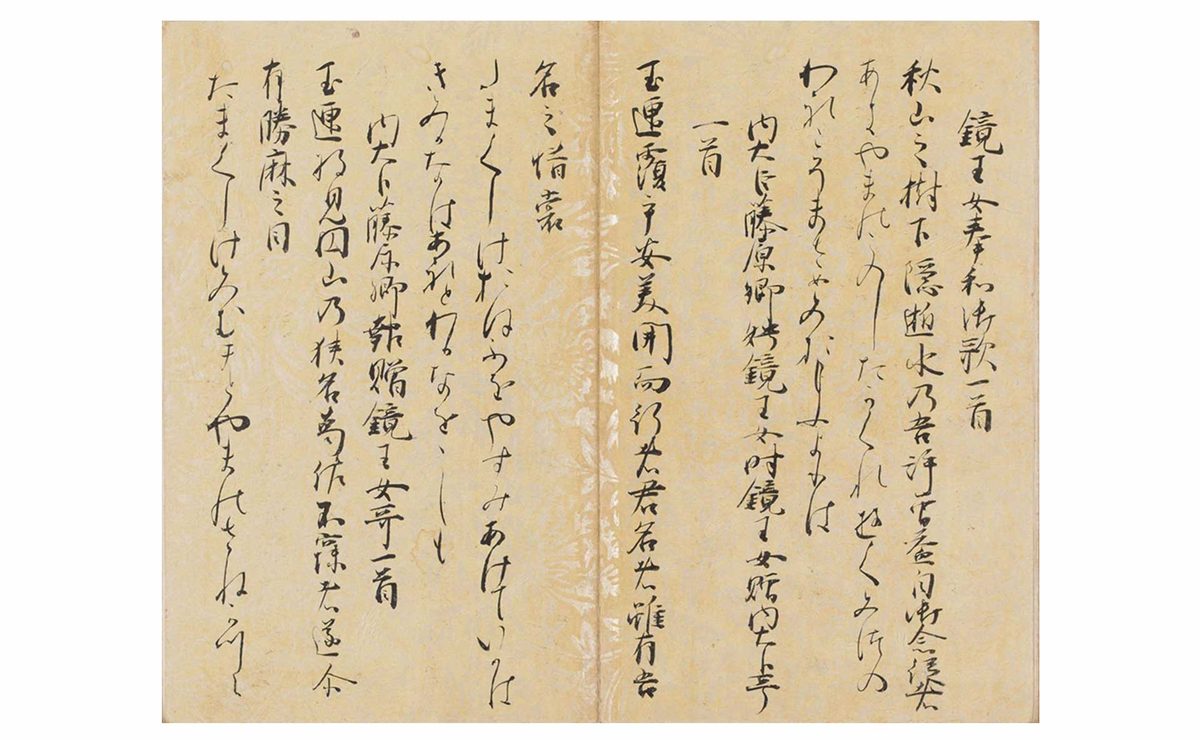
The Man'yoshu is the oldest surviving collection of Japanese poems, gathered in the 8th century. According to the Heibonsha World Encyclopedia, the word kotodama appears in it only three times, and a 2013 paper by Kyoko Yakushi of Mejiro University gives their numbers:
- Book 5, poem 894, by the poet Yamanoue no Okura, written to wish a safe journey to an envoy sailing to China. It says people have passed down the story that Japan is a land "where the spirit of words brings happiness" (kotodama no sakiwau kuni).
- Book 13, poem 3254, from the poems collected under the name of Kakinomoto no Hitomaro, also a farewell to an envoy to China: Japan is a land that the spirit of words helps, so may you be safe. The Nihon Kokugo Daijiten gives this poem as the earliest example of the word.
- Book 11, poem 2506, a love poem about yuke, which Digital Daijisen explains as fortune-telling at a crossroads in the evening. In this kind of fortune-telling, the Heibonsha World Encyclopedia says, people listened to the words of passers-by and took them as a message from the gods.
Interestingly, the poem just before Hitomaro's, Book 13, poem 3253, calls Japan a land where people don't make kotoage, which Digital Daijisen explains as "deliberately putting something into words and declaring it". Read together, the poems show words being treated with care: not said lightly, but powerful once said. The Encyclopedia of Shinto adds that some scholars think the belief in kotodama itself took shape around the time the Man'yoshu was compiled.
Imikotoba: the words people avoid
If words can make things happen, it follows that some words are better left unsaid. These are called imikotoba. The Britannica Japan encyclopedia notes that they go back a long way: a rulebook from the 10th century, the Engishiki, lists the words that the imperial princess serving at Ise Jingu (Mie) had to avoid, calling death naoru ("to recover") and illness yasumi ("rest"). Hunters, fishers and families at New Year had their own lists too, and, as the Heibonsha World Encyclopedia puts it, the idea later spread into everyday life.
- Weddings: Digital Daijisen gives "leave" (saru) and "go home" (kaeru) as wedding taboo words, and the Heibonsha World Encyclopedia notes that people avoid "cut" (kiru) and call the end of the party ohiraki ("opening up") rather than "the end". The speech guide of Zexy, Japan's best-known wedding magazine, adds "part" (wakareru), "end" (owaru) and "cool down" (sameru), plus repeated words such as kasanegasane ("again and again"), which can sound like a second marriage.
- Exam season: in Japanese, failing an exam is ochiru ("to fall"), and Digital Daijisen lists "to fail an exam" as one meaning of suberu ("to slip"). That's why these two words are the ones people tend to watch around students before exams, and why lucky charms play on the opposite. A newsletter from the Yamanashi Prefectural Police recalls that after a typhoon hit Aomori in 1991, a farmer sold the apples that stayed on the trees as lucky "apples that didn't fall" for exam takers, and that KitKat started to become a good-luck gift in Kyushu in the late 1990s, because "kitto katto" means "you're sure to win" in the Fukuoka dialect.
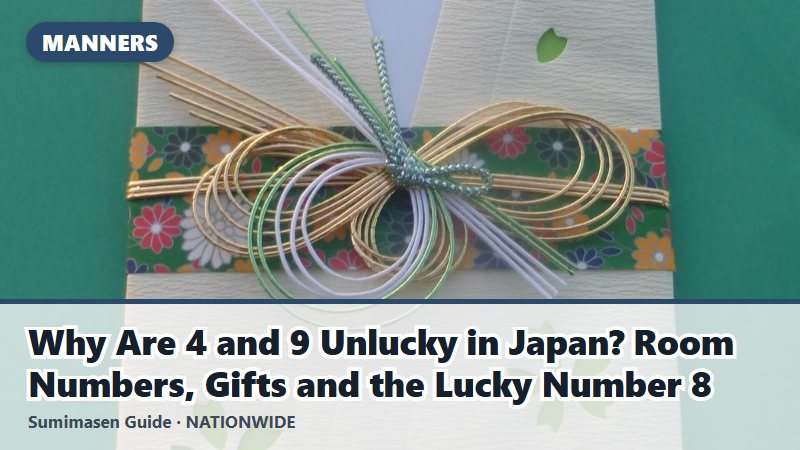
- Numbers: the number four can be read shi, which sounds like the word for death, so, as Digital Daijisen notes, people who avoid it say yon or yo instead.
Lucky substitutes you might spot
The other side of imikotoba is the replacement word. Several of these are still in everyday use, and you may spot them on menus, in shops and at New Year. Each one swaps a word with an unlucky sound for one with a lucky sound:
- Atarime for dried squid: surume starts with suru, which also means to lose money, for example by gambling. Digital Daijisen lists atarime as its taboo-word substitute, from ataru, "to hit" or "to win". The same swap turns the grinding bowl suribachi into ataribachi.
- Ari-no-mi for pears: the Japanese pear is nashi, which sounds like "nothing". Digital Daijisen lists ari-no-mi, "the fruit of having", as its substitute.
- Yoshi for reeds: the reed ashi sounds like "bad", so it's also called yoshi, which sounds like "good", as Digital Daijisen explains.
- Kagami-biraki at New Year: when the round rice cakes offered at New Year are broken and eaten in January, the custom is called kagami-biraki. Digital Daijisen explains that hiraki ("opening") is a taboo-word substitute for wari ("breaking").
Saying good words out loud
Kotodama isn't only about avoiding words. The Heibonsha World Encyclopedia explains that saying norito (Shinto prayers) to the gods, or offering words of celebration in the hope of a good result, is the positive side of the same belief: putting good words into the world so that they work. Digital Daijisen describes norito as words in an old style, recited before the gods at ceremonies and when praying to them. For how visitors pray at a shrine, see how to visit a shrine or temple.
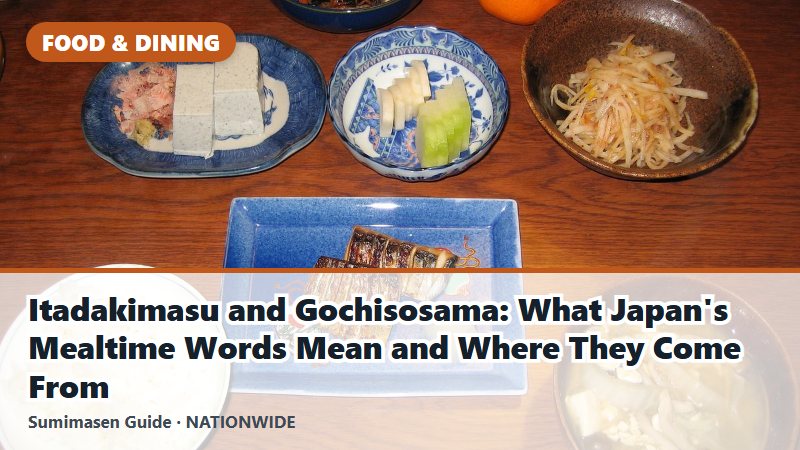
The most common good word of all is arigato, "thank you". It comes from arigatai, and Digital Daijisen explains that this originally meant "hard to exist", in other words rare. Thanking someone was a way of saying that their kindness was something that rarely happens. In the same spirit, the mealtime words itadakimasu and gochisosama put thanks for food into words before and after every meal (see what itadakimasu and gochisosama mean).
Useful to know as a visitor
Nobody will expect a visitor to follow these customs, and everyday conversation is full of the "unlucky" words anyway. They matter most on a few special occasions, and a wedding is the main one. If you're unsure, a warm, simple sentence is always fine.
| Occasion | Words people avoid | Safer choice |
|---|---|---|
| Wedding speech or card | Wakareru (part), kiru (cut), owaru (end), kasanegasane (again and again) | Talk about the future together; call the end of the party ohiraki |
| Saying numbers | The number four read as shi | Read it as yon |
| Friends taking exams | Ochiru (fall), suberu (slip) | Good-luck words, or a lucky snack like KitKat |
| Any day | Nothing in particular | Arigato: you can't say it too often |
Lucky and unlucky numbers work in a similar way, starting with four. That's a story of its own.
Last reviewed: October 18, 2026. How strictly people follow these customs differs from family to family and from region to region.
References
- Kotobank: Kotodama (Digital Daijisen, Nihon Kokugo Daijiten, Heibonsha World Encyclopedia) (Japanese)
- Kokugakuin University, Encyclopedia of Shinto: Kotodama
- Kotobank: Man'yoshu (Digital Daijisen) (Japanese)
- Kyoko Yakushi (2013): Kotodama in Ancient Sociolinguistic Concepts, Mejiro University (PDF)
- Kotobank: Yuke, evening fortune-telling (Digital Daijisen) (Japanese)
- Kotobank: Tsujiura, crossroads fortune-telling (Heibonsha World Encyclopedia) (Japanese)
- Kotobank: Kotoage (Digital Daijisen) (Japanese)
- Kotobank: Norito (Digital Daijisen) (Japanese)
- Kotobank: Imikotoba (Britannica Japan) (Japanese)
- Kotobank: Imikotoba (Nihon Kokugo Daijiten, Heibonsha World Encyclopedia) (Japanese)
- Kotobank: Imikotoba (Digital Daijisen) (Japanese)
- Zexy: Taboo words at weddings and how to rephrase them (Japanese)
- Kotobank: Suberu (Digital Daijisen) (Japanese)
- Yamanashi Prefectural Police: youth newsletter (Japanese, PDF)
- Kotobank: Shi, the number four (Digital Daijisen) (Japanese)
- Kotobank: Atarime (Digital Daijisen) (Japanese)
- Kotobank: Ari-no-mi (Digital Daijisen) (Japanese)
- Kotobank: Yoshi (Digital Daijisen) (Japanese)
- Kotobank: Kagami-biraki (Digital Daijisen) (Japanese)
- Kotobank: Arigatai (Digital Daijisen) (Japanese)