Lake Kawaguchi (Kawaguchiko): Day Trip or Overnight from Tokyo, What to Do When Mt. Fuji Hides, and How to Choose a Hotel
This page contains affiliate links.
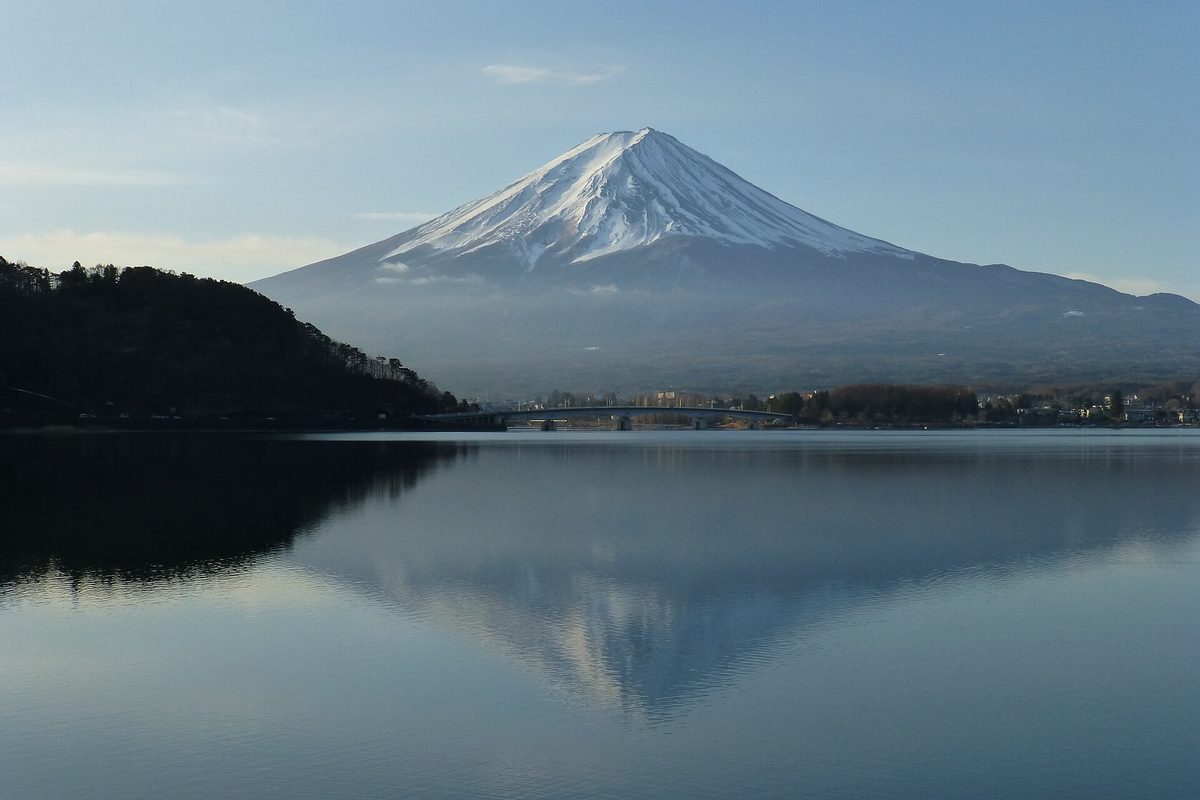
You can reach Lake Kawaguchi from Shinjuku Station in under 2 hours, by highway bus or by the direct Fuji Excursion train, so a day trip from Tokyo works. But Mt. Fuji is most often fully visible in the early morning and in winter, and is often hidden in summer. If seeing the mountain is the main reason for your trip, stay one night by the lake and look out at sunrise.
The lake is in Fujikawaguchiko (Yamanashi), at the foot of Mt. Fuji. This guide covers getting there, getting around, what to do on a cloudy day and how to compare places to stay, using the official pages of the bus and railway companies, the town and its tourism federation.
- Highway bus from Shinjuku Station: about 1 hour 45 minutes, adults from 2,200 yen (2,000 yen if you book and pay online).
- Fuji Excursion train from Shinjuku Station: fastest 1 hour 53 minutes, 4,200 yen one way. Both go on sale one month ahead.
- Mt. Fuji is clearest in the early morning and from November to February. From June to August it is often hidden, even on sunny days.
- On a cloudy day: lava caves, art museums, a day-trip hot spring and a village of thatched-roof houses.
- When you compare hotels, enter every guest and check the room's view, meals and baths. From April 1, 2027, the town plans an accommodation tax of 200 yen per person per night.
Day trip or one night?
A day trip is easy to plan. On weekdays, for example, the first Fuji Excursion leaves Shinjuku Station at 7:30 and arrives at Kawaguchiko Station at 9:28, and the last one back leaves at 17:41 and reaches Shinjuku Station at 19:48 (timetable from March 14, 2026). That gives you about 8 hours by the lake.
Staying one night has three advantages:
- The morning view. In Fuji City's long-term records, the whole mountain was visible more often at 8 a.m. than at noon or 16:00 (see the figure below). A day trip usually arrives after that.
- Time for both kinds of weather. If the mountain is hidden on day one, you can try again the next morning.
- Earlier closing times in winter. The lava caves close at 16:30 from mid-November to mid-February, so a day trip leaves little time after lunch.
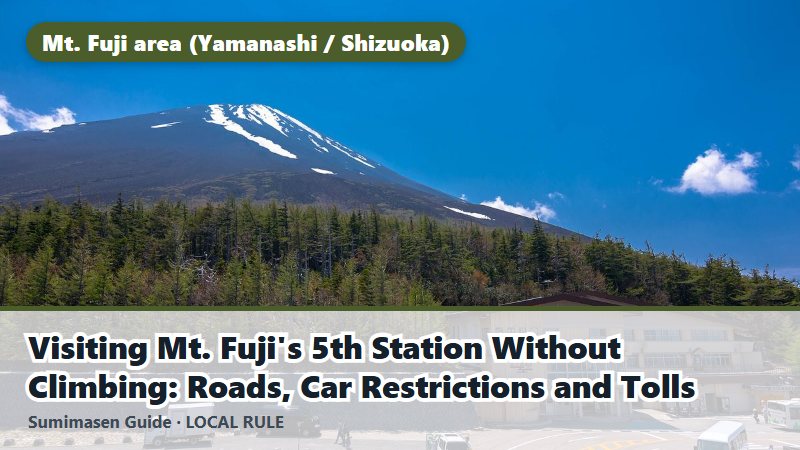
Planning to go up to the 5th station as well? The Fuji Subaru Line starts near Kawaguchiko Station. See visiting Mt. Fuji's 5th station without climbing for the roads, tolls and summer car restrictions.
Getting there from Tokyo: bus or train
Highway bus. Buses run by Fujikyu Bus and Keio Bus leave from Busta Shinjuku (Tokyo), the bus terminal on the 4th floor directly connected to the south exit of Shinjuku Station. The trip to Kawaguchiko Station takes about 1 hour 45 minutes, depending on traffic. All seats are reserved: bookings open one month before the day you travel, online or by phone, and you should buy your ticket at least 10 minutes before departure. Children under elementary school age (6) ride free unless they use their own seat.
Big suitcases on the bus. Fujikyu Bus says luggage can't be reserved, and if the luggage space is full, your bag can't be loaded or brought to your seat. For a big group, it suggests sending luggage to your hotel in advance. See luggage forwarding and coin lockers.
Fuji Excursion train. This limited express runs from Shinjuku Station straight through to Kawaguchiko Station, 4 round trips a day (plus 1 in some seasons). The one-way total from Shinjuku Station is 4,200 yen: a basic fare of 2,580 yen plus a limited express ticket of 1,620 yen. There are no non-reserved cars, so you need either a reserved seat ticket or a seat-unassigned ticket for a set day and section. Tickets go on sale one month before your travel date, at JR East ticket offices and machines and on JR-EAST Train Reservation, JR East's booking site for overseas visitors. Between Shinjuku Station and Otsuki, the train runs coupled to a Kaiji or Azusa limited express, so check the car number on your ticket.
Which to choose? The train isn't affected by traffic jams; the bus is cheaper. Either way, book early for weekends and holidays.
Getting around the lake
Fujikyu's sightseeing buses start from Kawaguchiko Station on three lines:
- Red Line: the northern shore of Lake Kawaguchi, including Oishi Park and the herb museum.
- Green Line: Lake Saiko, the Aokigahara forest, Saiko Iyashi-no-Sato Nenba and the Narusawa Ice Cave.
- Blue Line: on to Lake Shoji and Lake Motosu.
A single ride starts at 180 yen for adults. A pass for all three lines costs 1,500 yen for 1 day or 2,000 yen for 2 days (children half price), sold at the Kawaguchiko Station bus counter (6:30 to 19:00), online, and on the bus for the 1-day pass. No reservation is needed. You can also pay with an IC card such as Suica or PASMO, touching it when you get on and off: see cash and IC cards in Japan.
When can you see Mt. Fuji?
Fuji City, on the Shizuoka side of the mountain, has recorded the view of Mt. Fuji three times a day since the early 1990s. The weather around Lake Kawaguchi isn't identical, but the city's records show a clear pattern:
Fuji City also notes that from May to September, clouds and fog around the mountain often hide it even when the sky over the town is clear. So in summer, plan your trip around things you'll enjoy without the view, and treat the mountain as a bonus. The town's website has live cameras, for example at Lake Shoji, so you can check before you head out.
If Mt. Fuji is hidden: what to do
The town's official tourism site tags places that work on rainy days. A few that are easy to reach by the sightseeing buses:
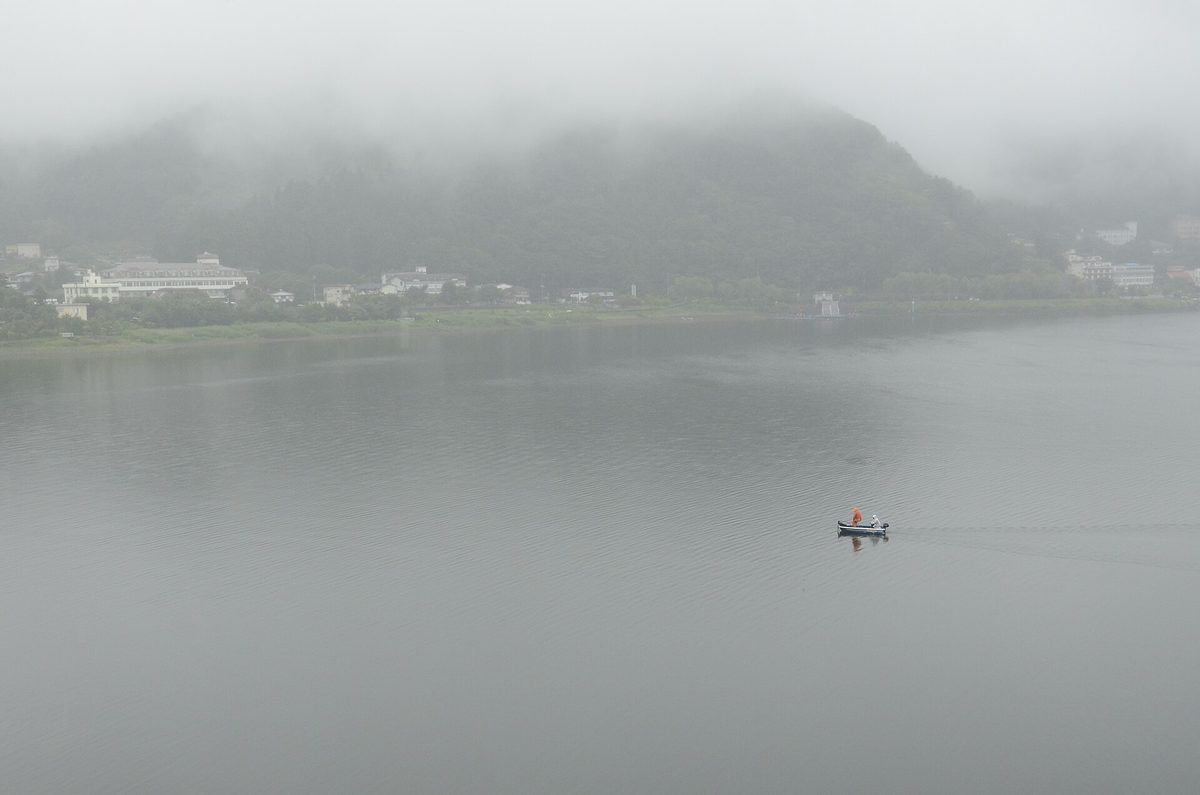
- Fugaku Wind Cave and Narusawa Ice Cave: lava caves in the Aokigahara forest, 350 yen each for adults. The Wind Cave is a gentle 201 m walk at an average of 3°C, so bring a layer. The Ice Cave has steep, slippery stone steps and a ceiling as low as 91 cm, so wear flat shoes, and you can't enter carrying a baby. Both close earlier in winter (16:30 from mid-November to mid-February).
- Itchiku Kubota Art Museum: the dyed textile works of Itchiku Kubota (Itchiku Tsujigahana), open 10:00 to 17:00 from April to November. From December 11 to March 13 it opens only on Saturdays, Sundays, Mondays and holidays, so check before a winter visit.
- Music Forest Museum: live demonstrations of automatic musical instruments and a European-style garden by the lake.
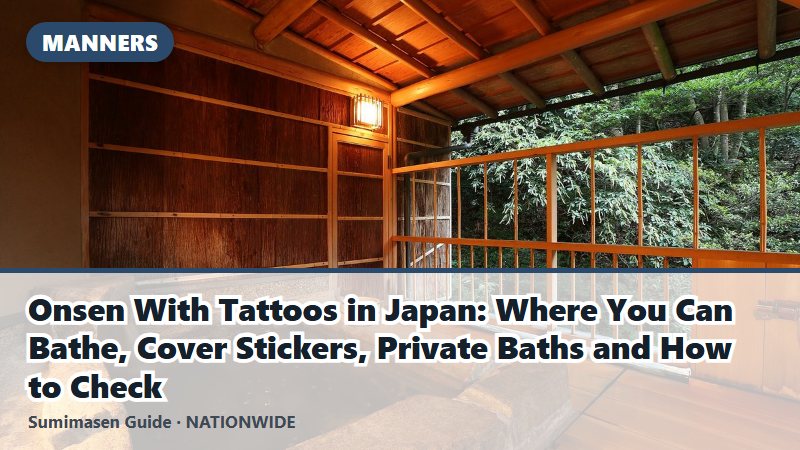
- Fuji Chobo no Yu Yurari: a day-trip hot spring with an outdoor bath facing Mt. Fuji, indoor and cave baths, and a restaurant. If you have a tattoo, check the rules first: see onsen and tattoos.
- Saiko Iyashi-no-Sato Nenba: a village of thatched-roof houses with workshops such as incense making, glass crafts and trying on kimono.
- Hoto for lunch: Yamanashi's local noodle dish, simmered with pumpkin and vegetables in a miso-based soup. Several restaurants near the lake serve it.
Clouds can also lift during the day. If the peak appears, the Mt. Fuji Panoramic Ropeway takes about 3 minutes from the lakeshore up to a viewpoint at 1,075 m.
Where to stay: how to compare places around the lake
The town's official tourism site lists 241 places to stay in six areas: the Lake Kawaguchi area, the Lake Saiko area, the Mt. Fuji foothills, the Lake Shoji area, the Lake Motosu area and Fujigane. They range from hot spring ryokan (traditional Japanese inns) and hotels to minshuku (family-run guesthouses), pensions, cottages, campsites and rental villas. You can filter them by area, type and tags such as "Mt. Fuji is visible" and "English support."
Choosing an area. Staying near the Lake Kawaguchi area keeps you close to Kawaguchiko Station, where the highway buses, the Fuji Excursion and all three sightseeing bus lines stop. The Lake Saiko area has a village of minshuku at Nenba, on the Green Line. The other areas are farther from the station, so check how you'll get there and back, especially in the evening, if you won't have a car.
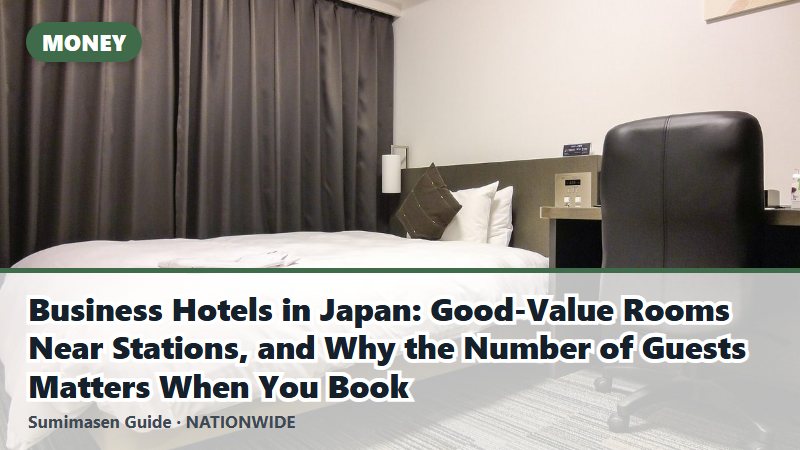
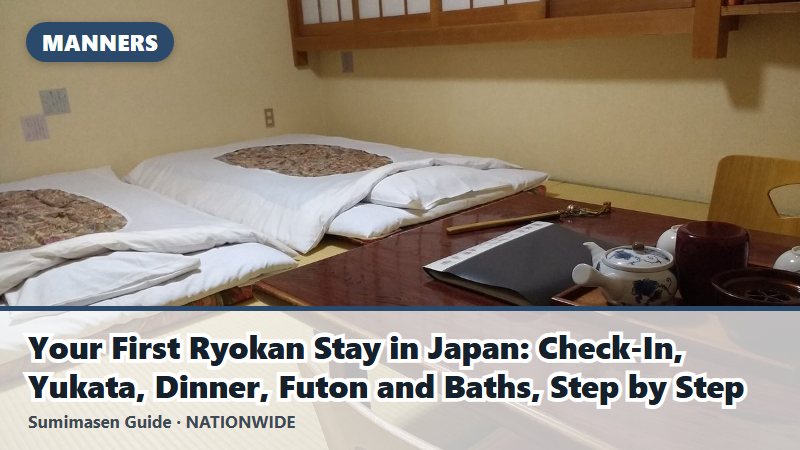
- Enter every guest. JNTO explains that ryokan rates are usually charged per person and include dinner and breakfast, so two people don't pay the same as one. Many hotels in Japan also price by the number of guests: see why the number of guests matters when you book, and our first ryokan stay guide.
- Check the room's view, not just the hotel's. A place tagged "Mt. Fuji is visible" may still have rooms facing the other way. Look for the view in the room type or plan you book, and ask the hotel if it isn't clear.
- Check the meals. If your plan doesn't include dinner, find out where you'll eat, especially if you're staying away from the station without a car.
- Check the baths. Many places have hot spring baths. Rules on tattoos and whether there's a private bath differ, so read them before you book. The Fuji Five Lakes Tourism Federation also asks guests not to put towels in the bath water.
- Check the access. Look at the distance from Kawaguchiko Station and which bus line stops nearby, and think about your luggage on the bus.
- Check the tax and cancellation terms. Japan's Ministry of Internal Affairs and Communications has agreed to the new accommodation tax of Fujikawaguchiko (Yamanashi): 200 yen per person per night, planned to start on April 1, 2027. Read the cancellation terms on the booking page too.
JNTO also notes that in popular cities, places to stay can book out quickly in peak seasons. Around a popular lake, it's worth booking early for weekends and holidays.
Manners around the lake
The Fuji Five Lakes Tourism Federation asks visitors to:
- stay on the sidewalk, and never step into the road to take photos;
- keep off private land, including for photos, resting or eating;
- keep quiet at night in parking lots and at your hotel;
- take unwanted suitcases home instead of leaving them behind;
- smoke only in smoking areas;
- if driving in winter, use winter tires and carry chains.
Why this matters here: what made the news in Japan explains what happened at a popular photo spot in Fujikawaguchiko (Yamanashi). In an emergency, the Japan Visitor Hotline is 050-3816-2787 (+81-50-3816-2787 from a foreign phone). In winter the lake is cold, so see what to wear in Japan in winter.
Quick checklist
- Book the bus or the Fuji Excursion up to one month ahead.
- Want to see Mt. Fuji? Stay one night and look out in the early morning.
- Check a live camera before you set out.
- Have a cloudy-day plan: caves, museums, a hot spring or hoto.
- Compare places to stay by guests, view, meals, baths and access.
More on our Mt. Fuji area page.
Last reviewed: October 25, 2026. Timetables, fares, opening hours and the accommodation tax can change. Please confirm on the official pages below.
Official sources (checked October 2026)
- Fujikyu Bus: Shinjuku Station to Kawaguchiko Station highway bus (English)
- Fujikyu Railway: Fuji Excursion limited express, timetable and fares (English)
- Fujikyu Bus: Sightseeing buses from Kawaguchiko Station (English)
- Fujikyu Bus: Sightseeing buses and IC cards (English)
- Fuji City: Mt. Fuji observation records, 2025 report (Japanese, PDF)
- Fujikawaguchiko Town (Yamanashi): Lake Shoji live camera (Japanese)
- Fujikawaguchiko Town (Yamanashi) Tourism Federation: Places to visit on rainy days (Japanese)
- Fujikawaguchiko Town (Yamanashi) Tourism Federation: Places to stay (Japanese)
- Fugaku Wind Cave and Narusawa Ice Cave: Entrance fees (English)
- Fugaku Wind Cave and Narusawa Ice Cave: Opening hours (Japanese)
- Fugaku Wind Cave and Narusawa Ice Cave: Safety notes (English)
- Fugaku Wind Cave (English)
- Itchiku Kubota Art Museum: Opening hours and days (Japanese)
- JNTO: Accommodation in Japan (English)
- Ministry of Internal Affairs and Communications: Fujikawaguchiko Town (Yamanashi) accommodation tax (Japanese, PDF)
- Fuji Five Lakes Tourism Federation: Travel manners (Japanese)