Your First Ryokan Stay in Japan: Check-In, Yukata, Dinner, Futon and Baths, Step by Step
This page contains affiliate links.
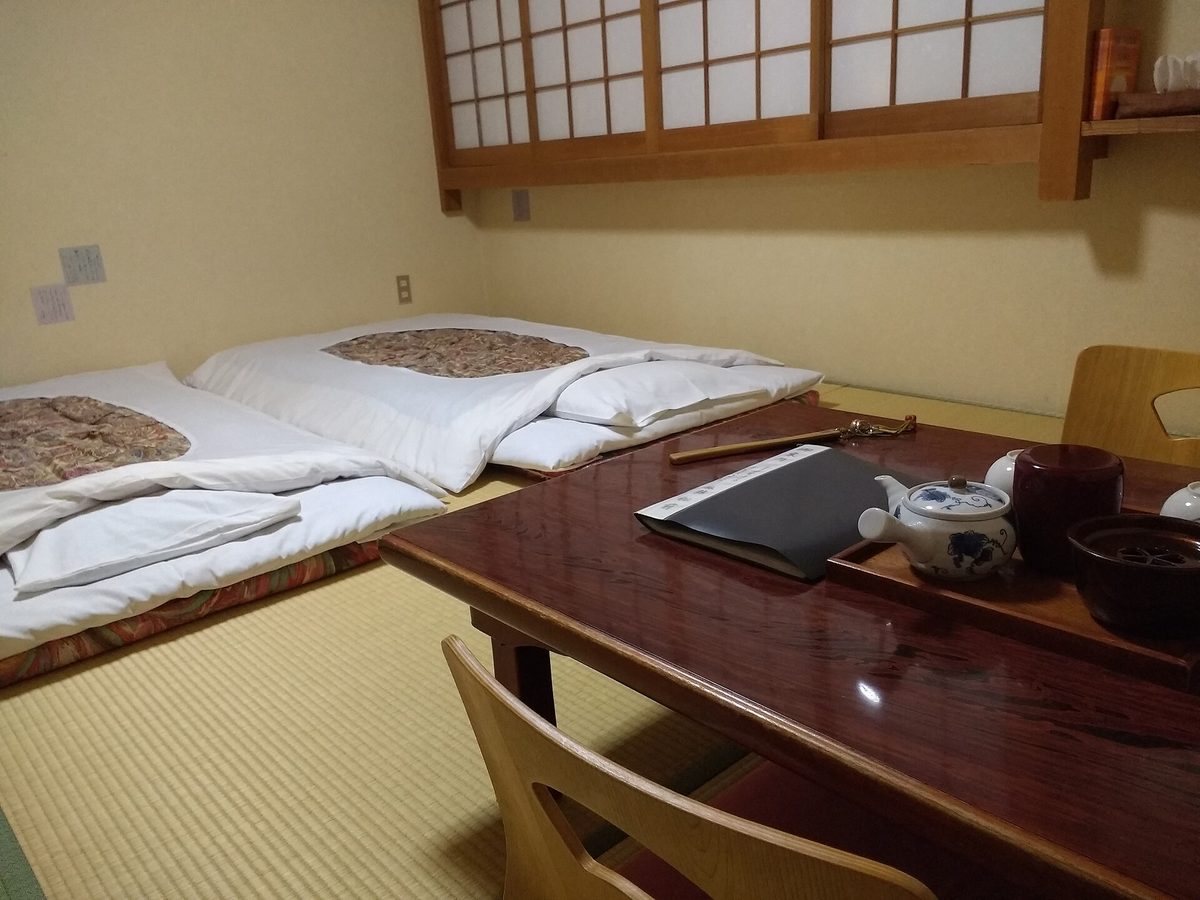
A night at a ryokan, a traditional Japanese inn, is one of the most memorable things you can do in Japan: tatami floors, a multi-course dinner, a hot bath and a futon bed laid out for you. It also runs on a timetable that is different from a hotel, and that is the part first-time guests most often miss. This guide walks you through one stay from check-in to check-out, shows how to wear the yukata the right way, and explains meals, futons, the room attendant, baths and tipping. It is based on the Japan Tourism Agency's ryokan Q&A, official prefectural travel guides and a ryokan's own guide, checked in October 2026.
- The short answer: arrive in the afternoon, and keep to the meal times
- A ryokan day at a glance
- Your room: shoes, slippers and tatami
- How to wear a yukata (left side over right)
- Dinner, futons, baths and tipping
- Check-out, and what to do before you go
The short answer
Check in during the afternoon, and tell the inn if you'll be late. The Japan Tourism Agency says check-in is usually from 15:00 to 16:00 and check-out from 10:00 to 12:00. Dinner and breakfast are often served at set times, and if you miss them you may not get the meal, so the inn needs to know your arrival time. Two ryokan guides, from Nagano Prefecture and from a ryokan in Gunma, suggest arriving by about 18:00 if dinner is included.
- Shoes come off at the entrance; no shoes or slippers on the tatami.
- Wear the yukata with the left side over the right. The opposite is for the dead.
- Staff lay out your futon, often while you're at dinner.
- No tip is needed.
Before you book
- Prices are often per person. The Japan Tourism Agency says ryokan often charge per person, and the usual plan includes dinner and breakfast (1-paku 2-shoku, "one night, two meals"). Some also offer breakfast-only or room-only plans.
- Food needs. Ryokan try to meet requests for allergies, vegetarian, vegan or gluten-free meals, but can't always. Tell them several days ahead if you can.
- Cancellation. Fees rise as the date gets closer; cancelling on the day, or not showing up, is usually charged at 100%.
- Beds or futons. More ryokan now offer rooms with beds. If you'd find sitting on the floor hard, ask for a chair.
- Tattoos. If you have one, ask about the bath before you book: see our guide to onsen with tattoos.
A ryokan day at a glance
Arriving and your room
- Shoes. Take your shoes off at the entrance or at your room door. Aichi Prefecture's official guide says not to wear slippers inside the guest room, and Go! NAGANO says no shoes or slippers on the tatami. For the reasons behind this, see why you take your shoes off in Japan.
- Your room attendant. At many ryokan, a room attendant (nakai-san) greets you and shows you to your room, and may serve your meals. Some ryokan ask guests to carry their own bags.
- Tatami. Don't drag heavy suitcases across the mats; they damage easily. The raised alcove with a scroll or flowers (tokonoma) is for decoration, not for sitting or luggage.
- Going out. The Japan Tourism Agency says many ryokan have a curfew, often around midnight. Some give you a key or keep staff at the front desk, so ask before you go out at night.
How to wear a yukata
Your room will usually have a yukata, a light cotton robe, for the bath, dinner and sleeping. The one rule that matters: the left side goes over the right side. In Japanese this is called migi-mae. The Japanese dictionary Digital Daijisen defines migi-mae as wearing Japanese clothing with the left front panel on top, and hidari-mae, the reverse, as the way the dead are dressed. It is the same for men and women.
- Neatly, not loose. Aichi Prefecture's guide says it is bad manners to wear a yukata loosely. Tie the sash (obi) around your waist.
- Where you can wear it. Inside the inn, usually anywhere. Outside, it depends: in onsen towns such as Kinosaki Onsen (Hyogo), inns give guests a yukata and wooden sandals to walk around town in, while Aichi's guide notes that at some ryokan you can't go outside in the yukata and slippers. Ask the staff.
- Size. If it doesn't fit, ask the front desk whether they have another size.
- Leave it behind. The yukata belongs to the inn. Don't pack it; fold it lightly in the room when you leave.
Dinner and breakfast
Dinner is often a kaiseki-style course of many small dishes made with local, seasonal food. Depending on the ryokan, it's served in your room, in a dining hall or in a separate restaurant, and breakfast may be in a different place. The Japan Tourism Agency says meals usually have set times and suggests checking in early so you can enjoy the bath before dinner. If you'll be late, call the inn.
Futons
Staff lay out the futon and put it away; at many ryokan they do it while you're at dinner, according to Go! NAGANO. You don't need to fold it in the morning: Kashiwaya Ryokan says you can leave it as it is, but tell the staff if it gets dirty.
Baths: the large bath and private baths
- Large shared bath. No reservation is usually needed, and it's often open late at night and early in the morning, except during cleaning. The Japan Tourism Agency asks guests not to bathe very late at night or after drinking alcohol.
- Private baths. Some ryokan have baths you can reserve for your group by time slot (kashikiri-buro); ask the staff when you arrive. Some are free for guests and others cost extra, according to Go! NAGANO. Some rooms have their own bath.
- Bath tax. At hot springs, cities charge a small bathing tax (nyuto-zei), collected by the inn or bath. For example, Sapporo (Hokkaido) charges 150 yen per person for an overnight stay and 100 yen for a day visit, and children under 12 are exempt. Some cities also have an accommodation tax: see the accommodation tax in Kyoto.
The steps for washing and soaking are in our onsen and sento manners guide.
Tipping
You don't need to tip. Kashiwaya Ryokan says that, basically, there is no tipping custom in Japan, that guests don't need to tip at a ryokan, and that how you're treated doesn't depend on it. JNTO says tipping is not common for hotels and similar services, and is not expected. JNTO also explains kokorozuke, a small gift "from the heart" in some situations, as an optional gesture. More in our guide to tipping in Japan.
Check-out
Check-out is usually between 10:00 and 12:00. Go! NAGANO says there is nothing special to do: you can leave the bedding as it is. Leave the yukata in the room and check that you've packed your things. Many ryokan run a shuttle to the nearest station, so confirm the time in advance.
What to do as a traveler
- When you book, check whether dinner and breakfast are included, and tell the inn about any food needs several days ahead.
- Tell the inn your arrival time, and arrive by about 18:00 if dinner is included.
- Wear the yukata with the left side over the right.
- Ask at check-in about meal times, bath hours, private baths and the door-closing time.
- Don't tip; a sincere "arigato gozaimashita" (thank you very much) at check-out is enough.
Last reviewed: October 25, 2026. Each ryokan has its own rules and times; please check with the inn and the official pages below.
References
- Japan Tourism Agency: Ryokan Q&A (Japanese)
- Go! NAGANO (Nagano Prefecture and Nagano Tourism Organization): How to stay in a Japanese ryokan (English)
- Aichi Now (Aichi Prefecture): Etiquette for an enjoyable stay at a ryokan (English)
- Kashiwaya Ryokan (Shima Onsen, Gunma): Basic etiquette, rules and manners at ryokan (English)
- Weblio: Migi-mae, Digital Daijisen (Japanese)
- Weblio: Hidari-mae, Digital Daijisen (Japanese)
- Japan Tourism Agency multilingual commentary database: Kinosaki Onsen, the soto-yu (English)
- JNTO: Tipping in Japan
- City of Sapporo (Hokkaido): Bathing tax (Japanese)