Onsen With Tattoos in Japan: Where You Can Bathe, Cover Stickers, Private Baths and How to Check
This page contains affiliate links.
Yes, you can enjoy a hot spring in Japan with a tattoo, but not at every bath. There is no national rule: each facility sets its own policy, so one bath may welcome you while the one next door says no. This guide explains why some baths refuse tattoos, what the Japan Tourism Agency told facilities in 2016, and the four ways travelers with tattoos usually get to soak: tattoo-friendly baths, cover stickers, private baths you can book, and rooms with their own bath. It is based on official pages from the Japan Tourism Agency, the Cabinet, the National Sento Association and local tourism sites, checked in October 2026.
- The short answer: each bath decides, so check before you go
- Why some baths say no, and what the 2016 notice says
- Four ways to bathe with a tattoo, from easiest to surest
- Which option fits you, at a glance
- What to say at the front desk
The short answer
Each bath decides for itself. In a written answer to the Diet on June 2, 2016, the Cabinet said that how a hot spring facility handles foreign travelers with tattoos is, in the end, left to the judgment of each facility's manager. So "all onsen ban tattoos" is not true, and neither is "you can go anywhere now."
- Easiest: a bath that says it is tattoo friendly, such as most neighborhood public baths (sento), according to the National Sento Association.
- Small tattoo: ask whether you may cover it with a sticker.
- Surest: a private bath you book for your group (kashikiri-buro), or a guest room with its own bath. Nobody else shares the water, so the question doesn't come up.
Why some baths say no
Many visitors are surprised, because a tattoo is a normal part of fashion or culture at home. The Japan Tourism Agency's ryokan Q&A explains the background: in Japan, tattoos have reminded people of members of anti-social groups, so ryokan refused guests with tattoos to avoid worrying their other guests. It also says that understanding of foreign visitors' tattoos is growing. The agency's 2016 notice adds that a tattoo causes no hygiene problem. For the longer history, see the tattoo section of our guide to onsen and sento manners.
What the 2016 notice says
On March 16, 2016, the Japan Tourism Agency sent a notice to four industry groups, including the Japan Ryokan Association and the Japan Spa Association. It says that refusing someone only because they have a tattoo is not appropriate, and asks facilities to keep in mind that people get tattoos for religious, cultural, fashion and other reasons. Two days later, the Ministry of Health, Labour and Welfare passed it on to local governments and asked them to make sure baths do not refuse guests for unfair reasons.
Two things are worth knowing. First, the notice gives examples for facilities to consider; it does not oblige them to accept tattoos. Second, it was written for foreign travelers. In the same Cabinet answer, the government said it had not made the same request for Japanese people with tattoos, which is one reason some baths keep a general "no tattoos" sign.
Way 1: Baths that welcome tattoos
- Neighborhood sento. The National Sento Association's English guide says ordinary sento are "tattoo friendly at most of them," while many super sento, spas and onsen don't allow tattoos, so "better to check in advance." A sento usually has a name ending in -yu (湯), and you can search for "sento" or "public bath" on a map app.
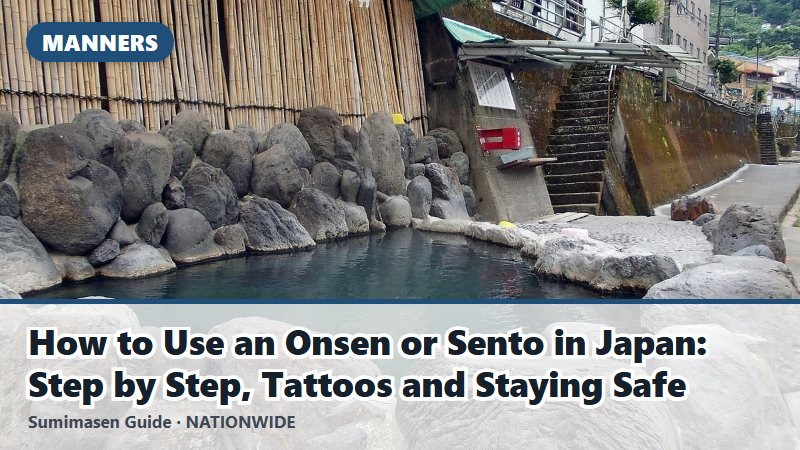
- Onsen towns with official lists. Some towns publish their own lists. Beppu (Oita), one of Japan's best-known hot spring towns, says on its onsen site that it has over 100 tattoo-friendly spots on a map, and that you don't need to cover your tattoo at the places on that list. For places not on the list, it asks you to check at the front desk before you pay.
- Words to look for. On a facility's website or sign, タトゥーOK or 入れ墨OK means tattoos are welcome. 入れ墨・タトゥーの方はご入浴をお断り means people with tattoos can't use the bath. Some rules also cover tattoo-style stickers and body paint, so read the whole line.
Way 2: Cover it with a sticker
Covering the tattoo is the first example in the 2016 notice. In practice, whether a sticker is accepted, how big it can be and how many you may use is up to each facility. It suits a small tattoo best; a large one is hard to cover completely.
- Ask before you pay, and tell the staff roughly how big the tattoo is.
- Put the sticker on clean, dry skin, before you enter the bath area.
- If a facility says no even with a sticker, accept it politely and use one of the other ways below.
Way 3: A private bath you book (kashikiri-buro)
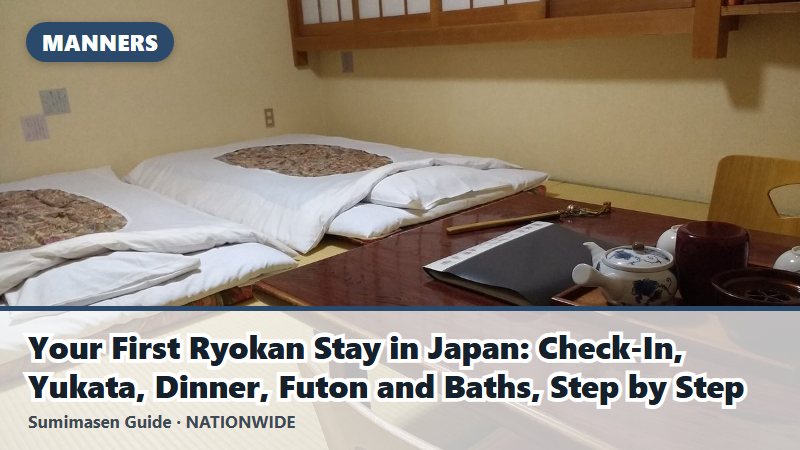
Some ryokan (traditional Japanese inns) have baths that a family, couple or single guest can reserve for a set time. The Japan Tourism Agency's ryokan Q&A says that time-slot private baths need a reservation, so ask the staff when you arrive. Nagano's official travel guide notes that some are free for guests and others cost extra. The Beppu (Oita) onsen site says that in a private onsen, tattoos are completely acceptable. In Japanese, look for 貸切風呂 (kashikiri-buro) or 家族風呂 (kazoku-buro, a "family bath").
The same Q&A says ryokan policies on tattoos in the large shared bath differ a lot: some have no limit, some decide case by case (a small one-point tattoo may be fine), and some guide guests to private or in-room baths. Its advice is simple: if you're worried, ask the ryokan.
Way 4: A room with its own bath
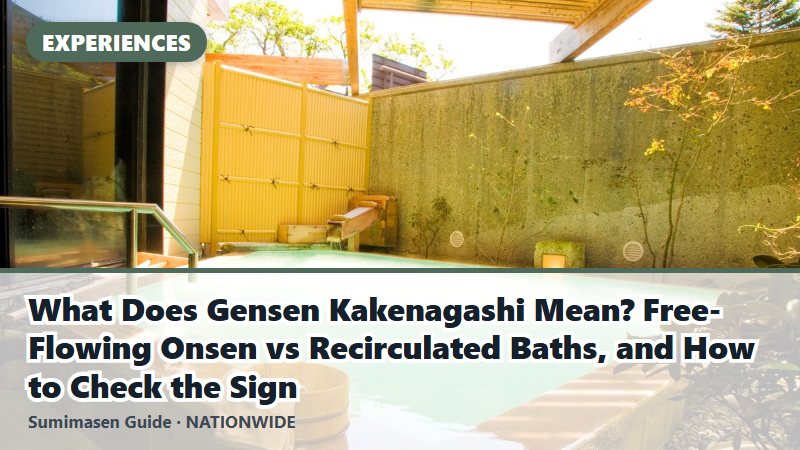
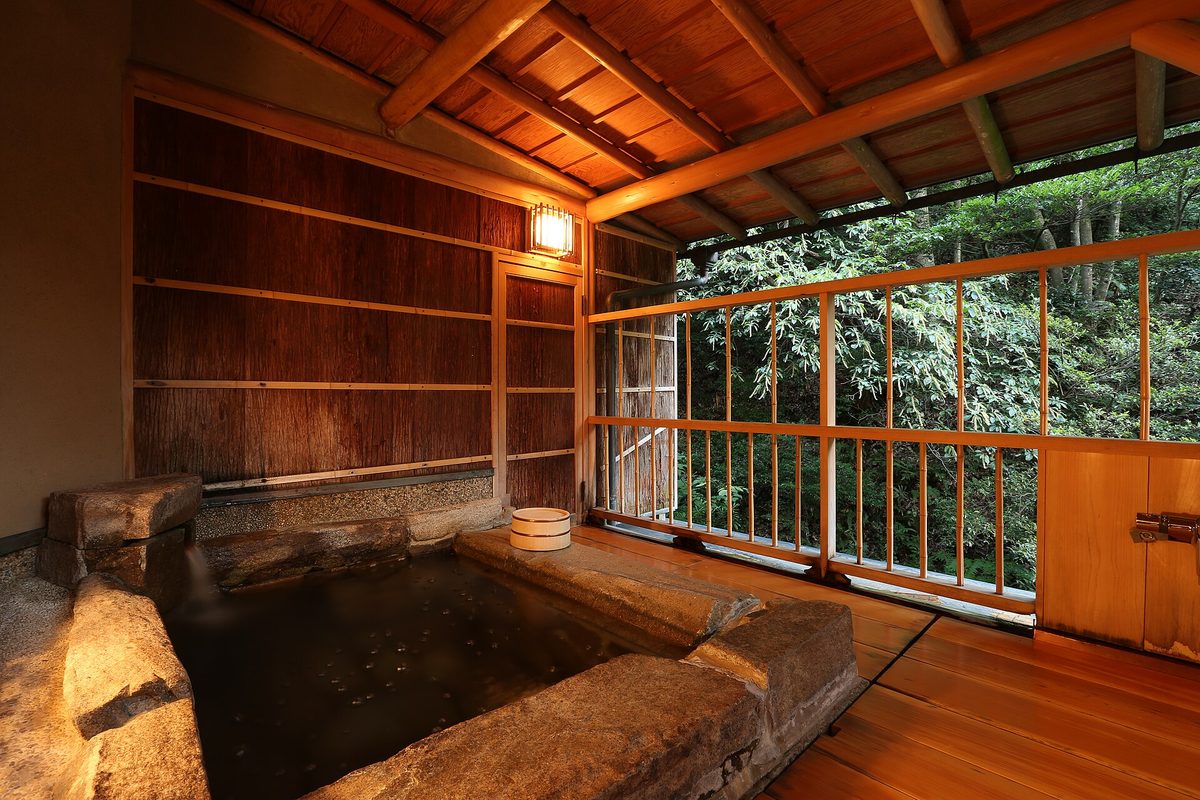
The most relaxed option is a guest room with its own bath, often an open-air bath on the balcony (客室露天風呂, kyakushitsu rotenburo), like the one in the photo at the top of this page. The 2016 notice lists this as an option for inns. You can bathe whenever you like, with no one else around and no tattoo question at all. When you book, check that the bath is in the room: "the hotel has an onsen" does not mean your room has one.
Which option fits you
What to say at the front desk
If you're unsure, ask before you pay. You can show these lines on your phone. For a longer message to send by email before you book, see the copy-and-send text in our onsen and sento manners guide.
Show this (Japanese):
タトゥーがあります。お風呂に入れますか。
I have a tattoo. May I use the bath?
シールで隠せば入れますか。
May I use it if I cover it with a sticker?
貸切風呂はありますか。
Do you have a private bath I can book?
Whatever the answer, a smile and "arigato gozaimasu" (thank you) go a long way. Staff follow their own facility's rule, and they are not judging you.
What to do as a traveler
- Before you book a ryokan, read its website or ask by email whether the large bath accepts tattoos, and whether it has a private bath or rooms with their own bath.
- For a day trip to a bath, look for a tattoo-friendly list from the town or check the facility's own rules first.
- For a small tattoo, ask whether a cover sticker is OK before you pay.
- Once you're in, follow the usual bath manners: see our step-by-step guide. Staying at a ryokan for the first time? Read our first-time ryokan guide.
Last reviewed: October 25, 2026. Facility rules change; please check the official pages below and the facility itself before you go.
References
- Japan Tourism Agency notice on bathing by foreign travelers with tattoos (March 16, 2016), as forwarded by the Ministry of Health, Labour and Welfare (March 18, 2016) (Japanese, PDF)
- House of Representatives: Cabinet answer on bathing by people with tattoos (June 2, 2016) (Japanese)
- Japan Tourism Agency: Ryokan Q&A (Japanese)
- Japan Tourism Agency: Ryokan Q&A, large baths and tattoos (Japanese)
- National Sento Association: How to find a sento (English)
- Enjoy Onsen, Beppu (Oita): 100+ tattoo-friendly onsen (English)
- Go! NAGANO (Nagano Prefecture and Nagano Tourism Organization): How to stay in a Japanese ryokan (English)
- Yokohama Minato Mirai Manyo Club: Facility rules, including tattoo-style stickers and body paint (Japanese)