Nagoya (Aichi) to Osaka (Osaka) on the Hinotori: Kintetsu's Relaxed Limited Express
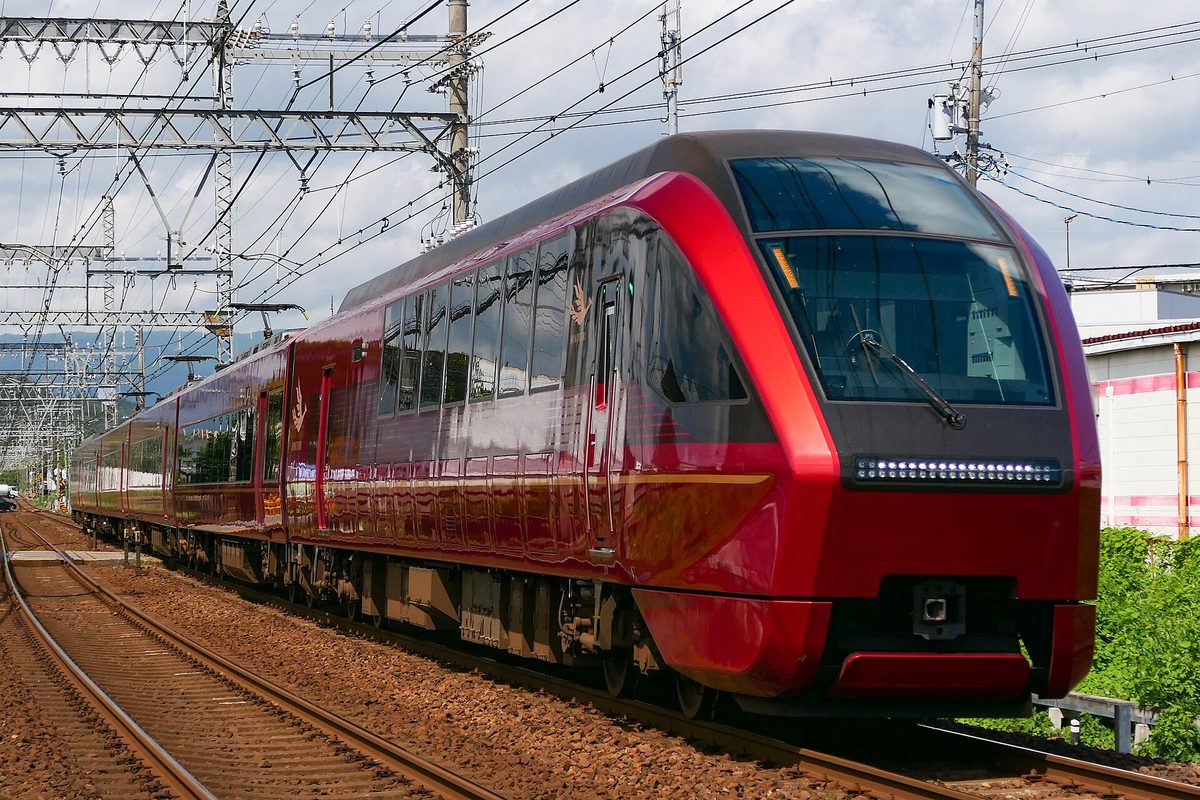
Most visitors cross from Nagoya (Aichi) to Osaka (Osaka) by shinkansen, and it is the fastest way. If you have a little more time, there is a calmer option: the Hinotori, a red limited express run by Kintetsu Railway between Kintetsu-Nagoya Station and Osaka-Namba Station. It takes about 2 hours instead of about 50 minutes, but every seat has a shell behind it so you can recline freely, the Premium cars have leather seats with leg rests, and it costs less than a reserved shinkansen seat. This guide covers the route, the two seat types, fares, how to buy tickets, what the Japan Rail Pass doesn't cover, and train manners, using Kintetsu's official pages.
This page may contain affiliate links. If you buy through them, we may earn a commission at no extra cost to you.
- Kintetsu-Nagoya to Osaka-Namba in about 2 hours, every hour
- Premium seats (3 per row) or Regular seats (4 per row), all with backshells
- Free lockers, a coffee spot and big windows
- Not covered by the Japan Rail Pass; how the Kintetsu Rail Pass works
Route, stations and travel time
The Hinotori runs on Kintetsu's own line, not on JR, so it uses different stations from the shinkansen. In Nagoya (Aichi) it leaves from Kintetsu-Nagoya Station, which is a separate station from JR Nagoya Station. In Osaka (Osaka) it ends at Osaka-Namba Station, in the Namba (Osaka) shopping and food district. Kintetsu says the trip takes approximately 2 hours.
On the way, Hinotori trains stop at Osaka-Uehommachi, Tsuruhashi (Osaka) and Tsu (Mie), and some also stop at Yamato-Yagi and other stations, so check the stops of your train. At Tsuruhashi Station you can change to JR; Kintetsu's Japanese page gives about 10 minutes from there to Osakajokoen Station for Osaka Castle by JR. In the official timetable (as of March 14, 2026), a Hinotori leaves each end at the top of every hour from 7:00 to 21:00, with extra departures on Saturdays and holidays.
Premium or Regular: choosing your seat
Every seat on the Hinotori has a backshell: a hard shell around the back of the seat, so when you recline, the seat moves inside its own shell instead of into the lap of the person behind you. Kintetsu says it was the first train in Japan with backshells on every seat. You can recline without asking, which takes away one small worry on a long ride.
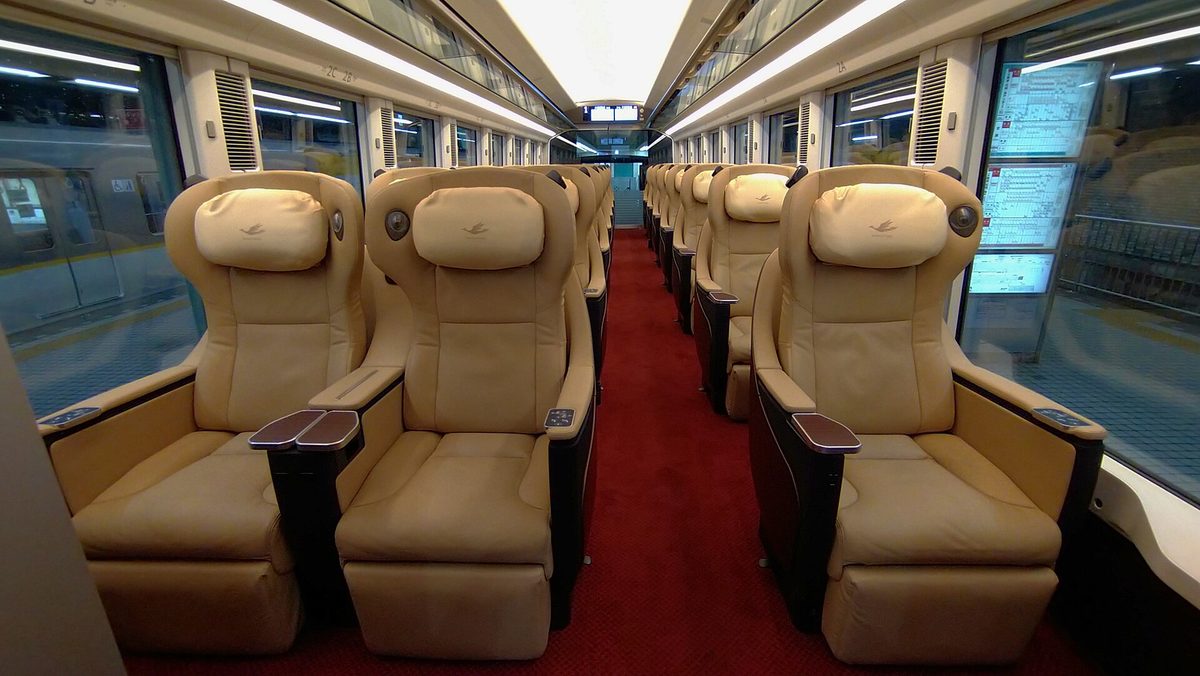
- Premium cars: 3 seats per row (2 + 1), a seat pitch of 130 cm, electric reclining, a leg rest, leather upholstery, a seat heater, a reading light, a large table and a power outlet. The floor is raised, and big front and side windows give a wide view. Kintetsu also fitted these cars with an active suspension to reduce side-to-side sway.
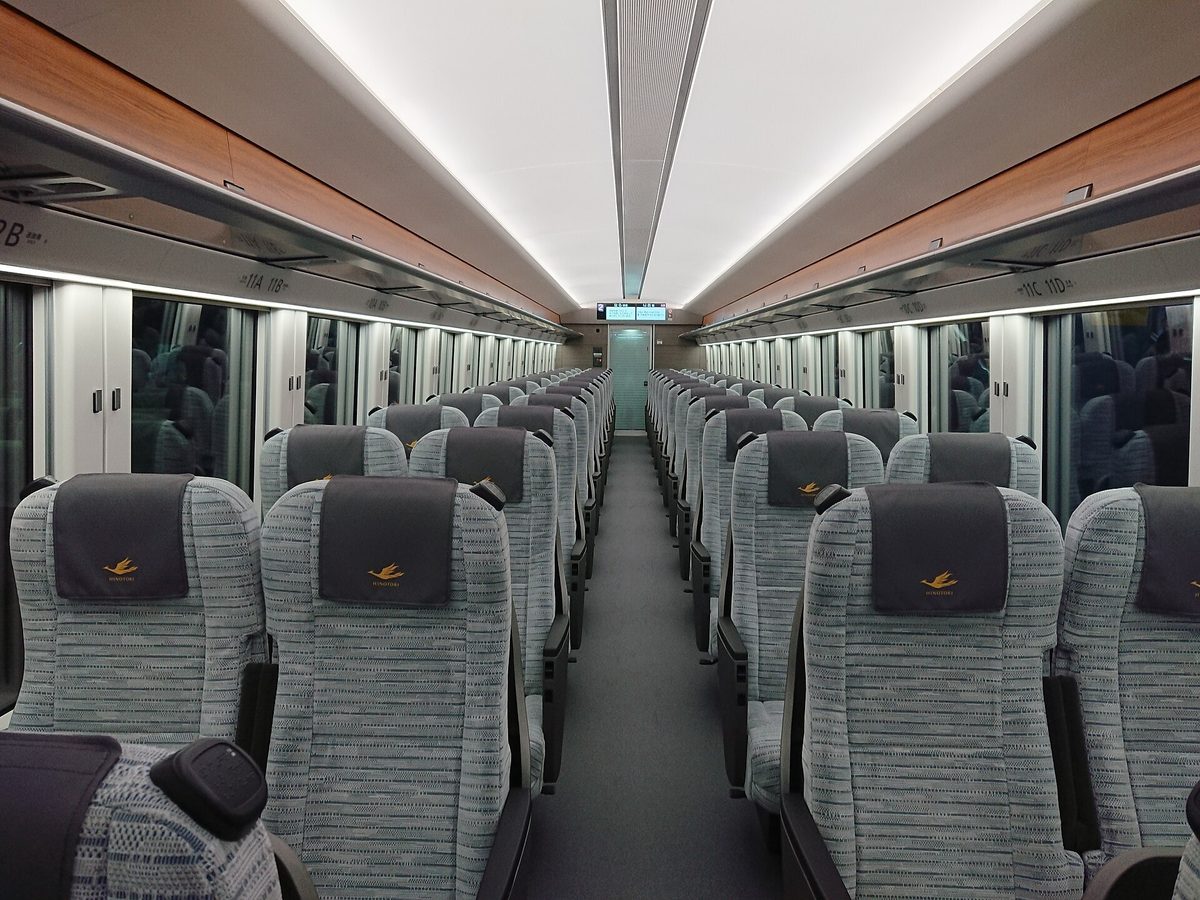
- Regular cars: 4 seats per row (2 + 2), a seat pitch of 116 cm (the widest of Kintetsu's regular seats), a footrest you can adjust, a seatback table, a cup holder and a power outlet at every seat.
The Regular seats are already roomy. Pay the extra for Premium if you want the leg rest, a single seat by the window, or the front view.
On board: lockers, a coffee spot and the view
- Lockers: Kintetsu's Hinotori page says there are free lockers in the deck areas for suitcases and other large bags.
- Cafe spot: vending machines with freshly ground coffee and sweets. The English page places them on the observation deck of the front and last cars.
- Bench space in the deck, which Kintetsu suggests for phone calls or a change of scene.
- Free Wi-Fi, and displays in every car with information in several languages.
Fares, and how they compare with the shinkansen
For the whole trip from Kintetsu-Nagoya to Osaka-Namba, Kintetsu's official fare table lists, for one adult:
- Regular car: 4,990 yen (basic fare 2,860 yen + limited express charge and Hinotori fee 2,130 yen)
- Premium car: 5,690 yen (basic fare 2,860 yen + limited express charge and Hinotori fee 2,830 yen)
- Children aged 6 to 11 pay half.
For comparison, JR Central's online service smartEX sells a reserved ordinary seat on the Nozomi shinkansen from Nagoya Station to Shin-Osaka Station for 6,480 yen in the regular season (its fare table, as of April 1, 2025). JR Central's published Nozomi schedule shows the run taking about 50 minutes. Keep in mind where you arrive: the shinkansen stops at Shin-Osaka, while the Hinotori ends in Namba (Osaka), which Kintetsu says is about 5 minutes by Osaka Metro from Shinsaibashi (Osaka).
Buying tickets
All seats on Kintetsu limited express trains are reserved, and you need two things: a basic fare (a ticket, an IC card, a contactless payment card or a Kintetsu pass) and a limited express ticket for your specific train. Kintetsu's ticket guide lists the ways to buy:
- Online, limited express ticket only (English): you choose your seat and can change trains up to three times free. You pay the basic fare separately, for example by tapping an IC card at the gate.
- Online, both tickets together (English, Korean, Simplified and Traditional Chinese): simpler, but you can't choose your seat or change trains.
- At a station: the limited express ticket counter, or an automatic limited express ticket machine at major stations.
Kintetsu's Japanese Hinotori page says tickets go on sale one month before the travel date, from 10:30. A limited express ticket is valid only for the train printed on it.
Japan Rail Pass and Kintetsu Rail Pass
- Japan Rail Pass: it covers JR lines. The official pass site says that on a private railway you pay the fare and charges for the section you use, and Kintetsu is a private railway. With a JR Pass, the Hinotori costs the full fare above.
- Kintetsu Rail Pass: the KINTETSU RAIL PASS 5day plus (6,700 yen for adults) gives unlimited rides on all Kintetsu lines, including Nagoya (Aichi) to Osaka (Osaka), for five days. The pass alone doesn't let you board a limited express: for the Hinotori you also buy the limited express ticket, which is the 2,130 yen (Regular) or 2,830 yen (Premium) part of the fares above. It pays off if you also plan Nara (Nara) or Ise (Mie) on Kintetsu in the same five days.
Manners on board
The Hinotori is a quiet train, and Kintetsu's on-board guide asks the following:
- Phone calls: take them in the deck (vestibule), not at your seat. Kintetsu's manners page also asks you to set your phone to silent.
- Headphones: keep the volume low so nothing leaks out.
- Luggage: don't block the aisle with suitcases; use the lockers or the racks.
- Eating and drinking: it's fine on a limited express, but Kintetsu asks you to avoid food with strong smells and not to spread out beyond your seat. A bento or a sandwich is fine; strong-smelling food is better saved for later.
- Reclining: thanks to the backshell, you don't need to ask the person behind you.
Who the Hinotori suits
The shinkansen is the right choice if time is tight, if you are heading to Shin-Osaka or Kyoto (Kyoto), or if you hold a Japan Rail Pass. The Hinotori suits you if:
- your hotel or plans are around Namba (Osaka), so you arrive right where you're going;
- you would rather spend a little less and have a roomier seat for the extra hour or so;
- you have a Kintetsu Rail Pass, or you simply want a relaxed ride with a coffee and a wide window.
Quick checklist
- Go to Kintetsu-Nagoya Station, not the JR shinkansen platforms.
- Have a basic fare (IC card or ticket) and a limited express ticket for your train.
- Choose Regular (4,990 yen) or Premium (5,690 yen).
- Store big bags in the lockers, make calls in the deck, and recline freely.
Also in Nagoya (Aichi): the Osu shopping streets and visiting Atsuta Jingu. For general train etiquette, see trains and buses in Japan. More on our Nagoya (Aichi) page.
Last reviewed: October 4, 2026. Fares and timetables change; please confirm on the official pages below before you travel.
References
- Kintetsu: HINOTORI, Limited Express between Osaka-Namba and Kintetsu-Nagoya (seats, timetable, fares)
- Kintetsu: Types of Limited Express Trains
- Kintetsu: Series 80000 Hinotori, car features (Japanese)
- Kintetsu: Hinotori for leisure travel (Japanese)
- Kintetsu: Limited Express Tickets
- Kintetsu: KINTETSU RAIL PASS 5day plus
- Kintetsu: In the Train Car
- Kintetsu: Manners on trains and in stations (Japanese)
- JAPAN RAIL PASS (official): Scope of validity
- smartEX: Fares for reserved ordinary seats (Japanese, PDF)
- JR Central: Supreme Class scheduled trains, with Nozomi times (PDF)