Street Smoking in Nagoya (Aichi): The Four No-Smoking Districts and the 2,000 Yen Fine
This page contains affiliate links.
Quick answer
- Nagoya (Aichi) bans smoking on the street in four busy districts, even if you're standing still.
- City staff on patrol collect a 2,000 yen fine on the spot.
- Outside those districts, please don't smoke while walking. The city runs its own smoking areas.
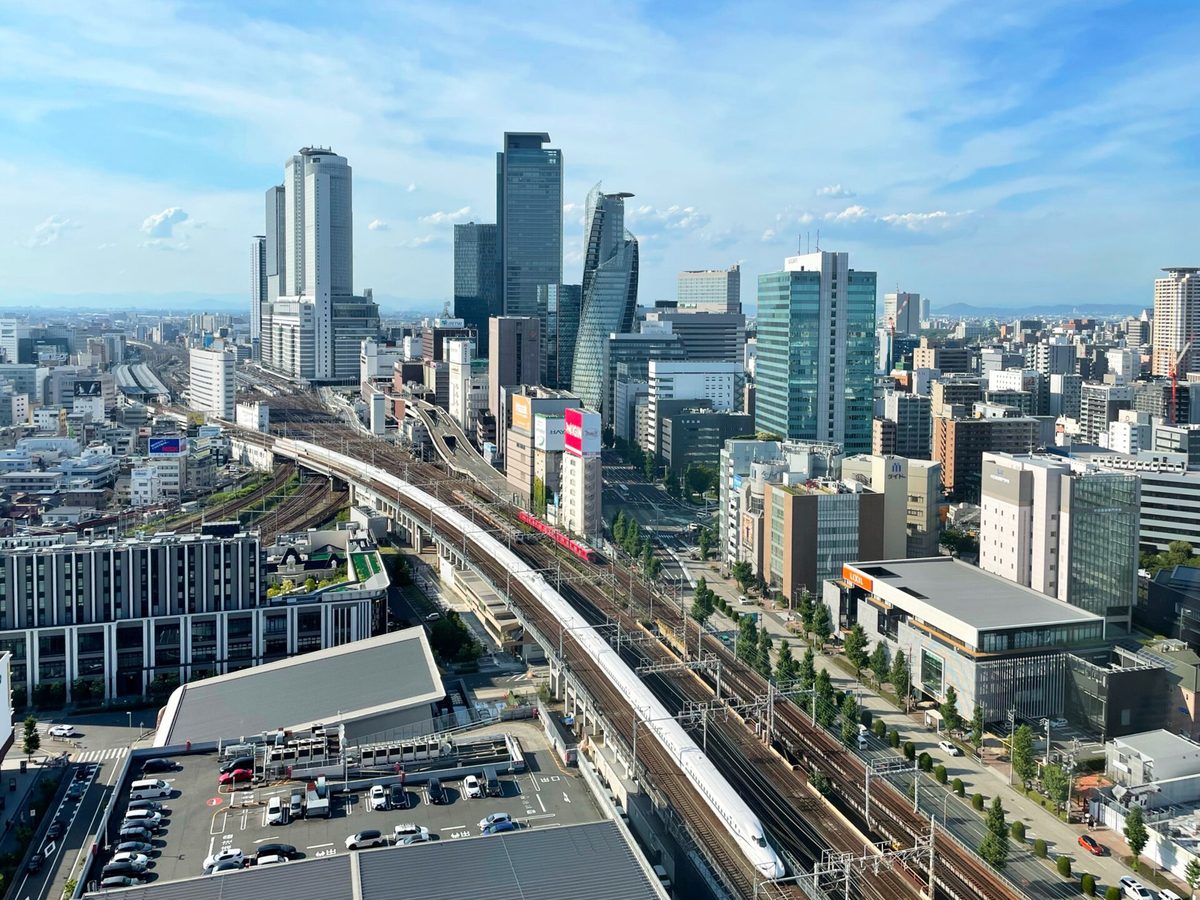
If you smoke, Nagoya (Aichi) is a city where it helps to know one local rule before you step out of the station. Nagoya City (Aichi) bans smoking on the street in four busy districts, and city staff on patrol collect a 2,000 yen fine on the spot. Outside those districts, the same ordinance still asks everyone not to smoke while walking. This guide explains where the districts are, what counts as smoking on the street, what happens if you're stopped, and where the city's own smoking areas are, based on Nagoya City (Aichi)'s official pages.
- The four districts: Nagoya Station, Sakae, Kanayama and Fujigaoka (Aichi)
- What's banned: smoking on roads and sidewalks, even standing still
- How the 2,000 yen fine is paid, and how to recognize real city staff
- The three smoking areas the city runs
Please read this first. This guide is based on Nagoya City (Aichi)'s official pages (checked October 2026). District boundaries are shown on signs and maps on site, and the city can change them. This is not legal advice.
Smoking at Nagoya Station: quick questions
Where can you smoke near Nagoya Station?
Outdoors, the only smoking area the city runs is at the Taiko-dori exit, on the south side of the fountain; the streets around the station are a no-smoking district. Indoors, the JR Central Towers and JR Gate Tower buildings are non-smoking, but their site points smokers to smoking rooms on the 12th and 13th restaurant floors of Towers Plaza and Gate Tower Plaza.
Is there a smoking room for the Shinkansen?
Yes. JR Central says every Tokaido Shinkansen station has a smoking room inside the ticket gates. At Nagoya Station, its guide (as of January 30, 2026) shows them on the Shinkansen platforms for tracks 14 and 15 and tracks 16 and 17, usable while the ticket gates are open.
Can you smoke at the Meitetsu or Kintetsu stations?
No. Meitetsu says all its stations and trains are non-smoking all day, and asks people not to use heated tobacco or e-cigarettes either. Kintetsu Nagoya Station is non-smoking all day, inside and outside the ticket gates.
The rule in one paragraph
Nagoya City (Aichi)'s ordinance for a safe, secure and comfortable city (安心・安全で快適なまちづくりなごや条例) lets the mayor designate no-smoking districts (路上禁煙地区, rojo kinen chiku) under Article 8. The city has designated four: Nagoya Station, Sakae, Kanayama and Fujigaoka (Aichi). In these districts, no one may smoke on the road. The city's page spells out what that means: smoking on the roadway or the sidewalk is banned whether you are walking, riding a bicycle or simply standing still, and you may not even hold a lit cigarette.
The four districts
- Nagoya Station area, the main rail hub
- Sakae (Aichi), the central shopping and entertainment area
- Kanayama (Aichi), around Kanayama Station
- Fujigaoka (Aichi), around Fujigaoka Station in the east of the city
The city's page shows each district on a map. Popular sights such as Osu (Aichi) and Atsuta Jingu are not among the four, but the city-wide request below still applies there. The city also says that busy spots next to the districts, such as the entrances of JR Nagoya Station, in front of the Meitetsu department store and around Kanayama Station, are patrolled together with local businesses.
If you're stopped: how the 2,000 yen fine works
The ordinance allows a fine (karyo, a non-criminal administrative fine) of up to 20,000 yen (Article 12). In practice, the city's bilingual Q&A sheet describes the procedure like this:
Two practical points. First, the people who collect the fine are city employees, not police, and the city says they carry a photo ID and identify themselves when they speak to you. If someone claims to be an official and asks for money in a way that doesn't match this, be careful; our guide to fake officials and fake police explains the warning signs. Second, you get a receipt, so keep it.
If you can't pay in cash on the spot, the city gives you a payment slip to pay at a bank or other financial institution in Japan by the deadline. If you are leaving Japan soon, ask the staff right there how to pay before you go; carrying 2,000 yen in cash is the simplest way.
Outside the districts
Being outside the four districts doesn't make street smoking a free-for-all. Under Article 7 of the same ordinance, everyone in the city is asked to try not to smoke while walking or riding a bicycle in public places, and smokers are asked to carry a portable ashtray so that butts don't end up on the ground. The same article bans throwing away cans and similar litter in public places anywhere in the city. There is no fine for walking and smoking outside the districts, but it is the clear local expectation.
The city's pages talk about "tobacco" (tabako) and do not say anything separate about heated tobacco or e-cigarettes. We couldn't confirm how they are treated, so the safest choice is to use them only where smoking is allowed.
Where the city lets you smoke
Nagoya City (Aichi) runs three outdoor smoking areas:
- Nagoya Station, Taiko-dori exit: on the south side of the fountain
- Kanayama Station, north exit: east of the police box in front of the station
- Kanayama Station, south exit: east of the public toilets on the south side
The city asks users to smoke only inside the area (not around it), to avoid using it when it's crowded, to keep conversation to a minimum, to keep some distance from others, to leave promptly when finished, and not to use it if they have cold symptoms. There is no city-run smoking area in Sakae (Aichi), so plan ahead. Shops, stations and hotels may have their own smoking rooms; check the signs in each building.
My visit
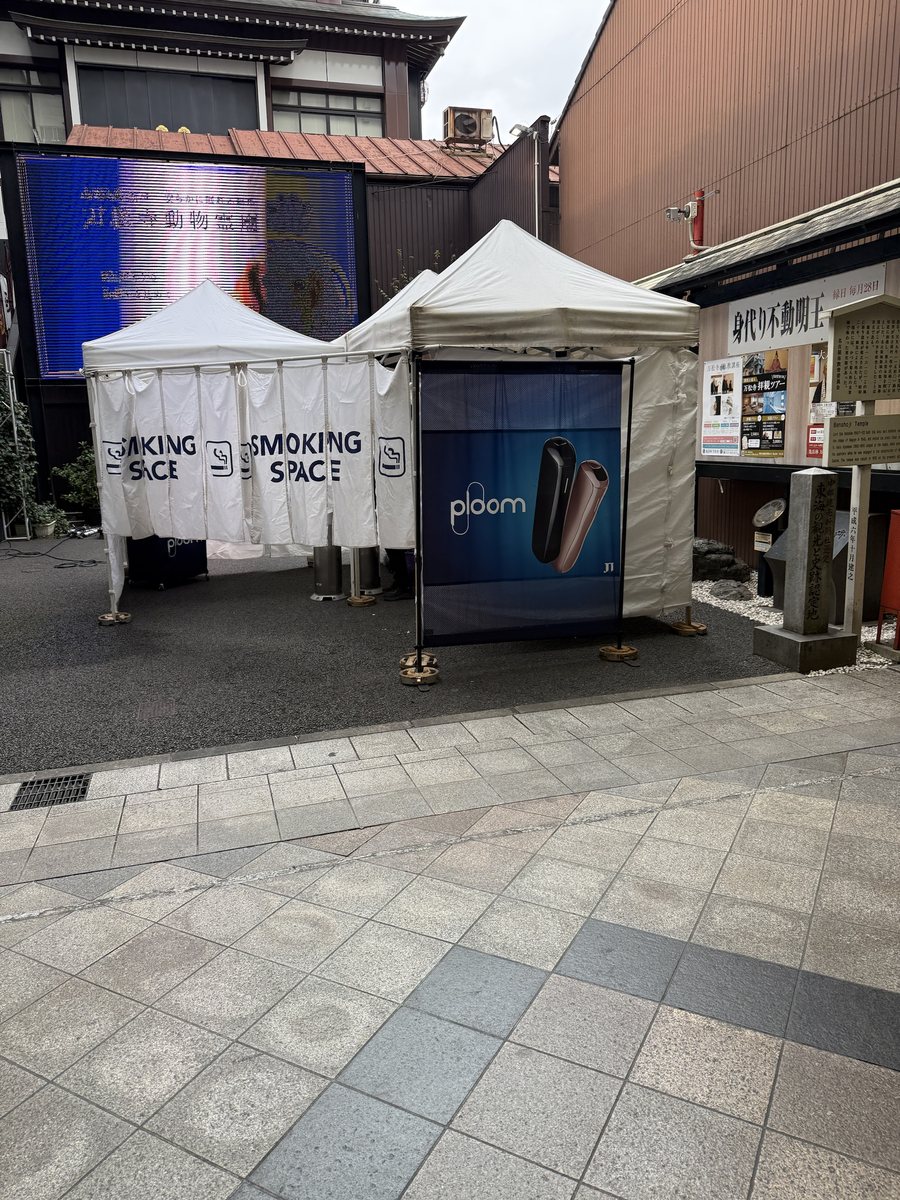
This is a JT sales booth in Osu (Aichi). Sometimes a booth like this doubles as a smoking area.
It stands next to Banshoji Temple, and its curtains say "SMOKING SPACE". If you want to smoke, follow any notices on site.
Find a smoking area with JT, then check the station exit
Start with the CLUB JT smoking area map in your phone browser. Use 検索 (search) for a station or destination, then choose 喫煙所 (smoking areas). If you choose to allow location access, 現在地へ戻る returns to your current location. The Japanese-language site may ask you to confirm that you are a smoker aged 20 or over.
- Open a listing near your destination and check its entrance, not just the map marker.
- Confirm whether it is outdoors or indoors, its opening hours, and whether a purchase or use of the premises is required. A restaurant marker is not a promise of a free public smoking area.
- Cross-check the local official map below and the signs at the entrance. Do not smoke on the pavement while searching or waiting outside.
For a public spot, compare the listing with the city's smoking area page. At Nagoya Station, look for 太閤通口 (Taiko-dori exit), then the south side of the fountain. At Kanayama Station, choose the north-exit spot east of the police box, or the south-exit spot east of the public toilets. These are the places listed by the city; their position matters more than a marker somewhere around the station.
Searching around Sakae (Aichi)? JT may show private venues, so check whether you need to order food or drink and whether the smoking space is indoors. The city list does not give opening hours for its station spots; do not assume they are open all night. Check on-site notices. Location guidance checked on 2026-10-18.
Quick checklist
- Arriving at Nagoya Station? You're in a no-smoking district the moment you step onto the street.
- Use the smoking area on the Taiko-dori side, or a smoking room indoors.
- Elsewhere in the city, don't smoke while walking, and carry a portable ashtray.
- Asked to pay? Real city staff show photo ID and give you a receipt.
Japan's national rules on smoking indoors, and the street rules in other cities, are in our guide Where you can (and can't) smoke in Japan. Nagoya City (Aichi) also has an ordinance asking people to stand still on escalators; see our escalator guide. Visiting more of the city? Read about the Osu shopping streets and Atsuta Jingu, or see everything on our Nagoya (Aichi) page. Traveling on to Osaka? There, street smoking is banned across the whole city; see Osaka's citywide street-smoking ban.
Last reviewed: October 13, 2026. Districts, smoking areas and procedures can change. Please confirm on the official pages below.
References
- Nagoya City (Aichi): Details of the no-smoking districts under the safe, secure and comfortable city ordinance (Japanese)
- Nagoya City (Aichi): Q&A concerning public nonsmoking areas (Japanese and English, PDF)
- Nagoya City (Aichi): Smoking areas set up by the city (Japanese)
- JR Central Towers and JR Gate Tower: Smoking rooms (Japanese)
- JR Central: Smoking rooms at Tokaido Shinkansen stations (Japanese, PDF, as of January 30, 2026)
- Meitetsu: Manners on trains and in stations (Japanese)
- Kintetsu: Kintetsu Nagoya Station guide (Japanese)