Why Say Thank You at a Japanese Shrine Instead of Making a Wish? Kito Prayers, Norito and the Local Ujigami
At a Japanese shrine, you will see people stand still for a moment in front of the offering box, hands together, eyes closed. Many visitors assume they are making a wish. Some are. But there is another way to visit that surprises many travelers: you go to a shrine to say thank you, and you leave a wish that really matters to a priest, who passes it on to the kami (the Shinto gods) in a prayer ceremony called a kito. This column explains that way of thinking, which is also how the operator of this site visits shrines, and checks it against what the Association of Shinto Shrines (Jinja Honcho) and major shrines say about thanks, wishes, kito, norito prayers and the local ujigami.
- The short answer: is a shrine for wishes or for thanks?
- Why "thanks first" runs through shrine prayers
- How to ask for a kito, and what the hatsuho-ryo offering is
- The ujigami, the kami of the place you are in
- What to do at a shrine on your trip
The short answer
You can do either, and nobody will scold you for making a wish. Jinja Honcho, the association that most shrines in Japan belong to, writes that since ancient times people in Japan have visited shrines at the turning points of life and of the seasons to offer thanks for everyday life and to pray for happiness. Both are part of it.
Still, thanks comes first again and again in shrine customs. The formal prayer that a priest reads, the norito, usually thanks and praises the kami before it asks for protection. Some people, including the operator of this site, keep an ordinary visit for thanks only and take a real wish to a kito ceremony, where the priest speaks for them.
Why "thanks first" runs through shrine prayers
The norito puts thanks before the request. Jinja Honcho describes the norito as the words a priest offers to the kami at a ritual. The usual form presents food and other offerings, expresses thanks for the kami's blessings along with words of praise, and then prays for new blessings. The Tokyo Prefectural Shinto Association gives the same order: first the kami's name and virtues are praised, then the purpose of the ritual is stated, then protection is asked for. Behind it is kotodama, the old belief that words carry a spiritual power, which is why priests read every word of a norito with great care.
You can even ask for a kito just to say thank you. At Ise Jingu in Ise (Mie), the list of things you can ask for in a kito begins with shin'on kansha, thanks for the kami's blessings, followed by safety of the household, good health, business, safe childbirth, study, traffic safety and more. The shrine adds that both of its forms of kito are an expression of thanks and sincerity toward the kami.
When a wish comes true, you go back to say thank you. Jinja Honcho's FAQ suggests a visit of thanks when something you asked for comes true, and says you can also apply at the shrine for this, as you would for a kito.
Here is how the operator of this site visits.
My visit
Here is how I was taught to pray, and what I believe is the proper way to visit a shrine. I don't make wishes when I pray at a shrine. To me, a shrine is a place to say thank you. In my heart, I first tell the kami my address and my real name, so they know who I am. Then I give thanks: for the connection that brought me to this place on my trip, and for arriving safely, without accidents or injuries on the way.
If there is something you truly want to come true, you can ask for a kito (祈祷), a prayer ceremony that the shrine priests and miko perform for you. Speaking to the kami on people's behalf is the priest's role: in the ceremony, the priest reads a prayer called a norito that passes your wish on to the kami. Think about it: if every visitor asked the kami for something, the kami couldn't keep track. That is why the priest gathers people's requests and passes them on. And that is why, to me, a regular visit is a time to give thanks for everyday life. Ask at the shrine office. For a lighter way, buy an omamori, a charm made for a particular wish, such as safe travel, health or success in exams.
Also keep in mind that each shrine enshrines a different kami. Many shrines explain which kami they enshrine on a board near the entrance or on their website, so it's worth reading before you pray. Two famous examples: the Inner Shrine of Ise Jingu in Ise (Mie) enshrines Amaterasu-Omikami, the ancestral kami of the Imperial family, and Izumo Taisha in Izumo (Shimane) enshrines Okuninushi-no-Okami, known as the kami who built the land. Inari shrines, such as Fushimi Inari, are known for their foxes, which the shrine explains are the messengers of the Inari kami, and many people pray there for success in business, in other words for luck with money and work. See also our guide to Ise Jingu.
The small shrine in a neighborhood is often the ujigami (氏神), the local kami that protects that land and the people who live there. When you stay somewhere for a few days, stopping by the local shrine to say thank you for your stay is a nice way to visit.
How to ask for a kito
For an ordinary visit you simply go up to the hall, make an offering and bow. For a personal prayer, such as for passing an exam or a baby's first shrine visit, or to pray inside the hall, Jinja Honcho says you need to apply at the shrine. The steps it describes:
- Go to the shamusho (the shrine office) or the juyosho (the counter where charms and talismans are given out).
- Hand over the hatsuho-ryo, the offering for the kito, and fill in the form with your address, your name and your wish.
- A priest or a miko (a shrine maiden) leads you into the hall, and the ceremony begins shortly after.
Notice that the form asks for your address and name: the same two things the operator tells the kami silently at an ordinary visit (see "My visit" above).
What kito are for. The Tokyo Prefectural Shinto Association lists, among others, prayers for safe childbirth, a baby's first shrine visit, Shichi-Go-San (a celebration for children aged three, five and seven, held around November 15), protection from bad luck at Setsubun (the day before the start of spring in the old calendar, when rites to drive away bad luck are held), household safety, business, traffic safety and recovery from illness. It adds that what matters most is to pray with a sincere heart.
The hatsuho-ryo. Hatsuho means the first rice of the year's harvest. As Jinja Honcho explains, people once offered it to the kami to give thanks for the harvest; today the word is used for money offered to the kami. The amount differs from shrine to shrine and by the type of kito, so check the shrine's sign or website. This guide doesn't list amounts.
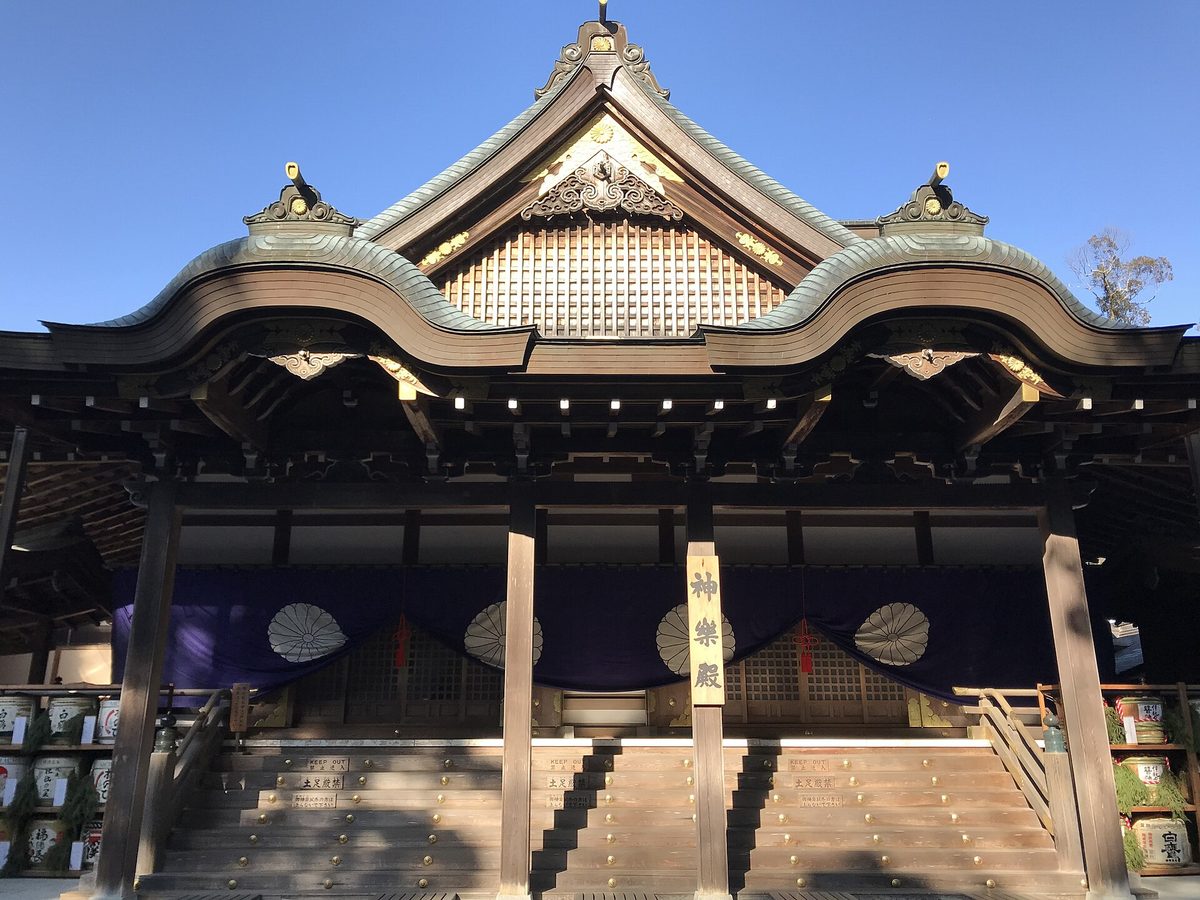
An example: Ise Jingu. According to the shrine, anyone can ask for a kito, alone, with family or as a group, and there are no advance reservations: you apply at the kito desk in the Kaguraden hall of the Inner Shrine or the Outer Shrine, and you are called in order. Reception hours change over the New Year, so check the shrine's latest notices.
The ujigami: the kami of the place you are in
Jinja Honcho calls the shrine of the kami who protects the area where you live the ujigami shrine, and the people living around it its ujiko. Originally an ujigami was a clan's ancestral kami; over time the word came to mean the kami of a place. A shrine you revere for your own reasons, apart from where you live, is a sukei-jinja, and Jinja Honcho says it is fine to revere both.
Jinja Honcho's FAQ adds that the ujigami is often the shrine closest to your home, and that the surest way to find out is to ask a priest there. As a traveler you don't live in Japan, but the small shrine near your hotel is still the shrine of that neighborhood's kami, which is why the operator suggests stopping by to say thank you for your stay.
What to do at a shrine on your trip
- At the offering box: make your offering, bow twice, clap twice and bow once. In your heart, say who you are and give thanks, for example for arriving safely. The full steps are in our guide to shrines and temples.
- Before you pray: read the board near the entrance to learn which kami the shrine enshrines.
- A wish that really matters: ask for a kito at the shrine office. Check the hours and the hatsuho-ryo on the shrine's sign or website first.
- Something lighter: receive an omamori charm for your wish. Here is how to keep an omamori and return it.
- If your wish comes true: go back to say thank you.
Whether you make a wish or only say thank you, a quiet bow and a sincere heart are what count. You don't need to be Shinto to visit or to pray.
Last reviewed: October 18, 2026. Each shrine can set its own way of praying and its own kito hours and offerings. Follow the shrine's signs and the official pages below.
References
- Jinja Honcho (Association of Shinto Shrines): Visiting a shrine (Japanese)
- Jinja Honcho: Asking for a prayer at a shrine (Japanese)
- Jinja Honcho: Norito (Japanese)
- Jinja Honcho: Words spoken in prayer (Japanese)
- Jinja Honcho: Hatsuho-ryo and tamagushi-ryo manners (Japanese)
- Jinja Honcho: Ujigami shrines and sukei-jinja (Japanese)
- Jinja Honcho: FAQ (Japanese)
- Tokyo Prefectural Shinto Association Q&A: What is a norito? (Japanese)
- Tokyo Prefectural Shinto Association Q&A: What is a kito? (Japanese)
- Ise Jingu: Kito prayers (Japanese)
- Ise Jingu: About Jingu (English)
- Izumo Taisha (official, Japanese)
- Fushimi Inari Taisha: FAQ (Japanese)