Osaka in 2 or 3 Days: A Simple Itinerary from Osaka Castle and Dotonbori to USJ, Shinsekai or a Day Trip to Kyoto or Nara
Two or three days is a popular length for a trip to Osaka, and the city makes it easy: the main sights sit on a few subway and JR lines, and Kyoto and Nara are each about half an hour away by train. This plan keeps the travel short. Day 1 is Osaka Castle, Kuromon Market and Dotonbori at night; day 2 is Universal Studios Japan (USJ); day 3 is either Shinsekai, Tsutenkaku Tower and Tennoji, or a day trip to Kyoto or Nara.
For every stop you'll find the nearest station and line, how long to allow, when it gets busy, a plan for rain, and a link to our detailed guide. Swap the days around to suit your dates.
This page may contain affiliate links. If you buy through them, we may earn a commission at no extra cost to you.
- Day 1: Osaka Castle opens at 9:00, so start there, then take the subway to Kuromon Market and walk on to Dotonbori for the evening.
- Day 2: USJ is about 11 minutes from Osaka Station by JR. Buy park tickets ahead from USJ or a travel agency it lists.
- Day 3: stay in the city for Shinsekai and Tsutenkaku Tower, or go to Nara (about 34 minutes from Osaka-Namba) or Kyoto (about 30 minutes from Osaka Station).
- Money: smoking on the street is banned across Osaka City, hotels add an accommodation tax, and from November 1, 2026 tax-free shopping works as a refund.
Day 1: Osaka Castle, Kuromon Market and Dotonbori
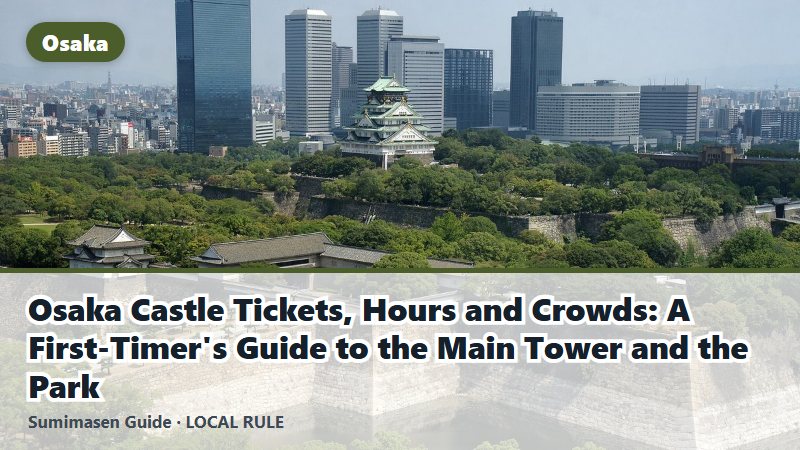
Morning: Osaka Castle. The park is free and open all day; the main tower, a museum with an observation deck on the 8th floor, is open 9:00 to 18:00 (last entry 17:30) and costs 1,200 yen for adults. Allow about an hour inside, plus 15 to 20 minutes' walk each way from the station.
- Getting there: Tanimachi 4-chome Station (Osaka Metro Tanimachi Line, Exit 1-B, or Chuo Line, Exit 9). The route through Otemon Gate is the gentlest, with no stairs. Osakajokoen Station on the JR Osaka Loop Line also works.
- When it's busy: the wait is at the ticket counter, and the castle's web ticket lets you skip that line. The castle says the upper floors get very crowded and that it may close the ticket queue before 17:30, so don't leave it until late afternoon.
- Good to know: no photos on the 3rd and 4th floors, and there are no coin lockers inside, so leave big bags at the station or your hotel.
Details, including the elevator and the step-free route: Osaka Castle tickets, hours and crowds.
Afternoon: Kuromon Market. From Tanimachi 4-chome, ride the Tanimachi Line south to Tanimachi 9-chome, change to the Sennichimae Line and go one stop to Nippombashi Station; the market is right outside. OSAKA-INFO, the city's official tourism site, says it has about 150 stores, many selling fresh seafood, and that it gets very crowded at the end of the year. The market's own site describes a roofed street about 580 meters long, which makes it a good stop on a rainy day.
- Hours: they differ from shop to shop, and so do closed days. The shop listings we checked on the market's site close at 16:30 or 17:00, so go after lunch rather than in the evening.
- Eating: some shops have seats for eating what you buy; the market's site marks them "Eat-in". Using those is the easy way to avoid trouble with eating while walking: see eating while walking in Japan (affiliate link).
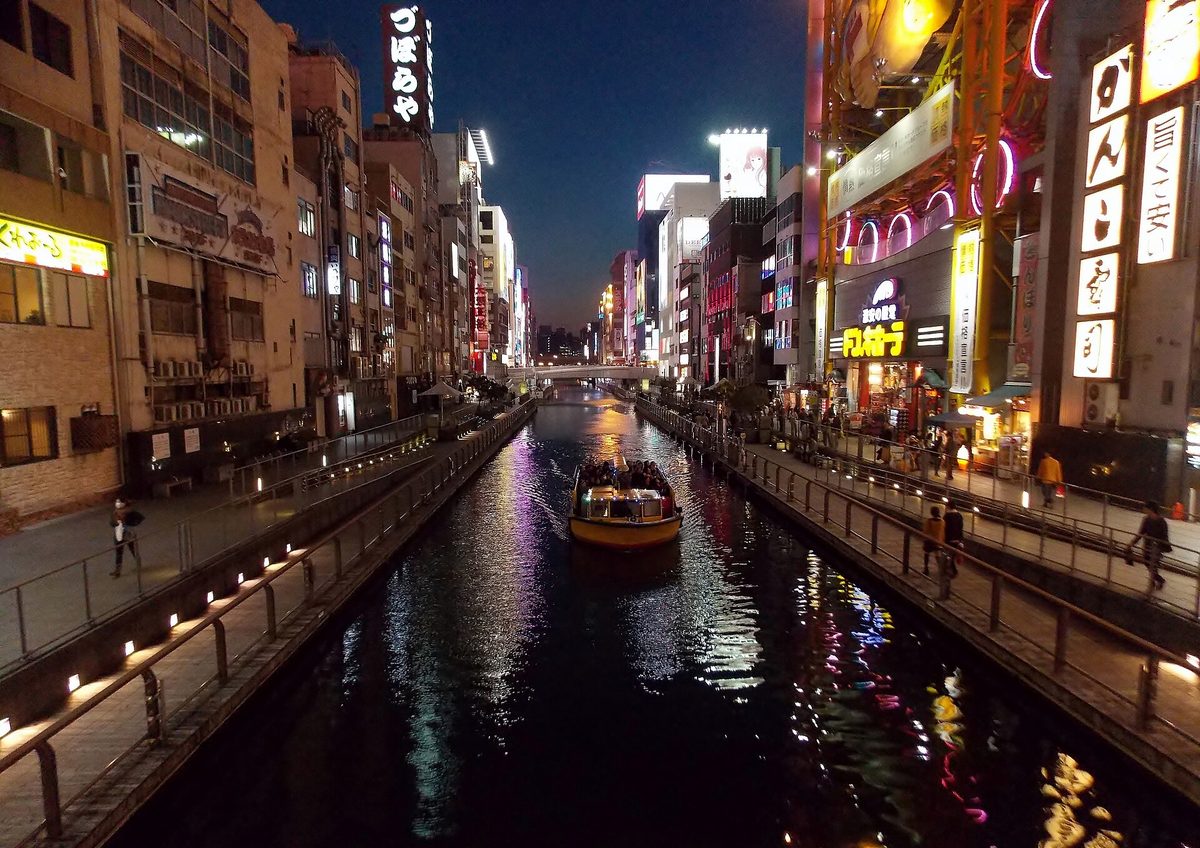
Evening: Dotonbori. Namba Station is the next stop west on the Sennichimae Line. OSAKA-INFO puts Dotonbori right outside Namba Station (Nankai, Kintetsu, and the Osaka Metro Midosuji, Sennichimae and Yotsubashi lines), with giant signs, including the famous Glico runner, over the canal. Its restaurants are crowded throughout the year, so expect a line at popular places around dinner time.
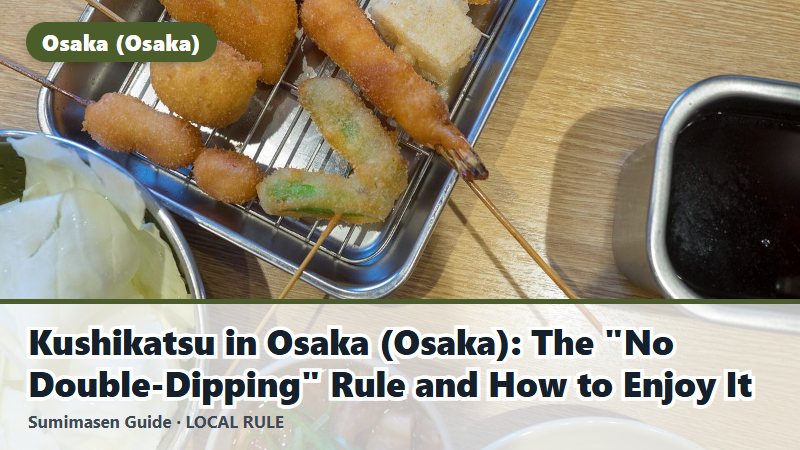
- Kushikatsu: at a shared sauce pot, dip each skewer only once. See the no double-dipping rule.
- Smoking: since January 27, 2025, smoking on the street is banned across the whole of Osaka City, heated tobacco included, with a 1,000 yen fine. Use a designated smoking area: see Osaka's smoking ban.
- Escalators: in Osaka, people who stand usually keep to the right, but standing still and holding the handrail is always fine. See escalators in Japan.
Day 2: Universal Studios Japan
USJ's own access page gives about 11 minutes from Osaka Station to Universal City Station: the JR Osaka Loop Line to Nishikujo (about 6 minutes), then the JR Yumesaki Line (about 5 minutes); some trains run straight through. From Osaka-Namba, it's about 13 minutes on the Hanshin-Namba Line to Nishikujo, then the same JR Yumesaki Line. Plan on the whole day.
- Tickets: you need a park ticket (Studio Pass) for your date. Buy it from USJ's official web store or a travel agency on USJ's official list; resale tickets are not accepted.
- Express Pass: an add-on for shorter lines at the attractions printed on it. It can't be canceled and each pass is for one person. It's most worth it if you have only one day and are going on a weekend or holiday. See is the USJ Express Pass worth it?
- SUPER NINTENDO WORLD: on busy days you may need a timed entry ticket, from certain Express Passes or from USJ's official app after you enter. Download the app before you go.
- Rain: USJ notes that attractions may stop and shows may be canceled, so check the app for what's running.
Day 3, plan A: Shinsekai, Tsutenkaku Tower and Tennoji
Shinsekai is the old downtown around Tsutenkaku Tower. The tower is a 3-minute walk from Exit 3 of Ebisucho Station (Osaka Metro Sakaisuji Line), 6 minutes from Exit 1 of Dobutsuen-mae Station (Midosuji Line), or 6 minutes from Shin-Imamiya Station (JR Osaka Loop Line).
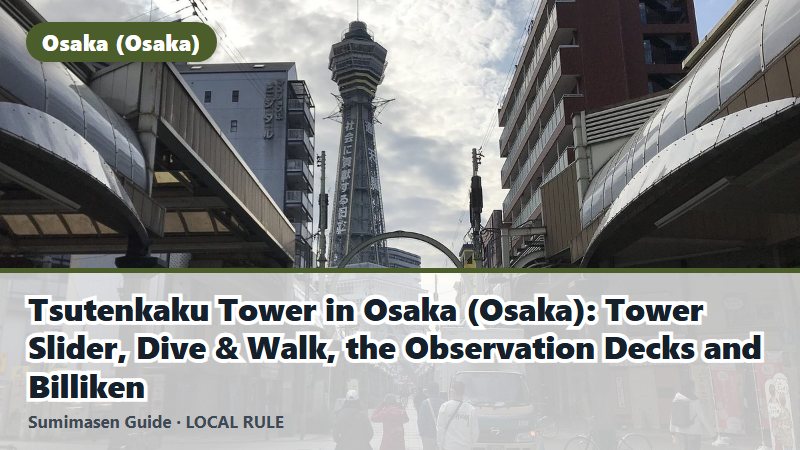
- The tower: the observation decks open 9:00 to 21:45 and cost 1,500 yen for adults. Every ticket has a reserved entry time, and tickets bought online by the day before let you go in at the time you chose. The Tower Slider, a 60-meter slide down the side of the tower, is for ages 7 to 65 and at least 120 cm tall. See Tsutenkaku Tower.
- When it's busy: OSAKA-INFO notes that Janjan Yokocho, the covered shopping street next to the tower, gets large tour groups on weekends and holidays. A weekday visit is quieter.
- Lunch: Shinsekai has many kushikatsu restaurants, especially along Janjan Yokocho. Do the slide before a beer: people who have been drinking alcohol can't ride it.
- Tennoji: Dobutsuen-mae is one stop from Tennoji on the Midosuji Line. Abeno Harukas is directly connected to Kintetsu's Abenobashi Station, about 3 minutes on foot from JR Tennoji Station.
Flying home from here? JR's Haruka limited express runs from Tennoji Station to Kansai International Airport in about 34 minutes, so plan A works well on your last day. See Kansai Airport to Osaka and Kyoto (affiliate link).
Day 3, plan B: a day trip to Nara or Kyoto
Nara. Nara Prefecture's official travel guide gives about 34 minutes from Osaka-Namba Station to Kintetsu-Nara Station by Kintetsu Express, or about 36 minutes from Tennoji Station to JR Nara Station by JR Rapid Express.
- The deer: they are wild animals. Give them only the official deer crackers (shika senbei), and keep away from males from September to November. See the deer of Nara.
- Todaiji: the Great Buddha Hall costs 800 yen for adults, cash only. It's open 7:30 to 17:30 from April to October and 8:00 to 17:00 from November to March, and it's indoors if it rains. See visiting Todaiji.
Kyoto and Fushimi Inari. Kyoto City's official travel guide gives about 30 minutes from Osaka Station to Kyoto Station by JR Special Rapid Service. From Kyoto Station, JR Inari Station is two stations and about 5 minutes away on the JR Nara Line, right next to Fushimi Inari Taisha. Keihan trains from Yodoyabashi Station in Osaka also stop at Fushimi-Inari Station.
- Time: the torii paths never close. The walk around Mount Inari is about 4 km and takes about 2 hours, but you can turn back at any point.
- Rain: the paths go up and down stone steps. The Senbon Torii start just above the main hall, so on a wet day you can walk that part and turn back.
- See walking the Senbon Torii.
Money rules to know in Osaka
- Accommodation tax: Osaka Prefecture charges 200 to 500 yen per person per night, depending on the room charge, and nothing when it's under 5,000 yen. It's paid to the hotel with the room. See Osaka's accommodation tax (affiliate link). Sleeping in Kyoto instead? Kyoto City has its own, higher tax: see Kyoto's accommodation tax.
- Street smoking: banned across Osaka City, with a 1,000 yen fine collected by city officers.
- Tax-free shopping: from November 1, 2026, shops charge the full price, and the tax is refunded after Japan Customs checks the goods when you leave. It applies to 5,000 yen or more per store per day, and the goods must leave Japan within 90 days. Keep them unopened. See the new tax-free refund.
- Cash: Todaiji's tickets are cash only. Osaka Castle takes cash, cards, IC cards and QR code payments. See cash, cards or IC card.
If it rains
- Day 1: the castle's main tower is indoors, but the walk from the station is not. Kuromon Market has a roof.
- Day 2: USJ may stop some attractions; check the official app. If you have two Osaka days left, swap day 2 and day 3.
- Day 3: at Tsutenkaku, the indoor decks and Billiken stay open when the open-air deck and the Tower Slider close. Janjan Yokocho is covered. In Nara, the Great Buddha Hall is indoors.
Where to stay and how to arrive
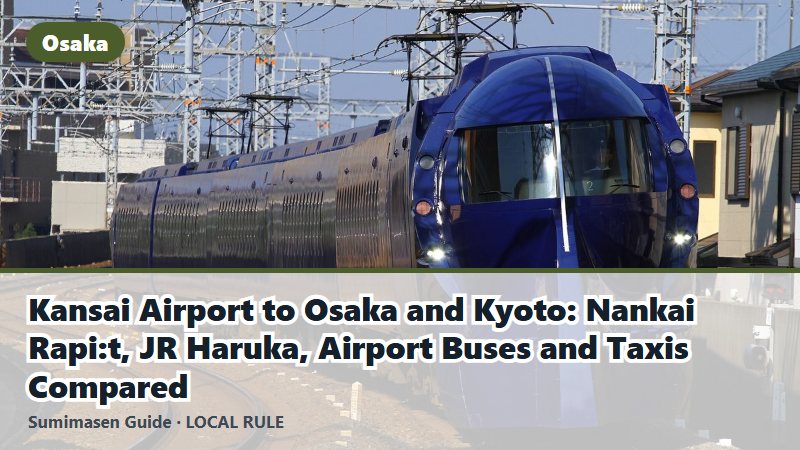
For this plan, a hotel near Namba Station or Shinsaibashi Station keeps day 1 and the Nara trip short, and one near Osaka Station is handy for USJ and Kyoto. Compare the areas in where to stay in Osaka. From Kansai International Airport, Nankai's Rapi:t reaches Namba Station in as little as 34 minutes: see Kansai Airport to Osaka and Kyoto. Going on to the rest of Japan? Our 7-day first trip adds Tokyo.
Pick your day 3 now, book the USJ ticket for your date, and the rest of the trip falls into place. More ideas are on our Osaka destination page.
Last reviewed: October 18, 2026. Fares, hours and rules change. Please check the linked guides and the official pages below before you travel.
Official sources (checked October 2026)
- Universal Studios Japan (official): Transportation access by train (English)
- OSAKA-INFO (Osaka Convention & Tourism Bureau): Kuromon Market (English)
- Kuromon Market (official) (English)
- OSAKA-INFO: Dotonbori (English)
- Osaka Metro: Routes and station guide (English)
- Nara Prefecture official travel guide: Travel to Nara (English)
- Kyoto City official travel guide: Getting to Kyoto (English)