Traveling in Typhoon Season: How to Read Warnings and Rebook
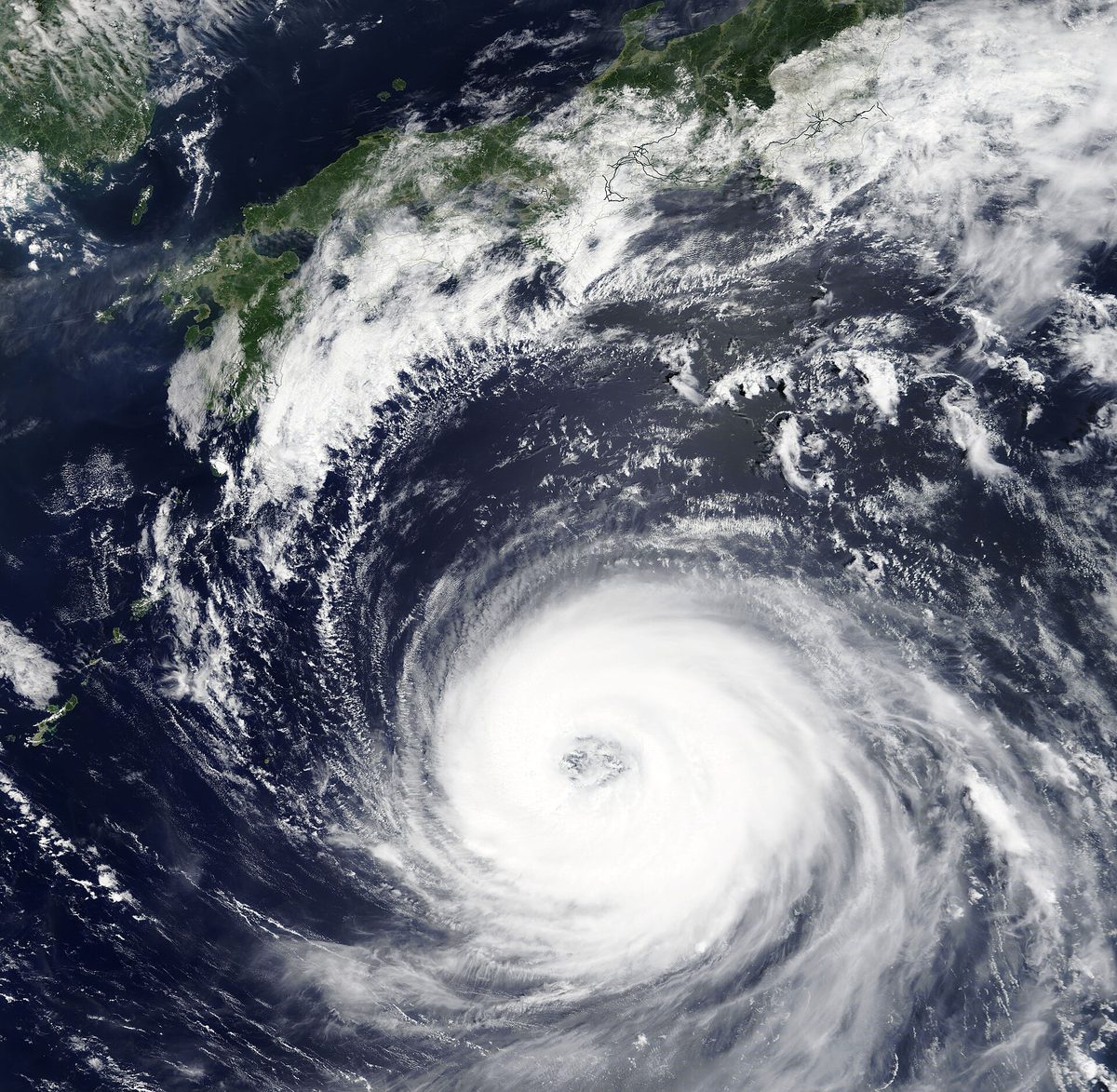
Typhoons can reach Japan from early summer to autumn, and when a strong one comes close, trains and flights may stop for a day or more. You can't control the weather, but you can know where to get alerts in your language, what the new warning levels mean, and how train and airline refunds work. This guide is based on the Japan Meteorological Agency (JMA), the Japan Tourism Agency, the Ministry of Land, Infrastructure, Transport and Tourism (MLIT) and the rail and airline companies' own rules.
This page may contain affiliate links. If you buy through them, we may earn a commission at no extra cost to you.
- When typhoons usually come close to Japan
- Free alerts in your language
- The new warning levels (since May 29, 2026)
- Planned train suspensions, refunds and flight changes
Please read this first. This page is general information (checked October 2026). In an emergency call 119 (fire and ambulance) or 110 (police), and always follow instructions from local authorities and staff.
When do typhoons come?
According to the JMA's climate statistics (1991–2020 averages), about 11.7 typhoons come close to Japan each year, and about 3.0 make landfall. August and September are the peak months. Okinawa and the Amami Islands see more close approaches than the rest of Japan.
Get alerts in your language
- Safety tips app. Supervised by the Japan Tourism Agency, this free app sends push alerts for weather warnings, earthquake early warnings, tsunami warnings and more, in 15 languages. Set the places you'll visit when you install it.
- JMA in English. The JMA's warnings map and tropical cyclone information are available in English, and its multilingual page links to other languages.
- JNTO. The Japan National Tourism Organization posts disaster updates for visitors on its "Japan Safe Travel" account on X (@JapanSafeTravel), and its Japan Visitor Hotline answers 24 hours a day in English, Chinese, Korean and Japanese at 050-3816-2787.
Reading the warning levels
On May 29, 2026, the JMA started a new system for heavy rain, river flooding, landslide and storm surge information. Each warning now carries a level number that matches Japan's five-level evacuation alerts, and a new "Level 4" warning was added. On the JMA's English map, they appear as follows.
- Level 4 is the line. The JMA asks everyone in dangerous places, such as near rivers, steep slopes or low ground by the sea, to have evacuated by Level 4. By Level 5, a disaster may already be happening.
- Wind and high waves are shown without level numbers, as an Advisory, a Warning or an Emergency Warning.
- Where to go. The JMA notes that evacuating doesn't always mean going to a shelter: moving to an upper floor of a sturdy nearby building, away from rivers and cliffs, can be the best choice. If you're in a hotel, ask the staff and follow their instructions.
Trains: planned suspensions and refunds
Before a strong typhoon, rail companies may stop trains on purpose for safety, a "planned suspension" (keikaku unkyu). MLIT has asked rail operators to give early notice in several languages, and its model timeline gives examples such as announcing a possible suspension about 48 hours ahead and the detailed plan about 24 hours ahead. After the storm, lines are checked for damage before trains restart, so services can stay suspended for a while and stations get very crowded.
For refunds, JR East's rules are a typical example:
- If your train is cancelled and you call off the trip, fares and charges are refunded in full.
- If a limited express or express train arrives 2 hours or more late, the limited express or express charge is refunded in full.
- You can ask for these refunds up to one year from the day after the cancellation or delay, at a JR ticket office or a travel agent.
- Rail passes such as the JR EAST PASS aren't extended or refunded after you start using them, and JR East doesn't pay for extra costs such as hotels caused by delays.
Other JR companies and private railways have their own rules, so check with the company you booked with.
Flights: changes and refunds
Check your airline's website for flight status and weather notices. As one example, JAL says that if an international flight is delayed or cancelled because of a typhoon or snow, you can change to any JAL flight with available seats even on a fare that normally can't be changed, or get a refund for the unused part of your ticket. Rules differ by airline and by where you bought the ticket, so check your airline's notice, and if you booked through a travel agent or booking site, contact them too.
A short checklist when a typhoon is coming
- Check the forecast and your train or flight status the evening before and the morning of travel.
- If your trip is flexible, move it a day earlier or later before tickets sell out.
- Charge your phone and a power bank, and keep some water and snacks in your room.
- Check the cancellation terms of hotels and tours you've booked.
Last reviewed: October 4, 2026. Warning names, refund rules and airline policies can change; check the official pages before you travel.
References
- Japan Meteorological Agency: Tropical cyclone climatology (normals for 1991–2020)
- Japan Meteorological Agency: New disaster prevention weather information from 2026 (Japanese)
- Japan Meteorological Agency: Weather warnings and advisories (English)
- Japan Meteorological Agency: Tropical cyclone information (English)
- Japan Meteorological Agency: Multilingual information on disaster risk reduction
- Japan Tourism Agency: Useful tools for international visitors in a disaster (Japanese)
- MLIT: Final summary on planned rail suspensions (Japanese)
- MLIT: Model timeline for information on planned suspensions (Japanese, PDF)
- JR East: Ticket Exchange and Refund Policy
- JAL: If my flight is delayed or cancelled due to a typhoon, snow, or other disasters, can I make changes or get a refund?