119, 110 and #7119: Who to Call in Japan and What to Say
Japan doesn't use 911 or 112. It has separate short numbers for the fire department and ambulances, for the police, and for advice when you aren't sure how serious something is. In a stressful moment, that difference can cost time, so it is worth spending two minutes now to learn which number does what, and the few words that get help moving fast even if you don't speak Japanese. This guide is based on the official guides of the Fire and Disaster Management Agency, the police and JNTO.
This page may contain affiliate links. If you buy through them, we may earn a commission at no extra cost to you.
- Which number to call for what
- The first words to say on 119 and 110, and what you'll be asked
- #7119 and other lines for when it might not be an emergency
- What to do if your phone can't make the call
The numbers at a glance
You dial these numbers as they are, without an area code, and from a public phone they cost nothing.
119: fire or ambulance
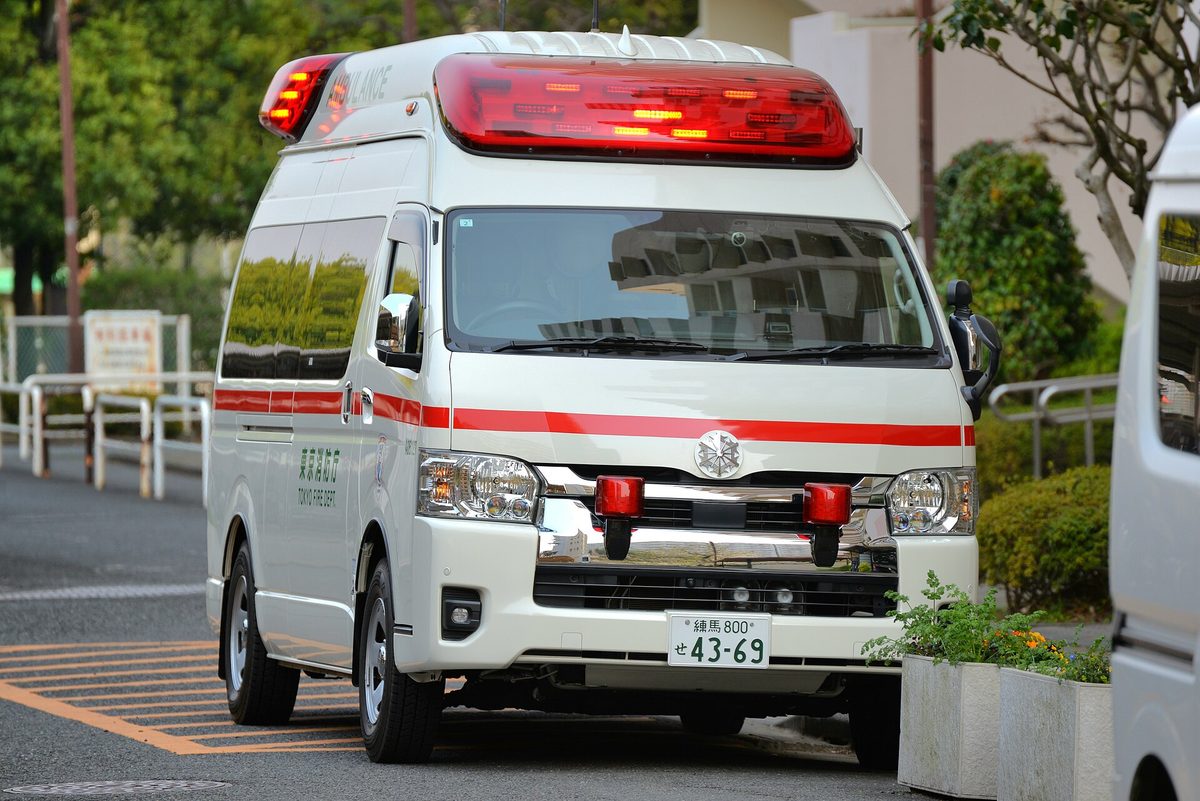
119 reaches the fire department, which runs both fire engines and ambulances. The Fire and Disaster Management Agency's guide for visitors explains how the call goes. The dispatcher's first question is always "Fire or ambulance?" (Kaji desu ka? Kyukyu desu ka?). Answer first, then the rest:
- "Kyukyu desu" (救急です, it's an ambulance) or "Kaji desu" (火事です, it's a fire).
- Where you are. If you don't know the address, describe a nearby building or intersection, such as the name of your hotel.
- What happened, who is ill or hurt, and since when.
- Their age (a rough guess is fine).
- Your name and a phone number you can be reached on after the call. The crew may call back if they can't find you.
The agency notes that in serious cases the ambulance is sent before all the questions are finished, so stay calm and answer slowly. If a Japanese speaker is nearby, ask them to help. In Tokyo (Tokyo), 119 calls can use an interpreter center for English, Chinese, Korean, Portuguese and Spanish, according to the city's fire department. Elsewhere, language support depends on the area.
What it costs. Fire departments don't charge for the ambulance ride itself, but you pay for treatment at the hospital, as the U.S. Embassy in Japan also explains. A few areas have started asking for an extra fee at some large hospitals when the call turns out not to have been urgent: in Ibaraki Prefecture, for example, this began on December 2, 2024. The prefecture stresses that this is not a charge for the ambulance and that you should not hesitate in a real emergency. Travel insurance that covers medical costs in Japan is worth having.
110: police
Call 110 for a crime or a traffic accident that needs the police right away. The Immigration Services Agency's guide lists what you'll be asked:
- When, where and what happened
- Your name and phone number
- A description of anyone involved (how many, age, clothing)
- Whether anyone is injured
The National Police Agency says police use officers who speak foreign languages and three-way calls with interpreters for callers who don't speak Japanese. Miyagi Prefectural Police, for example, ask callers to stay at the place they are calling from and to keep their phone on in case of a call back. For lost items, advice and other matters that aren't emergencies, go to a koban (police box) or call #9110, the police consultation line.
#7119: when you aren't sure it's an emergency
#7119 connects you to an emergency medical advice line, where trained staff help you decide whether you need an ambulance, should see a doctor soon, or can wait. The Fire and Disaster Management Agency lists 42 areas where it runs. They include prefectures such as Kanagawa, Okinawa, Fukuoka Prefecture and Hiroshima Prefecture, and the big cities of Tokyo (Tokyo), Kyoto (Kyoto) and Osaka (Osaka). It does not cover all of Japan: in Hokkaido, for example, it covers only the Sapporo (Hokkaido) area. Some areas offer it only at night and on weekends.
Expect #7119 to be in Japanese: the Tokyo Metropolitan Government's multilingual living guide notes that the #7119 operators in Tokyo (Tokyo) don't speak foreign languages. If you need help in English, Chinese or Korean, call the Japan Visitor Hotline at 050-3816-2787 (24 hours, 365 days), or use JNTO's medical institution search to find a clinic with staff who speak your language. If someone is unconscious, struggling to breathe, or has sudden chest pain or a severe headache, don't call an advice line first. Call 119.
If your phone can't make the call
- Public phones: you can call 110, 118 and 119 free, with no coins or card. If the phone has a red emergency button, press it and then dial. Otherwise just pick up and dial.
- Overseas phones: Tokushima City's official guide warns that a phone brought from overseas may not connect to Japan's emergency lines. If your plan is data-only, check before you travel whether it can make voice calls at all.
- Ask someone nearby. JNTO suggests showing this sentence: 救急車を呼んでください。 (Please call an ambulance.) For the police: 警察を呼んでください。 (Please call the police.) You can also ask hotel staff.
Save these before you need them
- 119 for fire and ambulance. Say "Kyukyu desu" or "Kaji desu" first.
- 110 for police. 118 for accidents at sea.
- 050-3816-2787 for help in English, Chinese or Korean, any time.
- Your hotel's name and address in Japanese, saved as a screenshot.
- Your travel insurance's emergency number.
With these on your phone, the hardest part of an emergency, knowing who to call, is already done.
Last reviewed: October 4, 2026. Services can change. Please confirm the latest information on the official pages below.
References
- Fire and Disaster Management Agency: Guide for Ambulance Services (English, PDF)
- Fire and Disaster Management Agency: Ambulance guide for foreign visitors, in several languages (Japanese page)
- Fire and Disaster Management Agency: #7119 areas (Japanese)
- Fire department of Tokyo (Tokyo): Disaster and emergency information center, multilingual 119 calls (Japanese)
- Immigration Services Agency of Japan: Emergency call (PDF)
- National Police Agency White Paper: Responding to 110 calls, including foreign languages and #9110 (Japanese)
- Miyagi Prefectural Police: English guide to 110 and #9110
- Tokyo Metropolitan Government (Life in Tokyo): List of contact numbers for immediate help
- Ibaraki Prefecture: Fees at some hospitals for non-urgent ambulance transport (Japanese)
- U.S. Embassy & Consulates in Japan: Calling for Help
- Tokushima City: 119 Multi-language Interpretation Call Service
- JNTO: Japan Visitor Hotline
- JNTO: Guide for when you are feeling ill