Ikebana: What Japanese Flower Arranging Really Is, How It Differs from Western Bouquets, and Where to Try It in Japan
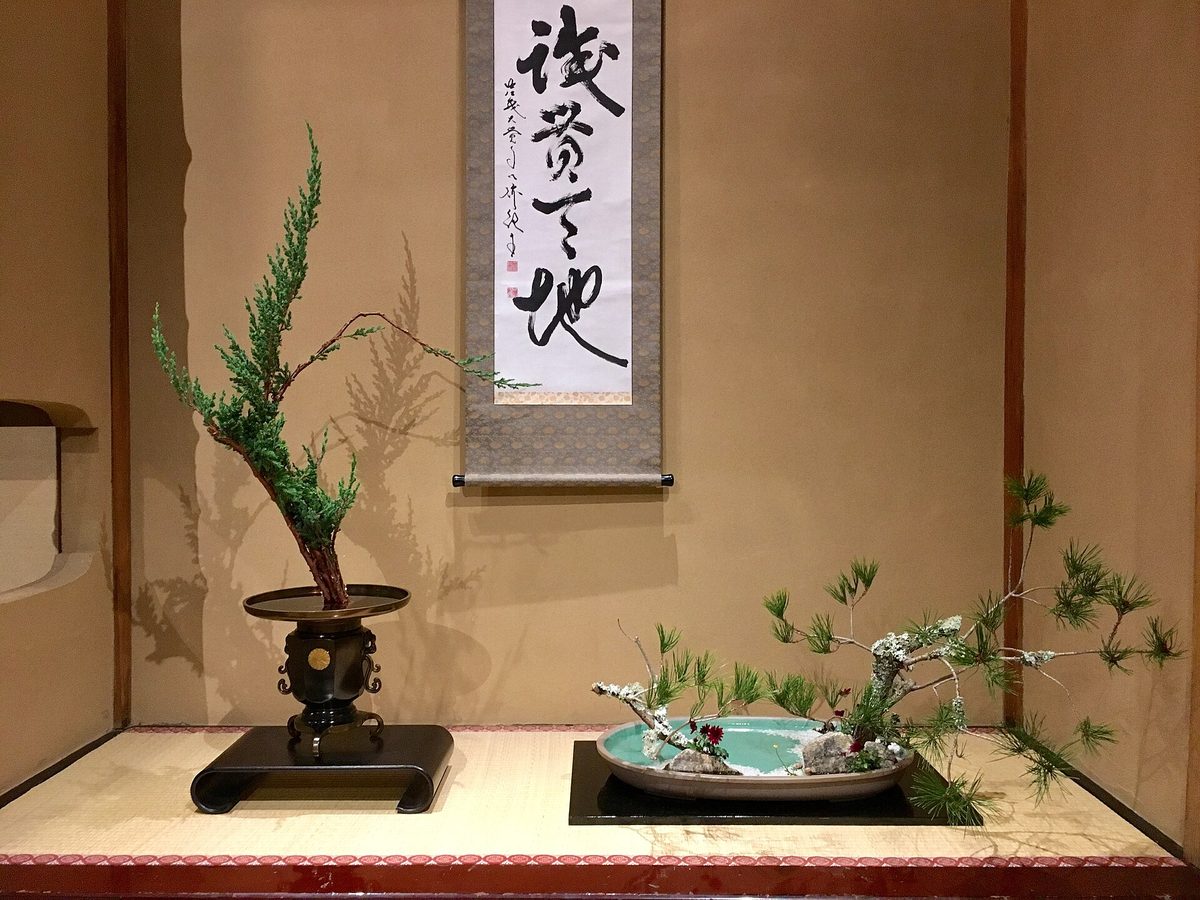
In a ryokan room, a temple hall or a hotel lobby in Japan, you may notice a single branch and a few flowers standing in a plain vessel, with a lot of empty space around them. That is ikebana, the Japanese art of arranging flowers, and it is one of the arts Japan is proudest of. It isn't simply a way of decorating with flowers: the arranger works with the plant's life, the season and the space around it. This column explains what ikebana is, where it came from, the main schools, how it differs from Western flower arranging, the tokonoma alcove where it is traditionally shown, and where visitors can see it or try it.
The short answer
- What it is: arranging cut branches, leaves and flowers so that a few stems suggest a whole landscape, a season or a feeling. The empty space is part of the work.
- Where it began: in flower offerings at Buddhist altars, and at Rokkakudo temple in Kyoto, where the Ikenobo school says ikebana began; Ikenobo first appears in a written record in 1462.
- Versus Western arranging: a Sogetsu school master writing for the Government of Japan describes Western arrangements as filling space with many flowers, and ikebana as using fewer materials and leaving generous empty space.
- Try it: the Ikenobo school runs a trial lesson for visitors in Kyoto with English or Chinese guides, and the Sogetsu school offers trial lessons in Tokyo and Kyoto, including a class held in English.
What ikebana is: arranging the life of a plant
The Ikenobo school, the oldest school of ikebana, explains that the arranger cuts plants from nature and gives them a new beauty in a new setting. The aim isn't to copy how the plant grew, but to create a new form that carries the arranger's impression and spirit. Ikenobo also values things a florist might throw away: a bud, because it holds the energy of a life moving toward the future, a branch bent by winter winds, or a leaf half eaten by insects, because they show the forces of nature.
That is why an ikebana arrangement can look very quiet: a single branch, a bud and a stretch of empty wall can carry the feeling of a season. Ikenobo sums up the idea behind it: people and plants are both part of nature.
Where ikebana came from
According to the Ikenobo school's history, offering flowers on Buddhist altars became common after Buddhism reached Japan in the 6th century. In 1462, the diary of a Zen monk at Tofukuji temple, Hekizan Nichiroku, recorded that Senkei Ikenobo, a priest at Rokkakudo temple in Kyoto, was invited by a warrior to arrange flowers, and that his arrangements were praised in the city. A later master, Senno Ikenobo, set down teachings that covered not only technique but also the thinking behind it.
Rokkakudo, formally Shiunzan Chohoji Temple, is still known as the "birthplace of ikebana," and the Ikenobo headquarters stands next to it. Ikenobo writes that over more than 550 years many other schools have branched off from it.
The main schools and styles
Ikebana is taught through schools, each with its own head (iemoto), teachers and styles. Three you'll often hear about:
- Ikenobo (Kyoto). The oldest school. Its styles include rikka, the oldest style, set in the Muromachi period, in which trees stand for mountains and grasses and flowers for water, so that a natural landscape appears in a single vase; shoka, built on three main branches called shin, soe and tai, which brings out the inner beauty of one plant; and free style (jiyuka), with no set form.
- Ohara (Tokyo). The Ohara school began in 1895. Its founder, Unshin Ohara (1861–1916), designed flat basins (suiban) and bowls for arranging Western flowers and started a new form, moribana, in which materials are "heaped" across a shallow vessel. The school describes its natural moribana as depicting natural scenery inside the vessel.
- Sogetsu (Tokyo). Sogetsu was founded in 1927 by Sofu Teshigahara, who saw ikebana as a creative art at a time when many people thought it meant following set forms. The school's own phrase is "Anytime, anywhere, by anyone," and it says its ikebana can use any material and suit any kind of space, Japanese or Western.
The Sogetsu master quoted below names shu-ha-ri as part of the Japanese spirit inside ikebana: first master the basics, then improve on them, then go beyond the form to a style of your own.
How ikebana differs from Western flower arranging
Writing in the Government of Japan's magazine Highlighting Japan (April 2026), OZONO Saihou, a first-class master of the Sogetsu school, explains the difference this way. Western flower arranging grew as a culture of flowers for gifts and decoration: space is gradually filled by adding many flowers, which also hide the foam that holds water, and the work takes shape through its outer silhouette. Ikebana puts more weight on a message or theme than on decoration, and it uses fewer materials and generous empty space to give a sense of depth. He compares it to haiku, which can hold a whole season in 17 syllables, set out as 5-7-5.
He is also clear that both cultures deserve respect, each with its own strengths. It's a difference in what each tradition is looking for, not a ranking.
The tokonoma: where ikebana is shown in a Japanese room
The traditional place for ikebana is the tokonoma, the raised display alcove of a tatami room, where flowers and art are set out for guests. Ikenobo's history traces it to the oshiita, a display board used for flower vases, and describes a small form of shoka as suited to the tokonoma of a small Japanese room.
If your ryokan room has a tokonoma, enjoy the flowers from the room. Aichi Now, Aichi Prefecture's official travel guide, explains that the alcove is decorated with flowers and art for guests to enjoy, that it isn't a place to relax, that people don't go into it or sit in it, and that luggage shouldn't be put there. For the rest of tatami-room manners, see why you take your shoes off so often in Japan.
Where to see ikebana and try it
- Rokkakudo and the Ikenobo headquarters (Kyoto). The temple is near Karasuma Oike Station on the Kyoto City Subway. The Ikenobo FAQ says visitors to the headquarters are welcome if they let the school know in advance, that staff can guide visitors through its Ikebana History Museum, and that the Spring Student Exhibition is held there every April.
- Ikenobo trial lesson for visitors (Kyoto). The lesson page says guides for the temple tour and the lesson are available in English or Chinese, that you meet at the front gate of Rokkakudo, and that you book by email.
- Sogetsu trial lessons (Tokyo and Kyoto). The trial lesson page says lessons are open to anyone with no previous Sogetsu experience, take place within a regular class at the Sogetsu Kaikan in Akasaka (Tokyo) or at Sogetsu WEST in Kyoto, include an International Class held in English in Tokyo, and need booking at least five days ahead, not counting weekends and national holidays.
- In everyday places. You'll also meet arrangements in ryokan alcoves, temple halls and hotel lobbies. They change with the season, so it's worth a slow look.
Days, times and fees change, so please check each school's official page before you go. If you enjoy ikebana, a tea ceremony is another quiet art to try: see where to try a tea ceremony. For another art that puts a landscape in a pot, see bonsai.
A few things to keep in mind
- Book ahead. Both Ikenobo and Sogetsu ask you to book trial lessons in advance, and Sogetsu notes that a class can be full because each class has a limit on visitors.
- Sogetsu trial lessons are part of a regular class. Its page notes that staff may need to put regular students first, so support for visitors can be limited.
- Leave the tokonoma alone. In a ryokan or a home, look at the flowers, but don't step into the alcove or set your bag there.
Last reviewed: October 18, 2026. Lesson details and exhibition dates can change. Please check the official sites before you go.
References
- Ikenobo: About Ikenobo (English)
- Ikenobo: History of ikebana (English)
- Ikenobo: Arranging styles (English)
- Ikenobo: Ikenobo and the Rokkakudo Temple (English)
- Ikenobo: FAQ (English)
- Ikenobo: Trial lesson for visitors (English)
- Ohara School of Ikebana: About the Ohara school (Japanese)
- Sogetsu Foundation: About Sogetsu (English)
- Sogetsu Foundation: Ikebana trial lesson (English)
- Government of Japan, Highlighting Japan (April 2026): The Japanese Spirit Within Ikebana (English)
- Aichi Now (Aichi Prefecture's official travel guide): Etiquette for an enjoyable stay at a ryokan (English)