Valentine's Day in Japan: Why Women Give Chocolate, and How White Day on March 14 Began
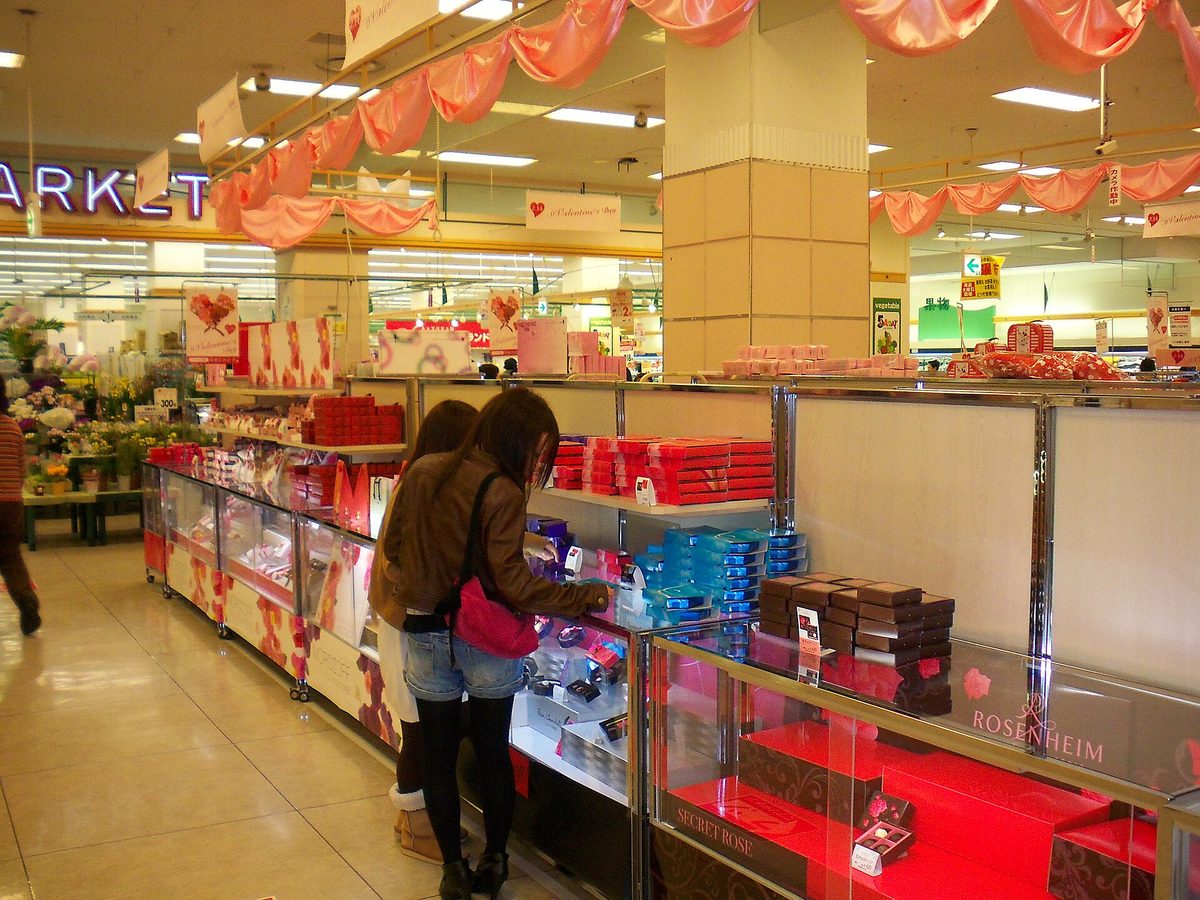
If you're in Japan in early February, you'll see chocolate everywhere: special counters in department stores, displays in supermarkets and big chocolate fairs with lines of shoppers. And the gift has traditionally gone one way. In Japan, Valentine's Day (February 14) has long been the day when women give chocolate to men. A month later comes White Day (March 14), when the people who received chocolate give something back. This column explains how that unusual pattern started, how it has changed, how it compares with other countries, and what it means for you if you visit in February or March.
The short answer
- Our take: Japan's Valentine's Day grew out of the sales campaigns of chocolate makers and department stores, which spread until it became a national event.
- Who started it: the stories differ. Morozoff says it introduced Valentine's chocolate in Japan in 1932; Mary Chocolate says it held Japan's first Valentine's sale, at a Tokyo department store, in 1958.
- Why women give to men: Mary Chocolate's early catchphrase called it the one day a year when a woman could confess her love to a man.
- White Day: a return-gift day that began in Japan between 1978 and 1980, credited to a confectioner in Fukuoka and, according to news reports, to the candy industry.
- Today: chocolate also goes to family, coworkers and friends, and since the 2000s, many people buy fine chocolate for themselves.
Who brought Valentine's chocolate to Japan? The stories differ
More than one company says it came first, and their stories don't fully match, so it helps to read them side by side. Here is how each company explains its own part on its official website.
- Morozoff: the company started in August 1931 as a chocolate shop on Tor Road in Kobe (Hyogo). It says that in 1932 it became the first in Japan to introduce the idea of giving chocolate on Valentine's Day, after its founder heard from an American friend that people in the West give gifts to the ones they love on February 14. Morozoff also says it has found a Valentine's chocolate advertisement it placed in the English-language newspaper The Japan Advertiser on February 13, 1935, and that it ran Valentine's ads every year until February 1940, with the message: give chocolate to the one you love.
- Mary Chocolate: the company says it held Japan's first Valentine's fair at a department store in Tokyo from February 12 to 14, 1958. The idea came from a postcard an employee received from a friend in Paris, saying that people there give flowers, cards and chocolate on February 14. Hardly anyone in Japan knew about Valentine's Day yet: the company says it sold just three 50-yen chocolate bars and one 20-yen message card, 170 yen in total.
- Other makers: some accounts also credit other large confectioners, such as Morinaga, with spreading the custom. We couldn't find an official account from Morinaga itself, so we don't go into details here.
The two main stories describe different things. Morozoff's is about the first Valentine's chocolates and its ads in an English-language newspaper in the 1930s. Mary Chocolate's is about a department-store sale that, from the late 1950s, spoke directly to women. According to Mary Chocolate, large makers joined in during the 1970s, and that is when the custom really took off.
Why women give chocolate to men
In Europe and the United States, Valentine's gifts can go from anyone to anyone. Japan's version took a clearer shape. Mary Chocolate says that in 1959 it sold heart-shaped chocolates on which the buyer could write "to" and "from" with the names of the giver and the receiver. Around then, many new weekly magazines for women were being launched, and the company's catchphrase, a day when a woman can confess her love to a man once a year, caught on. Its brand page gives the 1958 catchphrase as "Once a year, a confession of love from a woman to a man!"
That is the core of our view: the custom didn't grow by itself. Chocolate makers and department stores gave it a simple shape (who gives, what to give and on which day) and promoted it every February until the whole country took part.
Honmei, giri, tomo and "my" chocolate: how the custom changed
Mary Chocolate describes the changes decade by decade:
- 1960s: chocolate handed over shyly, as a confession of first love.
- 1970s: chocolate as a sign of love between couples, as large makers joined in.
- 1980s: women started giving chocolate to fathers and brothers, and then to bosses and school friends. This was the start of giri-choco ("obligation chocolate"), a small gift for people you aren't in love with.
- 1990s: chocolate to say thank you or to show friendship.
- 2000s: "my-self Valentine", fine chocolate bought as a reward for yourself.
Japanese has a word for each kind. Honmei-choco ("true-feelings chocolate") is for the person you love, giri-choco is for coworkers and people you know, tomo-choco ("friend chocolate") is swapped between friends, and chocolate for yourself is often called a reward for yourself (gohobi). Surveys now ask about all of these. In Cross Marketing's survey for 2026, for example, people planned to spend 2,243 yen on average on chocolate for themselves, 2,829 yen on honmei-choco and 1,090 yen on giri-choco.
White Day: a return-gift day made in Japan
White Day (March 14), one month after Valentine's Day, is the day to give something back to the people who gave you chocolate. It began in Japan, and as with Valentine's chocolate, more than one story is told about who started it.
- Ishimura Manseido: this Fukuoka confectioner's official company profile says that in 1978 it started a "Marshmallow Day" campaign, which later became White Day. The company calls itself the birthplace of White Day.
- The candy industry: news reports say that the National Candy Industry Cooperative, an association of candy makers, set up White Day as a day to give candy in return. One report says the decision was made in June 1978 and that the first White Day was held in 1980. We couldn't find an official page from the cooperative itself.
Either way, it follows the same pattern as February: confectioners gave the day a name, a date and a product, and the custom spread from there.
How the return gift works
There is no fixed rule, but the idea is simple: if you received chocolate on Valentine's Day, you give a small gift back on White Day. Sweets are the classic choice, since the day itself was created by confectioners. As a visitor, you don't have to follow any of this. But if a Japanese friend or coworker gives you chocolate in February, a small box of sweets on March 14 is a kind way to say thank you, even if you send it from home.
Japan and other countries compared
In the United States, the National Retail Federation (NRF) asked shoppers about Valentine's Day 2026 (published January 27, 2026): 55% planned to celebrate. Of those, 83% planned to buy for a partner, 58% for other family members, 33% for friends, 35% for pets, 27% for children's classmates and teachers, and 21% for coworkers. The most popular gifts were candy (56%), flowers (41%), greeting cards (41%), an evening out (39%) and jewelry (25%).
| Japan | United States | |
|---|---|---|
| Who gives | Traditionally women to men; now also to family, friends and yourself | Anyone; most often to a partner |
| Typical gift | Chocolate | Candy, flowers, cards or an evening out |
| Return day | White Day, March 14 | No separate return day |
So the surprise for many visitors isn't the chocolate itself. It's that the gift has a direction, and that there's a second day in March to answer it.
If you're in Japan in February or March
- Department-store chocolate fairs: the biggest Valentine's events are held in department stores, with brands from Japan and abroad. In 2026, Isetan's store in Shinjuku, Tokyo, held its Salon du Chocolat on the 6th floor of its main building, in parts between January 15 and February 15, with 153 brands. Hankyu's main store in Umeda, Osaka, held its Valentine Chocolate Expo from January 21 to February 14, with about 350 brands and about 3,000 kinds of chocolate.
- Dates for next year: Mitsukoshi Isetan says the in-store dates for Salon du Chocolat 2027 will be published at 10 a.m. on October 24, 2026. Check the official pages before you plan your visit.
- Crowds: these fairs are popular, and some days or hours can be set aside for the store's own card members. In 2026, for example, January 24 and 25 were special invitation days for Mitsukoshi Isetan's card members. Check the official page for any limits on the day you want to go.
- Limited editions: some makers sell products only for the Valentine's season. Mary Chocolate's company history, for example, notes a Valentine's-only brand that became a hit in 2021. If you see something you like, buy it then, since seasonal items may not come back after February 14.
- In Kobe and Fukuoka: next to Hanshin Mikage Station in Kobe (Hyogo), a Valentine Plaza with a monument was completed in May 2013, and Morozoff redesigned the bus stop beside it with a chocolate theme. In Fukuoka, Ishimura Manseido, which calls itself the birthplace of White Day, still makes marshmallows.
- Shopping tips: big department stores usually offer tax-free shopping for visitors, and the system changes on November 1, 2026. See how the new tax refund works. For gift ideas to take home, see souvenirs from Japan, and for what else happens in each season, see the best time to visit Japan, month by month.
Last reviewed: October 18, 2026. Dates of chocolate fairs change every year; please check the official pages below before you go.
References
- Morozoff (official): Valentine's Day and Morozoff (Japanese)
- Morozoff (official): Company history (Japanese)
- Mary Chocolate (official): Mary's Valentine history (Japanese)
- Mary Chocolate (official): Brand story (Japanese)
- Mary Chocolate (official): Company history (Japanese)
- Ishimura Manseido (official): Company profile (Japanese)
- INTERNET Watch (Impress): article on the origin of White Day (Japanese, March 8, 2001)
- Mynavi News: article on the origin of White Day (Japanese, March 4, 2022)
- Cross Marketing: Valentine's Day survey 2026 (Japanese, January 21, 2026)
- National Retail Federation: Valentine's Day spending expected to reach new records (January 27, 2026)
- Mitsukoshi Isetan (official): Salon du Chocolat 2027 in-store dates (Japanese)
- FASHIONSNAP: Salon du Chocolat 2026 at Isetan in Shinjuku, Tokyo (Japanese, December 12, 2025)
- Hankyu Department Store (official): Valentine Chocolate Expo (Japanese)
- WWDJAPAN: Valentine Chocolate Expo 2026 at Hankyu's main store in Umeda, Osaka (Japanese)