Halloween Costumes Are New in Japan: Otsukimi Dorobo, the Older Custom Where Kids Take the Moon-Viewing Sweets
If you're in Japan in October, you'll see pumpkins in shop windows, costumes at theme parks and Halloween sweets at convenience stores. It can look like an old tradition, but dressing up for Halloween spread in Japan only in the last few decades. Long before that, many villages had their own night when children were allowed to take treats from their neighbors: otsukimi dorobo, the "moon-viewing thief." This column explains both, how they compare, and what to know if you're in Japan at the end of October.
This page may contain affiliate links. If you buy through them, we may earn a commission at no extra cost to you.
The short answer
- Halloween dress-up is recent in Japan. A toy shop's parade in Harajuku (Tokyo) dates back to 1983, the Kawasaki (Kanagawa) Halloween parade began in 1997, and Universal Studios Japan has held Halloween Horror Nights since 2011.
- The older custom is otsukimi dorobo. On the night of the harvest moon in autumn, children were allowed to quietly take the dumplings and taro offered to the moon, and having your offerings taken was thought to bring good luck.
- It still goes on in some areas, mostly as children going from house to house for sweets. It was never done everywhere in Japan.
- At the end of October, Shibuya (Tokyo) bans street drinking at night and asks people to drop "bad Halloween" behavior; theme parks have their own costume rules.
What is otsukimi dorobo?
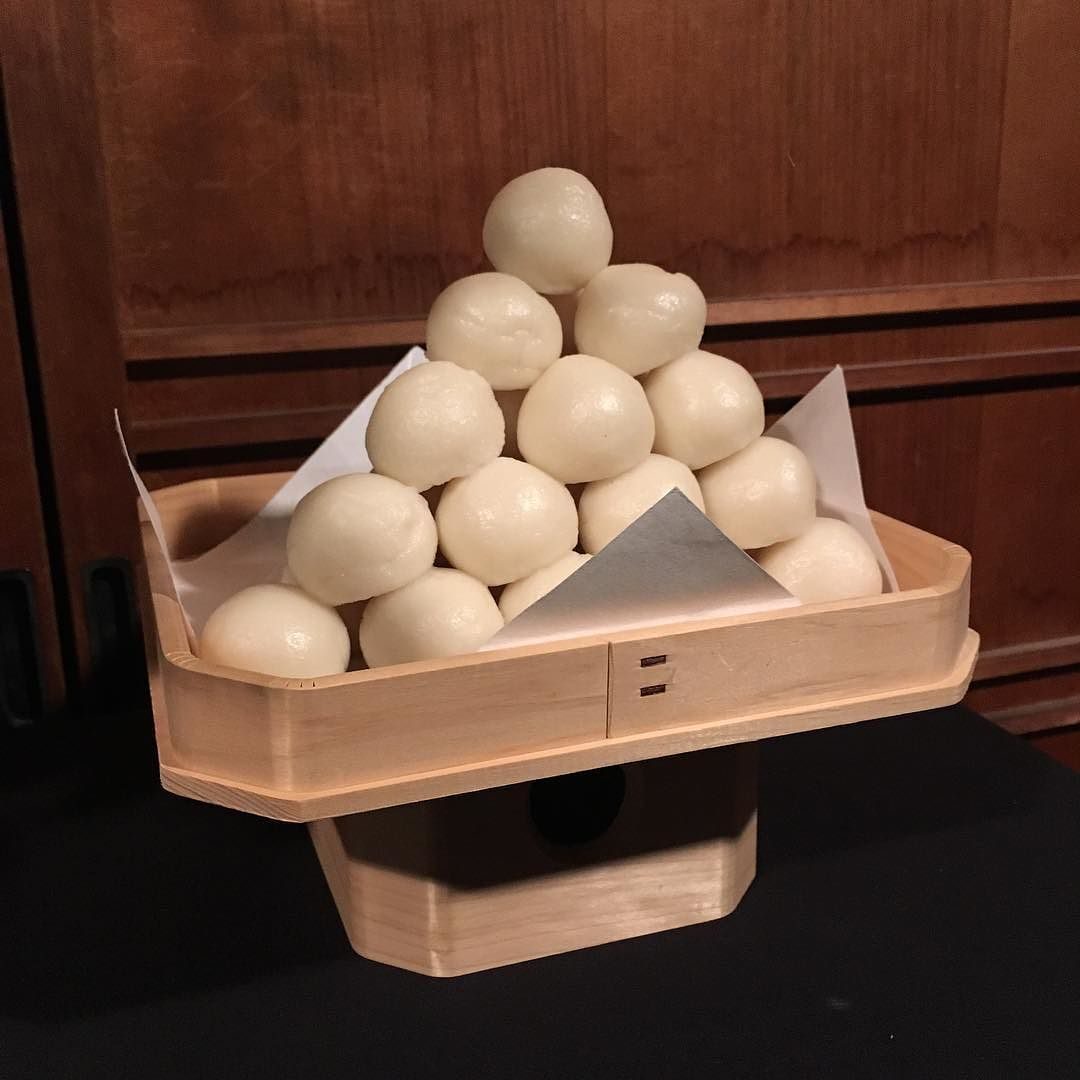
Otsukimi means moon viewing. The main night is jugoya (the "fifteenth night"), the harvest moon on the 15th day of the 8th month of the old lunar calendar. It moves on the modern calendar: the National Astronomical Observatory of Japan says it fell on September 25 in 2026. Families set out round rice dumplings called tsukimi dango, pampas grass and freshly dug taro (satoimo) for the moon.
Dorobo means thief. A report by the Yokkaichi City Museum in Yokkaichi (Mie) explains that on this one night, children were allowed to "steal" the moon-viewing dango. Where dango were precious, taro was offered instead, and children went round the neighborhood with friends, spearing one piece per person at each house with chopsticks. A Kyoto Prefecture food-education sheet describes the same idea: if a child could eat the dango without being seen, "something good will happen," so on that night every house was open, and families put the dango on the veranda where children could reach them.
Why would anyone want their offerings taken? The Yokkaichi museum lists the explanations passed down:
- Children were seen as messengers from the moon, and taking the offerings brought happiness to the house.
- If children took crops on that night, there would be a good harvest.
- In times when food was scarce, it showed a spirit of sharing and caring for the neighborhood's children.
Where it has been done
Otsukimi dorobo is a local custom, and its name changes from place to place. These are the areas we could confirm in public sources:
- Aichi. A public library in Nagoya (Aichi) quotes the prefecture's official history: the eastern Owari area had a custom of children "stealing dango" on the harvest moon, and some districts still continue it as children going round for sweets. The city's own history of Nagoya (Aichi) adds that it was once done across much of the city, disappeared in many places some time after the war, and that children in areas such as Midori Ward now go round for sweets. In September, supermarkets there even set up "otsukimi dorobo" sweets corners.
- Mie. The Yokkaichi City Museum calls Yokkaichi one of the few places where the custom still survives. Nearby towns use other names, such as imo-nusumi ("taro stealing") in Asahi and imo-pakuri in Toin, both in Mie.
- Ibaraki and Osaka. The same report records the name dango-dorobo in Kamisu (Ibaraki) and dango-tsuki ("dango poking") in Kishiwada (Osaka).
- Chiba. The town of Tako (Chiba) brought it back in 2012 as a modern event, with children walking the shopping street and receiving gifts when they say a password, according to the town's newsletter.
The custom has changed over time. In Yokkaichi, the museum says it stopped after the war because of food shortages, came back in the 1960s, and from around the 1980s turned into an event where people leave sweets at the front door or gate for children to collect. Many neighborhoods no longer do it, and the museum notes that fewer children has meant fewer areas still taking part.
My visit
Where I live, the custom is still going. Children press the intercom and say, "Otsukimi dorobo desu" ("It's the moon-viewing thief"), and they're given sweets. So in my area it's no longer about sneaking off with the offerings: you ring the bell, say the words, and get your treat.
Otsukimi dorobo and Halloween compared
The two have a lot in common. In both, children go round the neighborhood and come home with sweets, and the grown-ups are glad to give them. That's why Japanese local newsletters and libraries sometimes call otsukimi dorobo a "Japanese Halloween."
There are differences too. Otsukimi dorobo follows the moon, so it falls in September or early October, and it grew out of thanks for the autumn harvest. In the old form, the fun was taking the offerings without being noticed. Halloween in Japan is always on October 31, and what most visitors see is the costumes and events.
How Halloween costumes spread in Japan
- 1983, Harajuku (Tokyo). The toy shop Kiddy Land says that in October 1983 its store in Harajuku (Tokyo) organized a Halloween parade as a sales event and invited customers to join. It calls 1983 the start because that is its oldest surviving record.
- 1997, Kawasaki (Kanagawa). Kawasaki City says the first Kawasaki Halloween was held in 1997. By its 20th year in 2016, about 2,500 people took part in the costume parade.
- 2011, Osaka. Universal Studios Japan has held Halloween Horror Nights, with zombies on the park streets at night, since 2011.
- Shibuya (Tokyo). Crowds in costume came to gather around Shibuya Station on Halloween night, even though no event is held there. Shibuya City (Tokyo) made an ordinance in June 2019 that banned street drinking at Halloween and the New Year countdown. In 2023 the mayor asked people not to come to the area for Halloween, under the line "Shibuya (Tokyo) is not a Halloween event venue." Since October 1, 2024, the night-time ban has applied all year.
If you're in Japan at the end of October
Otsukimi dorobo will already be over. It takes place on the harvest-moon night in September or early October, and it's a neighborhood event for local children rather than something for visitors. What you're more likely to meet at the end of October is Halloween.
Shibuya (Tokyo). Around Shibuya Station, drinking on the street and in parks is banned every night from 6 p.m. to 5 a.m., all year. At a press conference on September 30, 2026, Shibuya City (Tokyo) announced its Halloween message for this year, "GOODBYE BAD HALLOWEEN": no street drinking, no smoking, no littering and no blocking the way, and enjoy Halloween at local and venue events while following the rules. The ward is also sending these messages in English, Chinese and Korean. For the full rules, including the 2,000 yen littering fine, see our guide to the street-drinking rules in Shibuya (Tokyo).
Tokyo Disney Resort in Urayasu (Chiba). Guests aged 12 and over are asked not to wear costumes, except during the set period of the Disney Halloween event. Check the resort's costume page for this year's dates before you pack one. Tickets are for a fixed date and park, so see our Tokyo Disney Resort guide first.
Universal Studios Japan in Osaka. Its autumn event runs September 10 to November 8, 2026, and Halloween Horror Nights runs from September 11 to November 8, 2026. During the day, you can say "Trick or treat!" to crew members to get candy, from park opening until 17:00 (not in Super Nintendo World or The Wizarding World of Harry Potter). Costumes are allowed within the park's rules, but masks that hide more than half of your face, full-face makeup and helmets are not, and zombie or ghost costumes can't go into Universal Wonderland, Minion Park or the areas near them. The park says Halloween Horror Nights is not recommended for children aged 5 or under. If you'll be there, our USJ Express Pass guide explains how to cut the lines.
For more on what's on in autumn, see our month-by-month guide to Japan.
Last reviewed: October 18, 2026. Local customs differ from area to area, and event rules change every year. Please check the official pages before you go.
References
- Yokkaichi City Museum: Otsukimi dorobo survey report, March 30, 2023 (Japanese, PDF)
- Yokkaichi City: Public newsletter, September 2018, museum column on moon viewing (Japanese, PDF)
- Library of Nagoya (Aichi), Tokushige branch: Local information sheet on otsukimi dorobo (Japanese, PDF)
- Kyoto Prefecture, Kyoto food-education network: Otsukimi zoni recipe sheet (Japanese, PDF)
- Tako Town (Chiba) newsletter, September 2016, as reprinted by Seijiyama (Japanese)
- National Astronomical Observatory of Japan: The harvest moon, September 2026 (Japanese)
- National Astronomical Observatory of Japan, Calendar Office: What is the harvest moon? (Japanese)
- Kiddy Land press release: Kiddy Land Harajuku (Tokyo) store Halloween 2019, October 18, 2019 (Japanese)
- Kawasaki City: Mayor's press material on Kawasaki Halloween 2016, October 17, 2016 (Japanese, PDF)
- Universal Studios Japan: Autumn 2026 events and the 15th year of Halloween Horror Nights, July 9, 2026 (Japanese)
- Universal Studios Japan: Costume information and other notes on Universal Extreme Autumn (English)
- Tokyo Disney Resort FAQ: Wearing a costume (English)
- Shibuya City (Tokyo): Revised Shibuya Station area safety ordinance, from October 2024 (Japanese)
- Shibuya City (Tokyo): Request not to visit the station area for Halloween, October 11, 2023 (Japanese)
- Shibuya City (Tokyo): Photo diary, September 2026, Halloween press conference (Japanese)