Is DAISO Tax-Free in Japan? DAISO, Seria and 3COINS from November 2026
Quick answer
- Tax-free is decided shop by shop, so some DAISO, Seria or 3COINS branches may be tax-free and others are not. Check the branch before you pay.
- Look for the "Japan. Tax-free Shop" sign, check the mall's tax-free page, or ask "Menzei dekimasu ka?" and show your passport.
- You need 5,000 yen or more before tax at one store on one day (about 50 items at 100 yen). Since November 1, 2026, you pay the full price and get the tax back after customs.
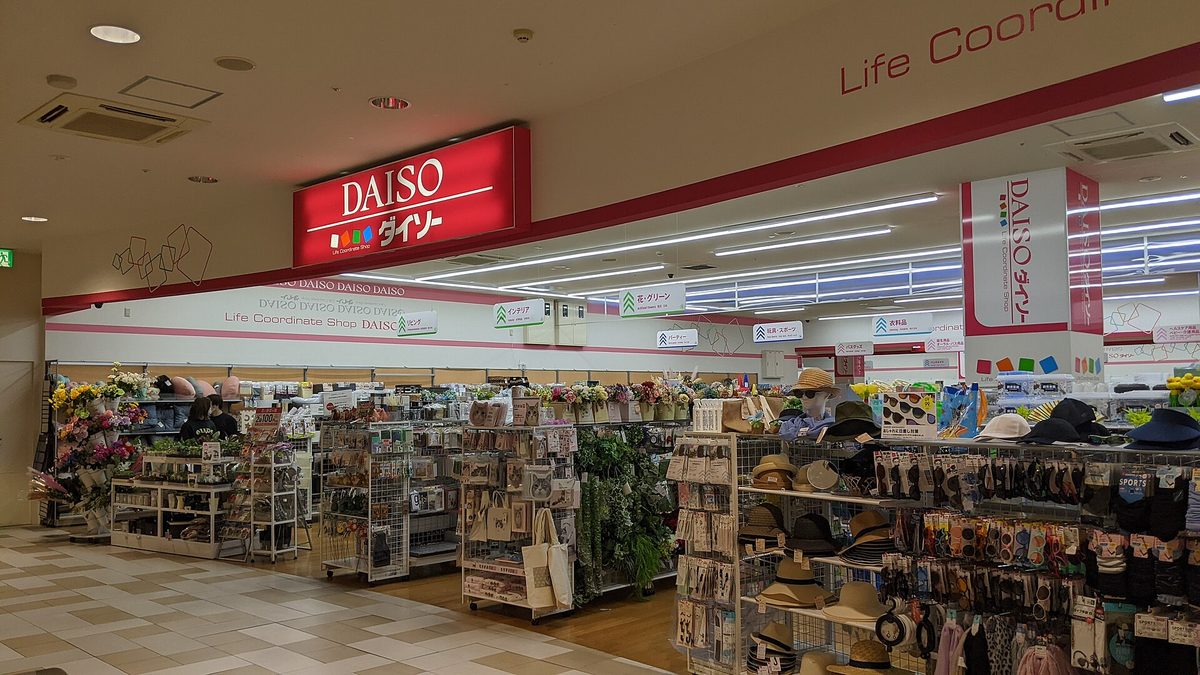
Tax-free shopping in Japan works shop by shop, not chain by chain. Some DAISO, Seria or 3COINS branches may be tax-free, but the branches checked for this guide were not, and DAISO's official store finder has no tax-free filter. If a branch is tax-free, you need 5,000 yen or more (before tax) at that store on the same day, which is about 50 items at 100 yen. Since November 1, 2026, you pay the full price and get the tax back after customs checks your goods when you leave Japan.
- Why "Is DAISO tax-free?" has no single yes or no
- 3 quick ways to check a branch before you fill your basket
- What 5,000 yen means at a 100-yen shop and at 3COINS
- What changed on November 1, 2026, and the snack rule that cancels a refund
The short answer: it depends on the branch
Japan's tax-free system gives permission to each store, not to a company. The Japan Tourism Agency explains that a business first needs permission from the tax office for each store. So two DAISO shops in the same city can give you different answers. Here is what the official pages showed when this guide checked them on November 10, 2026:
| Chain | What the official pages show |
|---|---|
| DAISO | The official store finder filters by credit card, e-money, barcode payment and opening hours, but not by tax-free. The store pages checked list payment methods only. |
| Seria | The mall page for the Seria shop in P'PARCO, Ikebukuro (Tokyo) marks the shop as not tax-free. |
| Can★Do | The mall page for Can★Do Urawa PARCO (Saitama) marks the shop as not tax-free. |
| 3COINS | LaLaport Fukuoka lists 3coins+plus among the shops its tax-free counter handles (information as of November 1, 2026). Tokyo Dome City also lists 3COINS+plus at LaQua on its tax-free page. |
These are single branches, not rules for a whole chain. Use them as a reason to check the shop you are standing in, not as a list to plan around.
How to check a branch in under a minute
Check the branch itself before you fill your basket. The first thing to look for is a tax-free sign at the entrance or the register.
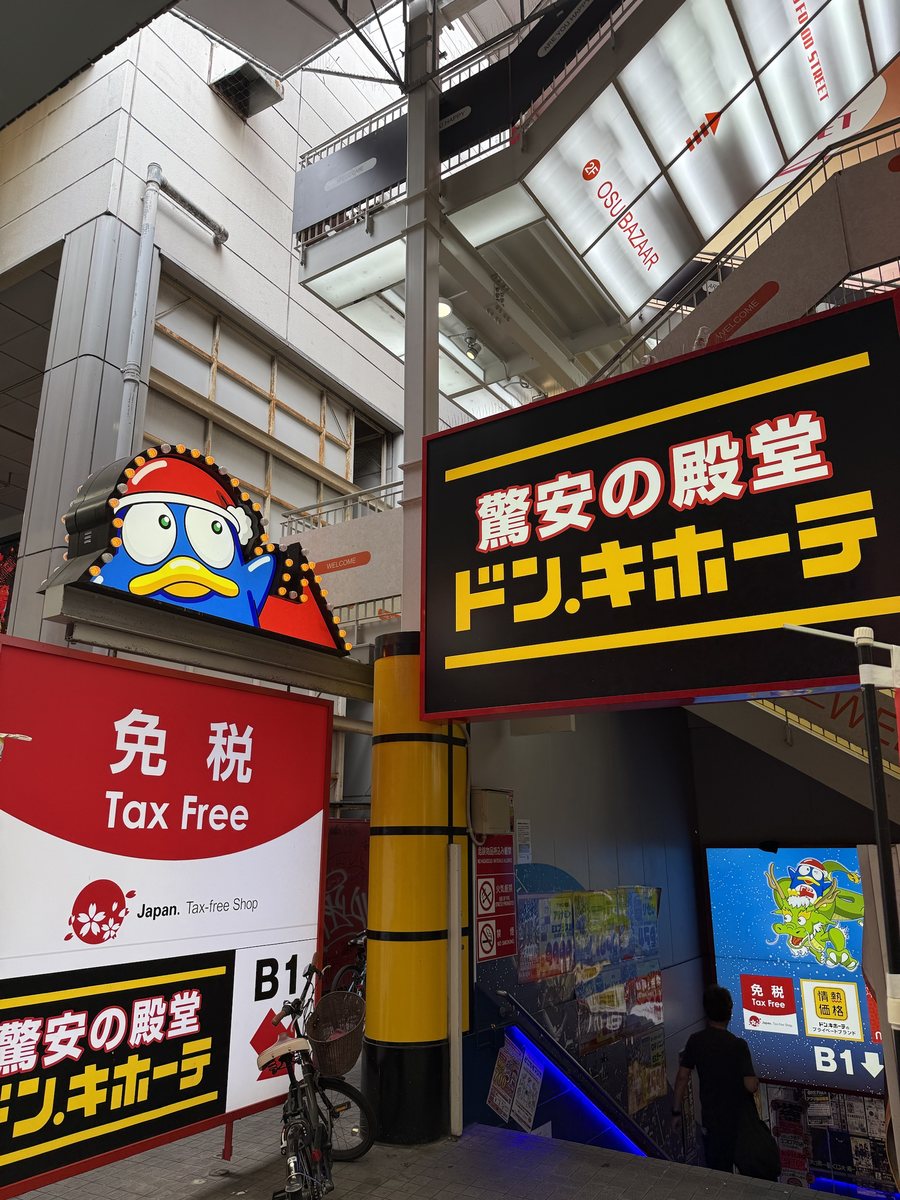
1. Look for the sign. The Japan Tourism Agency runs a tax-free shop symbol mark that reads "Japan. Tax-free Shop". Only shops with tax-free permission can apply to use it, and the agency says it is there so foreign travelers can spot tax-free shops. No sign doesn't always mean no, so go on to the next checks.
2. Check the mall. Many 100-yen shops and 3COINS stores sit inside shopping malls. Large malls often publish a tax-free page that lists their tax-free shops, and the mall's own shop page may say "tax-free: not available" (免税 対象外) for a branch.
3. Ask at the register, before you pay. Say "Menzei dekimasu ka?" (Can I shop tax-free?) and show your passport. Ask before the staff scan your items, because the tax-free steps are done at the time of the sale.
One more reason to check today, not from an old blog post: the National Tax Agency says tax-free shops that had not switched to the electronic system by October 31, 2026 lost their tax-free permission on that date. A branch that was tax-free last year may not be now.
What 5,000 yen means at a 100-yen shop
The Japan Tourism Agency sets the minimum as purchases totaling 5,000 yen or more (excluding tax) per day at the same store. At a 100-yen shop, that is a big basket.
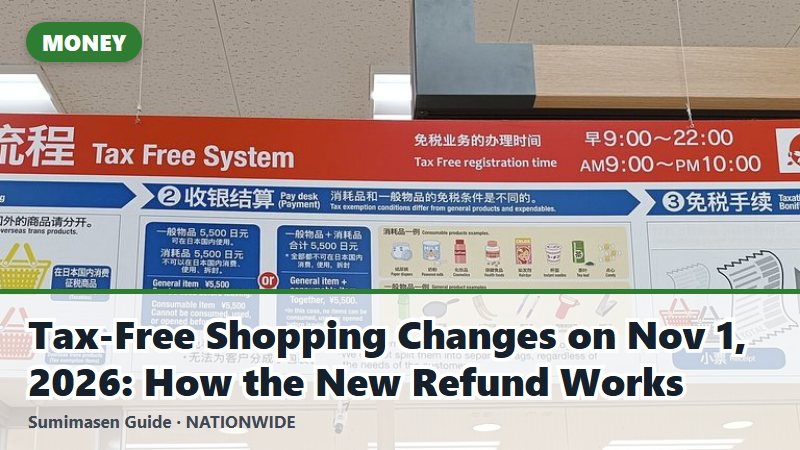
Since November 1, 2026, food, drinks, cosmetics and everyday goods count together toward that 5,000 yen. The National Tax Agency leaflet says the split between "general goods" and "consumables" was abolished, along with the 500,000-yen cap on consumables and the special sealed packaging. Before that date, you needed 5,000 yen in each group.
In a mall, the amount may add up across shops. The Japan Tourism Agency notes that when tax-free shops hand their procedures to a shared tax-free counter, purchases you make at several of those shops on the same day can be combined at the counter to reach 5,000 yen. This only covers the shops on that counter's list, so ask at the counter first.
What changed on November 1, 2026
The National Tax Agency confirms that the refund method started on November 1, 2026. You pay the tax-inclusive price at the register, and the tax comes back after customs confirms at the airport or seaport that you are taking the goods out of Japan. You must do that customs step within 90 days of the purchase. How and when the money comes back differs by shop, so ask at the register.
The rule that hurts most at a 100-yen shop: customs checks one receipt at a time. If you no longer have even one item from a receipt, none of the items on that receipt can be confirmed. If you plan to open a snack or use a lotion during your trip, pay for it on a separate receipt from the gifts you are taking home.
The full airport steps, including why you must do the kiosk before checking your bags, are in how the new tax-free refund works.
No price on the item? How much DAISO things cost
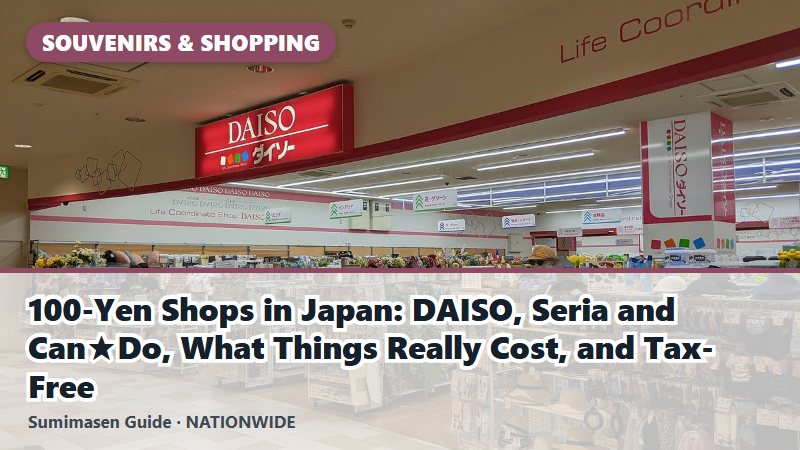
Most DAISO, Seria and Can★Do items are 100 yen before tax, so you pay 110 yen at the register (108 yen for food and non-alcoholic drinks). But not everything is 100 yen: DAISO's THREEPPY and Standard Products lines center on 300 yen. If you can't find a price, ask "Kore wa ikura desu ka?" (How much is this?), or check the amount on the register screen before you pay. Prices, store types and payment methods are in our 100-yen shops in Japan guide.
Keep the receipt
You need the receipt for the tax-free refund, and DAISO's store policy also asks for it for returns: bring the receipt to the store where you bought the item within 14 days. Food, pet food, name seals, opened items and special orders can't be returned. DAISO also says it can't split, combine or reissue receipts, so keep the original safe.
Your 100-yen shop checklist
- Carry your passport (the original) when you shop.
- Before you fill the basket, look for the "Japan. Tax-free Shop" sign or ask "Menzei dekimasu ka?"
- Count before tax: 5,000 yen at one store on one day (about 50 items at 100 yen).
- In a mall, ask the tax-free counter whether purchases from several shops can be combined.
- Put things you will use in Japan on a separate receipt.
- Keep every receipt and every item with you until the customs check at departure.
Last reviewed: November 10, 2026. Tax-free status can change by branch. Please check the shop and the official pages below before you buy.
References
- Japan Tourism Agency: Special page for travelers (English) — Refund Method
- Japan Tourism Agency: Frequently Asked Questions for Travelers (Refund Method)
- Japan Tourism Agency: About the tax-free shop system (Japanese)
- Japan Tourism Agency: Tax-free shop symbol mark (Japanese)
- National Tax Agency: Review of the tax-free shop system (Refund Method) (Japanese)
- National Tax Agency: Shift to the Refund Method (Japanese, PDF, April 2025)
- Daiso Industries: Store finder (Japanese)
- Daiso Industries: Store policy (Japanese and English)
- PARCO, Ikebukuro (Tokyo): Seria shop page (Japanese)
- Urawa PARCO (Saitama): Can★Do shop page (Japanese)
- LaLaport Fukuoka: Tax-free shops (Japanese)
- Tokyo Dome City: Tax-free shopping (Japanese)