Eating While Walking in Kyoto (Kyoto): Nishiki Market and Busy Streets
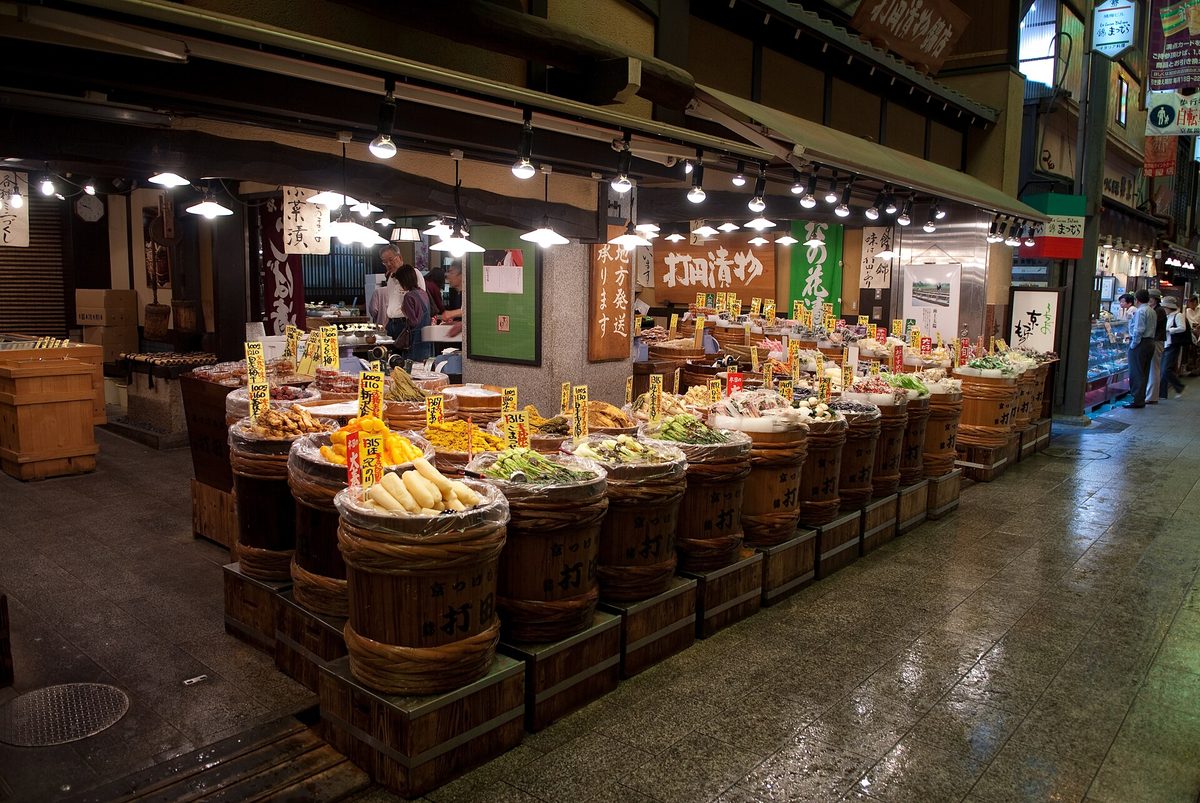
Nishiki Market is Kyoto (Kyoto)'s famous food street: a covered shopping street of about 390 meters along Nishikikoji-dori, with more than 130 shops selling fish, pickles, tofu, sweets, knives and ready-to-eat snacks. It's also where visitors most often meet a request that surprises them: please don't eat while you walk. Food is everywhere, and you're welcome to eat it, just not on the move. This guide explains what the market and Kyoto City (Kyoto) ask, why, and how to enjoy Nishiki Market and Kyoto (Kyoto)'s other busy streets without being the person blocking the way.
This page may contain affiliate links. If you buy through them, we may earn a commission at no extra cost to you.
- What Nishiki Market asks, in its own words
- Where to eat what you buy, and where the rubbish goes
- Busy streets elsewhere in Kyoto (Kyoto)
- Timing your visit to avoid the crowds
Please read this first. Eating while walking is not against the law in Kyoto (Kyoto). It's a request from the shopping street and from the city, made because the lanes are narrow and crowded. Shops and residents have asked for years, so it's worth following. Based on official pages checked in October 2026.
What the market asks
Nishiki Market is run by its shopping street association. On its official site, under "A request to everyone visiting Nishiki Market", it says, in our translation:
Eating while walking can cause nuisance and trouble, so please refrain from it. Please eat in front of the shop where you bought the food, or inside the shop.
According to Kyoto City (Kyoto), the association made signs saying not to eat while walking together with a local university (the Kyoto Institute of Technology) and put them up at shop fronts, and published a leaflet and notice on its website in the 2019 fiscal year. The Kyoto City Tourism Association's official travel site puts it plainly: walking around the market while eating or drinking what you've bought is strictly prohibited; eat in front of the shop or in its eating area, and throw your rubbish in that shop's bin.
Why it matters here
The lane is narrow and busy, and it's still a working market where Kyoto (Kyoto) restaurants and inns buy their ingredients. When people eat as they walk, skewers, sauces and drinks are carried at elbow height through a crowd, the flow stops around them, and the rubbish ends up in other shops' bins or on the ground. Stopping at the counter where you bought something keeps the lane moving and lets you actually taste what you're eating.
Getting there and timing your visit
- Access: about 5 minutes on foot from Hankyu Karasuma Station or the Shijo-Kawaramachi and Shijo-Takakura city bus stops, and about 7 minutes from Shijo Station on the Karasuma subway line.
- Opening hours differ from shop to shop, and the market's site notes they can change. If you have a particular shop in mind, check it before you go.
- Crowds: the Kyoto City Tourism Association suggests checking the sightseeing comfort level map, which forecasts how crowded Nishiki Market will be by time of day, and a live camera.
- Big bags: the lane is narrow. Kyoto City (Kyoto) encourages hands-free travel, sending luggage to your hotel instead of carrying it around.
Elsewhere in Kyoto (Kyoto)
Nishiki Market has the clearest rule, but the same idea applies on other busy streets. The Kyoto City Tourism Association's first basic rule for the city is don't block the road, naming the approach to Kiyomizu-dera, Nishiki Market and Arashiyama (Kyoto). It also asks visitors not to litter, and says Kyoto City (Kyoto) has designated 43 areas, mainly tourist spots such as Arashiyama (Kyoto) and Fushimi Inari Taisha, as "Beautification Promotion Areas" where violations can mean a fine of up to 30,000 yen. Inside temples and shrines, follow their own rules about food; see our shrine and temple guide. And Kyoto (Kyoto) doesn't allow smoking on its streets either; see smoking rules in Japan.
Five habits for Kyoto (Kyoto)'s food streets
- Buy one thing at a time, and eat it at that shop.
- Hand the stick or cup back before you move on.
- Step to the side of the shop front, not into the middle of the lane, while you eat.
- Carry a small bag for any rubbish you can't hand back, and take it with you.
- Go early or on a quieter day, and check the comfort level map.
Visiting Gion (Kyoto) the same day? Read Gion (Kyoto): private lanes and photo rules. Staying the night? See the accommodation tax in Kyoto (Kyoto). Tokyo (Tokyo) has a similar market with similar manners: the Tsukiji Outer Market. More on the city on our Kyoto (Kyoto) destination page.
Last reviewed: October 4, 2026. Please follow the signs at the market and check the official pages below.
References
- Nishiki Market shopping street association (in Kyoto (Kyoto)): official site (Japanese)
- Nishiki Market shopping street association (in Kyoto (Kyoto)): shop map (Japanese)
- Kanko Navi (official site of Kyoto City (Kyoto)): Nishiki Market (Japanese)
- Kyoto City Tourism Association: Things to keep in mind while exploring Kyoto (Kyoto) (English)
- Kyoto City (Kyoto): Manner campaigns for international visitors (Japanese)