Ramen from Kyoto: Tenkaippin's Kotteri, Shinpuku Saikan's Black Shoyu Ramen and Yakimeshi, and Muteppou
Quick answer
- Tenkaippin began as a Kyoto street stall in 1971; its kotteri soup of chicken bones and vegetables is so thick the company calls it a soup you eat. The main shop in Ichijoji opens 11:00 to 1:00.
- Shinpuku Saikan, east of Kyoto Station, began as a stall in 1938. Order the dark soy-sauce chuka soba and the black yakimeshi; it takes cash only and opens 9:00 to 20:00.
- Muteppou makes a thick soup from pork bones and water only. Its main shop is in Kizugawa (Kyoto) and closes on Mondays.
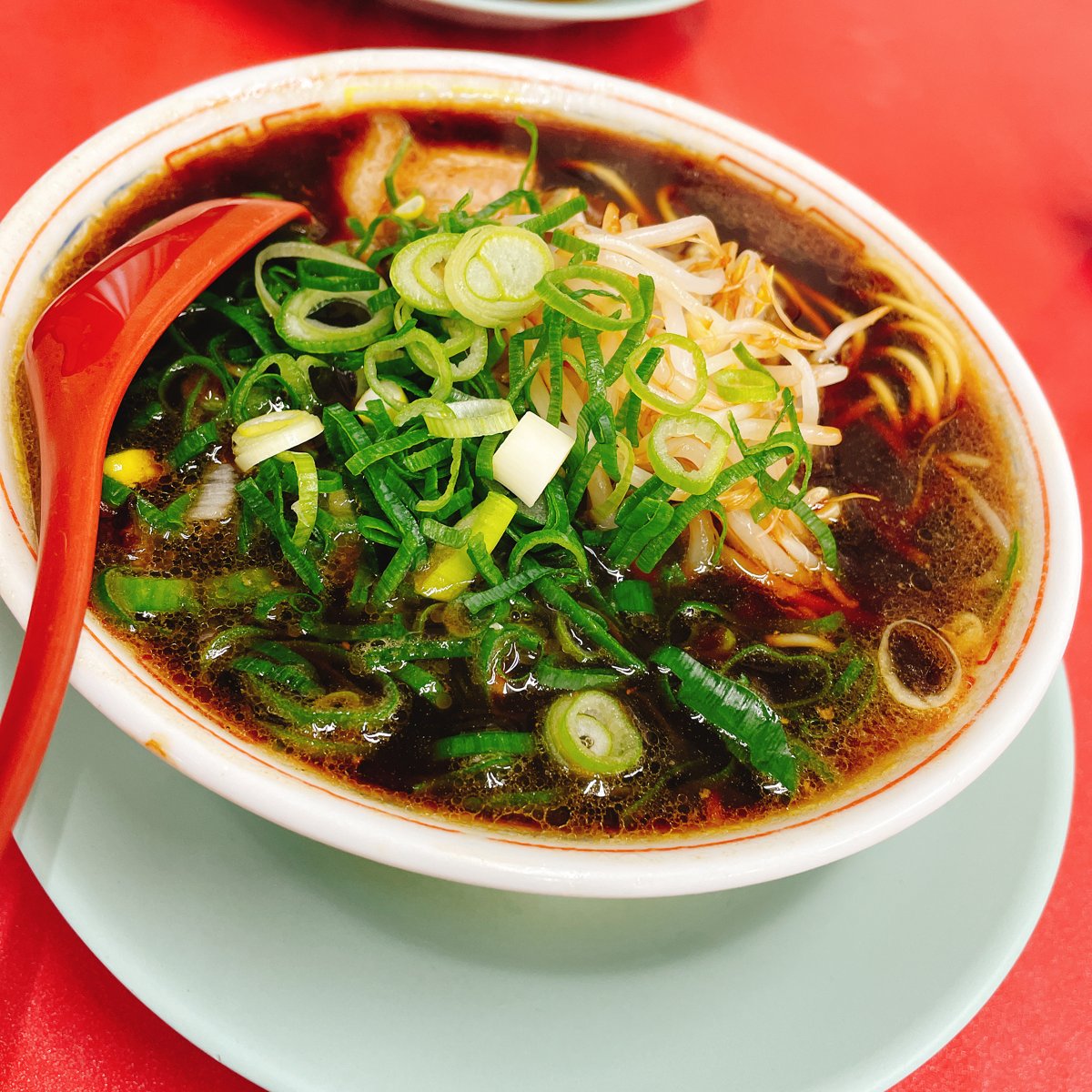
Kyoto is famous for delicate food, but its ramen is anything but light. This guide covers three names to know: Tenkaippin (天下一品), whose thick chicken soup began at a Kyoto street stall in 1971; Shinpuku Saikan (新福菜館), a shop east of Kyoto Station that started as a stall in 1938 and is known for its very dark soy-sauce soup and black fried rice; and Muteppou (無鉄砲), a thick pork-bone ramen whose main shop is in Kizugawa (Kyoto). Hours and closing days come from each shop's official site (checked October 25, 2026).
“Kyoto gave birth to the ultimate ramen: Tenkaippin. And Shinpuku Saikan's shoyu ramen and black fried rice.” (the site owner)
- Tenkaippin: started as a street stall near Ginkaku-ji in 1971. Its kotteri (rich) soup is made by slowly cooking chicken bones and vegetables, so thick that the company calls it a soup you eat rather than drink. It also serves a clear assari (light) soup.
- Shinpuku Saikan: started as a stall near Kyoto Station in 1938. Order the dark soy-sauce chuka soba (ramen) and the yakimeshi (fried rice), which turns black because it's seasoned with the ramen's soy-sauce base.
- Muteppou: a thick soup made only from pork bones and water, with no added oil. The main shop is in Kizugawa (Kyoto), in the south of Kyoto Prefecture, and there is also a shop in Osaka.
- Before you go: Shinpuku Saikan takes cash only and closes on some Wednesdays. Tenkaippin's main shop opens 11:00 to 1:00 and closes on New Year's Day. Muteppou closes on Mondays.
Kyoto ramen is richer than you might think
The Shin-Yokohama Ramen Museum says many people expect Kyoto ramen to be light, because of Kyoto cuisine and a "Kyoto-style ramen" boom in the Tokyo area, but in fact it is among the richest in Japan. The light Kyoto-style ramen is a minority in Kyoto itself. The museum sorts Kyoto ramen into three main styles:
- Dark soy sauce: a pork-based soup seasoned with dark koikuchi soy sauce. Shinpuku Saikan is the best-known example.
- Thick chicken: chicken and vegetables boiled down until the soup is thick and almost like a stew. Tenkaippin is the best-known example.
- Chicken with back fat: a chicken-bone soup with plenty of pork back fat (seabura) on top.
The noodles are medium-thick and straight, and cooked fairly soft. Toppings are green onion, chashu (sliced pork) and menma (bamboo shoots), and some shops add bean sprouts. The museum notes that the green onion is Kujo negi, a soft, sweet Kyoto onion, and that Ichijoji, where Tenkaippin's main shop stands, has many students and many ramen shops. Muteppou, further down this page, is a different style again: a thick pork-bone soup.
Tenkaippin: the thick soup that began at a Kyoto street stall
According to Tenkaippin's official site, Tsutomu Kimura, now the company's chairman, opened a ramen stall in Kyoto in 1971, at the age of 36, after the company he worked for went bankrupt. The company's column about its main shop says the stall stood near Ginkaku-ji, that the soup took years of trial and error, and that the main shop opened as a real shop in August 1975.
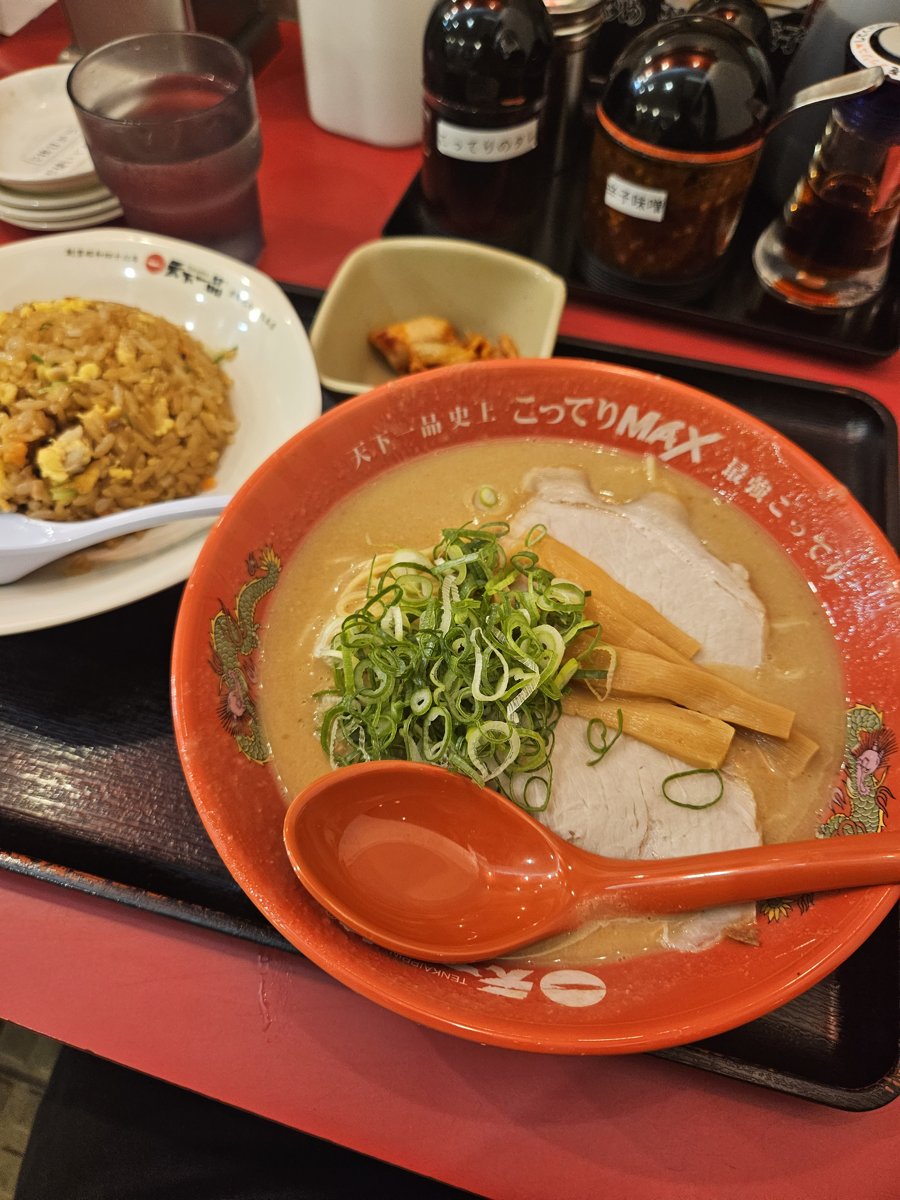
The official site says the kotteri soup took 3 years and 9 months to perfect. It is made by slowly cooking chicken bones and vegetables to draw out the flavor of the chicken, and it feels rich in the mouth but leaves a clean aftertaste. The company calls it a soup you eat rather than drink. The Ramen Museum explains that the fat blends into the soup until it's thick, with a stew-like texture, and that this style started a new kind of ramen.
If you'd like something lighter, the assari bowl is a clear soup of chicken bones and vegetables. The official menu also lists yatai no aji ("the taste of the stall", often called kossari), which the company describes as halfway between kotteri and assari and modeled on the soup before kotteri, and kotteri MAX, an even richer kotteri.
Only at the main shop. In its column, Tenkaippin introduces dishes made only at the main shop, such as beef tendon ramen (牛すじラーメン, gyūsuji rāmen) and beef tendon kimchi ramen, and says other shops have their own limited dishes too. The column dates from 2020, so check the menu on the day.
Shops across Japan. Tenkaippin had 194 shops as of October 25, 2026, according to its company page, so if you fall for kotteri in Kyoto, you can find it in other cities too. The company's shop search lists them by prefecture.
At Lawson convenience stores. Lawson has sold Tenkaippin-supervised food more than once. Its news release announced a kotteri ramen in February 2024, the first microwave noodle dish supervised by Tenkaippin, and a Lawson article introduced a new range on May 12, 2026, with kotteri ramen, kotteri MAX ramen, and Tenkaippin instant noodles and frozen dishes. The product page for the kotteri ramen (1 serving) says it isn't sold at Natural Lawson stores and has finished selling in some areas, so you may not find it everywhere.
My visit
I go to the main shop. There are shops all over Japan, so I also go to the one near where I live. For me, it's kotteri and nothing else. The soup is very thick, so starting with assari is a good idea too.
Depending on the shop (some are franchises), you may also see items called kossari or yatai no aji, so please check the official site. You can also find Tenkaippin cup noodles at convenience stores, and frozen meals you heat in the microwave.
Shinpuku Saikan: black soy-sauce ramen and black yakimeshi
Shinpuku Saikan's official site describes the main store as an old chuka soba shop in Higashi-Shiokoji, in front of Kyoto Station, that began as a street stall in 1938. Its dark soy-sauce soup, the shop says, surprises people the first time and keeps them coming back after that. The Ramen Museum calls it the pioneer of Kyoto ramen: in 1938 a stall run by Xu Yongti (徐永俤), who came from Zhejiang in China, began selling noodles near Kyoto Station, and the shop became known for its dark soy-sauce soup topped with plenty of thinly sliced chashu. The museum says this soup became the basic form of Kyoto ramen.
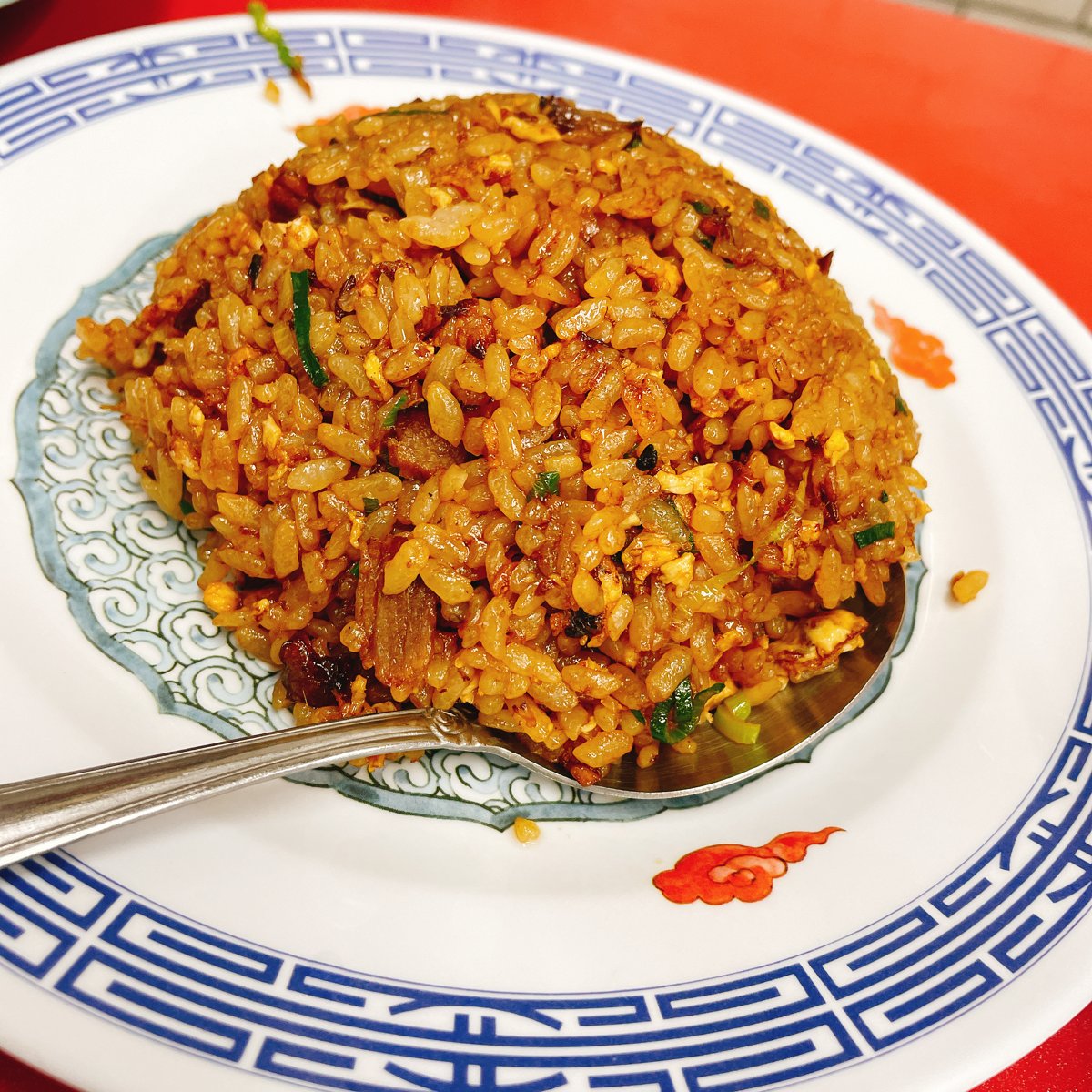
The other dish to order is yakimeshi (焼き飯, fried rice). A 2023 article by the Shin-Yokohama Ramen Museum explains that it's black because it's seasoned with the same soy-sauce base as the ramen, and that it was created in the early 1970s by Masaru Yamauchi, who took over the shop from the founder. On the shop's menu, the dishes have English names too: Ramen noodle for the regular bowl, Fried rice for the yakimeshi.
My visit
I go to the main store. When I'm in Kyoto, I usually go there for lunch. The shoyu ramen and the black fried rice (yakimeshi): those two are a must. They also sell the sauce for the black fried rice, so if you like it, take some home as a souvenir.
The shop's official site doesn't list the sauce, so ask at the shop if you'd like to buy some.
Two old shops east of Kyoto Station
Shinpuku Saikan isn't the only long-running ramen shop here. Honke Daiichi Asahi (本家第一旭), which its company says was founded in 1947, serves a pork-bone soy-sauce soup, and its main shop's address is also in Higashi-Shiokoji Mukaihata-cho. The Ramen Museum lists both among Kyoto's main local shops. If you're staying near Kyoto Station, the two make an easy pair to compare on different days.
Muteppou: thick pork-bone ramen in Kizugawa (Kyoto)
Muteppou's official site says its tonkotsu (pork-bone) soup is made only from good Japanese pork bones and water. About 300 kg of bones a day are cooked until they crumble and the marrow melts, and no lard or other oil is added, so the shop says it is sweeter and lighter than it looks. The chashu is made in house, and the noodles come from Kyushu, so when they run out, the shop finishes for the day. Its menu page says the takana (spicy pickled mustard greens) is free when you eat in, and lists 140 g packs of takana to take home.
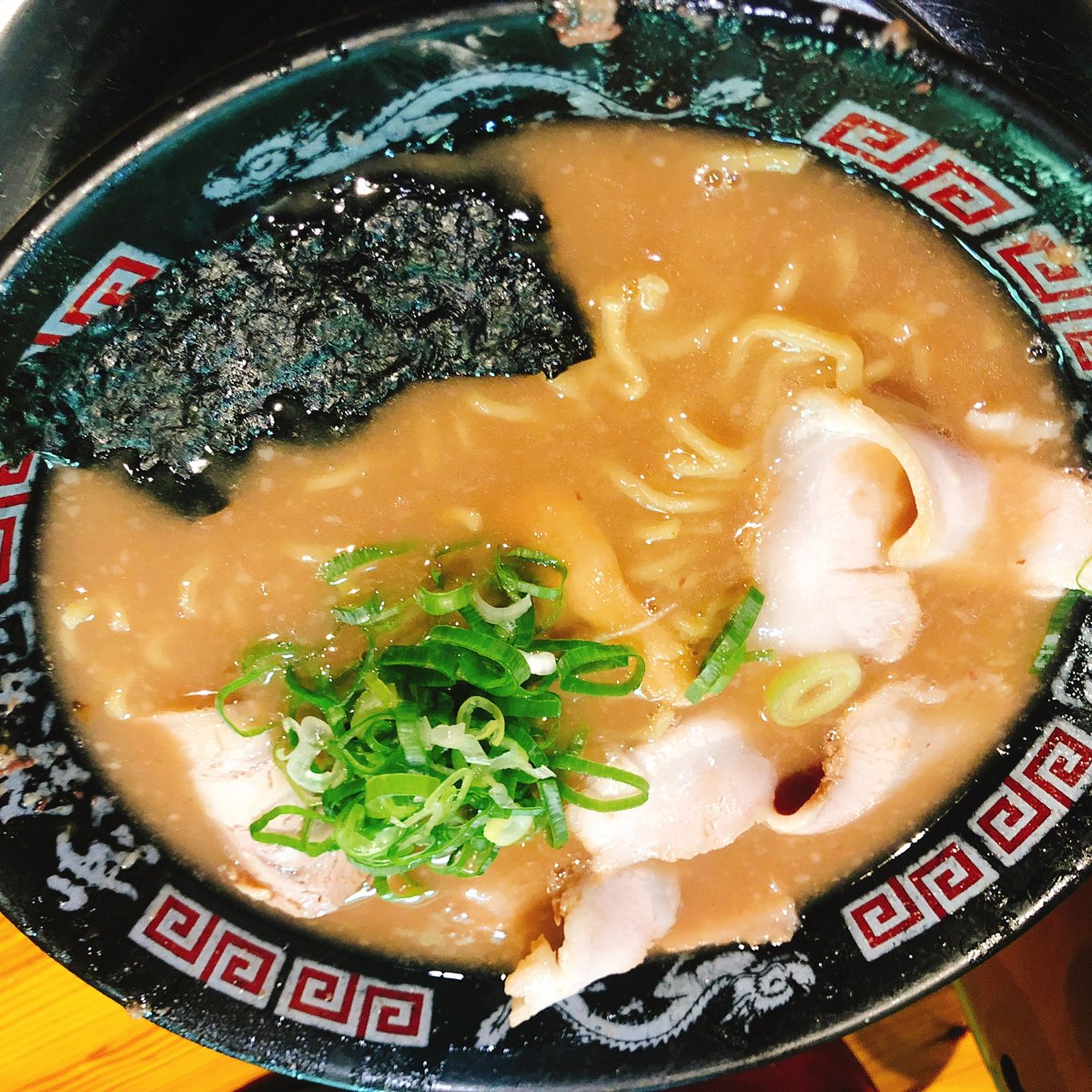
The main shop, opened on December 22, 2003, is at Umedani Higedani 15-3, Kizugawa (Kyoto), in the south of Kyoto Prefecture and outside Kyoto city. It opens 11:00 to 15:00 and 18:00 to 23:00 and closes on Mondays (this can change around public holidays). It has a car park for 36 cars and asks visitors not to park on the road. Phone 0774-73-9060 (from abroad +81-774-73-9060). The official site gives no train or bus directions, so plan your route with a map app before you go.
Staying in Osaka? Muteppou Osaka is at Ebisuhonmachi 1-5-21, Naniwa Ward, Osaka. It opens 11:00 to 15:00 and 17:30 to 22:30, closes on Mondays (this can also change around public holidays) and has no car park. Phone 06-6645-0522 (from abroad +81-6-6645-0522).
My visit
I go to the main shop, and there's usually a line. Inside, the smell of pork bones is very strong, so be careful if you don't like strong smells. But the ramen has a very refined soup, and it goes well with rice too. The free topping, spicy takana, is great on rice, and great in the ramen to change the flavor. You can buy the spicy takana to take home as a souvenir. Lawson also sells collaboration cup noodles.
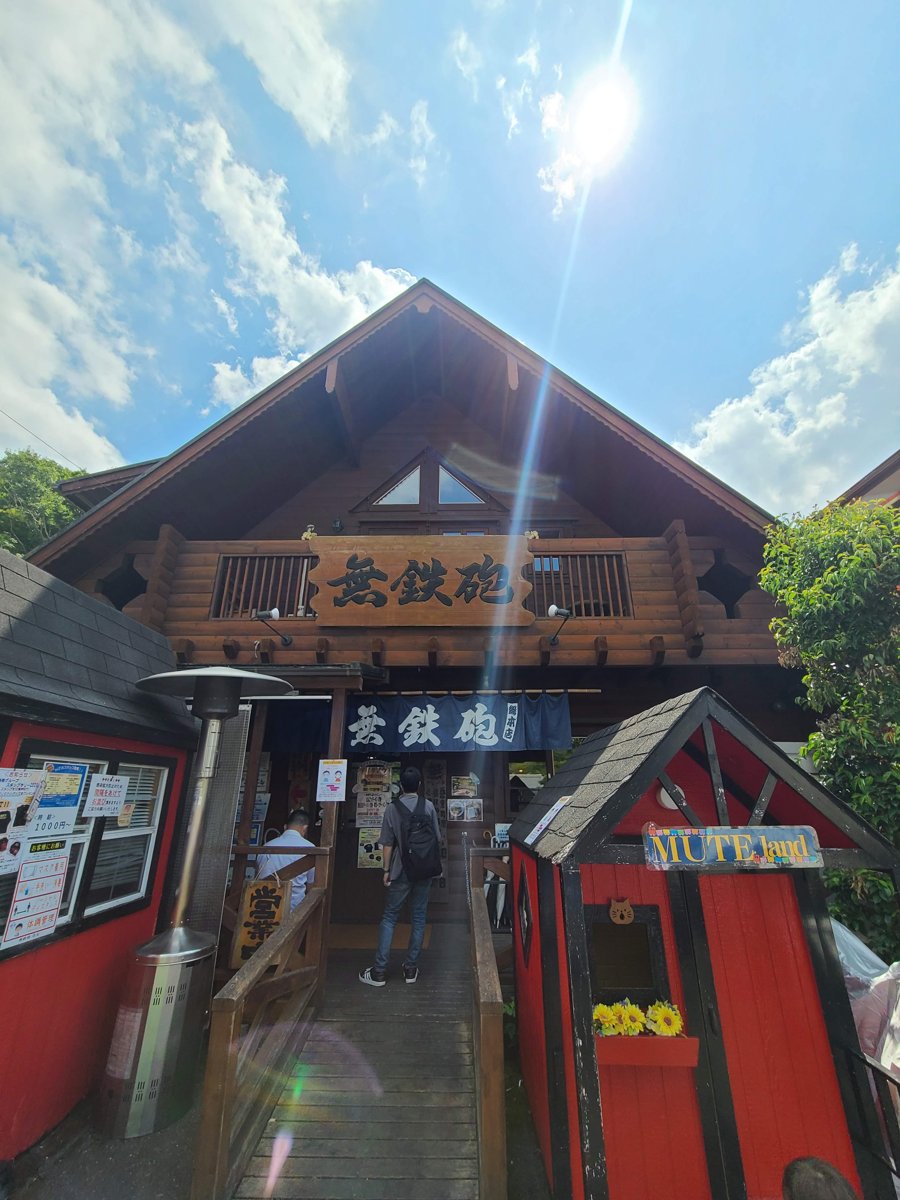
Convenience-store cup noodles like these aren't always on sale, so there may be times when you can't find them.
The three at a glance
Getting there from Kyoto Station
Shinpuku Saikan main store: Higashi-Shiokoji Mukaihata-cho 569, Shimogyo Ward, east of Kyoto Station. JAL's travel guide puts it about a 7 to 8 minute walk from the station. Phone 075-371-7648 (from abroad +81-75-371-7648).
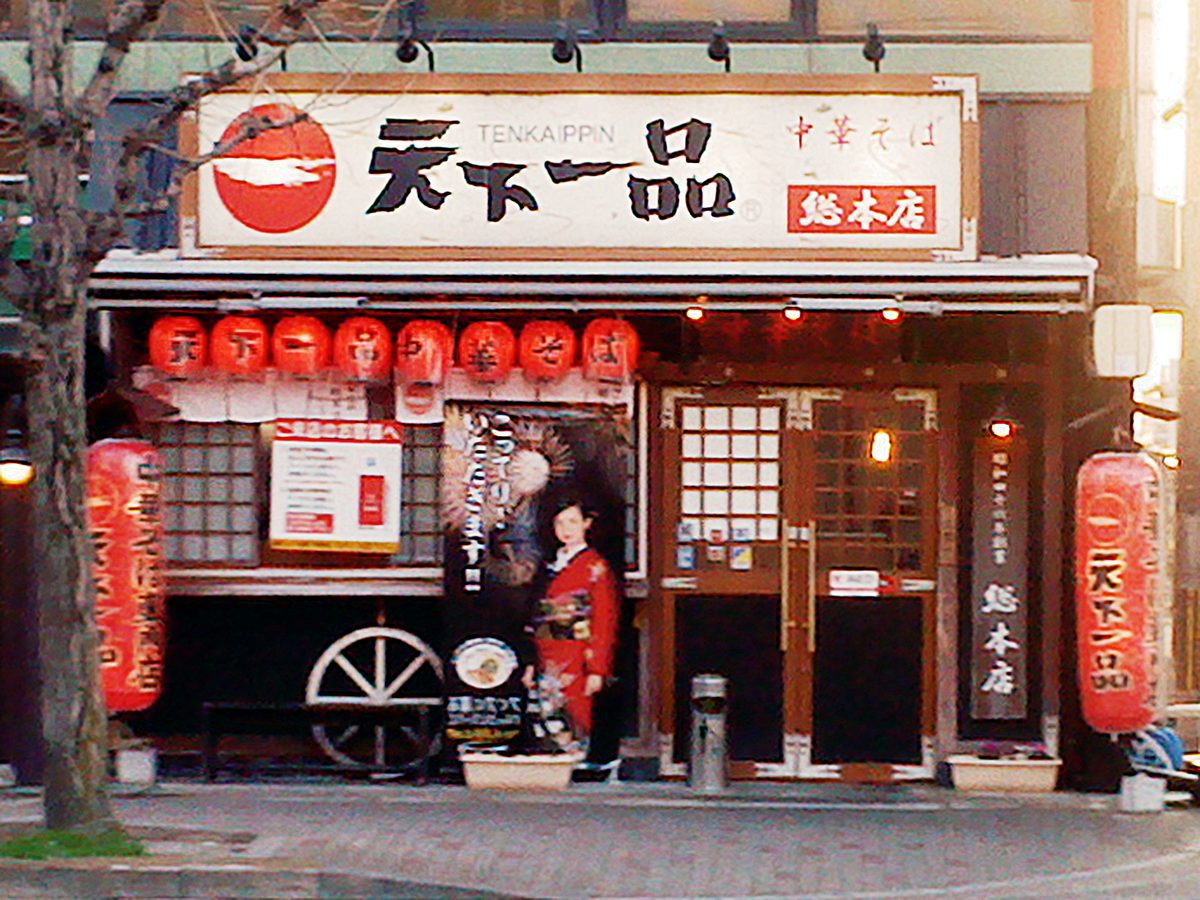
Tenkaippin main shop: Ichijoji Tsukuda-cho 94, Sakyo Ward. Tenkaippin's column suggests a Kyoto City Bus from Kyoto Station to the Ichijoji Kinomoto-cho stop, about 45 minutes, then a 3 minute walk. Or take the Eizan Railway to Chayama-Kyoto Geijutsu Daigaku Station (called Chayama until April 2023) and walk about 10 minutes. Phone 075-722-0955 (from abroad +81-75-722-0955).
Muteppou main shop: in Kizugawa (Kyoto), outside Kyoto city, to the south. Plan the route with a map app, as above.
What to do when you go
- Check the day. Shinpuku Saikan opens 9:00 to 20:00 and closes on some Wednesdays, and it posts extra closing days for each month on its official site (in October 2026, the 20th and 21st). Tenkaippin's main shop opens 11:00 to 1:00 the next morning, with last orders 15 minutes before closing, and closes on New Year's Day and on occasional extra days. Muteppou closes on Mondays and finishes early when the noodles run out.
- Bring cash for Shinpuku Saikan. The shop says it takes cash only: no credit cards, and no PayPay or other e-money.
- If there's a line, join the end. How you order differs between shops. Some have a ticket machine by the door, and at others you tell the staff. Our ramen guide explains both.
- Know what to ask for. At Tenkaippin, choose kotteri or assari. At Shinpuku Saikan, the regular bowl is 中華そば(並) (chūka soba, nami), and the fried rice is 焼き飯 (yakimeshi). At Muteppou, the regular bowl is とんこつラーメン (tonkotsu rāmen).
More ramen and Kyoto guides
For soup types and how ticket machines work, read our ramen guide. For a different family of rich ramen, see the iekei ramen family tree, and for nine shops I've eaten at in the mountains, ramen in Matsumoto and Shiojiri (Nagano). All of our ramen guides are in Ramen in Japan. Planning the rest of your time in the city? Try our 1 to 2 day Kyoto itinerary and where to stay in Kyoto.
Last reviewed: October 25, 2026. Shops change their hours, menus and closing days. Please check each shop's official page before you go.
References
- Tenkaippin: our commitment (history, kotteri and assari) (Japanese)
- Tenkaippin: the main shop and its limited menu (2020) (Japanese)
- Tenkaippin: main shop address and hours (Japanese)
- Tenkaippin: company profile and number of shops (Japanese)
- Lawson (2024): Tenkaippin-supervised kotteri ramen and more (Japanese)
- Lawson (May 12, 2026): new Tenkaippin-supervised range (Japanese)
- Lawson: Tenkaippin kotteri ramen product page (Japanese)
- Shinpuku Saikan main store: official site, hours and closing days (Japanese)
- Shinpuku Saikan main store: menu (Japanese and English)
- Muteppou: official site and tonkotsu ramen (Japanese)
- Muteppou: shops, addresses and hours (Japanese)
- Muteppou: shop and takeout menu (Japanese)
- Shin-Yokohama Ramen Museum: Kyoto ramen (Japanese)
- ASCII (July 10, 2023), by the Shin-Yokohama Ramen Museum: Shinpuku Saikan and its yakimeshi (Japanese)
- Takabashi Co.: press release on Honke Daiichi Asahi (Japanese)
- JAL ontrip: Shinpuku Saikan main store (Japanese)
- Eizan Railway (March 24, 2023): station renamed Chayama-Kyoto Geijutsu Daigaku (Japanese, PDF)