Obon in Japan: What It Means, Why It's in July or August, and What Travelers Should Know About the Crowds
Short answer: Obon (a Buddhist summer event, usually August 13 to 16) is when families in Japan welcome the spirits of their ancestors home, then send them back. In most of Japan it takes place in August, but in Tokyo and some other areas it's held in July. For travelers, the August Obon week is one of the busiest times of the year on trains and roads, because many people take time off and go back to their hometowns.
You may notice small fires at doorsteps, lanterns, people visiting graves, or a neighborhood dance in a park. Here is what those things mean, and how to plan around Obon if your trip falls in the middle of it.
- Why families "welcome" and "send off" their ancestors
- July Obon and August Obon: which areas use which dates
- Bon odori dances and Kyoto's Gozan Okuribi bonfires
- Trains, roads and manners if you're in Japan during Obon
What Obon is: welcoming the ancestors home, then sending them back
Obon comes from the Buddhist ceremony Urabon-e. According to JR East's explanation, it is a time to welcome the spirits of one's ancestors and hold memorial services for them. The custom traces back to a story from ancient India, in which a disciple of the Buddha made offerings to monks for the sake of his late mother, and it reached Japan by way of China.
Obon is not a national holiday. The only public holiday in August is Mountain Day on August 11, so shops and offices decide their own Obon breaks. Families mark Obon in a few common ways:
- Mukaebi (welcome fire): a small fire lit at the start of Obon, as a sign so the spirits can find their way home.
- Grave visits: families clean the family grave, offer incense and flowers, and put their hands together in thanks.
- Shoryo-uma (spirit animals): in many areas, people make a horse from a cucumber and a cow from an eggplant. The wish is that the ancestors come quickly on the horse and go back slowly on the cow.
- Okuribi (send-off fire): a fire lit at the end of Obon to see the spirits off to the other world.
July or August? It depends on where you are
Obon dates are not the same across Japan. JR East explains that August Obon is the most common timing nationwide, and it's when many companies give their staff an "Obon holiday". July Obon is mainly the custom in Tokyo and a few other areas, such as parts of Kanagawa and Shizuoka. In 2026, July Obon was July 13 to 16, and August Obon was August 13 to 16.
So if you're in Tokyo in mid-July, you may see Obon lanterns and temple services while life elsewhere carries on as usual. The big travel rush, though, comes in August.
Bon odori: the summer dance
Bon odori is a traditional dance held during the Obon season to comfort the returning spirits and see them off. If you come across one, watch from the edge first, and join in only if the organizers welcome people in. Follow any rules posted at the venue about food, drink and photos.
Kyoto's Gozan Okuribi on August 16
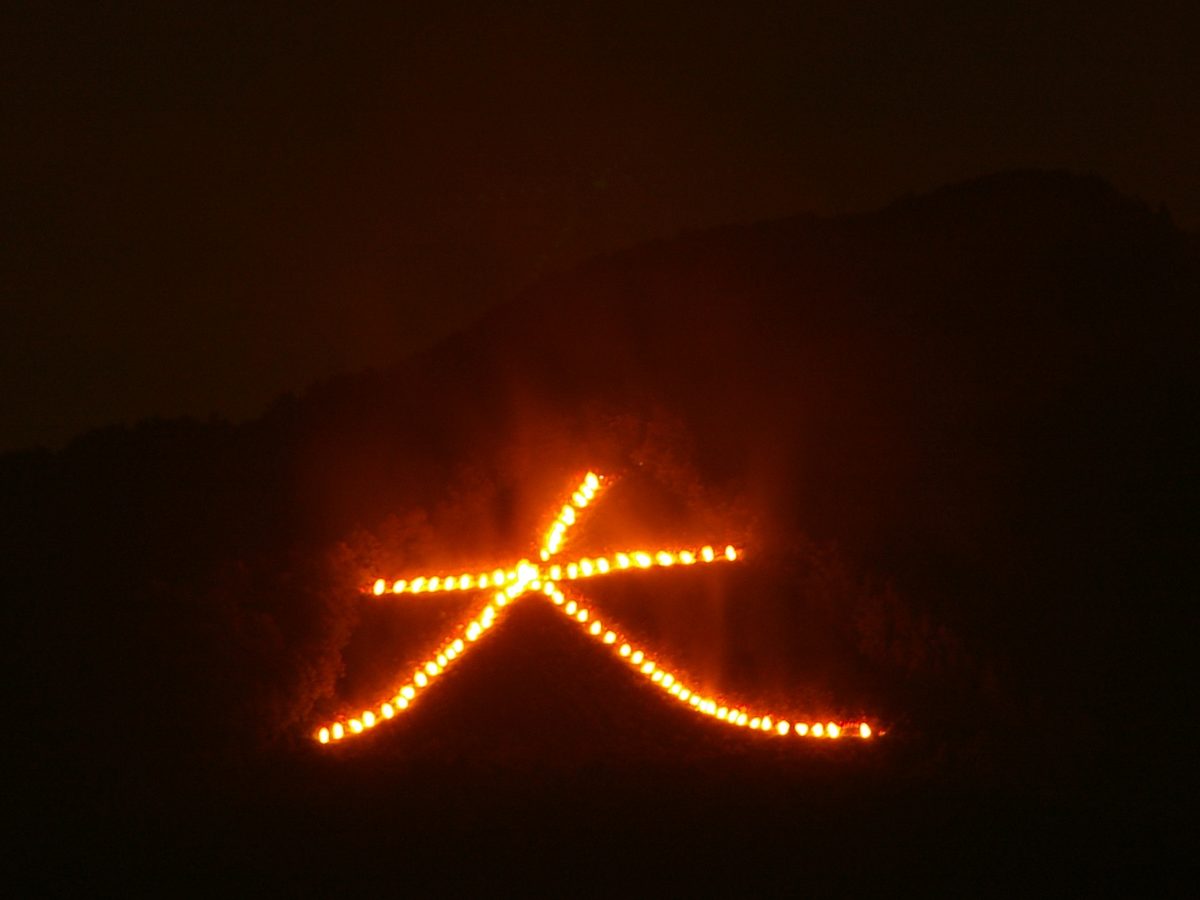
Kyoto's best-known send-off fire is the Gozan Okuribi (Five Mountain Bonfires). The Kyoto City Tourism Association explains that people believe the ancestors' spirits come home from August 13 to 16, and that the fires are said to send the spirits back. On the evening of August 16, five huge shapes are lit on the mountains around the city, one after another, every 5 minutes from 8 p.m.:
| Fire | Shape | Lit at |
|---|---|---|
| Daimonji | The character for "great" | 8:00 p.m. |
| Myo-Ho | The characters for the Buddha's teaching | 8:05 p.m. |
| Funagata | A ship | 8:10 p.m. |
| Hidari Daimonji | "Great", on the left-hand mountain | 8:15 p.m. |
| Toriigata | A shrine gate | 8:20 p.m. |
The times can change with rain or wind. Things to know before you go:
- Walking up the bonfire mountains on August 16 is not allowed, and the trails have no lights.
- The riverbanks may be closed when the water is high. Even when they are open, the tourism association advises against going onto them at night, because they are dark and people can fall.
- Don't walk while looking at your smartphone in the crowds.
- Because of the crowds and summer heat, the tourism association also suggests watching the online stream from your hotel if you prefer. In 2026, it ran on August 16.
If you're in Japan during Obon
Obon is a lovely time to see local customs, but the August week needs planning. Here is what to expect and how to make it easier.
- Shinkansen: JR Central made every Nozomi train between Tokyo and Hakata (Fukuoka) all-reserved from August 7 to 16, 2026. The unreserved cars (165 seats per train) were switched to reserved seats, so you need a reserved seat to sit on a Nozomi. Hikari and Kodama trains kept their unreserved cars, but they run less often and can get crowded. Book seats as early as you can. Our guide to Shinkansen tickets and the JR Pass explains how.
- Highways: NEXCO Central Japan and the other expressway companies forecast 436 traffic jams of 10 km or more for August 7 to 16, 2026, with outbound traffic peaking twice and return traffic peaking in the second half. The weekend and holiday discount on tolls didn't apply in that period. If you plan to rent a car, avoid the peak days or leave very early.
- Flights and hotels: domestic flights and rooms in popular areas can fill up during Obon week, so book well ahead.
- Shops and restaurants: many companies take their Obon holiday around August 13 to 16, and some small, family-run shops and restaurants close for a few days. Check opening days on the official page before you go out of your way.
- Graves and temples: families come to pray for their ancestors. Keep your voice down, walk around people who are praying, and don't take photos of families at graves.
- Heat: Obon is in the hottest part of summer. Carry water and take breaks in the shade, especially at crowded evening events.
Choosing when to come? Our month-by-month guide to the best time to visit Japan compares weather and crowds for every season, including summer.
Last reviewed: October 18, 2026. Obon dates and customs vary by area and family, and event times, train rules and traffic forecasts change every year. Please check the official pages below before you go.
References
- JR East (official travel media): Obon dates in 2026, customs and meaning (Japanese)
- Kyoto City Tourism Association: Gozan Okuribi
- Kyoto City Tourism Association: Gozan Okuribi bonfires notice, 2026
- JR Central: Periods when all Nozomi seats are reserved (Japanese)
- NEXCO Central Japan: Traffic jam forecast for the Obon period, nationwide (Japanese, July 17, 2026)
- Cabinet Office: National holidays (Japanese)