Daruma Dolls: Why You Fill In One Eye First, Who Daruma Was, and Where to Buy One in Japan
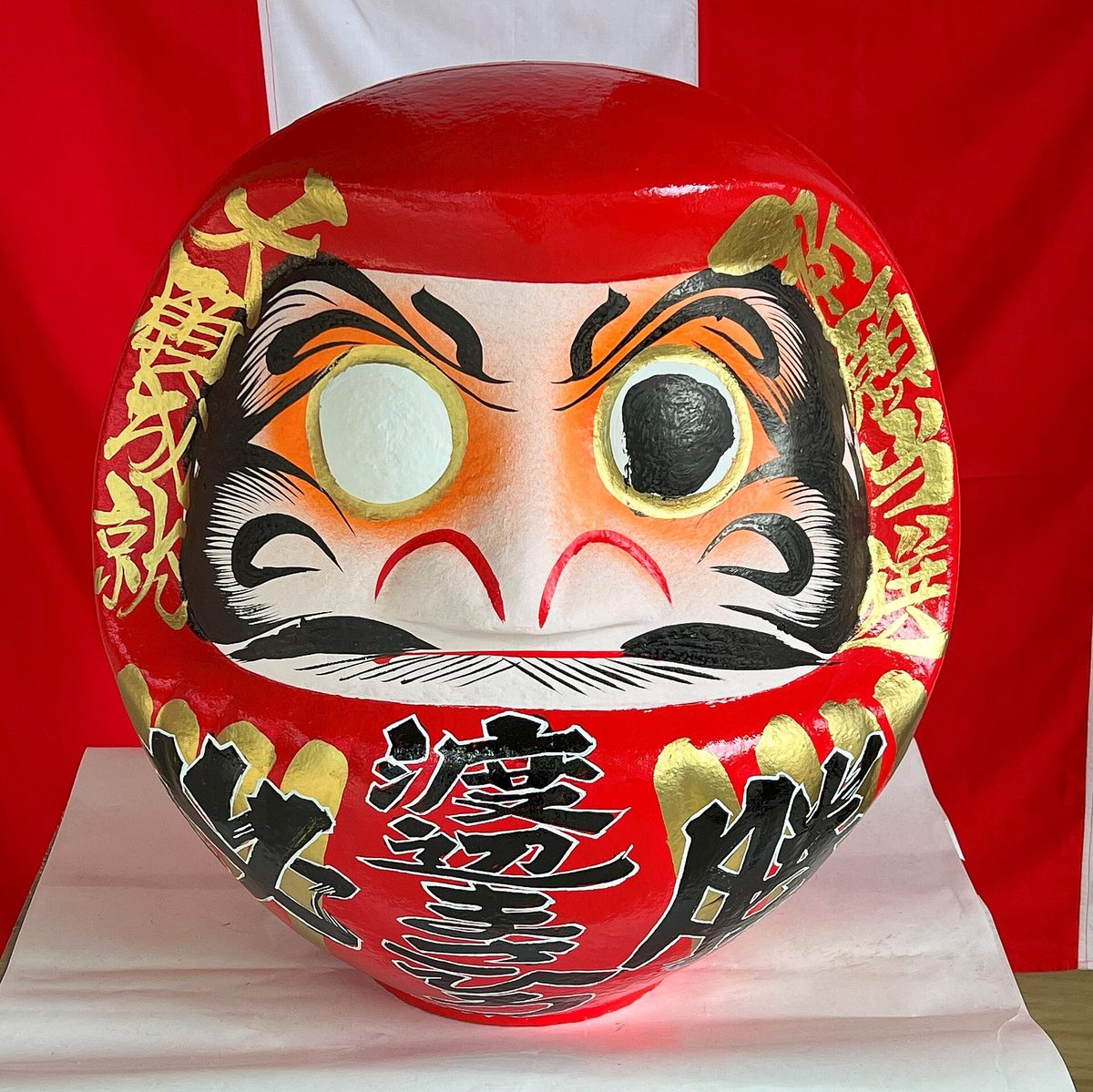
Round, red and wide-eyed, the daruma doll is one of Japan's most familiar lucky charms. Look closely at the ones in shops and you'll notice their eyes are blank white, and in homes and offices you may see daruma with only one eye painted in. This column explains the eye custom, who Daruma was, why most daruma come from one city in Gunma, where to find daruma markets, and what to do with a daruma when you're done with it.
This page may contain affiliate links. If you buy through them, we may earn a commission at no extra cost to you.
The short answer
- The eyes: you paint in one eye as you make a wish, and the other once the wish comes true or you've come through the year safely.
- Which eye first: the temple where lucky daruma began says the one on your right as you face the doll; the makers' association says there's no fixed order.
- Who Daruma is: Bodhidharma, the Indian monk regarded as the founder of Zen in China, shown sitting in meditation in a red robe.
- When you're done: take it to a temple or shrine to be burned in a memorial service, rather than throwing it away.
Who was Daruma?
Daruma is the Japanese name of Bodhidharma. According to Shorinzan Daruma-ji, the temple in Takasaki (Gunma) regarded as the birthplace of the lucky daruma, he was born about 1,600 years ago as the third prince of a kingdom in South India, became a monk, and later sailed to China. There he is said to have meditated facing a wall for nine years near the Shaolin temple, and he laid the foundations of Zen Buddhism in China.
The doll's shape comes from that image. The temple answers two questions visitors often ask: the daruma is red because Bodhidharma wore a red robe, which he pulled over his head as he sat in meditation; and the doll does have arms and legs, they're just hidden under the robe. A Japanese government article adds that the lucky daruma is a paper doll modeled on his seated meditation posture. If you'd like to try that kind of sitting yourself, see our guide to zazen meditation in Japan.
One eye for the wish, one eye for the thanks
A lucky daruma is a doll you make a wish on. Shorinzan Daruma-ji describes the steps like this: face the daruma, calm your mind, and paint in the eye on your right as you face it while making your wish. Then, when you've come through the year safely or your wish has come true, paint in the other eye to give thanks. At the temple, a priest can first put a small dot in one eye in a ceremony called kaigen ("opening the eyes"), and you then paint the eye in fully at home, starting from that dot.
The Gunma Daruma Doll Manufacturers' Cooperative, which makes Takasaki daruma, also recommends starting with the daruma's left eye, the one on your right as you face it. One explanation is that the left side was traditionally the seat of higher rank, but the association says there is actually no fixed order. What matters, it says, is that painting the eye isn't just filling in a missing eyeball: it expresses opening the "eye of the heart".
Takasaki daruma: cranes, turtles and "fuku-iri"
Most of Japan's papier-mâché daruma come from Takasaki (Gunma), about an hour from Tokyo Station by Shinkansen. The makers' cooperative says it ships about 900,000 daruma a year (a figure from its own survey around 2003), the great majority of Japan's papier-mâché daruma. Takasaki daruma were designated a traditional craft by Gunma Prefecture in 1993 and registered as a regional brand trademark in 2006.
Shorinzan Daruma-ji traces the lucky daruma to a famine in the 1780s, after the great eruption of Mount Asama. To help the struggling farmers nearby, the temple's ninth head priest, Togaku, carved a wooden mold based on a painting of Daruma by the temple's founder and taught Yamagata Tomogoro of Toyooka village how to make papier-mâché daruma, which were then sold as lucky charms at the temple's New Year festival. The makers' cooperative adds two more threads to the story: production grew after the port of Yokohama (Kanagawa) opened in 1859 and a red pigment (scarlet) began to be imported, and silk farmers in the region prized the doll, because a silkworm shedding its skin was said to "get up" (okiru), just like a daruma that rights itself however many times it's knocked over (nanakorobi yaoki, "fall down seven times, get up eight").
Look at the face of a Takasaki daruma and you'll find two lucky animals: according to the cooperative and the temple, the eyebrows are cranes and the mustache, from the nose down, is a pair of turtles. Wishes such as household safety or business success are written on both sides of the face, and the belly usually carries the large characters fuku-iri, "filled with good fortune".
Does the color matter?
Daruma come in red, black, gold, white and many other colors, and here the answers differ. Shorinzan Daruma-ji says the color makes no difference to the meaning: a daruma takes on meaning when you put your wish into it as you paint the eye. The makers' description on the Japan Patent Office's trademark page, on the other hand, says that black is now bought to wish for a business in the black and gold to wish for money luck. Red remains the classic, after Bodhidharma's robe, and the cooperative notes that in Edo (old Tokyo) red daruma were once bought to ward off smallpox, because red things were believed to drive off evil.
Daruma markets: where to buy one
Daruma are sold all year at Takasaki's daruma makers and at Shorinzan Daruma-ji, but the most lively place to buy one is a daruma market (daruma-ichi), held mostly in winter and early spring:
- Takasaki Daruma Market: held on the street in front of the West Exit of Takasaki Station. The 2026 market ran on January 1 and 2, and the organizers call it the earliest daruma market of the year in Japan. Check the official site for the next dates.
- Shorinzan Nanakusa Taisai Daruma Market (Takasaki): held every year from January 6 to 7 at Shorinzan Daruma-ji. The festival starts on the evening of January 6 and goes on through the night until the evening of January 7, with 20 to 30 daruma and food stalls, and the 230 stone steps up to the temple are lit with lanterns. (Nanakusa, "seven herbs", refers to the Japanese custom of eating rice porridge with seven spring herbs on January 7 for good health.)
- Jindaiji Daruma Fair (Chofu, Tokyo): held every year on March 3 and 4 at Jindaiji temple, one of Japan's three great daruma markets according to the temple. Tokyo's official travel guide says a priest can write a Sanskrit character on your daruma: one character for a new doll, and another for an old doll whose work is done.
When you're done: returning a daruma
A daruma that has watched over you isn't thrown out with the trash. The makers' cooperative suggests asking a nearby temple or shrine to burn it in a memorial service (otakiage), with an offering, or putting it in a local New Year fire festival such as dondo-yaki, and asks that it never be treated as rubbish.
Shorinzan Daruma-ji accepts daruma for its memorial burning every day from 9:00 to 17:00, at the reception between the main hall and the Daruma hall. The offering is up to you, and the temple asks you to take bags and boxes home with you. Its biggest memorial burning is held on January 15, and smaller ones follow a few times a year. The temple also asks you to contact it if you'd like to send a daruma by mail, which can help if you've taken yours home abroad.
Paint your own at the birthplace
Shorinzan Daruma-ji runs a daruma painting experience in its grounds every day, from 10:00 (last entry 15:30), with no booking needed for individuals. It takes about 30 minutes, you can choose a 12 cm or 15 cm daruma, and a priest can perform the eye-opening ceremony on the one you've painted. Groups of 10 or more are asked to book by email. The temple is about a 20-minute walk or a 5-minute taxi ride from Gunma-Yawata Station, or about 30 minutes by the "Gururin" city bus (Shorinzan line) from the West Exit of Takasaki Station to the Shorinzan-iriguchi stop.
Taking a daruma home
- Where to put it: Shorinzan Daruma-ji suggests a spot higher than eye level, where it can watch over everyone. The makers' cooperative suggests a place where people often see it, such as on a shelf or, for an exam wish, on a study desk, facing somewhere between south and east.
- Packing: papier-mâché daruma are light but hollow, so carry yours in your cabin bag where it won't be crushed.
- Size: the cooperative says some people buy a slightly bigger daruma each time a wish comes true, and the same size again if it didn't.
For general manners when you visit, see our guide to visiting shrines and temples, and for more ideas on what to bring home, souvenirs from Japan.
Last reviewed: October 18, 2026. Market dates, hours and what temples accept can change. Please check the official sites before you go.
References
- Shorinzan Daruma-ji official: The temple where lucky daruma began (Japanese)
- Shorinzan Daruma-ji official: Daruma Daishi (Bodhidharma) (Japanese)
- Shorinzan Daruma-ji official: FAQ (Japanese)
- Shorinzan Daruma-ji official: Daruma memorial service (Japanese)
- Shorinzan Daruma-ji official: Daruma painting experience (Japanese)
- Shorinzan Daruma-ji official: Hours and access (Japanese)
- Shorinzan Daruma-ji official: Annual events (Japanese)
- Government of Japan, Highlighting Japan (November 2025): Nanakusa Taisai Daruma Market at the Temple where the Lucky Daruma Began (English)
- Gunma Daruma Doll Manufacturers' Cooperative: What is Takasaki daruma? (Japanese)
- Gunma Daruma Doll Manufacturers' Cooperative: History of Takasaki daruma (Japanese)
- Gunma Daruma Doll Manufacturers' Cooperative: FAQ (Japanese)
- Gunma Daruma Doll Manufacturers' Cooperative: Takasaki Daruma (English)
- Japan Patent Office: Regional brand trademark No. 5003697, Takasaki daruma (Japanese)
- Takasaki Daruma Market official site (Japanese)
- Jindaiji temple official site (Japanese)
- GO TOKYO (Tokyo's official travel guide): Jindaiji Temple Daruma Doll Fair (English)