New Rules for Visiting Japan in 2026: Fees, Taxes and Systems That Changed, by Date
Planning a trip and wondering what is different this year? 2026 brought more changes for visitors to Japan than usual: a higher departure tax, much higher visa fees, new accommodation taxes in several prefectures, fines for cyclists, and, from November 1, a new way to get your tax-free refund. A new online travel authorization, JESTA, is now law too. This page lists every change we could confirm on an official government or operator page, sorted by date, with who it affects, what to do, and a link to our detailed guide where we have one.
This page may contain affiliate links. If you buy through them, we may earn a commission at no extra cost to you.
Last updated: October 5, 2026. "In effect" means the change has already started. "Coming" means it has been officially decided or announced but has not started yet. We update this page when an official page changes.
- All 2026 changes on one timeline, and what's still coming
- For each change: who it affects and what you actually need to do
- A link to the official source for every item
Please read this first. Only items confirmed on an official page are listed. News reports and rumors are left out until the government or the operator publishes the details. Prices and dates can still change, so check the official link before you book or pay.
January to March 2026 (in effect)
January 13, 2026: Miyagi Prefecture's accommodation tax
- Status: In effect
- What changed: Stays in Miyagi Prefecture, including Sendai (Miyagi), now carry an accommodation tax of 300 yen per person per night when the room charge is 6,000 yen or more (room only, before tax). In Sendai (Miyagi) the 300 yen is split between the prefecture and the city.
- Who: Anyone staying overnight in a hotel, ryokan or private lodging in Miyagi Prefecture. School trips are exempt.
- What to do: Nothing. The accommodation collects it with your bill.
- Source: Miyagi Prefecture: Accommodation tax (Japanese)
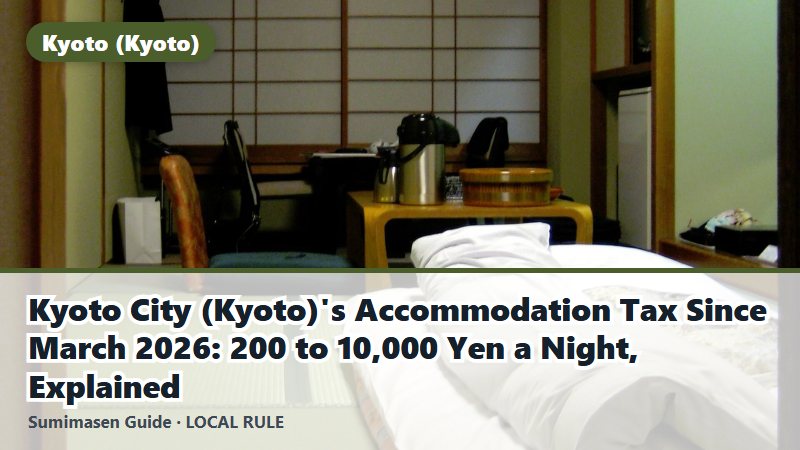
March 1, 2026: Kyoto City (Kyoto) raises its accommodation tax
- Status: In effect
- What changed: Kyoto City (Kyoto) moved from three bands to five, from 200 to 10,000 yen per person per night depending on the room charge. A night of 100,000 yen or more now carries 10,000 yen of tax.
- Who: Everyone staying overnight in Kyoto City (Kyoto). The date of the stay counts, not the booking date.
- What to do: Budget a few hundred yen more per night for most rooms. The hotel collects it.
- Source: Kyoto City (Kyoto): About the accommodation tax (Japanese)
- Our guide: Kyoto City (Kyoto)'s accommodation tax since March 2026
March 1, 2026: Himeji Castle costs 2,500 yen
- Status: In effect
- What changed: Admission to Himeji Castle in Himeji (Hyogo) is now 2,500 yen for visitors aged 18 and over who don't live in the city (residents pay 1,000 yen). Everyone under 18 gets in free. Date-specified digital tickets are now in full use.
- Who: All visitors to Himeji Castle, including international visitors.
- What to do: Budget for the new price. You can buy a digital ticket in advance.
- Source: Himeji City (Hyogo): Himeji Castle admission from March 1 (Japanese)
March 14, 2026: JR East raises fares
- Status: In effect
- What changed: JR East, which runs the trains in the Tokyo (Tokyo) area and eastern and northern Japan, raised its fares for tickets bought on or after March 14, 2026.
- Who: Anyone paying JR East fares with a ticket or an IC card.
- What to do: Nothing special. Fare apps and ticket machines already show the new prices.
- Source: JR East FAQ: The fare revision in March 2026 (Japanese)
April to June 2026 (in effect)
April 1, 2026: Fixed fines (blue tickets) for cyclists
- Status: In effect
- What changed: Cyclists aged 16 and over can now get a "blue ticket" and a fixed fine for common violations, such as using a phone while riding. Having a driver's license or not makes no difference.
- Who: Anyone riding a rental bike, a shared bike or a hotel bicycle.
- What to do: Ride on the left, stop at signals and keep your phone away while riding.
- Source: National Police Agency: The new system for bicycles (Japanese)
- Our guide: Japan's new bicycle fines
April 1, 2026: Hokkaido's accommodation tax
- Status: In effect
- What changed: Hokkaido now charges 100, 200 or 500 yen per person per night, depending on the room charge (under 20,000 yen, 20,000 to under 50,000 yen, and 50,000 yen or more). Some cities and towns, such as Sapporo (Hokkaido) and Niseko (Hokkaido), add their own tax on top.
- Who: Anyone staying overnight in Hokkaido.
- What to do: Nothing. The accommodation adds it to your bill.
- Source: Hokkaido Government: Hokkaido accommodation tax (Japanese)
April 1, 2026: Hiroshima Prefecture's accommodation tax
- Status: In effect
- What changed: Stays in Hiroshima Prefecture now carry 200 yen per person per night when the room charge is 6,000 yen or more (room only, before tax).
- Who: Anyone staying overnight in Hiroshima Prefecture, including Hiroshima (Hiroshima) and Miyajima (Hiroshima). School trips are exempt.
- What to do: Nothing. The accommodation collects it. The 100 yen Miyajima Visitor Tax for the ferry is a separate tax.
- Source: Hiroshima Prefecture: Outline of the accommodation tax (Japanese)
- Our guide: The Miyajima Visitor Tax
April 1, 2026: Cashew nut added to allergen labels
- Status: In effect, with a two-year transition period for labels
- What changed: Cashew nut became one of the ingredients that must be shown on packaged food labels in Japan.
- Who: Visitors with a cashew or nut allergy.
- What to do: Look for カシューナッツ on labels, but during the transition some packs may not show it yet, so ask when in doubt.
- Source: Consumer Affairs Agency: Cashew nut added to specified ingredients (Japanese, PDF)
- Our guide: Food allergies in Japan
May 29, 2026: Weather warnings now carry level numbers
- Status: In effect
- What changed: The Japan Meteorological Agency (JMA) now names warnings with the same level numbers as the five evacuation levels, for example "Level 4 Heavy Rain Warning".
- Who: Everyone, especially in typhoon and rainy seasons.
- What to do: Treat Level 4 as the point to move to safety, and follow local instructions.
- Source: Japan Meteorological Agency: New disaster prevention weather information from 2026 (Japanese)
- Our guide: Traveling in typhoon season
June 1, 2026: Nagano Prefecture's accommodation tax
- Status: In effect
- What changed: Stays in Nagano Prefecture now carry 200 yen per person per night when the room charge is 6,000 yen or more (room only, before tax). The rate is 200 yen until May 31, 2029, then 300 yen. Some places, such as Matsumoto (Nagano), Karuizawa (Nagano) and Hakuba (Nagano), have their own tax; in Matsumoto (Nagano) the 200 yen total is shared between the city and the prefecture.
- Who: Anyone staying overnight in Nagano Prefecture.
- What to do: Nothing. The accommodation collects it.
- Source: Nagano Prefecture: Nagano accommodation tax (Japanese) and Matsumoto City (Nagano): Accommodation tax (Japanese)
June 1, 2026: On-the-spot littering fines in Shibuya (Tokyo)
- Status: In effect
- What changed: Shibuya City (Tokyo) now collects a 2,000 yen fine on the spot for littering, anywhere in the ward, including private land.
- Who: Everyone in Shibuya (Tokyo), especially at Halloween and New Year's Eve.
- What to do: Carry your trash until you find a bin, or take it back to your hotel.
- Source: Shibuya City (Tokyo): Littering ban and fines (Japanese)
- Our guide: Shibuya (Tokyo) at Halloween and New Year's Eve
July to October 2026 (in effect)
July 1, 2026: The departure tax rises to 3,000 yen
- Status: In effect
- What changed: The International Tourist Tax, paid each time you leave Japan by plane or ship, went from 1,000 yen to 3,000 yen.
- Who: Everyone leaving Japan, except children under 2 and some transit passengers.
- What to do: Nothing. The airline or ferry company adds it to your ticket.
- Source: National Tax Agency: Tax Answer No.7195 (Japanese)
- Our guide: Japan's departure tax is now 3,000 yen
July 1, 2026: Visa fees about five times higher
- Status: In effect
- What changed: For visa applications accepted from July 1, 2026, the fee is about 15,000 yen for a single-entry visa and about 30,000 yen for a multiple-entry visa, paid in the local currency at the embassy or consulate.
- Who: Only travelers whose nationality needs a visa for Japan. Visa-exempt visitors are not affected.
- What to do: Check the fee with the Japanese embassy or consulate where you apply.
- Source: Ministry of Foreign Affairs: Visa fees (English)
July 14, 2026: The Drone Act was amended
- Status: In effect
- What changed: The no-fly areas around important facilities (the facility itself and about 1,000 meters around it) were extended to places where designated protected dignitaries are present and to international conference venues.
- Who: Anyone bringing a drone, of any weight.
- What to do: Check the zones before every flight; in central Tokyo (Tokyo), assume you can't fly.
- Source: National Police Agency: The Drone Act (English)
- Our guide: Flying a drone in Japan as a tourist
September 3, 2026: Tap a credit card on the Nagoya (Aichi) subway
- Status: In effect
- What changed: You can ride the Nagoya (Aichi) subway by tapping a contactless credit card or phone at the gates of every station. City buses are not included.
- Who: Visitors to Nagoya (Aichi) without an IC card.
- What to do: Use the gates marked for contactless cards, and use the same card to enter and exit.
- Source: Nagoya City Transportation Bureau: Riding with a contactless credit card (Japanese)
- Our guide: Getting around Nagoya (Aichi)
October 1, 2026: Japan Rail Pass costs more from overseas agents
- Status: In effect
- What changed: Passes bought from overseas sales agents now cost more: the 7-day ordinary pass for adults is 53,000 yen (it was 50,000 yen). The official Japan Rail Pass website keeps the old price of 50,000 yen for a limited period; the end date has not been announced.
- Who: Visitors planning to buy a Japan Rail Pass.
- What to do: Compare the price on the official website before buying from an agent.
- Source: JAPAN RAIL PASS official website: Prices (English) and JR Group: Japan Rail Pass price revision, April 9, 2026 (Japanese, PDF)
Coming: November 2026 and later
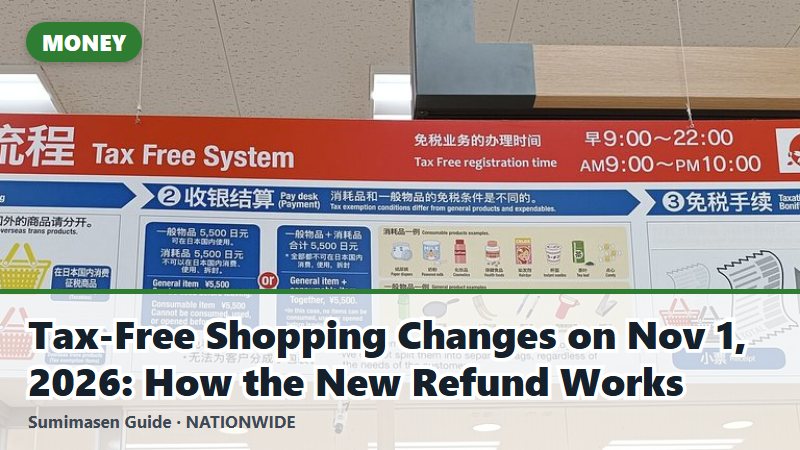
November 1, 2026: The new tax-free refund
- Status: Coming
- What changes: Shops will charge the full price, tax included. Customs checks your goods at the airport or seaport when you leave, and the shop then refunds the tax.
- Who: Visitors who shop tax-free (5,000 yen or more, before tax, per store per day).
- What to do: Go through the customs check before checking your bags, and leave Japan within 90 days of buying.
- Source: Japan Tourism Agency: Refund Method, special page for travelers (English)
- Our guide: How the new tax-free refund works
November 23, 2026: Shuri Castle's rebuilt main hall opens
- Status: Coming
- What changes: The main hall of Shuri Castle in Naha (Okinawa) opens to the public, with a new adult price of 1,000 yen and timed reservations for the inside of the hall.
- Who: Visitors to Naha (Okinawa).
- What to do: Book a time slot online if you want to see the inside of the main hall.
- Source: Shuri Castle Park: New prices and timed reservations (Japanese)
- Our guide: Shuri Castle's main hall and timed tickets
February 1, 2027: Okinawa's accommodation tax
- Status: Coming
- What changes: Okinawa Prefecture will charge 2% of the room charge, up to 2,000 yen per person per night. In six municipalities that add their own tax, the 2% is shared between the prefecture and the municipality.
- Who: Anyone staying overnight in Okinawa Prefecture.
- What to do: Nothing. The accommodation will collect it.
- Source: Okinawa Prefecture: Okinawa accommodation tax (Japanese)
Fiscal year 2027: Lower bus fares for Kyoto (Kyoto) residents
- Status: Coming (planned; the fare for visitors is not final)
- What changes: Kyoto City (Kyoto) plans a "resident-priority" fare on its city buses during fiscal year 2027 (April 2027 to March 2028): 200 yen for residents, and a higher fare for everyone else, which the city puts at about 350 to 400 yen.
- Who: Visitors who ride Kyoto (Kyoto) city buses.
- What to do: Nothing yet. We will add the final fare when the city publishes it.
- Source: Kyoto City Transportation Bureau: Resident-priority bus fares (Japanese)
- Our guide: Trains and buses in Japan
By March 31, 2029: JESTA, Japan's online travel authorization
- Status: Coming (law passed; start date not yet set)
- What changes: Visa-exempt visitors coming for a short stay, such as for sightseeing, will need to get an online authorization before each trip, much like the US ESTA. Cruise passengers and some transit passengers are also covered. Airlines will report passenger names and must not carry people the government says should not enter. A fee will be set later.
- Who: Most tourists from visa-exempt countries and regions.
- What to do: Nothing yet. There is no application site yet, so don't pay any site that claims to sell JESTA today. The government aims to start during fiscal year 2028 (April 2028 to March 2029).
- Source: Immigration Services Agency: The 2026 amendment of the Immigration Control Act (Japanese) and Immigration Services Agency: Outline of the amendment, including JESTA (Japanese, PDF)
- Our guide: Fake "official" sites and fake police
In effect vs coming: what you need to do
What we left out, and why
We list only changes that a government office or the operator has published. Ideas that are only reported in the news, such as possible new fees at other sights, are not on this page until they are official. The Mt. Fuji trail fee of 4,000 yen is not new in 2026, so it is in our separate Mt. Fuji climbing guide.
Last reviewed: October 5, 2026. Please confirm the latest information on the official pages below.
References
- Immigration Services Agency: The 2026 amendment of the Immigration Control Act, promulgated June 5, 2026 (Japanese)
- Immigration Services Agency: Outline of the amendment, including JESTA (Japanese, PDF)
- Immigration Services Agency: Zero Illegal Foreign Residents Plan, JESTA target of fiscal year 2028 (Japanese, PDF)
- Ministry of Foreign Affairs: Visa fees (English)
- National Tax Agency: Tax Answer No.7195, Outline of the International Tourist Tax (Japanese)
- Japan Tourism Agency: Refund Method, special page for travelers (English)
- National Police Agency: The new system for bicycles (Japanese)
- National Police Agency: The Drone Act (English)
- Japan Meteorological Agency: New disaster prevention weather information from 2026 (Japanese)
- Consumer Affairs Agency: Cashew nut added to specified ingredients, April 1, 2026 (Japanese, PDF)
- Miyagi Prefecture: Accommodation tax (Japanese)
- Kyoto City (Kyoto): About the accommodation tax (Japanese)
- Hokkaido Government: Hokkaido accommodation tax (Japanese)
- Hiroshima Prefecture: Outline of the accommodation tax (Japanese)
- Nagano Prefecture: Nagano accommodation tax (Japanese)
- Matsumoto City (Nagano): Accommodation tax (Japanese)
- Okinawa Prefecture: Okinawa accommodation tax (Japanese)
- Himeji City (Hyogo): Himeji Castle admission from March 1 (Japanese)
- JR East FAQ: The fare revision in March 2026 (Japanese)
- JAPAN RAIL PASS official website: Prices (English)
- JR Group: Japan Rail Pass price revision, April 9, 2026 (Japanese, PDF)
- Nagoya City Transportation Bureau: Riding with a contactless credit card (Japanese)
- Shibuya City (Tokyo): Littering ban and fines (Japanese)
- Shuri Castle Park: New prices and timed reservations from the main hall opening (Japanese, July 31, 2026)
- Kyoto City Transportation Bureau: Resident-priority bus fares (Japanese)